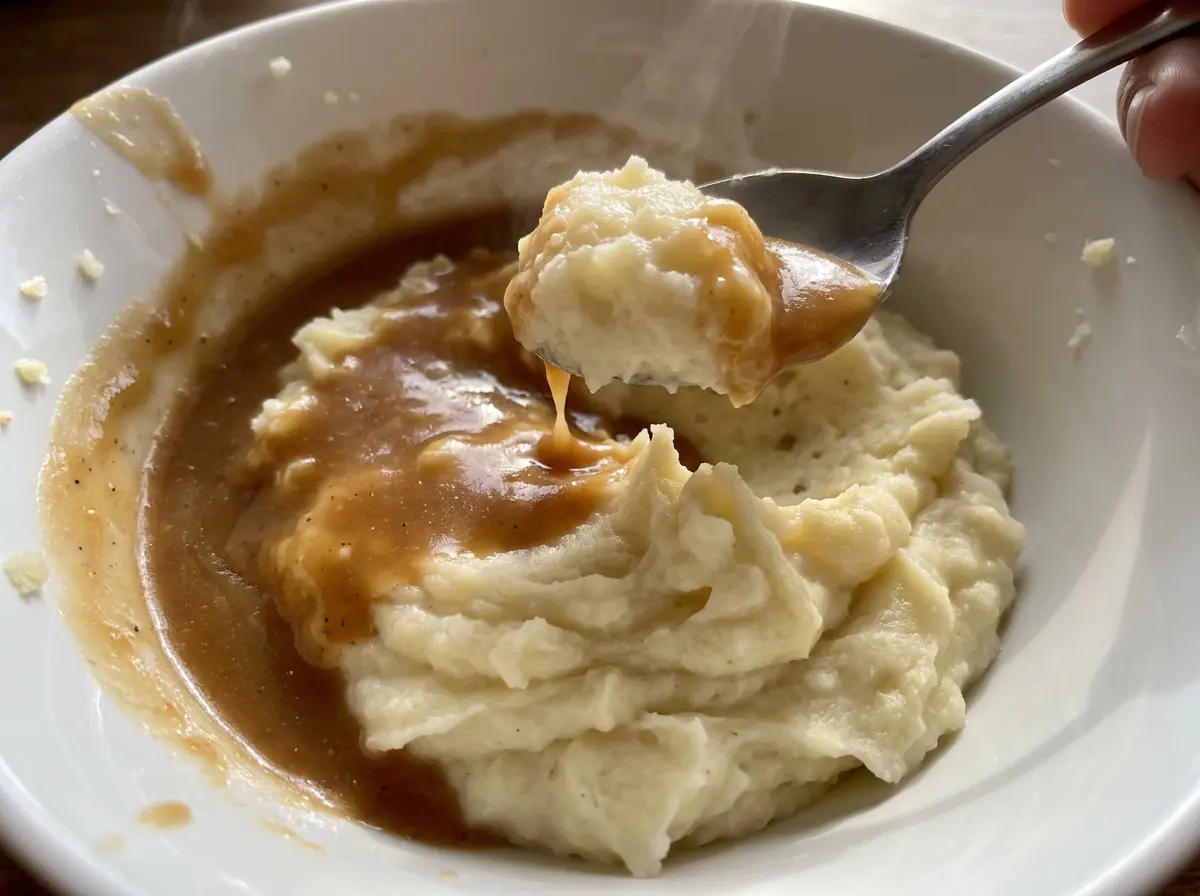
The gravy is the moment to watch: it starts out thin, then suddenly clings to the whisk and coats the back of a spoon. Paired with smooth, buttery potatoes, that familiar brown gravy is what makes KFC Mashed Potatoes and Gravy such a satisfying plate. I make the potatoes from russets and build the gravy in a separate saucepan, so each part gets the attention it needs.
Russets turn tender and mash smoothly, while warm milk and butter blend in without cooling the potatoes. For the gravy, a lightly golden flour-and-butter roux gives the broth body, and using both chicken and beef broth builds a fuller savory taste than either one brings alone. Keep the potatoes covered while the gravy simmers, then spoon the thick, glossy gravy over the top.
Kitchen Note
After draining, give the potatoes their minute over low heat before adding the milk mixture. I look for the visible steam to taper off; potatoes that are still wet can make the mash looser than you want.
Save KFC mashed potatoes and gravy for a cozy dinner with smooth russet potatoes and rich, two-broth gravy.
Why This Gravy Tastes Fuller Than a Single-Broth Version
The gravy gets its character from the combination of chicken broth and beef broth. Chicken broth keeps the flavor savory without taking over, while beef broth gives the finished gravy a deeper, darker note. Neither needs to be cooked down on its own; the flavor builds as the broth thickens with the butter-and-flour roux.
That roux does more than thicken. Cooking the flour in butter until it turns lightly golden takes away its raw taste and gives the gravy a gentle toasted note. The color should stay light rather than dark brown, since the broths provide much of the finished gravy’s color. Gradually whisking in the broths also lets the flour disperse smoothly instead of gathering into little lumps. Together, the broth blend and the roux make a simple gravy that’s savory, spoonable, and right at home over mashed potatoes.
What the Russets, Milk, and Broth Each Bring

- Russet potatoes — Their high-starch flesh breaks down into a fluffy, smooth mash. Choose firm potatoes without soft spots, peel them, and cut the chunks evenly so they cook at a similar rate. Yukon Gold potatoes can stand in, but they make a denser, creamier mash with a buttery character rather than the lighter russet texture.
- Whole milk — Whole milk adds enough richness to soften the starchy potatoes without making them taste heavy. Warm it with the butter before mashing; cold milk can cool the potatoes and is harder to blend in evenly. The whole-milk version gives the intended creamy texture.
- Unsalted butter — Butter brings richness to both the potatoes and gravy, and unsalted butter leaves the seasoning easier to control. Use butter that tastes fresh, since its flavor comes through clearly in both parts of the dish. Keep the potato portion and gravy portion separate while you prep.
- Chicken and beef broth — Low-sodium broth gives the gravy its savory base while leaving room to season it with salt. The blend makes the flavor rounder than a single broth. Either broth can be used in place of the other, but the gravy will lean toward whichever one you choose.
- All-purpose flour — This is what thickens the broth into a classic spoonable gravy when cooked with butter. Regular all-purpose flour is the right fit here; it’s inexpensive and does the job reliably. Keep it in the pan long enough to turn lightly golden before adding liquid.
Cook the Potatoes and Gravy Without Losing Their Texture
Simmer the Russets Until Fork-Tender
Put the peeled potato chunks in an 8-quart pot with the water and the cooking-water portion of the salt. Bring everything to a boil over high heat, then lower the heat to maintain a steady simmer. Cook for 15 to 20 minutes, checking that a fork slides easily into the center of a chunk. If the pieces are still firm in the middle, give them more time at the simmer rather than mashing them undercooked.
Drain Well and Let the Steam Lift
Drain the potatoes thoroughly, then return them to the pot over low heat for about 1 minute. Shake the pot gently as the excess steam subsides. Keep the heat low; the goal is to let moisture evaporate, not brown the potato surfaces. This brief pause gives the mash a better starting texture.
Warm the Butter and Milk Before Mashing
In a small saucepan over low heat, warm the milk with the portion of butter for the potatoes until the butter melts and the milk is steaming. Don’t let the mixture boil. Mash the potatoes with the warm mixture and the measured salt until smooth, then cover the pot to keep the potatoes warm. Stop when the mash is smooth; it doesn’t need prolonged beating.
Cook the Flour in Butter Until Lightly Golden
Melt the remaining butter in a medium saucepan over medium heat, then whisk in the flour. Cook for 1 to 2 minutes, whisking, until the mixture turns lightly golden. If the flour stays pale, it may taste raw in the finished gravy; if it darkens quickly, lower the heat. This is the base that will give the broth its body.
Whisk in Both Broths and Simmer Until Glossy
Gradually whisk in the chicken broth and beef broth until the mixture is smooth, then add the black pepper and remaining salt. Bring the gravy to a simmer and cook for 4 to 6 minutes, whisking often. It’s ready when it coats the back of a spoon instead of running off like broth. Serve it over the warm mashed potatoes.
Two Broth Swaps and a More Rustic Potato Option
Make the Gravy Chicken-Forward
Use chicken broth in place of the beef broth, keeping the total broth amount the same. The gravy will taste lighter and less robust, while still thickening with the same butter-and-flour base.
Make the Gravy Beef-Forward
Replace the chicken broth with beef broth, using the same total amount of broth. You’ll get a deeper, more pronounced beef flavor; keep whisking as it simmers so the gravy stays smooth.
Leave the Potato Skins On
For a more rustic bowl, scrub the russets well and leave the skins on before cutting and cooking them. The mash will have flecks of peel and a less uniform texture, rather than the smooth, peeled-potato finish.
Storage and Reheating
- Refrigerator: Store the potatoes and gravy in separate airtight containers for 3 to 4 days. The potatoes will firm up as they chill.
- Freezer: Freeze the potatoes and gravy separately in airtight containers for up to 1 month. The potato texture may be slightly grainier after thawing.
- Reheating: Warm the potatoes gently in a covered saucepan over low heat, stirring as they soften, and warm the gravy separately while whisking. Reheat leftovers to 165°F; high heat can scorch gravy or make the potatoes gluey.
Questions That Come Up With Mashed Potatoes and Gravy
KFC Mashed Potatoes and Gravy
Ingredients
Method
- Combine the water, 1 tablespoon of the salt, and the potatoes in an 8-quart pot.
- Bring the potatoes to a boil over high heat, then reduce the heat to maintain a steady simmer and cook for 15 to 20 minutes, until the potatoes are fork-tender.
- Drain the potatoes well.
- Return the potatoes to the pot over low heat for about 1 minute, shaking the pot gently until excess steam subsides.
- Warm the milk and 4 tablespoons of the butter in a small saucepan over low heat until the butter melts and the milk is steaming; do not let it boil.
- Mash the potatoes with the warm milk mixture and 3/4 teaspoon of the salt until smooth.
- Cover the pot to keep the potatoes warm.
- Melt the remaining 3 tablespoons of butter in a medium saucepan over medium heat.
- Whisk in the flour and cook for 1 to 2 minutes, until lightly golden.
- Gradually whisk in the chicken broth and beef broth until smooth.
- Whisk in the black pepper and remaining 1/4 teaspoon of salt.
- Bring the gravy to a simmer and cook for 4 to 6 minutes, whisking often, until thickened enough to coat the back of a spoon.
- Serve the gravy over the mashed potatoes.