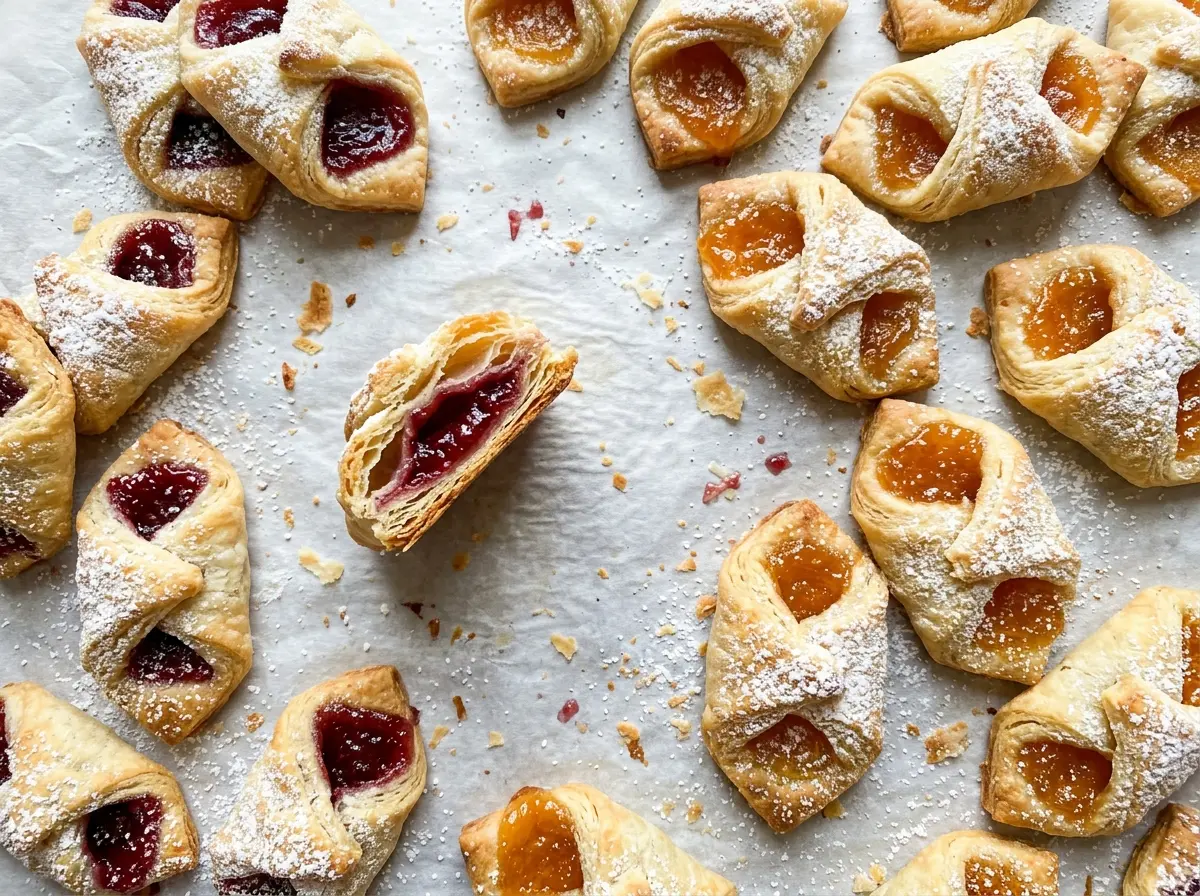
The first tray of kolaczki taught me that these little pastries look a little humble coming out of the oven: lightly golden at the edges, pale on top, and ready for a snowy finish of confectioners’ sugar. Apricot preserves bring a bright, fruity center, while the cream cheese dough bakes up tender and buttery. They’re small enough to enjoy in a couple of bites, but the folded corners make each one feel like a proper pastry.
I keep the dough simple and mix it only until it comes together softly. There’s no need to coax it into a smooth, elastic ball; a gentle mix and a rest in the refrigerator are what make it manageable to roll and shape. Once the cookies cool, a fine dusting of sugar settles over the folds and fruit, leaving a delicate finish on every buttery square.
Kitchen Note
If the dough starts feeling sticky while you roll, it has warmed up too much to handle neatly. Pop it back in the refrigerator until firm again; cool dough is much easier to lift and fold without stretching.
Save these apricot kolaczki for a baking day when you want tender pastry, bright fruit filling, and a pretty powdered-sugar finish.
Why Kolaczki Dough Isn’t Meant to Taste Like a Sweet Cookie
Unlike a typical cookie dough, this one has no granulated sugar mixed in. The butter and cream cheese make a mild, tender pastry that lets the apricot filling stand out, while the confectioners’ sugar adds sweetness at the end. That balance matters: a heavily sweet dough would compete with the fruit instead of letting its tartness come through.
It also helps to think of the dough as a pastry, not something to beat until fluffy or knead until springy. Once the flour goes in, mixing just until a soft dough forms keeps the finished cookies tender. If you keep mixing in hopes of making the dough silky, you’ll develop more structure than these delicate folded squares need. The result should be a dough you can divide and chill, not a stretchy ball that fights the rolling pin.
What Butter, Cream Cheese, and Apricot Preserves Bring to Kolaczki

- Unsalted butter — Butter gives the dough its rich, tender bite, so a basic grocery-store butter works well; there’s no need to reach for a specialty brand. It should be softened, not melted or oily. If salted butter is what you have, leave out the kosher salt so the dough doesn’t become too salty.
- Cream cheese — This is what makes the dough softer and more pliable than a standard butter pastry. Use plain cream cheese that has softened to room temperature; whipped or spreadable cream cheese brings a different texture and can make the dough harder to handle.
- All-purpose flour — Regular all-purpose flour gives the dough enough structure to hold its folded shape. Measure it without packing it into the cup; too much flour can leave the dough dry and prone to cracking as you roll it.
- Apricot preserves — Thick preserves hold their place in the center and give each pastry a concentrated fruit flavor. A standard store-brand jar is fine as long as the preserves are thick rather than runny. The bright apricot flavor is especially good with the buttery dough.
- Confectioners’ sugar — Its fine texture leaves a light, even coating instead of the gritty finish granulated sugar would give. Keep it for the final dusting rather than mixing it into the dough.
From Soft Dough to Neatly Folded Kolaczki
Mix Just Until the Dough Comes Together
Beat the softened butter and cream cheese in a large bowl until the mixture looks smooth and creamy. Add the flour and kosher salt, then mix only until a soft dough forms. Stop when the dry flour is worked in; the dough doesn’t need to look whipped or elastic. Overmixing at this stage is the easiest way to lose that tender pastry texture.
Chill the Two Dough Disks
Divide the dough in half and shape each half into a disk. Wrap both disks and refrigerate them for at least 1 hour, which gives the dough time to firm up before rolling. A chilled disk should feel solid enough to handle without smearing across the parchment. Keeping the portions separate also means you can roll one while the other stays cold.
Roll and Cut Even Squares
Heat the oven to 350°F and line two baking sheets with parchment paper. Roll one disk between sheets of parchment until it’s 1/8 inch thick, then cut 2-inch squares. Reroll the scraps once, cut the remaining squares, and repeat with the second disk. Keeping the squares close in size helps them bake evenly on the sheets.
Fold the Corners and Bake Until Lightly Golden
Put 1/2 teaspoon of apricot preserves in the center of each square. Bring two opposite corners together over the filling and pinch them firmly to seal; a loose pinch can open during baking. Arrange the cookies on the prepared sheets and bake for 12 to 15 minutes, rotating the sheets halfway through. Take them out when the edges are lightly golden.
Cool Before the Sugar Dusting
Let the cookies cool on the baking sheets for 5 minutes, then transfer them to a wire rack. Wait until they’re completely cool before dusting with confectioners’ sugar. If the cookies are still warm, the sugar will melt into the surface instead of leaving a soft, snowy coating. The finished pastries should feel delicate, not weighed down by a thick layer.
Three Ways to Change the Filling or Flour
Make Them with Raspberry Preserves
Replace the apricot preserves with thick raspberry preserves, using the same small amount in the center of each square. Raspberry makes the cookies a little more tart and gives the filling a deeper berry flavor; choose a thick preserve so it stays tucked into the fold.
Use a Cup-for-Cup Gluten-Free Flour Blend
For a gluten-free batch, replace the all-purpose flour with the same volume of a cup-for-cup gluten-free baking blend that contains xanthan gum. The dough will be more delicate and less elastic, but it can still be rolled between parchment and folded into squares. Lift the cut pieces carefully so their edges don’t tear.
Try Thick Plum Preserves
Swap in thick plum preserves for a rounder, less tangy fruit center. Keep the filling amount modest so the corners can meet cleanly, and avoid loose preserves that would run onto the baking sheet.
Storage and Reheating
- Refrigerator: Store the cooled cookies in an airtight container for up to 5 days. They’ll soften slightly but stay tender.
- Freezer: Freeze completely cooled cookies in an airtight container for up to 2 months. Dust them with confectioners’ sugar after thawing for the prettiest finish.
- Reheating: These pastries are best at room temperature, so they don’t need reheating. Avoid microwaving them; the preserves can heat unevenly and leak from the folds.
Questions That Come Up When Making Kolaczki
Kolaczki
Ingredients
Equipment
Method
- Beat the softened butter and cream cheese in a large bowl until smooth and creamy.
- Add the flour and salt and mix just until a soft dough forms.
- Divide the dough in half and shape each half into a disk.
- Wrap the disks and refrigerate for at least 1 hour.
- Heat the oven to 350°F.
- Line two baking sheets with parchment paper.
- Roll one disk between sheets of parchment to 1/8 inch thick and cut into 2-inch squares.
- Reroll scraps once and repeat with the remaining disk.
- Put 1/2 teaspoon of apricot preserves in the center of each square.
- Bring two opposite corners together over the filling and pinch firmly to seal.
- Arrange the cookies on the prepared baking sheets and bake for 12 to 15 minutes, rotating the sheets halfway through, until the edges are lightly golden.
- Cool the cookies on the baking sheets for 5 minutes.
- Transfer them to a wire rack to cool completely.
- Dust the cookies with confectioners' sugar.