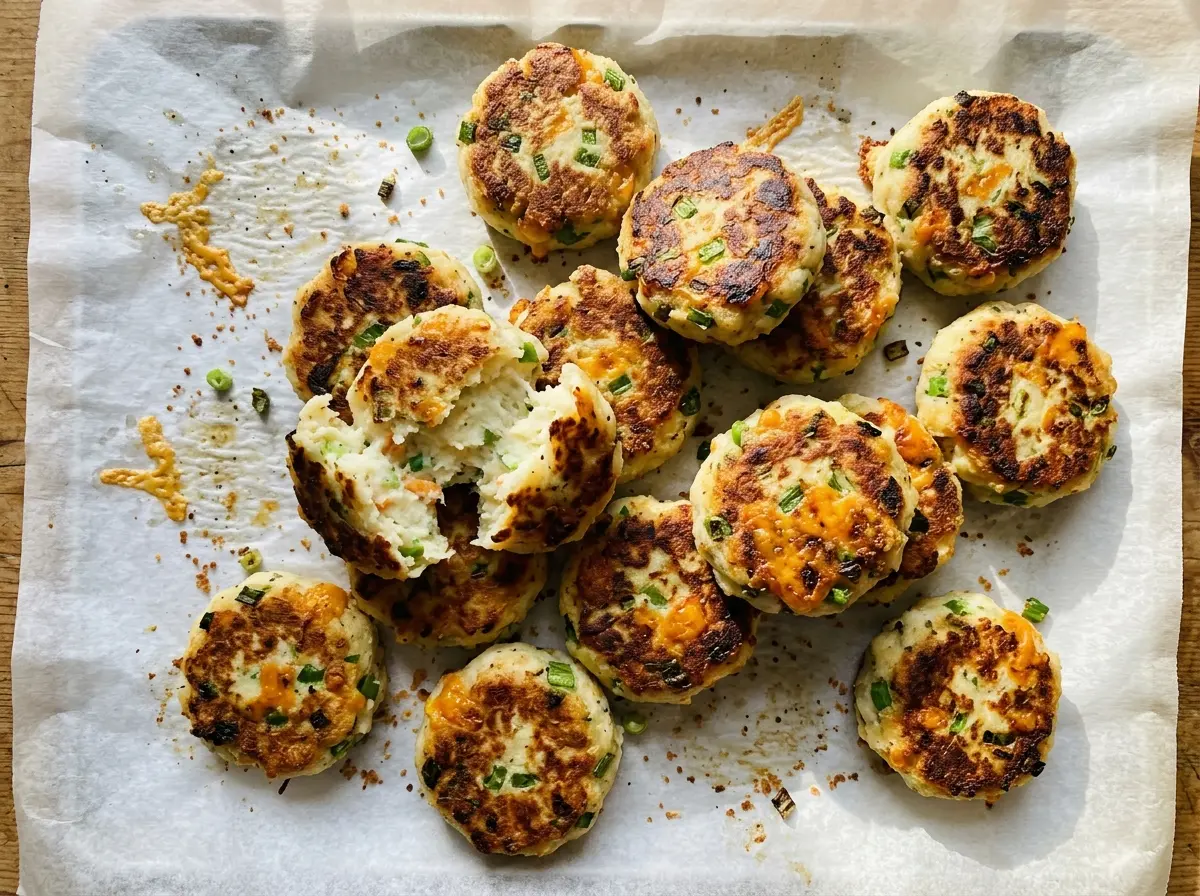
The first potato cake should sizzle as soon as it meets the skillet, then stay put long enough to build a golden bottom. That’s the difference between a cake that flips neatly and one that breaks apart when you slide the spatula underneath. These leftover mashed potato cakes turn cold potatoes into eight savory patties with sharp cheddar and green onions tucked through the middle.
I keep the patties an even thickness and cook them in two batches, which gives each one room to brown instead of steam. The outside turns crisp and the center stays soft, with the cheese adding a salty, savory bite. Since the potatoes are already cooked, the skillet work is all about browning the cakes and heating them through.
Kitchen Note
I shape all eight patties before I heat the oil. That way, the first batch gets my full attention, and the second batch is ready to go as soon as the skillet is free.
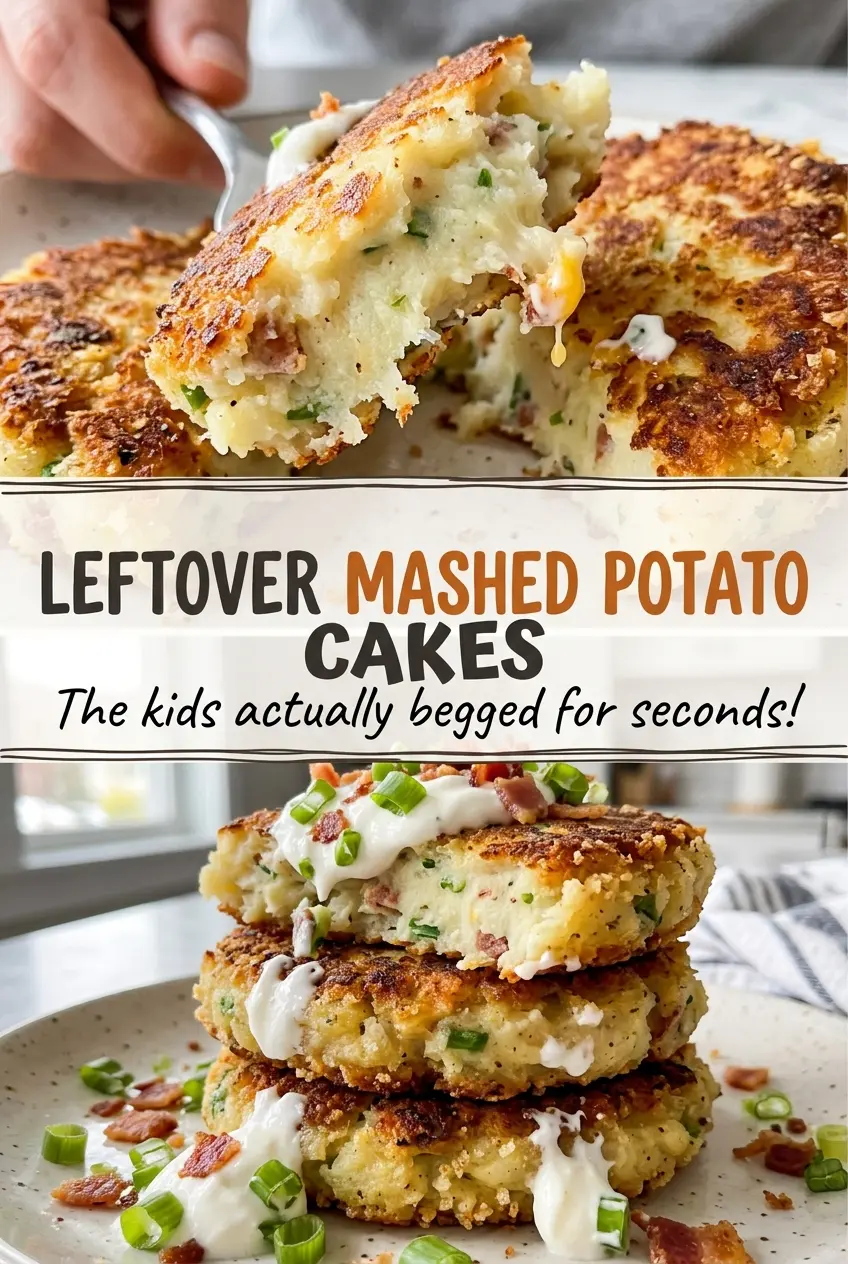
Save these leftover mashed potato cakes for a crisp, cheesy way to use up cold mashed potatoes.
Why the Half-Inch Patty Is the Difference Between Brown and Burnt
Potato cakes need enough time in the skillet for the center to heat before the outside gets too dark. Keep each patty about a half-inch thick: that gives the flat sides plenty of contact with the pan, while the middle can warm through as the crust browns. Make them much thicker and you risk a dark exterior around a cool center. Go much thinner and the cakes are more likely to dry out before they develop a good crust.
There’s also a practical reason to shape them consistently. Eight patties of similar thickness cook at a similar pace, so you can rely on the same timing across both batches instead of guessing which one is ready first. Cold mashed potatoes are easier to portion and shape than warm, loose mash, and the egg and flour help the mixture hold together. Once the cakes are in the skillet, give the first side time to form a proper crust before flipping.
If your leftover potatoes are on the softer side, handle the mixture gently as you shape it. The goal is a cohesive patty, not a tightly packed one. Press just enough to make each portion hold its shape and keep the edges neat; compacting the mixture hard can make the centers dense.
What the Cheddar, Egg, and Flour Each Bring to These Cakes
- Cold leftover mashed potatoes — They make up the bulk of each cake, so use mash that’s fully chilled and easy to scoop. The seasonings and richness already in your leftovers carry into the finished patties; a strongly flavored mash will show through more than a plain one.
- Egg and all-purpose flour — Together, they help the potato mixture hold its shape through flipping. The egg brings the ingredients together, while the flour gives the mixture structure. For a gluten-free batch, a cup-for-cup gluten-free flour blend is the most practical flour swap; the texture may be a little more tender.
- Sharp cheddar — Sharp cheddar keeps its savory character among the potatoes instead of fading into the background. Bagged shredded cheese is convenient, while freshly shredded cheese tends to melt more evenly. Mild cheddar works too, though the finished cakes will taste less tangy.
- Green onions — Thin slices spread their mild onion flavor through the patties without adding much moisture. Slice them finely so they don’t make the cakes difficult to shape. If you don’t have green onions, leaving them out is better than adding a wet or strongly flavored substitute.
- Vegetable oil — Its neutral flavor lets the potato, cheddar, and green onion come through. Canola oil works in its place; use the same amount and keep the skillet at medium heat.
How to Brown the Cakes Without Losing Their Shape
Bring the Potato Mixture Together
Stir the mashed potatoes, egg, flour, cheddar, green onions, salt, and black pepper in a medium bowl until everything is evenly combined. Scrape the sides and bottom of the bowl so there aren’t pockets of flour or egg left behind. The finished mixture should look evenly speckled with cheese and green onion. Stop stirring once it comes together; it doesn’t need to be beaten smooth.
Shape Eight Even Patties
Divide the mixture into eight portions and shape each into a patty about a half-inch thick. Keep the thickness consistent from the center to the edges so the cakes brown at roughly the same rate. If a few bits of cheese or green onion poke out, press them gently back into the surface. Set all the shaped patties aside while you heat the skillet.
Let the First Side Turn Golden
Heat one tablespoon of vegetable oil in a 12-inch skillet over medium heat. Add four patties, leaving room to turn them without crowding the pan. Cook for four to five minutes, until the bottoms are golden brown; don’t flip early just because the tops still look pale. If the bottoms are browning too fast, lower the heat so the centers have time to warm before the crust gets too dark.
Flip, Finish, and Cook the Second Batch
Turn each patty carefully and cook the second side for three to four minutes, until it’s golden and the center reaches 160°F. Transfer the cooked cakes to a plate. Add the remaining tablespoon of oil to the skillet and cook the other four patties the same way. Keep the batches separate rather than squeezing all eight into the pan; crowded patties won’t brown as evenly.
Three Easy Ways to Change the Flavor or Fit a Dietary Need
Make a gluten-free batch
Replace the all-purpose flour with the same amount of cup-for-cup gluten-free flour blend. The cakes may be a touch more delicate, so shape them gently and turn them with a wide spatula.
Leave out the cheddar
For a dairy-free version, omit the cheddar only if the mashed potatoes themselves are dairy-free. You’ll lose the cheesy richness, but the egg and flour still help the potato cakes hold together.
Use pepper jack for a little heat
Swap the sharp cheddar for an equal amount of shredded pepper jack. It melts into the cakes and brings a mild kick, while the green onions keep the flavor fresh.
Storage and Reheating
- Refrigerator: Store cooked cakes in an airtight container for 3 to 4 days. The crust softens as they chill, but it firms up again in the skillet.
- Freezer: Freeze cooled cakes in a single layer until firm, then transfer them to a freezer-safe container with parchment between layers. They keep their best quality for about 2 months.
- Reheating: Warm them in a skillet over medium-low heat, turning once, until hot in the center. Check that reheated leftovers reach 165°F; high heat can darken the outside before the middle warms through.
Questions That Come Up When Making Potato Cakes
Leftover Mashed Potato Cakes
Ingredients
Equipment
Method
- Stir together the mashed potatoes, egg, flour, cheddar, green onions, salt, and pepper in a medium bowl until evenly combined.
- Divide the mixture into 8 portions.
- Shape each portion into a 1/2-inch-thick patty.
- Heat 1 tablespoon of the oil in a 12-inch skillet over medium heat.
- Add 4 patties and cook for 4 to 5 minutes, until golden brown on the bottom.
- Flip the patties and cook for 3 to 4 minutes, until golden on the second side and 160°F in the center.
- Transfer the patties to a plate.
- Heat the remaining 1 tablespoon oil in the skillet and repeat with the remaining patties.