When flour first meets leftover mashed potatoes, the dough looks rough and a little clingy—not like the smooth dinner-roll dough you might expect. That’s normal here. The potatoes bring moisture and starch into the mix, and these rolls turn that humble scoop of leftovers into a soft, tender batch for the table.
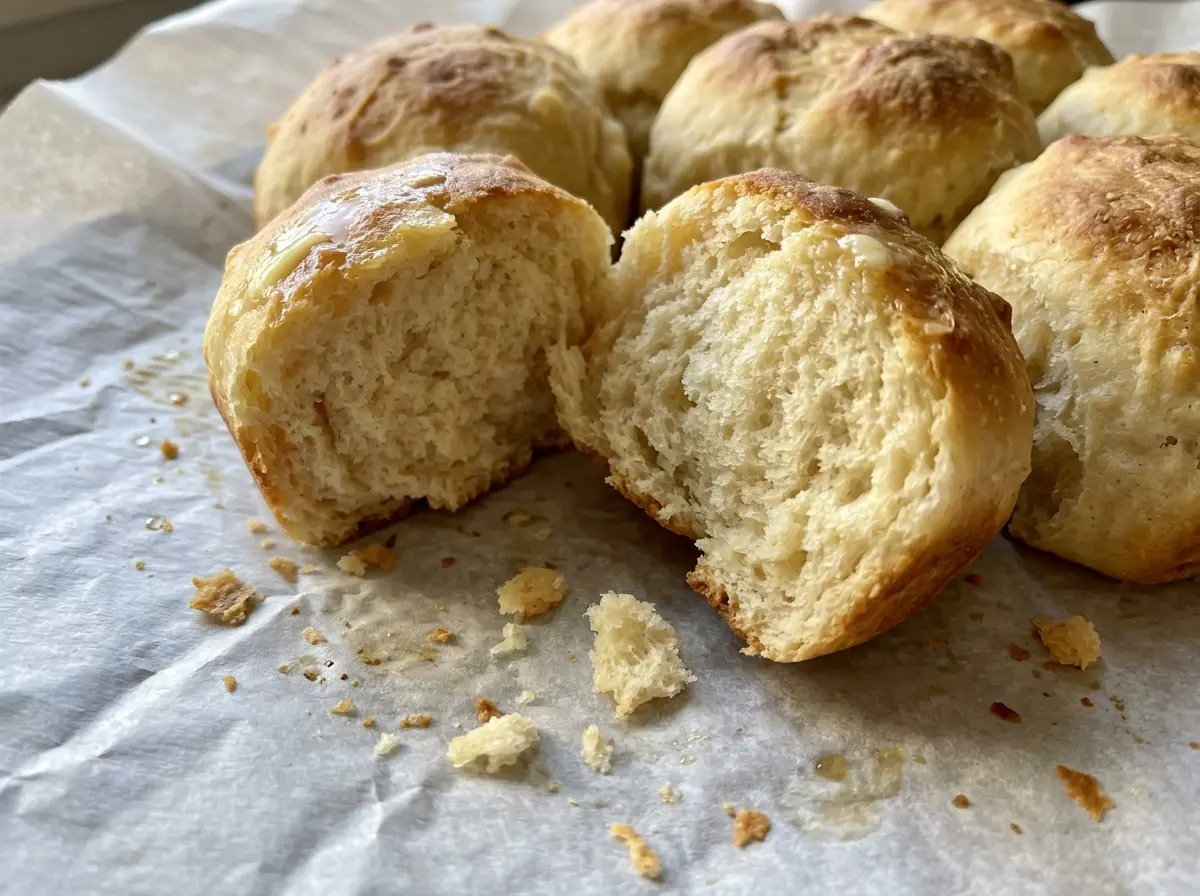
I keep the mashed potatoes at room temperature before mixing so they blend evenly with the egg and melted butter. Once the flour goes in, kneading brings the shaggy dough together; it should finish smooth and elastic, not dry or stiff. Give the dough time to rise until it has doubled, then shape the rolls and let them get puffy in the baking dish. The finished rolls have golden tops and a tender crumb that’s made for pulling apart.
Kitchen Note
Let the rolls rest in the baking dish for the full 10 minutes before serving. They’re delicate straight from the oven, and that short pause gives the soft centers time to settle before you pull them apart.
Save these leftover mashed potato rolls for a soft, golden batch that turns yesterday’s potatoes into today’s dinner bread.
Why Potato Dough Feels Stickier Than Your Usual Dinner Roll Dough
Mashed potatoes don’t behave like a liquid, but they do bring moisture and starch along with them. That’s why this dough can feel softer and tackier than a basic flour-and-milk dough, especially before the gluten has had time to develop. A sticky first impression doesn’t mean the dough needs a pile of extra flour.
Keep the flour amount steady and knead on a lightly floured surface. As you work the dough for 8–10 minutes, it should become smoother and more elastic. Too much extra flour can make the finished rolls heavier, taking away the soft texture the potatoes help create. Use just enough on the counter to keep the dough manageable, and give the kneading time to do its job.
The mash itself matters, too. Thick leftover mashed potatoes are a better starting point than loose, soupy potatoes because a wetter mash can leave the dough harder to handle. If yours is especially loose, don’t try to fix it by repeatedly dusting flour over the dough; choose a thicker batch next time for a more predictable texture.
What the Potatoes, Yeast, and Enrichment Each Bring to These Rolls

- Leftover mashed potatoes — They add moisture and give the crumb its tender feel. Thick, plain mash is easiest to work with; heavily seasoned or very loose potatoes can make the dough harder to balance. There isn’t a substitute that gives quite the same soft, potato-enriched texture.
- Active dry yeast — This is what lifts the dough through its two rises. Fresh yeast matters more than an expensive brand, so check that the packet is in date and stored properly. Instant yeast can behave differently in the first mixing stage, so active dry yeast is the straightforward choice for this method.
- Whole milk — Milk enriches the dough and helps activate the yeast when warmed to the specified range. Regular whole milk from any brand works; the temperature matters more than the label. Unsweetened oat milk is a practical replacement for a dairy-free batch.
- Egg and butter — Together they make the rolls richer and more tender than a lean bread dough. The egg should be at room temperature so it blends readily, while the melted butter needs to cool before it goes into the bowl. For a dairy-free version, use vegan butter in place of the butter; the egg remains.
- All-purpose flour — It gives these rolls their structure without making them overly chewy. A standard all-purpose flour is the dependable choice here, and there’s no need to seek out a specialty brand.
From Foamy Yeast to Soft Rolls: The Stages That Matter
Wake Up the Active Dry Yeast
Stir the yeast and sugar into milk warmed to 105–110°F, then leave the mixture for 5–10 minutes. Look for foam on top before moving on; a foamy surface shows the yeast is active. If the milk is too hot, it can damage the yeast, so use a thermometer rather than guessing. Don’t rush this pause—the dough depends on the yeast getting started.
Bring the Potato Dough Together
In a large bowl, mix the mashed potatoes, egg, melted and cooled butter, and salt until combined. Stir in the yeast mixture, then add the flour until a shaggy dough forms. It may look uneven at this point, but there shouldn’t be dry pockets of flour left behind. Resist turning it into a smooth dough with extra flour before kneading.
Knead Until Smooth, Then Let It Double
Turn the dough onto a lightly floured surface and knead for 8–10 minutes, until it feels smooth and elastic. Lightly spray a large bowl, add the dough, and turn it once so the surface is coated. Cover the bowl and let the dough rise in a warm spot for 1–1 1/2 hours, until doubled in size. Use the doubled volume as your cue rather than expecting every kitchen to hit the same minute.
Shape Twelve Rolls and Give Them a Second Rise
Lightly spray a 9×13-inch baking dish, divide the dough into 12 equal pieces, and shape each piece into a ball. Arrange the balls in the dish, cover, and let them rise for 30–45 minutes, until puffy. Leave them arranged together in the baking dish; this is the setup for the soft sides and rounded tops. If they still look compact, give the second rise more time.
Bake Until the Tops Turn Golden
Heat the oven to 375°F and bake the rolls for 18–22 minutes, until golden brown. Watch the color near the end of the bake, since pale tops need a little longer to develop that golden finish. Let them rest in the dish for 10 minutes before serving so the warm, tender crumb can settle.
Two Smart Ways to Adapt These Potato Rolls
Make a Dairy-Free Batch
Replace the whole milk one-for-one with unsweetened oat milk and the butter one-for-one with vegan butter. The leftover mashed potatoes also need to be dairy-free for the swap to work throughout. The rolls will be a little less rich, and they still contain egg, so this isn’t a vegan adaptation.
Use Mashed Sweet Potatoes
Swap in an equal volume of thick, plain mashed sweet potatoes for the leftover mashed potatoes. The rolls will have a gentle sweetness and a warmer color, while keeping the same soft-roll format. Avoid a loose mash, which can make the dough sticky and difficult to shape.
Storage and Reheating
- Refrigerator: Keep the rolls in an airtight container for up to 4 days. Refrigeration makes bread firm up faster, so the texture won’t be quite as soft as on baking day.
- Freezer: Freeze fully cooled rolls in an airtight freezer bag or container for up to 2 months. Thaw at room temperature before warming.
- Reheating: Cover the rolls loosely with foil and warm them in a 300°F oven for 5–8 minutes. Leaving them uncovered can dry the edges before the centers warm through.
Questions That Come Up When Baking Mashed Potato Rolls
Leftover Mashed Potato Rolls
Ingredients
Equipment
Method
- Stir the yeast and sugar into the warm milk.
- Let the mixture stand for 5–10 minutes, until foamy.
- In a large bowl, mix the mashed potatoes, egg, melted butter, and salt.
- Stir in the yeast mixture.
- Stir in the flour until a shaggy dough forms.
- Knead on a lightly floured surface for 8–10 minutes, until smooth and elastic.
- Lightly spray a large bowl with cooking spray.
- Add the dough and turn it once to coat.
- Cover and let rise in a warm spot for 1–1 1/2 hours, until doubled in size.
- Lightly spray a 9x13-inch baking dish with cooking spray.
- Divide the dough into 12 equal pieces and shape into balls.
- Arrange the balls in the dish.
- Cover and let rise for 30–45 minutes, until puffy.
- Heat the oven to 375°F.
- Bake the rolls for 18–22 minutes, until golden brown.
- Let the rolls rest in the dish for 10 minutes before serving.