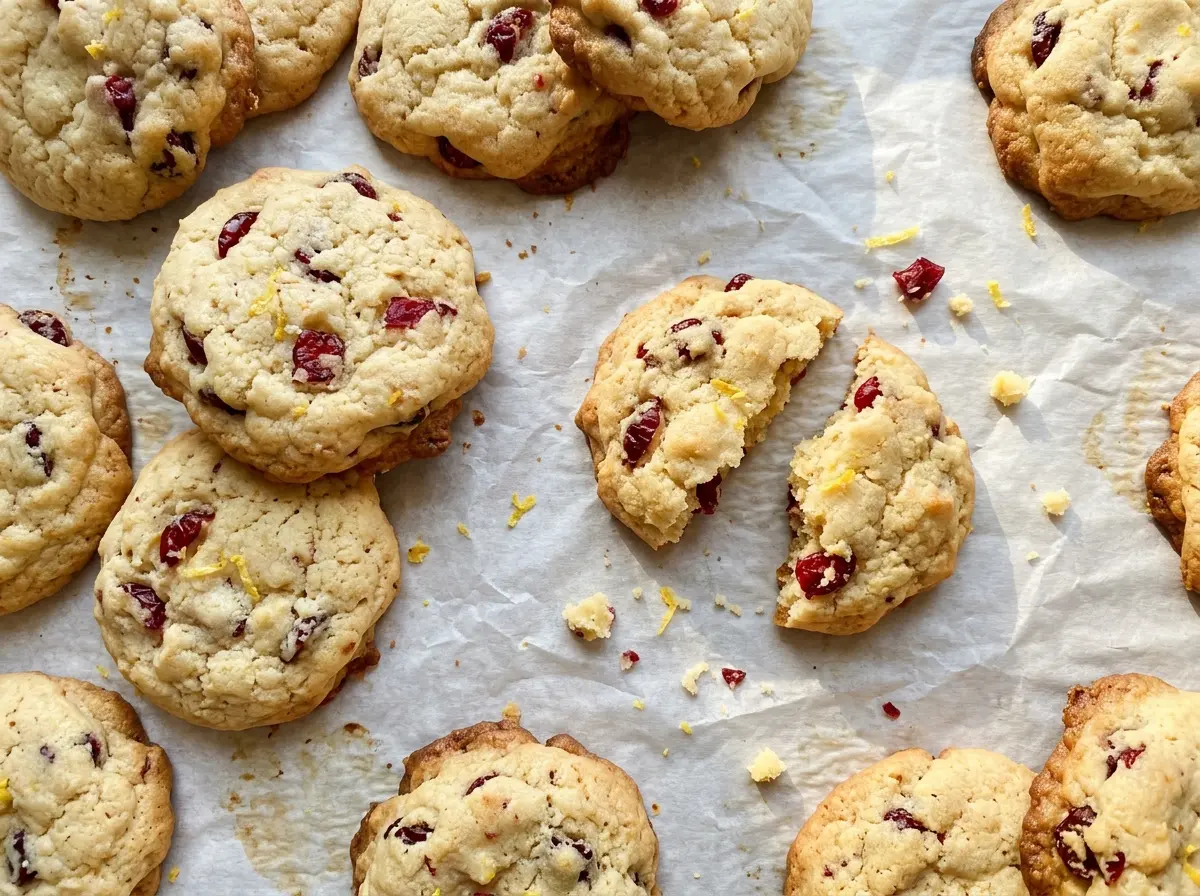
The smell of lemon comes through before these cookies have even browned, and the chopped cranberries make each bite sweet-tart instead of sugary all the way through. I like how the edges turn lightly golden while the centers stay tender; they’re a nice change from a plain sugar cookie without asking you to hunt down anything unusual.
For these lemon cranberry cookies, the citrus comes from both finely grated zest and fresh juice, so you get fragrant lemon notes along with a little brightness in the dough. The cranberries are roughly chopped before they go in, which helps keep the fruit distributed instead of leaving a few oversized pieces in some cookies and none in others. They’re just as welcome with an afternoon cup of coffee as they are tucked into a cookie tin.
Kitchen Note
A room-temperature egg blends into the creamed butter much more smoothly than a cold one. If the mixture looks a little curdled after you add the egg and lemon, keep mixing just until it comes together; don’t try to fix it by adding extra flour.
Save these lemon cranberry cookies for a bake when you want tender centers, lightly golden edges, and a bright lemon lift.
Why the 30-Minute Chill Keeps Lemon Cookies from Spreading Thin
Cookie dough made with softened butter starts out pliable, and the oven makes that butter melt quickly. If the dough goes onto the baking sheet warm, the portions have more time to spread before the flour sets around them. A brief chill firms the butter back up, giving the cookies a better chance to bake into plump rounds rather than thin, crisp discs.
Thirty minutes in the refrigerator is enough to make this dough easier to portion and help the cookies keep a tender center. Cover the bowl while it chills so the surface doesn’t dry out or pick up refrigerator odors. You’re not aiming for rock-hard dough; it should still be easy to scoop after chilling. This little pause also makes the batch easier to handle while you bake in rounds, especially if your kitchen is warm.
What the Lemon and Cranberries Bring to the Dough

- All-purpose flour — It gives the cookies enough structure to hold the cranberries while keeping the crumb tender. A standard store-brand flour works well; avoid swapping in self-rising flour, since it already contains leavening and salt.
- Unsalted butter — Butter supplies the rich, soft base and lets you control the salt level. Choose a fresh-tasting butter, but there’s no need for a specialty brand. For a dairy-free batch, stick-style plant butter is the more useful replacement than a tub spread; the cookies may have a slightly different spread and texture.
- Granulated and light brown sugar — The two sugars bring sweetness with slightly different qualities: granulated sugar helps the edges bake up, while brown sugar contributes moisture and a softer bite. Pack the brown sugar into the measuring cup so the dough has the intended balance.
- Lemon zest and fresh lemon juice — Zest carries the fragrant oils that make the lemon aroma stand out; juice gives the dough a cleaner, tangier finish. Use a firm, fragrant lemon and grate only the yellow peel, since the white pith tastes bitter. Orange is a good citrus alternative if you want a softer, sweeter note.
- Dried cranberries — Their concentrated sweetness and chewy texture stand up to the citrus better than fresh fruit would. Roughly chop them so the pieces are easier to spread through the dough. Sweetened dried cranberries are a natural fit here; choose a bag with soft, pliable fruit rather than hard, dried-out pieces.
- Egg and vanilla extract — The egg binds the dough and helps it bake into a tender cookie, while vanilla rounds out the sharp lemon and tart fruit. A basic pure or imitation vanilla extract works; the citrus and cranberries are the louder flavors.
From Creamed Butter to Set Edges: The Cookie Dough Cues
Whisk the dry ingredients evenly
Whisk the flour, baking soda, and fine salt together in a medium bowl before they meet the wet ingredients. Break up any small flour lumps as you whisk so the leavening is distributed through the batch. This takes only a moment, but skipping it can leave one cookie saltier or more puffed than the next.
Cream until the butter mixture looks smooth
Beat the softened butter with both sugars for about 2 minutes, stopping when the mixture looks creamy rather than greasy. Scrape the bowl if butter is clinging to the sides, so it gets incorporated instead of leaving streaks. Beat in the egg, lemon zest, lemon juice, and vanilla until combined. If you see a few tiny flecks, keep mixing briefly; the mixture should come together without looking separated.
Stop mixing as soon as the flour disappears
Add the flour mixture and mix just until you can’t see dry streaks. Overmixing at this stage can make cookies tougher, so don’t keep beating once the dough is uniform. Fold in the roughly chopped cranberries until they’re spread through the dough. Scrape the bottom of the bowl once; pockets of flour sometimes hide there.
Chill, then portion with room to spread
Cover the bowl and refrigerate the dough for 30 minutes. Scoop it into 1 1/2-tablespoon portions and arrange 12 portions about 2 inches apart on the parchment-lined 18×13-inch baking sheet. Keep the portions roughly the same size so they bake at a similar rate. Bake in batches rather than crowding the pan.
Pull the cookies when the edges are lightly golden
Bake at 350°F for 10–12 minutes, watching for edges that look set and lightly golden. The centers can still look soft when the cookies come out; they’ll continue to settle on the hot baking sheet. Leave them there for 5 minutes, then transfer them to a wire rack to cool completely. Moving them too early can break a tender cookie before it has set.
Easy Changes for a Different Citrus or a Gluten-Free Batch
Swap lemon for orange
Use finely grated orange zest and fresh orange juice in place of the lemon zest and juice, keeping the same amounts. The cookies will taste rounder and sweeter, with less of lemon’s sharp tang beside the cranberries.
Make them gluten-free
Replace the all-purpose flour with a cup-for-cup gluten-free baking blend intended to replace wheat flour. The cookies may be a little more delicate, so let them rest on the baking sheet for the full 5 minutes before moving them to the rack.
Trade cranberries for dried cherries
Use roughly chopped dried cherries in place of the dried cranberries. They’re a little sweeter and less tart, but their chewy texture works well with the lemon. Keep the pieces roughly the same size so they fold evenly into the dough.
Storage and Reheating
- Room temperature: Keep cooled cookies in an airtight container for up to 4 days. They’ll soften slightly as they sit.
- Freezer: Freeze fully cooled cookies in an airtight freezer-safe container for up to 2 months. Separate layers with parchment, then thaw at room temperature.
- Reheating: For a warm cookie, microwave one for 5–8 seconds. Longer heating can make the edges tough, so use a short burst.
Questions That Come Up While Baking Lemon Cranberry Cookies
Lemon Cranberry Cookies
Ingredients
Equipment
Method
- Heat the oven to 350°F.
- Line an 18x13-inch baking sheet with parchment paper.
- Whisk the flour, baking soda, and salt together in a medium bowl.
- In a large bowl, beat the butter, granulated sugar, and brown sugar until creamy, about 2 minutes.
- Beat in the egg, lemon zest, lemon juice, and vanilla until combined.
- Add the flour mixture and mix just until no dry streaks remain.
- Fold in the cranberries.
- Cover and refrigerate the dough for 30 minutes.
- Scoop the dough into 1 1/2-tablespoon portions and arrange 12 portions about 2 inches apart on the prepared baking sheet.
- Bake in batches for 10–12 minutes, until the edges are set and lightly golden.
- Let the cookies cool on the baking sheet for 5 minutes.
- Transfer the cookies to a wire rack to cool completely.