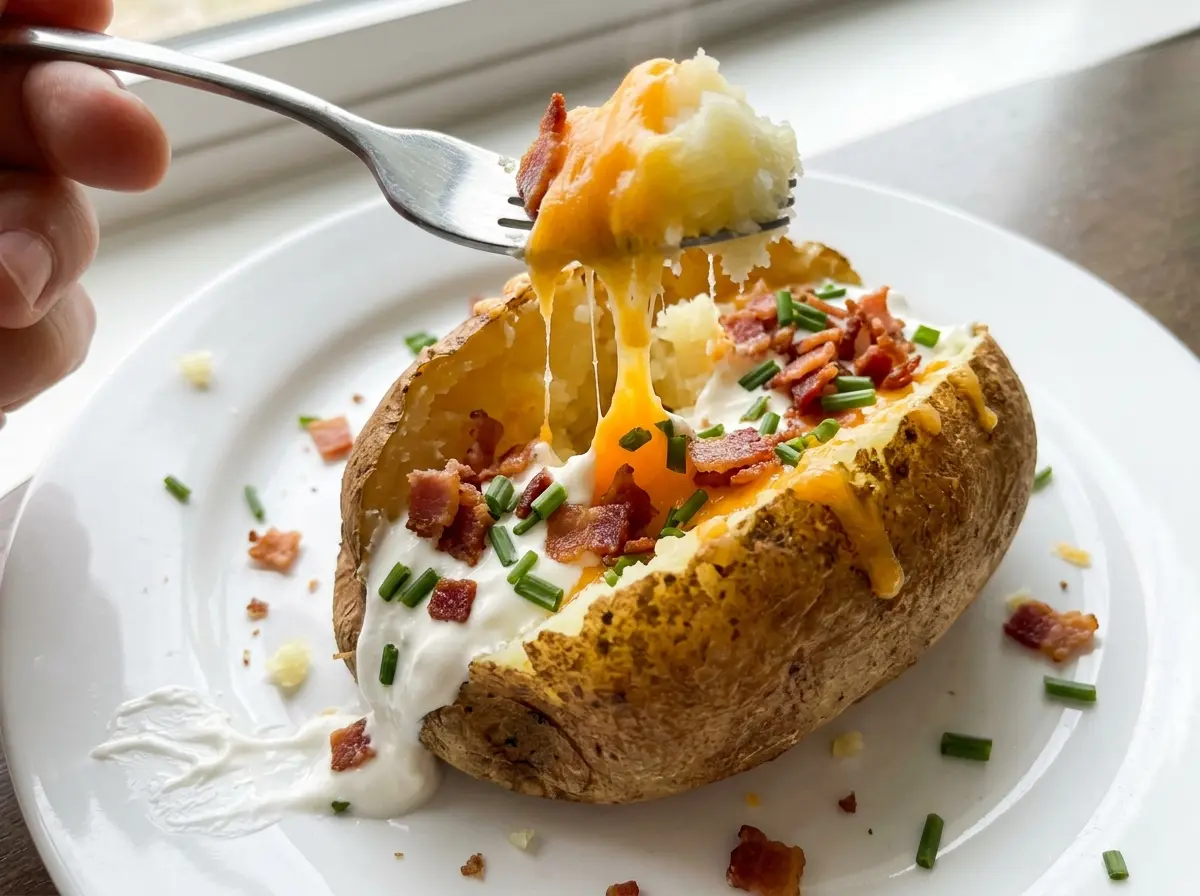
When a knife slides easily into the center of a russet and the skin gives a little crackle under your fingers, you’re right where you want to be. I used to cut into baked potatoes as soon as they came out of the oven; the steam rushed out and the fluffy center felt a little tight. Letting them rest briefly makes them easier to open, and the butter and cheddar melt into the hot potato instead of sliding off. These loaded baked potatoes turn a simple oven-baked russet into a full, satisfying meal with crisp bacon, cool sour cream, and fresh green onion.
The texture starts with the potato itself. Russets have a dry, starchy interior that turns fluffy in the oven, while a coating of olive oil helps the skins bake up crisp. Similar-sized potatoes finish at about the same time, so you’re less likely to have one ready while another still has a firm center. Once they’re baked, a lengthwise slit and a gentle squeeze open a pocket for all those toppings.
Kitchen Note
Pierce each potato several times with a fork before it goes in the oven. Those little openings let steam escape as the centers heat, so the potatoes bake evenly instead of building pressure under the skins.
Save these loaded baked potatoes for a cozy dinner with crisp bacon, sharp cheddar, and fluffy russet centers.
Why Russets Bake Up Fluffier Than Waxy Potatoes
A baked potato can have a browned skin and still feel dense inside. The variety matters: russets are starchy and relatively dry, so their centers separate into a soft, fluffy texture as they bake. Waxy potatoes, such as red potatoes, hold their shape more firmly and have a creamier, tighter bite. They’re good for other dishes, but they won’t give you the classic fluffy middle that makes a loaded potato work.
Size matters for timing, too. Four medium russets of about the same size are more likely to finish together than a mix of small and large potatoes. The oven time is a range because potatoes don’t all behave identically, but the knife test tells you more than the clock: the blade should slide easily into the center. A crisp skin with a firm middle means the potato needs more time, not more toppings. Give the centers time to become tender before you split them open.
What Each Topping Brings to a Loaded Russet
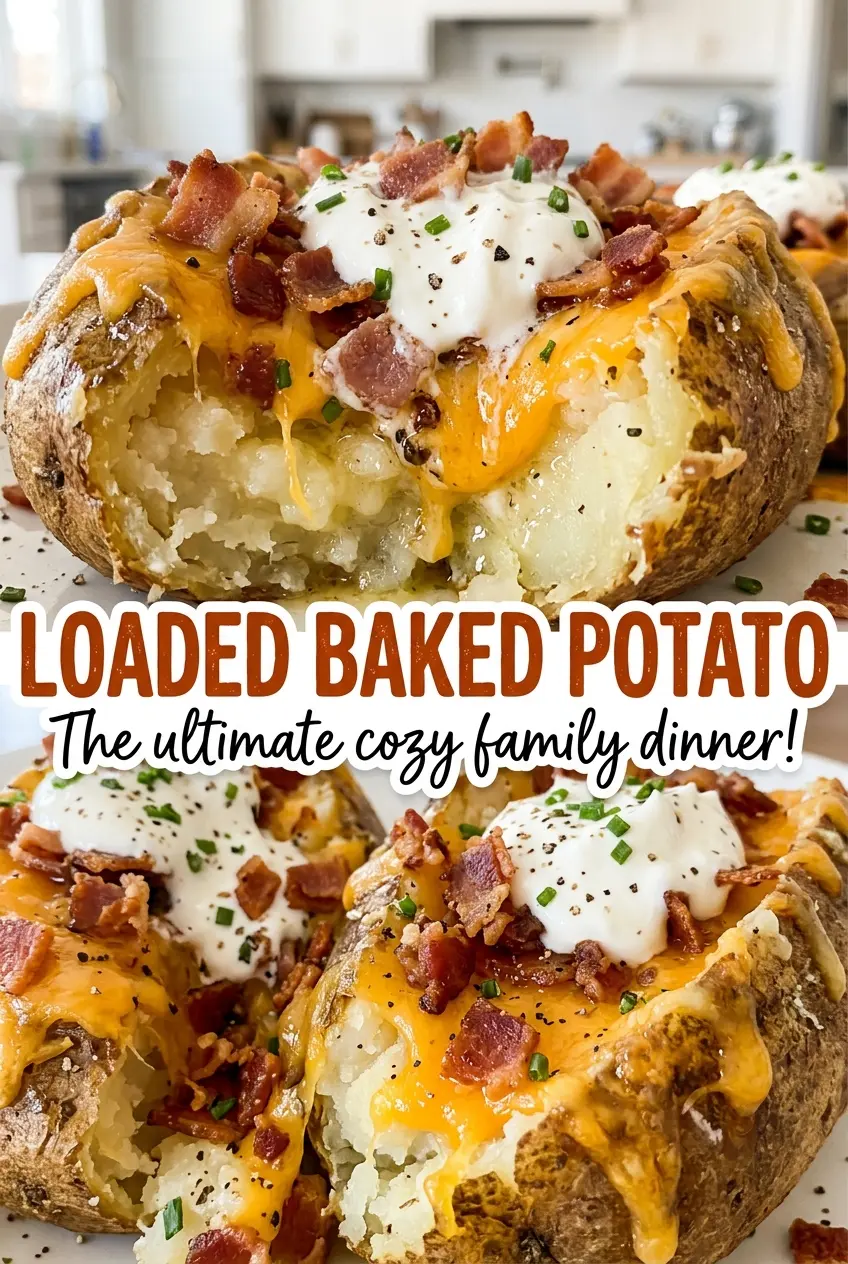
- Russet potatoes — Choose firm potatoes without soft spots, and look for ones close in size so they bake evenly. Their starchy centers are what make the inside fluffy; another potato variety will taste good but won’t have quite the same texture.
- Olive oil — It helps the skins brown and crisp. A basic, inexpensive olive oil is fine here; if you’re out, use the same amount of a neutral cooking oil instead.
- Bacon — Crisp bacon gives the soft potato a salty, smoky contrast. Regular bacon works well, and turkey bacon can replace it if you prefer a leaner topping, though it won’t leave the same rendered fat or richness.
- Sharp cheddar — Its pronounced tang stands up to the potato and sour cream. Bagged shredded cheddar is convenient, while freshly shredded cheese usually melts more smoothly; Monterey Jack is a milder swap if you want a gentler cheese flavor.
- Butter and sour cream — Butter melts into the hot, fork-fluffed center, and sour cream adds a cool, tangy finish. Plain Greek yogurt can replace sour cream in the same amount; it’s thicker and a little less rich.
- Green onions — Thin slices add a fresh, mild onion bite against the rich toppings. Chives are a good stand-in if that’s what you have, though their flavor is more delicate.
From Crisp Skins to a Potato That Holds Its Toppings
Dry and season the russets
Heat the oven to 425°F. Scrub the potatoes, dry them well, and pierce each one several times with a fork. Rub them with olive oil, sprinkle with kosher salt, and set them on a rimmed baking sheet. Dry skins take on a better crisp than damp ones, so don’t rush past that step.
Bake until the centers give easily
Bake the potatoes for 50 to 65 minutes, until the skins are crisp and a knife slides easily into the centers. Start checking near the shorter end of the range, then give them more time if the centers still feel firm. A crisp exterior alone doesn’t tell you whether the middle is tender. When the knife meets little resistance, they’re ready to open.
Cook the bacon while the oven does its work
Set a skillet over medium heat and cook the bacon for 8 to 12 minutes, turning it as needed. Watch for evenly browned slices that feel crisp rather than bendy; the exact pace depends on the bacon. Transfer it to paper towels to drain, then crumble it once it’s cool enough to handle. This gives you crisp pieces to scatter over the soft potato.
Fluff, top, and serve while hot
Let the potatoes rest for 5 minutes, then cut a lengthwise slit in each one. Gently squeeze the ends to open the slit, and fluff the centers with a fork. Divide the butter, cheddar, sour cream, bacon, and green onions among the potatoes, adding them in that order so the butter and cheese meet the hot potato first. Serve while the centers are warm and the cheddar is beginning to soften.
Easy Ways to Change Up the Toppings
Make it vegetarian with plant-based bacon
Use vegetarian bacon in place of the regular bacon and cook it according to its package directions before crumbling it over the potatoes. You’ll keep the smoky, crisp topping, though the flavor and texture will depend on the brand.
Give the cheese a peppery edge
Swap the sharp cheddar for pepper Jack to bring gentle heat and a softer, creamier melt. The potato stays familiar, but each bite has more kick; choose Monterey Jack instead if you want a milder cheese.
Make the toppings dairy-free
Replace the butter with plant-based butter, use dairy-free shredded cheddar, and finish with dairy-free sour cream. The potato will still be rich and creamy, though plant-based cheese often melts less smoothly than dairy cheddar.
Storage and Reheating
- Refrigerator: Refrigerate leftovers within 2 hours in an airtight container and use within 3 to 4 days. The skins soften, especially once the toppings are on.
- Freezer: Freezing fully topped potatoes isn’t ideal; the sour cream can separate and the potato texture may turn grainy. For better results, freeze the baked potatoes without toppings, wrapped individually, for up to 1 month.
- Reheating: For the best texture, remove cold sour cream and green onion if you can, then warm the potato in a 350°F oven until the center reaches 165°F. Add the cold toppings after reheating; microwaving can warm the middle quickly but leaves the skin soft.
Questions That Come Up Before You Load the Potatoes
Loaded Baked Potato
Ingredients
Equipment
Method
- Heat the oven to 425°F.
- Scrub the potatoes, dry them well, and pierce each several times with a fork.
- Rub the potatoes with the olive oil and sprinkle with the salt.
- Place the potatoes on a rimmed baking sheet and bake for 50 to 65 minutes, until the skins are crisp and a knife slides easily into the centers.
- While the potatoes bake, cook the bacon in a skillet over medium heat for 8 to 12 minutes, turning as needed, until crisp.
- Drain the bacon on paper towels and crumble.
- Let the potatoes rest for 5 minutes.
- Cut a lengthwise slit in each potato and gently squeeze the ends to open.
- Fluff the insides with a fork.
- Divide the butter, cheddar, sour cream, bacon, and green onions among the potatoes, and serve.