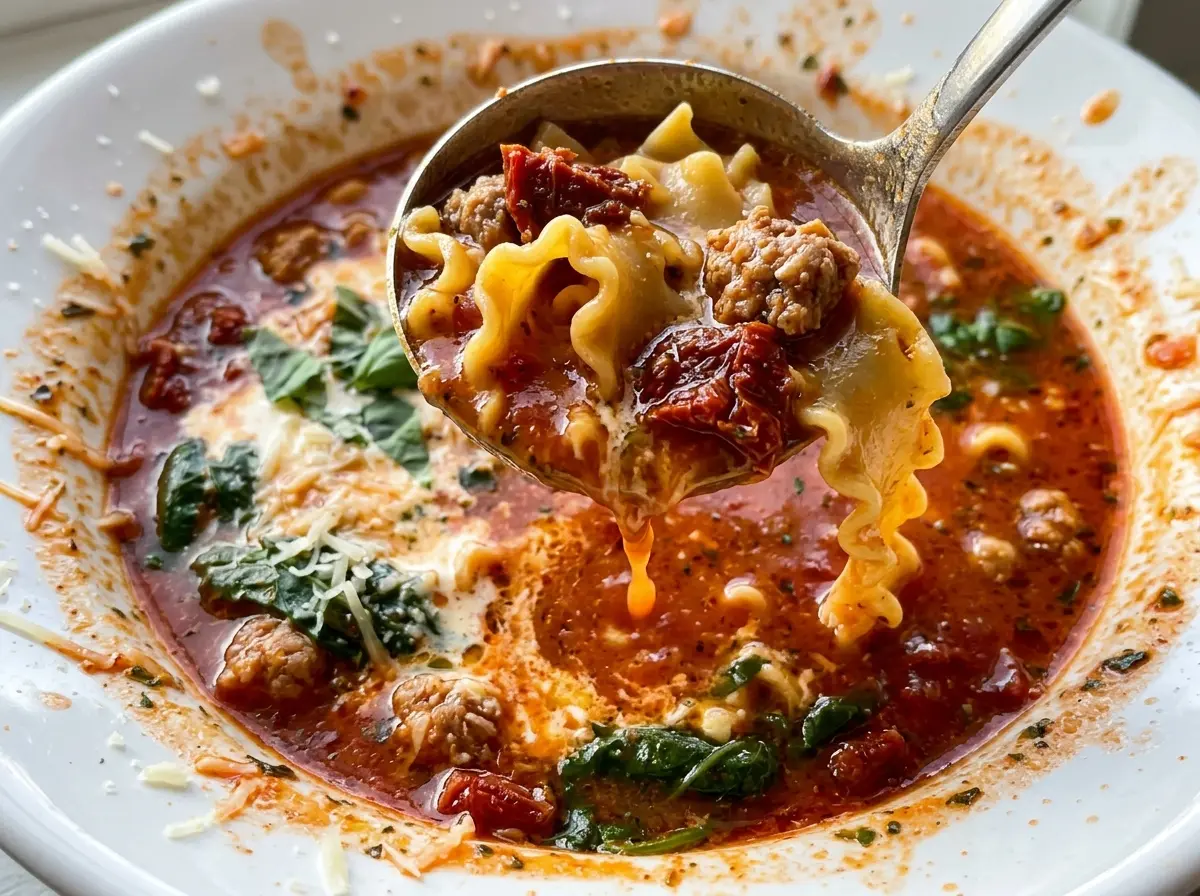
The sausage browns in the bottom of the pot, and those little caramelized bits are the first hint that this soup will taste more like a slow-built sauce than a quick tomato broth. I make Marry Me Lasagna Soup when I want the cozy layers of lasagna without assembling a pan; the broken noodles cook right in the soup, and a splash of cream softens the tomatoes at the end.
Sun-dried tomatoes bring a concentrated, savory note that canned tomatoes alone don’t quite give you. I let them cook briefly with the tomato paste and seasonings, then scrape the browned sausage bits into the broth so they become part of the base. The finished soup is hearty without being heavy, with tender pasta, wilted spinach, and Parmesan stirred through every bowl.
Kitchen Note
Check a larger piece of sausage with an instant-read thermometer before moving on; it should reach 160°F. Small crumbles brown quickly, so break them up as they cook and check more than one spot.
Save Marry Me Lasagna Soup for a cozy dinner: broken lasagna noodles simmer in a rich tomato and sausage broth, then finish with cream, spinach, and Parmesan.
Why the Lasagna Noodles Go in After the Soup Boils
Broken lasagna noodles need enough hot liquid to soften evenly, so I bring the broth and tomatoes to a boil before adding them. Starting them in a barely warm pot would make the timing harder to judge and could leave some pieces firm while others turn soft. Once the noodles are in, the goal changes: lower the heat to a steady simmer and let them cook uncovered until tender.
Unlike noodles cooked separately, these release some starch directly into the broth. That gives the soup a fuller, more cohesive texture, but it also means the pasta keeps absorbing liquid as it sits. Stir now and then during the simmer so pieces don’t settle together, and use tenderness—not just the timer—as your final cue. Ten to twelve minutes is the usual window for the broken lasagna pieces here; their thickness and size affect where they land in that range.
Serve the soup when the noodles have a little bite but no hard center. Waiting until they’re very soft in the pot leaves less room for the pasta to continue relaxing in the hot broth between the stove and the table.
What the Sausage and Sun-Dried Tomatoes Bring to the Pot

- Italian sausage — It supplies the savory, seasoned base and browns into small pieces that carry through each spoonful. Breaking it up as it cooks helps it distribute evenly; casings need to come off before browning if they’re still on.
- Sun-dried tomatoes packed in oil — These add a concentrated tomato flavor and chewy little pieces that stand out against the crushed tomatoes. Drain them before chopping so their packing oil doesn’t make the soup greasy; oil-packed tomatoes are worth choosing for their tender texture.
- Tomato paste and crushed tomatoes — Cooking the paste briefly with the aromatics deepens its concentrated flavor, while crushed tomatoes make up the body of the broth. The canned crushed tomatoes are the practical choice here; their consistent texture keeps the base thick without blending.
- Lasagna noodles — Their broad, broken pieces give each serving the unmistakable lasagna feel. Break them into bite-size pieces before they go into the pot so you can stir them through the soup without wrestling with long strips.
- Heavy cream — It rounds out the acidity of the tomatoes and gives the broth its creamy finish. Milk won’t provide the same richness or body, so heavy cream is the better choice for this particular balance.
- Baby spinach — The tender leaves wilt quickly in the hot soup, adding green color without needing a separate cooking step. Use leaves that look fresh and dry them if they’re wet, so you don’t add excess water to the finished pot.
- Finely grated Parmesan — Fine shreds melt more readily into the warm broth than large pieces. A block grated just before cooking gives the smoothest result, though pre-grated Parmesan is convenient if that’s what you have.
Building the Broth Before the Noodles Go In
Brown the sausage in the Dutch oven
Heat the olive oil in a 6-quart Dutch oven or soup pot over medium-high heat, then add the sausage. Break it into small pieces as it cooks for 6–8 minutes, until browned and cooked through. Don’t crowd the pieces into one large lump; smaller crumbles expose more surface to the pot and brown more evenly. Leave the browned bits in place because they’ll loosen into the soup later.
Soften the onion and cook the tomato base
Add the diced onion and cook over medium heat for 4–5 minutes, stirring occasionally, until softened. Stir in the garlic, tomato paste, chopped sun-dried tomatoes, Italian seasoning, red pepper flakes, kosher salt, and black pepper. Cook for 1 minute, stirring so the tomato paste and seasonings coat the onion rather than sticking in one spot. The garlic should smell fragrant, not browned.
Bring the broth to a boil, then simmer the pasta
Pour in the chicken broth and crushed tomatoes, scraping the bottom of the pot to release the browned bits. Bring the soup to a boil over high heat before adding the broken lasagna noodles. Reduce the heat to maintain a steady simmer and cook uncovered for 10–12 minutes, stirring occasionally. The pieces are ready when they’re tender rather than chalky in the middle.
Finish gently with cream, spinach, and Parmesan
Stir in the heavy cream, baby spinach, and finely grated Parmesan, then cook over low heat for 2–3 minutes. The leaves will wilt into the soup and the Parmesan will disperse through the creamy tomato broth. Keep the heat low during this final stretch; a hard boil isn’t needed to heat the soup through. It’s ready when the spinach has collapsed and the soup is hot throughout.
Simple Changes for a Milder or Gluten-Free Bowl
Make the soup milder
Leave out the crushed red pepper flakes for a gentler tomato-and-cream broth. You’ll lose the little background tingle, but the sausage, Italian seasoning, and sun-dried tomatoes still give the soup plenty of savory character.
Use gluten-free lasagna noodles
Swap in the same weight of gluten-free lasagna noodles and break them into bite-size pieces. Different brands soften at different rates, so check them as they simmer and stop when tender; the broth may turn a little cloudier from the pasta starch.
Leave out the spinach
For a simpler, all-tomato-and-sausage bowl, skip the baby spinach when you stir in the cream and Parmesan. The soup will still finish creamy, but it won’t have the fresh, leafy contrast the spinach brings.
Storage and Reheating
- Refrigerator: Keep leftovers in a covered container for 3–4 days. The noodles will continue to absorb broth and become softer as they sit.
- Freezer: I don’t recommend freezing the finished soup; the pasta can turn mushy and the cream may separate when thawed.
- Reheating: Warm a portion gently in a saucepan over low to medium-low heat, stirring often, until it reaches 165°F. Avoid bringing it to a rolling boil, which can make the creamy broth look separated.
Questions That Come Up With Lasagna Soup
Marry Me Lasagna Soup
Ingredients
Equipment
Method
- Heat the olive oil in a 6-quart Dutch oven or soup pot over medium-high heat.
- Add the sausage and cook for 6–8 minutes, breaking it into small pieces, until browned and cooked to 160°F.
- Add the onion and cook over medium heat for 4–5 minutes, stirring occasionally, until softened.
- Stir in the garlic, tomato paste, sun-dried tomatoes, Italian seasoning, red pepper flakes, salt, and black pepper and cook for 1 minute.
- Stir in the chicken broth and crushed tomatoes, scraping up any browned bits.
- Bring the soup to a boil over high heat.
- Add the broken lasagna noodles, reduce the heat to maintain a steady simmer, and cook uncovered for 10–12 minutes, stirring occasionally, until the noodles are tender.
- Stir in the heavy cream, baby spinach, and Parmesan and cook over low heat for 2–3 minutes, until the spinach wilts and the soup is hot throughout.