The salmon goes into the oven while the quinoa simmers, and the kitchen starts to smell like oregano and warm olive oil. By the time the fish is ready, the tomatoes and cucumber are bright and juicy, the feta is salty, and the yogurt sauce has a little lemony tang. That mix is what makes this Mediterranean Salmon Bowl feel like a full meal without turning dinner into a long project.
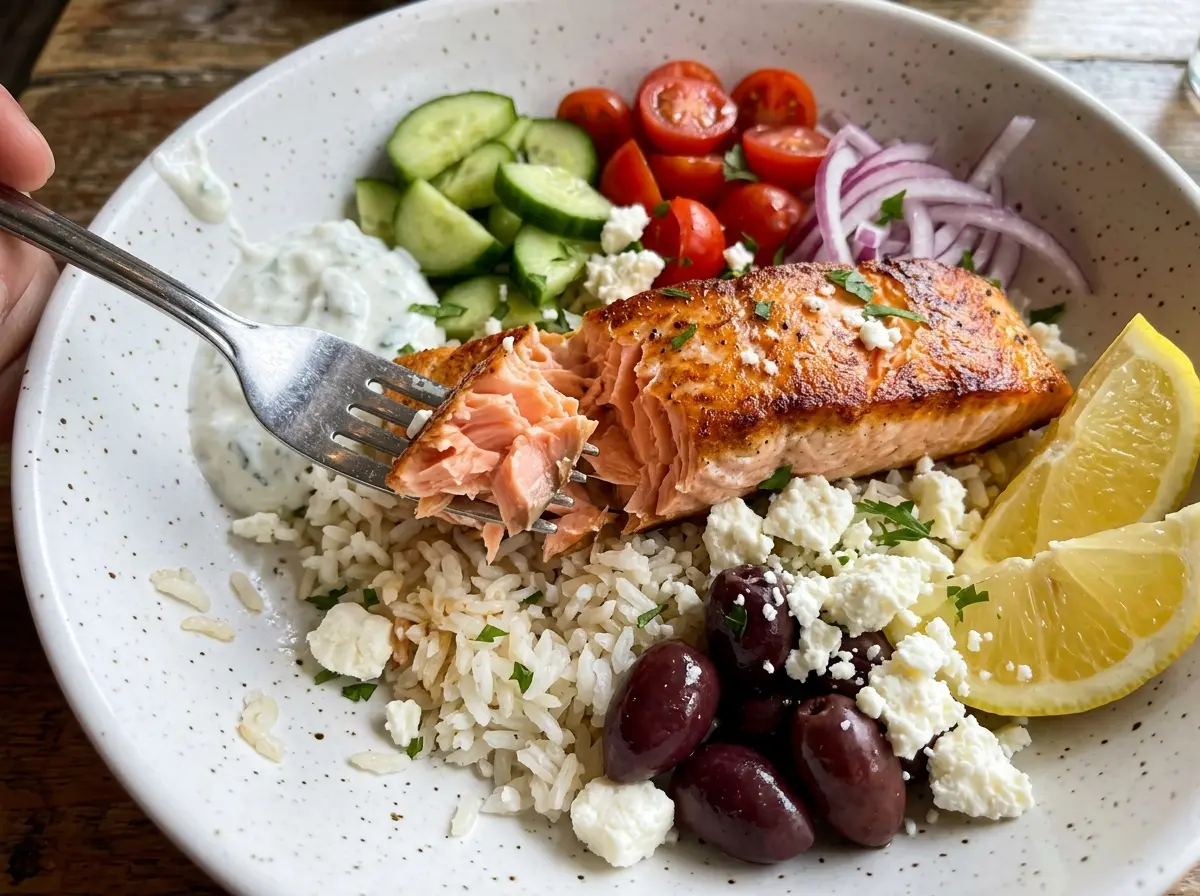
I like keeping the parts distinct in the bowl: a soft bed of quinoa, a warm salmon portion, and a crisp, briny salad spooned alongside. The sauce ties them together without hiding the fresh vegetables, and you can add as much as you like to each bite.
Rinsed quinoa, oregano-seasoned salmon, and a quick cucumber-tomato salad do the heavy lifting here. Each bowl has a little warmth, a little crunch, and enough savory feta and olives to keep every forkful interesting.
Kitchen Note
Mince the garlic finely before it goes into the yogurt. Bigger pieces stay sharp and raw-tasting in a cool sauce, while a fine mince blends through every spoonful.
Save this Mediterranean Salmon Bowl for the nights you want oregano-roasted salmon, briny feta, and a bright cucumber-tomato salad in one satisfying bowl.
Why This Bowl Works Better When the Parts Stay Distinct
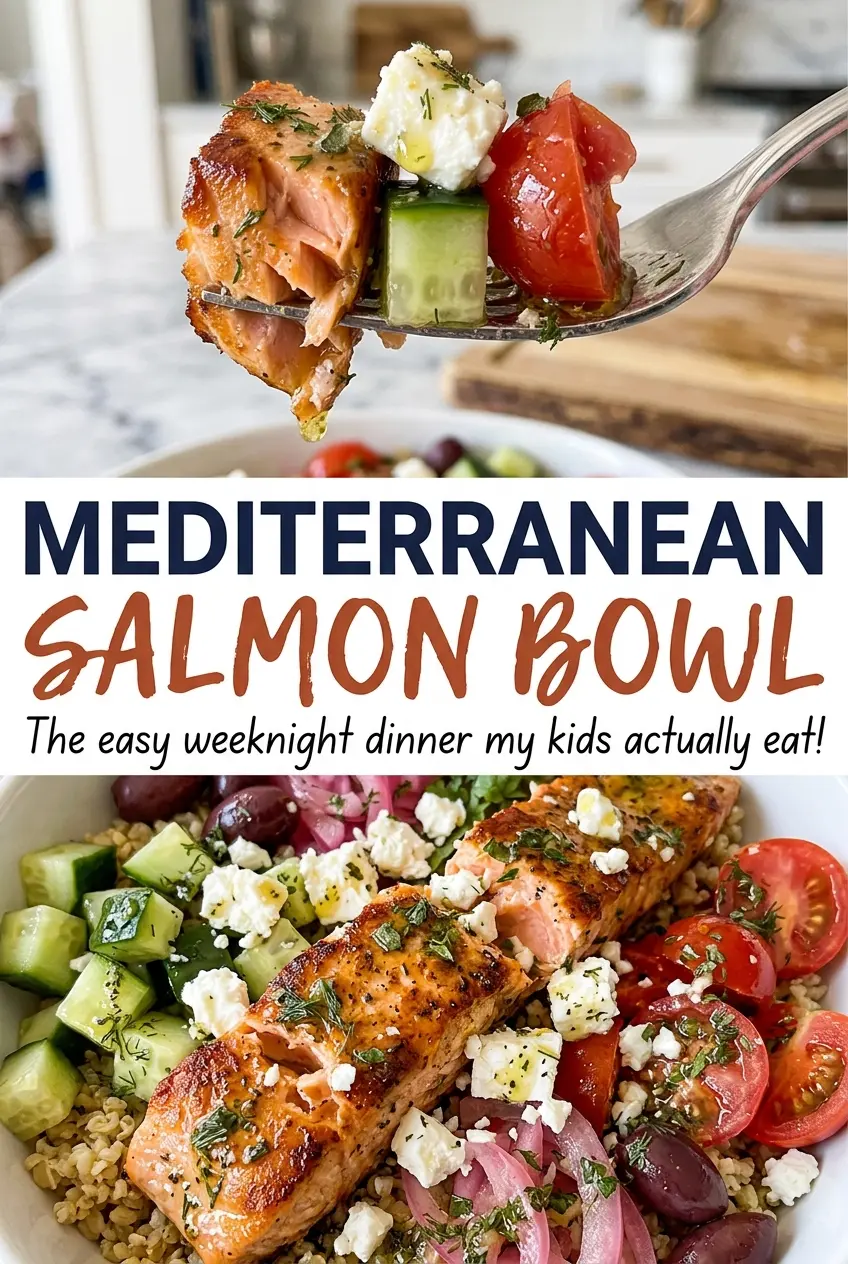
A bowl like this needs more than a pile of ingredients with sauce poured over the top. The quinoa is mild and tender, so it gives the salmon and the sharper toppings somewhere to land. Cucumber and tomatoes bring a juicy crunch, while olives and feta add salty, savory bites. Keeping those textures recognizable makes the bowl feel lively from the first forkful to the last.
The contrast matters just as much as the ingredients. Warm quinoa and freshly baked salmon sit beside a cool, vinegar-dressed salad; the yogurt sauce adds creaminess without turning the vegetables soft. I portion the components into the bowls rather than mixing everything into one large dish. That way the salad keeps its crunch, and each person can drag a little sauce across the salmon or quinoa as they eat. It’s a small assembly choice, but it keeps the bowl from becoming uniformly soft or overly dressed.
The Ingredients That Give This Bowl Its Mediterranean Character
- Quinoa — Rinsing removes the bitter coating that can cling to the grains, so don’t skip that quick rinse. Its light, separate texture makes a good base for the juicy salad. You can use another grain, but cook it separately according to its own package directions; quinoa’s water ratio and timing won’t carry over.
- Skin-on salmon — Choose portions that are close in thickness so they finish at about the same time. Skin helps the pieces hold together on the baking sheet. If you prefer skinless salmon, it can work in the same arrangement, but start checking it early because a thinner portion cooks faster.
- Oregano and olive oil — Dried oregano seasons both the salmon and the vegetable salad, while olive oil helps the salmon take on an even coating and gives the salad a rounded finish. A fresh, aromatic jar of oregano makes a difference here; there’s no need to use a specialty olive oil.
- Cucumber, grape tomatoes, and red onion — These are the crisp, juicy part of the bowl. Choose firm cucumber and tomatoes that aren’t split or soft. Slice the onion thinly so its bite is distributed rather than concentrated in a thick piece.
- Kalamata olives and feta — Their salty, briny notes give the fresh vegetables more depth. Kalamata olives bring a distinct flavor, so if you don’t care for them, leaving them out is better than replacing them with a milder olive that changes the balance. Feta can also be omitted for a dairy-free bowl.
- Greek yogurt, lemon, dill, and garlic — Thick plain Greek yogurt makes a sauce that stays on the salmon and quinoa instead of running straight to the bottom. Fresh dill gives it a clean herbal note; if dill isn’t available, leave it out rather than using a different herb that would pull the sauce in another direction. The lemon and garlic keep the yogurt from tasting flat.
From Fluffy Quinoa to Salmon Bowls, Without the Guesswork
Simmer the quinoa gently
Bring the rinsed quinoa, water, and half of the salt to a boil over high heat in a medium saucepan. Once it boils, cover the pan and reduce the heat to low for a 15-minute simmer. Keep the lid on while it cooks so the water stays in the pan and the grains cook evenly. When the simmer is finished, remove the pan from the heat and leave it covered for 5 minutes, then fluff the quinoa with a fork.
Season the salmon for the oven
Heat the oven to 425°F and line a rimmed baking sheet with parchment. Pat the salmon portions dry, then set them skin-side down on the sheet. Rub them with olive oil and season with oregano and the remaining salt, spreading the seasoning over the tops. Bake for 12–15 minutes, checking the thickest part with a thermometer; the salmon is ready when it reaches 145°F.
Toss the salad while the salmon bakes
Combine the diced cucumber, halved grape tomatoes, and thinly sliced red onion with the pitted kalamata olives. Add the remaining olive oil, red wine vinegar, and oregano, then toss until the vegetables have a light, even sheen. Fold in the crumbled feta at the end so it stays in distinct pieces instead of disappearing into the dressing. The salad should look glossy, not submerged in liquid.
Stir the sauce and build the bowls
Stir the Greek yogurt with lemon juice, chopped dill, and minced garlic in a small bowl until smooth. Divide the fluffed quinoa among four bowls, then add a salmon portion and the cucumber-tomato salad to each. Serve the yogurt sauce alongside so it can be spooned over the top to taste. Keep the sauce off the salad until serving if you want the vegetables to stay crisp.
Two Easy Ways to Adapt Your Salmon Bowl
Make it dairy-free
Leave off both the feta and yogurt sauce. The cucumber-tomato salad still has olive oil and red wine vinegar to season it, so the bowl stays bright and savory; you’ll lose the creamy, tangy contrast, but the salmon and olives still make it satisfying.
Serve it as a salmon salad plate
Skip the quinoa and arrange the salmon with the cucumber-tomato salad and yogurt sauce instead. It shifts the meal toward a cool, crisp salad with a warm fish portion, but you’ll give up the soft grain that makes the original bowl more filling.
Storage and Reheating
- Refrigerator: Keep the salmon, quinoa, salad, and sauce in separate airtight containers for up to 3 days. The cucumber and tomatoes soften and release liquid as they sit.
- Freezer: Cooked salmon and quinoa freeze well separately for up to 2 months. The fresh salad and yogurt sauce don’t freeze well; their textures turn watery after thawing.
- Reheating: Warm the salmon and quinoa gently in the microwave, covered, until heated through, then add the cold salad and sauce. Avoid reheating the assembled bowl, since the vegetables lose their crunch and the yogurt sauce can separate.
Questions That Come Up When Making Mediterranean Salmon Bowls
Mediterranean Salmon Bowl
Ingredients
Equipment
Method
- Heat the oven to 425°F.
- Line a rimmed baking sheet with parchment paper.
- Combine the rinsed quinoa, water, and 1/2 teaspoon of the salt in a medium saucepan and bring to a boil over high heat.
- Cover, reduce the heat to low, and simmer for 15 minutes.
- Remove the saucepan from the heat and let the quinoa stand, covered, for 5 minutes.
- Fluff the quinoa with a fork.
- Pat the salmon dry and place it skin-side down on the prepared baking sheet.
- Rub the salmon with 1 tablespoon of the olive oil.
- Season the salmon with 1 teaspoon of the oregano and the remaining 1/2 teaspoon salt.
- Bake for 12–15 minutes, until the thickest part of the salmon reaches 145°F.
- Toss the cucumber, tomatoes, red onion, and olives with the remaining 1 tablespoon olive oil, the red wine vinegar, and the remaining 1/4 teaspoon oregano.
- Fold in the feta.
- Stir together the Greek yogurt, lemon juice, dill, and garlic in a small bowl.
- Divide the quinoa among 4 bowls.
- Top with the salmon and cucumber-tomato salad.
- Serve with the yogurt sauce.