When broth hits a hot baking sheet, it hisses around the sweet potatoes. That sound comes late in the cooking, after the rounds have already picked up deep color on both sides. It’s the difference between melting sweet potatoes with browned edges and sweet potatoes that steam before they have a chance to caramelize.
I like this method because it gives each stage its own moment: butter and olive oil coat the rounds, a hot oven builds the crust, and chicken broth finishes the centers until they’re fork-tender. The rounds stay simple, but the browned edges and thyme make every bite feel complete. Cut them evenly and let the pan do the work; the finished sweet potatoes are tender inside, golden outside, and just right for sharing at the table.
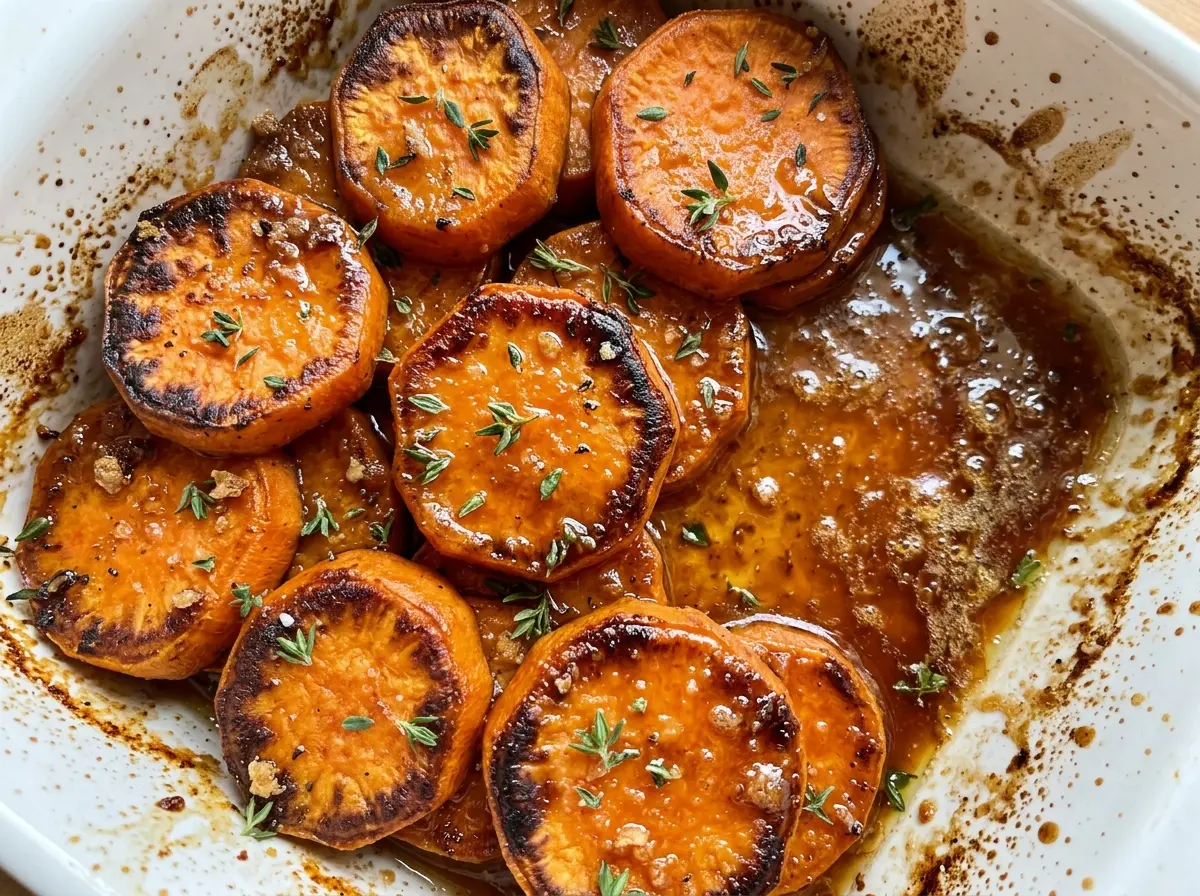
Kitchen Note
Give the rounds their full five-minute rest before moving them to a serving dish. They’re tender straight from the oven, and that short pause helps keep the centers intact when you lift them.
Save these melting sweet potatoes for their golden edges, buttery centers, and thyme-finished broth.
Why the Broth Belongs at the End, Not at the Beginning
Sweet potatoes release moisture as they cook, and broth adds even more liquid to the pan. If you introduce it before the rounds have browned, the potatoes spend that early oven time softening in a steamy environment instead of developing the dark, savory edges that make this dish distinctive. The timing isn’t just a finishing touch; it gives browning and tenderizing separate jobs.
The first stretch of roasting dries and colors the exposed surfaces. Turning the rounds gives the other side a chance to brown, too. Only when they’re already browned and nearly tender does the broth go in, where it softens the centers without wiping out the work the oven has done. Pouring it around the potatoes, rather than over their tops, keeps those browned surfaces from getting drenched. You’ll still get tender, buttery rounds, but the contrast between their browned edges and soft middles stays intact.
The Ingredients That Make the Edges Brown and the Centers Tender
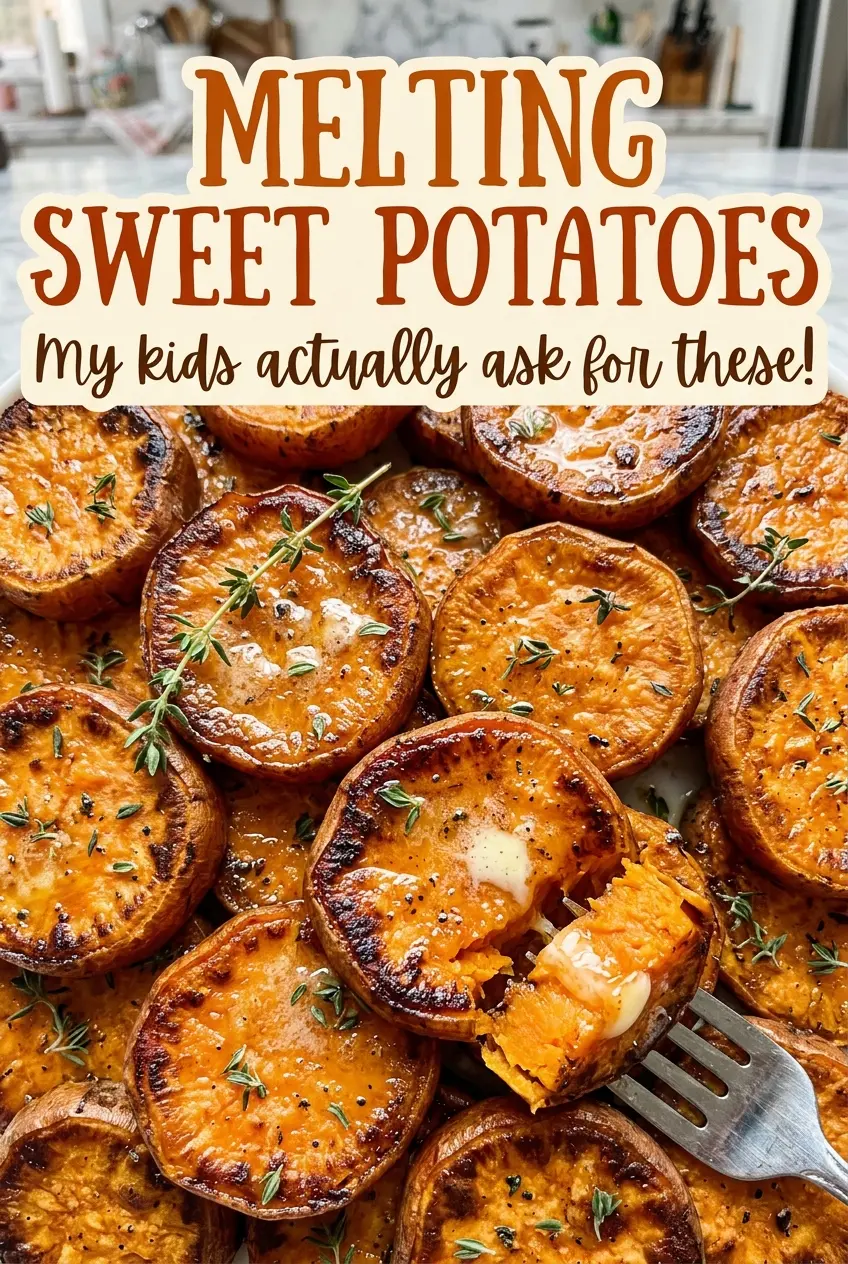
- Sweet potatoes — Choose firm potatoes and cut crosswise into evenly thick rounds. Matching the thickness matters more than choosing oversized or especially sweet potatoes: rounds that are close in size cook at a similar pace, so you’re less likely to have a few that are tender while others are still firm.
- Unsalted butter — Melted butter coats the cut surfaces and brings the rich, rounded flavor that makes the centers taste especially soft. Unsalted butter also lets you control the seasoning. For a dairy-free version, use olive oil in its place; the rounds will still brown, though they’ll lose the buttery aroma.
- Olive oil — It helps coat the potatoes and keeps the baking sheet from sticking. Use an everyday olive oil here; a specialty finishing oil won’t add much once it’s roasted alongside butter. Dividing it between the pan and the potatoes gives both surfaces a light coating.
- Low-sodium chicken broth — The broth provides the liquid that finishes softening the centers, while low-sodium broth keeps the final seasoning from becoming too salty. Vegetable broth is a straightforward swap for a vegetarian dish; it gives the finish a slightly different, more vegetable-forward savory note.
- Fresh thyme — Fresh leaves add a fragrant, herbal finish without covering up the sweet potato. Strip the leaves from their stems before measuring, and sprinkle them on after the roasting is finished so their aroma stays fresh.
- Black pepper — Pepper adds a little warmth against the sweet, buttery rounds. Freshly ground pepper has a more pronounced aroma, but pre-ground black pepper works perfectly well here.
Build the Golden Crust Before the Broth Finish
Heat the Oven and Prepare the Pan
Heat the oven to 425°F. Brush a rimmed 18×13-inch baking sheet with 1 teaspoon of the olive oil, spreading it across the surface where the rounds will sit. The rim helps contain the broth later, so don’t swap in a flat cookie sheet. Set the pan aside while you coat the potatoes.
Coat and Space the Rounds
Toss the sweet potato rounds with the melted butter, the remaining 2 teaspoons of olive oil, kosher salt, and black pepper. Turn them until the cut faces and edges are lightly coated. Arrange them in a single layer on the prepared baking sheet, leaving space rather than stacking or overlapping them. Crowded rounds won’t brown as evenly.
Roast Both Sides Until Browned
Roast for 20 to 25 minutes, until the undersides are deeply golden. Turn each round and roast for another 15 to 20 minutes, until the second side is browned and the potatoes are nearly tender. Use a thin spatula to get underneath them without scraping away the browned surfaces. They don’t need to be completely fork-tender yet; the broth finish takes care of that.
Finish with Broth and Thyme
Carefully pour the chicken broth around the sweet potatoes, not over their tops. Roast for 10 to 15 minutes, until the rounds are fork-tender and most of the broth has been absorbed. Check the thickest round with a fork; it should slide in without a hard center. Sprinkle with the fresh thyme, then let the potatoes rest for 5 minutes before serving.
Two Swaps That Keep the Tender Centers
Make the Finish Vegetarian
Replace the chicken broth with vegetable broth, keeping the same amount and pouring it around the rounds. The potatoes still finish tender, but the savory note is gentler and more vegetable-forward. Choose a low-sodium version so the seasoning stays balanced.
Make Them Dairy-Free
Swap the melted butter for the same amount of olive oil and keep the rest of the method unchanged. The rounds still roast and soften in the broth, but the flavor is cleaner and less rich without butter. Use chicken broth as listed, or pair the olive-oil version with vegetable broth for a fully vegetarian dish.
Storage and Reheating
- Refrigerator: Cool and refrigerate within 2 hours; keep leftovers covered for 3 to 4 days. The rounds soften a little more as they sit.
- Freezer: Freeze cooled rounds in an airtight freezer-safe container for up to 2 months. They’re safe to freeze, though the thawed centers will be softer.
- Reheating: Reheat in a 350°F oven until hot, spooning any saved pan liquid over the rounds first. Avoid reheating them uncovered for too long, which can dry the edges before the centers warm through.
Questions That Come Up While the Pan Is in the Oven
Melting Sweet Potatoes
Ingredients
Equipment
Method
- Heat the oven to 425°F.
- Brush a rimmed 18x13-inch baking sheet with 1 teaspoon of the olive oil.
- Toss the sweet potatoes with the melted butter, remaining 2 teaspoons olive oil, salt, and pepper.
- Arrange the sweet potatoes in a single layer on the baking sheet.
- Roast for 20 to 25 minutes, until the undersides are deeply golden.
- Turn the rounds over and roast for 15 to 20 minutes, until browned and nearly tender.
- Carefully pour the broth around the sweet potatoes.
- Roast for 10 to 15 minutes, until the rounds are fork-tender and most of the broth has been absorbed.
- Sprinkle with the thyme.
- Let rest for 5 minutes before serving.