As the tangzhong thickens in the saucepan, the whisk starts leaving tracks through the flour-and-milk paste. That small change is the first sign these Milk Bread Cinnamon Rolls are headed toward soft, tender centers instead of dry, bready ones. The dough is enriched with butter and egg, then rolled around a buttery cinnamon-sugar filling for the familiar swirl without losing that plush milk-bread texture.
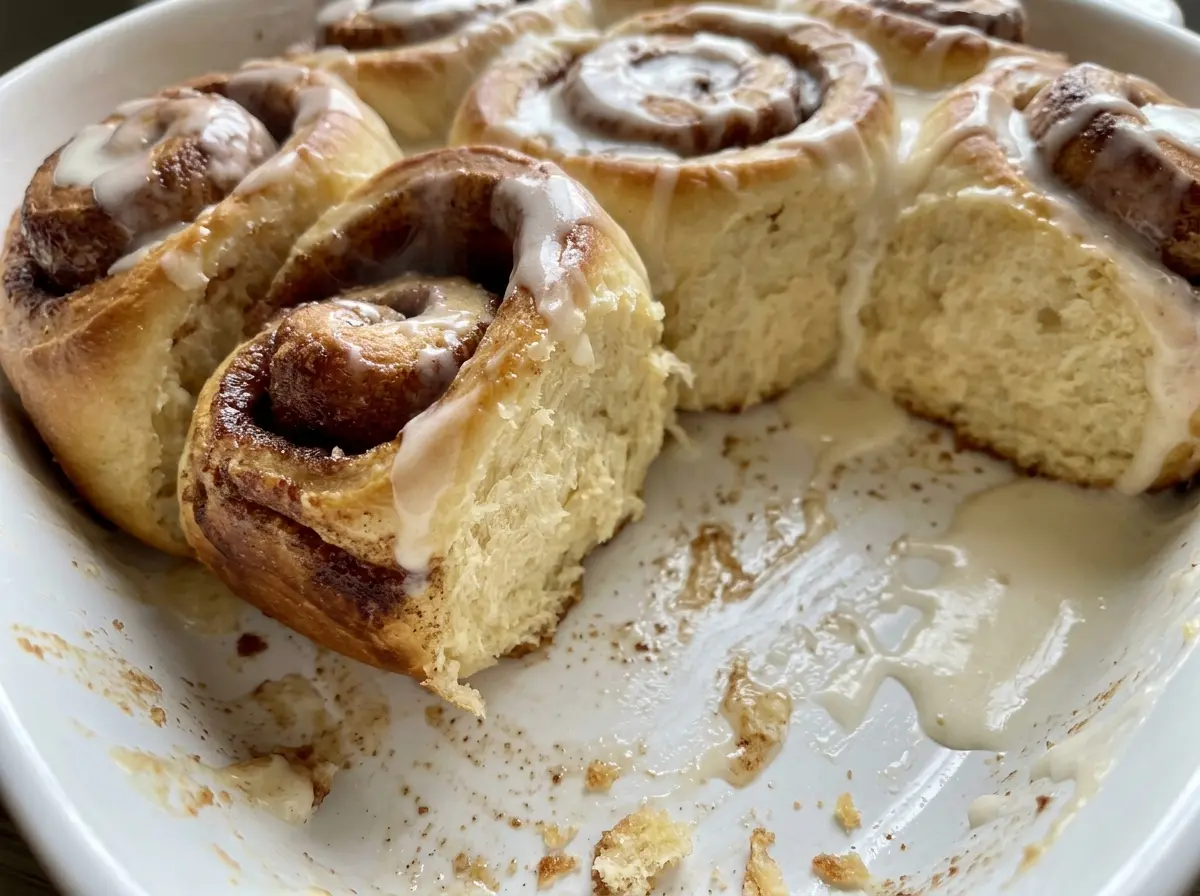
I like that the dough has a clear rhythm: cook the tangzhong, knead until elastic, let it rise, then shape and proof the rolls in the pan. The two rises take patience, but neither needs guesswork. You’re looking for doubled dough the first time and puffy rolls the second, and the centers should reach about 190°F in the oven. A smooth cream cheese frosting goes over the rolls while they’re still warm, softening just enough to settle into the cinnamon swirls.
Kitchen Note
When you add the butter to the dough, work it in a piece at a time. The dough may look slick before it comes back together, so keep kneading rather than adding extra flour.
Save these Milk Bread Cinnamon Rolls for a soft, buttery swirl with cinnamon sugar and a creamy finish.
Why the Tangzhong Makes These Rolls Stay Tender
The cooked flour-and-milk mixture is more than a preliminary step. Heating some of the flour with milk thickens it into a paste before it goes into the dough, which lets the finished rolls hold on to moisture as they bake. That’s what gives milk bread its characteristic soft, springy crumb. It’s a different starting point from mixing all the flour straight into a dough, and you can see the change as the tangzhong cooks: it goes from a loose slurry to a thick mixture that holds whisk tracks.
Cooling matters, too. The tangzhong should be lukewarm before it meets the yeast and the rest of the dough ingredients. If it’s still hot, it can interfere with the yeast; if it’s cool enough to handle comfortably, it’s ready to combine. The mixture doesn’t need to be perfectly cold or set firm. Just give it the brief rest it needs, then stir it into the dough and continue.
Why Whole Milk and Softened Butter Matter in These Rolls

- All-purpose flour — It gives the dough enough structure to hold the filling while staying tender. Keep the flour for the tangzhong separate from the portion for the dough so each part cooks and mixes as intended.
- Whole milk — The milk contributes richness to both the tangzhong and the dough. Warm only the portion added to the dough to the specified range; hotter milk can be hard on the yeast. I wouldn’t swap in water if you want the same soft, rich crumb.
- Instant yeast — Instant yeast mixes directly into the dough ingredients, so there’s no separate proofing step. Check that it’s fresh; yeast that has been open for a long time may not raise the dough reliably.
- Egg and unsalted butter — The egg enriches the dough, while butter adds softness and helps make the dough supple. Let the egg come to room temperature and use softened, not melted, butter so it incorporates smoothly.
- Light brown sugar and cinnamon — Packed brown sugar makes a moist filling that clings to the butter, and ground cinnamon supplies the warm, familiar flavor. Use cinnamon that still smells fragrant when you open the jar; a flat, old spice won’t bring as much aroma.
- Cream cheese — Softened cream cheese gives the frosting its tangy, creamy body. For the smoothest result, soften it along with the butter before beating; cold cream cheese is more likely to leave small lumps.
From Tangzhong to Soft, Evenly Baked Rolls
Cook the flour-and-milk paste
Whisk the flour for the tangzhong with its portion of milk in a small saucepan until smooth. Cook over medium-low heat, whisking constantly, for 2 to 3 minutes, until the mixture thickens enough to leave tracks from the whisk. Scrape it into a large mixing bowl and let it cool until lukewarm, about 15 minutes. Keep whisking as it cooks so the bottom doesn’t turn lumpy or scorch.
Mix and knead the enriched dough
Warm the remaining milk to 100°F to 110°F, then stir it into the tangzhong with the remaining flour, instant yeast, sugar, salt, and room-temperature egg. Mix until you have a shaggy dough. Knead with a dough hook on medium-low for 8 to 10 minutes, adding the dough butter a piece at a time, or knead by hand for 12 to 15 minutes while working in the butter gradually. Stop when the dough is smooth and elastic.
Let the dough rise, then roll and fill
Cover the bowl and let the dough rise at room temperature for 60 to 90 minutes, until doubled in size. Butter a 9×13-inch baking dish, then roll the dough on parchment into an 18×12-inch rectangle. Spread the filling butter over the dough, leaving a 1/2-inch border along one long edge, and sprinkle the brown sugar mixed with cinnamon evenly over the top. Roll from the long edge opposite the bare border and pinch the seam closed.
Cut, proof, and bake
Cut the log into 12 equal rolls and arrange them cut side up in the prepared dish. Cover and let them rise for 45 to 60 minutes, until puffy and nearly doubled; start heating the oven to 350°F during the final 20 minutes of that rise. Bake for 25 to 30 minutes, until the tops are golden brown and the centers register about 190°F. If the tops are browning before the centers reach that temperature, keep baking and check again rather than pulling the pan early.
Finish with cream cheese frosting
While the rolls bake, beat the softened cream cheese with the remaining butter until smooth. Beat in the powdered sugar and vanilla until creamy, scraping the bowl as needed so no pockets of cream cheese remain. After baking, let the rolls rest in the pan for 10 minutes. Spread the frosting over the rolls while they’re warm so it softens and settles across the tops.
Two Simple Ways to Change the Cinnamon Rolls
Make them without cinnamon
Leave the ground cinnamon out of the brown sugar filling and keep the rest of the method the same. You’ll still get buttery brown-sugar spirals, but without the cinnamon’s warm spice. This is a useful option if cinnamon isn’t welcome at the table.
Skip the frosting for a less-sweet roll
Leave off the cream cheese frosting and serve the baked rolls plain. The cinnamon-sugar filling still gives each spiral sweetness, while the finish stays lighter and less tangy. This is also the simplest change if you’d rather taste the soft milk-bread dough on its own.
Storage and Reheating
- Refrigerator: Store frosted rolls covered in the refrigerator for up to 4 days. The dough firms as it chills, so the rolls won’t feel as pillowy straight from the fridge.
- Freezer: Freeze the rolls in an airtight container for up to 2 months. Separate them so you can thaw only what you plan to eat; the frosting may lose a little of its just-made smoothness after thawing.
- Reheating: Warm an individual roll in the microwave for about 15 seconds, then check and continue in short bursts if needed. Avoid overheating, which can make the dough tough and cause the frosting to melt completely.
Questions That Come Up While Making Milk Bread Cinnamon Rolls
Milk Bread Cinnamon Rolls
Ingredients
Equipment
Method
- Whisk 1/3 cup flour and 2/3 cup milk in a small saucepan until smooth, then cook over medium-low heat, whisking constantly, for 2 to 3 minutes, until thick enough to leave whisk tracks.
- Scrape the tangzhong into a large mixing bowl and cool until lukewarm, about 15 minutes.
- Warm the remaining 1/2 cup milk to 100°F to 110°F.
- Stir the warm milk into the tangzhong with the remaining 3 2/3 cups flour, yeast, sugar, salt, and egg until a shaggy dough forms.
- Knead with a stand mixer fitted with a dough hook on medium-low for 8 to 10 minutes, adding 4 tablespoons butter a piece at a time; or knead by hand for 12 to 15 minutes, working in the butter gradually, until the dough is smooth and elastic.
- Cover the bowl and let the dough rise at room temperature for 60 to 90 minutes, until doubled in size.
- Butter a 9x13-inch baking dish with 1 tablespoon butter, then roll the dough on parchment into an 18x12-inch rectangle.
- Spread 6 tablespoons butter over the dough, leaving a 1/2-inch border along one long edge.
- Mix the brown sugar and cinnamon, then sprinkle evenly over the butter.
- Starting at the long edge opposite the bare border, roll the dough into a log and pinch the seam closed.
- Cut the log into 12 equal rolls and arrange them cut side up in the baking dish.
- Cover and let rise for 45 to 60 minutes, until puffy and nearly doubled; preheat the oven to 350°F during the final 20 minutes.
- Bake for 25 to 30 minutes, until golden brown and the centers register about 190°F.
- While the rolls bake, beat the cream cheese and remaining 2 tablespoons butter until smooth.
- Beat in the powdered sugar and vanilla until creamy.
- Let the rolls rest in the pan for 10 minutes, then spread the frosting over the warm rolls.