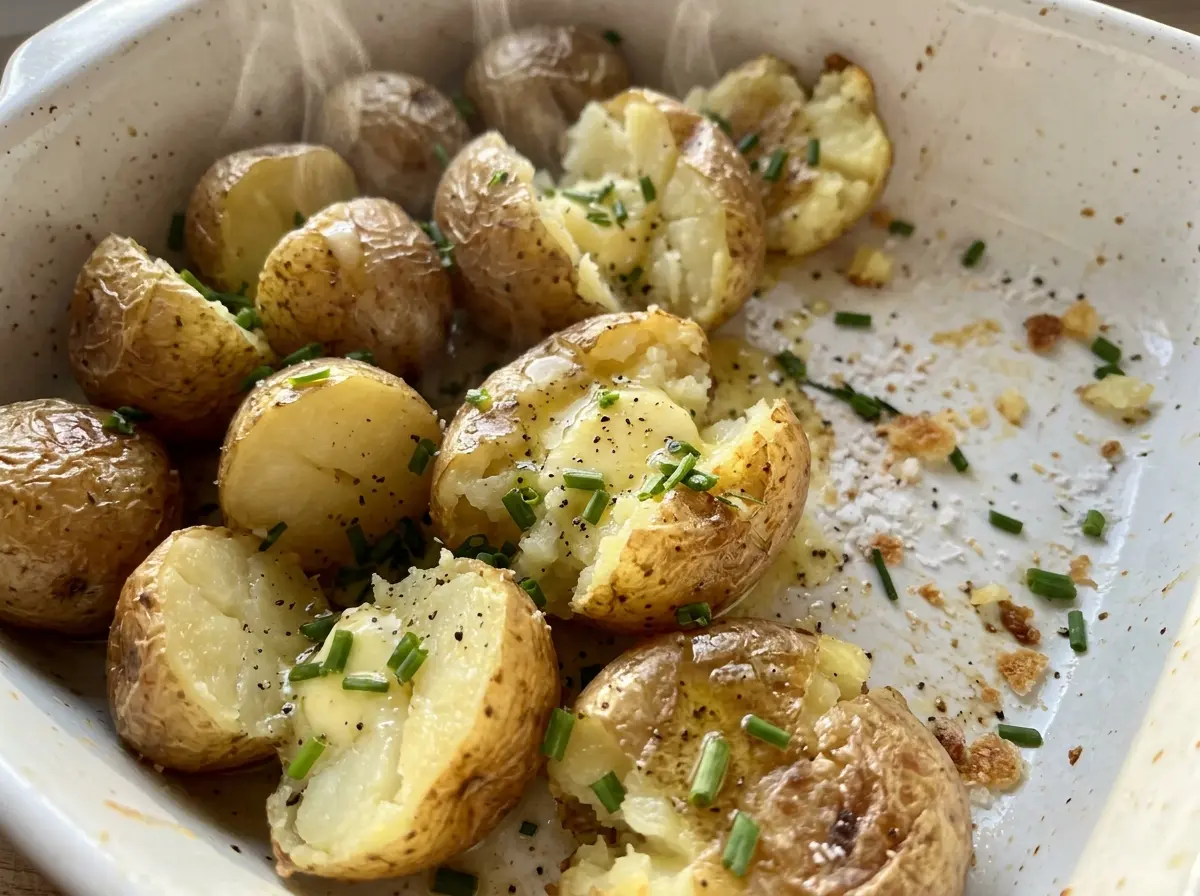
When the baking sheet comes out, the little potatoes should have skins that feel taut and crisp, not soft and damp. A knife should slip into the middle without a hard push, even on the largest potato. That combination is what I look for with these mini baked potatoes: browned, savory outsides and fluffy centers, with very little hands-on work.
The size matters more than it might seem. Baby potatoes that are about 1 to 1 1/2 inches wide roast through in the same window, while a mix of much larger and smaller ones can leave you with a few firm centers beside potatoes that are already soft. I keep them whole, coat them evenly with olive oil and seasoning, and give them room on the baking sheet. The oven handles the rest, and the finished potatoes are easy to pick up and serve while the skins are still crisp.
Kitchen Note
Give every potato a turn at the halfway point rather than just shaking the pan. It’s a small bit of attention that helps the skins brown more evenly all around.
Save these mini baked potatoes for a crisp-skinned, fluffy-centered side that takes just a few minutes to prep.
Why Potato Size Matters More Than a Longer Bake
It’s easy to assume that a few extra minutes will make any potato roast evenly. With small whole potatoes, size is the first thing to get right: potatoes close to the same width finish at roughly the same pace, so you’re not choosing between a firm center and an over-soft one. I use baby potatoes that measure 1 to 1 1/2 inches across for this reason.
A longer bake isn’t a fix for a tray with a wide range of sizes. The smallest potatoes can soften well before the biggest ones, and their skins keep roasting while you wait. Choosing a close, consistent size gives the batch a better chance of reaching that tender center and crisp skin together. The knife test is the final check, not a reason to ignore how much the potato sizes vary.
There’s also a difference between crisping the outside and simply cooking the center. The potatoes need enough space for the hot oven to reach their surfaces; if they’re piled together, the crowded spots won’t brown as well. Use a rimmed baking sheet large enough to hold them in a single layer, with a little room around each one.
What Baby Potatoes, Olive Oil, and Seasoning Each Bring

- Baby potatoes — Their small size lets you roast them whole, so there’s no cut surface to dry out before the centers turn tender. Pick potatoes close to the same width; a mix of red- and yellow-skinned baby potatoes works as long as they stay within the stated size range. Scrub off any soil, then dry the skins thoroughly before adding oil.
- Olive oil — A light coating helps the seasoning cling and gives the skins a chance to crisp in the oven. A standard olive oil is a sensible choice here; there’s no need to use a special finishing oil. Toss until the potatoes look evenly coated rather than leaving a puddle of oil at the bottom of the bowl.
- Kosher salt and black pepper — The salt seasons the potato itself as well as the skin, while black pepper gives the simple coating a gentle savory bite. Freshly ground black pepper has a more pronounced aroma, but ordinary pre-ground pepper works. Toss the seasonings over the oiled potatoes so they’re distributed across the batch.
This ingredient list is naturally vegan and gluten-free, so no replacement is needed for either of those diets. Since the seasoning is deliberately simple, the potato and olive oil do most of the work; there isn’t a hidden sauce or coating to account for.
Roasting the Potatoes Until the Skins Crisp
Heat the oven before the potatoes go in
Set the oven to 425°F before you start prepping. A fully heated oven gets the skins roasting as soon as the pan goes in, rather than letting the potatoes warm slowly. While the oven heats, scrub the potatoes and dry them thoroughly. Any lingering water on the skins can interfere with an evenly crisp finish.
Coat the potatoes evenly
Put the dry potatoes in a bowl and toss them with the olive oil, kosher salt, and black pepper. Look for a light, even sheen across the skins, with seasoning spread over the whole batch. If oil and seasoning collect at the bottom, keep tossing until the potatoes are coated. The goal is a thin coating, not potatoes sitting in excess oil.
Arrange a single layer on the pan
Move the potatoes to a rimmed baking sheet and spread them into one layer. Avoid stacking them or wedging them tightly together; uncovered surfaces roast more evenly than crowded ones. Give the pan a quick look before it goes into the oven, especially around the edges where potatoes can bunch up. Keeping the arrangement simple makes the halfway turn easier too.
Turn halfway, then check the centers
Bake for 35 to 45 minutes, turning the potatoes halfway through. The skins should look crisp, and a knife should slide easily into the center when they’re ready. Start checking toward the shorter end of the baking window, since potato size and individual ovens can affect how quickly they cook. If the knife meets a firm spot, return the pan to the oven and check again as the potatoes continue baking.
Simple Ways to Adapt a Tray of Mini Baked Potatoes
Mix the potato skin colors
Use a mix of red- and yellow-skinned baby potatoes while keeping them close to the same 1 to 1 1/2-inch size. The seasoning and roasting method stay the same, but the platter gets a little color variation. Avoid adding much larger potatoes to the mix, since they won’t necessarily finish at the same time.
Make a smaller batch
For half a batch, divide each ingredient amount in half and keep the potatoes in a single layer on the baking sheet. The same oven temperature and doneness cues apply; use the knife test rather than assuming a smaller quantity will be ready earlier. This is a practical way to make just enough without changing the character of the dish.
Keep the simple seasoning dairy-free
The potatoes are already dairy-free, vegan, and gluten-free with the listed ingredients, so you don’t need to replace anything to serve them to guests avoiding those foods. Keeping the seasoning as written preserves the crisp skins and straightforward potato flavor without introducing an ingredient that changes the recipe.
Storage and Reheating
- Refrigerator: Refrigerate leftovers in a covered container within two hours and use them within 3 to 4 days. The skins soften as the potatoes sit.
- Freezer: They can be frozen in an airtight container, but the centers may turn softer or a little mealy after thawing. Freeze only if that texture change won’t bother you.
- Reheating: Warm them in the microwave in short bursts or in the oven until hot throughout. The microwave is quick but leaves the skins soft; repeated reheating can dry the centers, so warm only what you plan to eat.
Questions That Come Up With Mini Baked Potatoes
Mini Baked Potatoes
Ingredients
Equipment
Method
- Preheat the oven to 425°F.
- Scrub the potatoes and dry them thoroughly.
- Toss the potatoes with the olive oil, kosher salt, and black pepper.
- Arrange the potatoes in a single layer on a rimmed baking sheet.
- Bake for 35 to 45 minutes, turning them halfway through, until the skins are crisp and a knife slides easily into the centers.