The knife tells you more than the clock when sweet potatoes are baking: it should slide through the center without catching. I use that cue for these miso butter sweet potatoes because even potatoes that look alike can finish at different times. The oven does the hands-off work, and the topping takes only a minute to stir together.
White miso gives softened butter a savory depth, while a little maple syrup rounds it out without turning the topping into a sweet glaze. I mix the butter separately and add it to each potato after baking, so it melts over the hot flesh instead of disappearing into the pan. Split one open and the butter settles into every soft, steaming forkful.
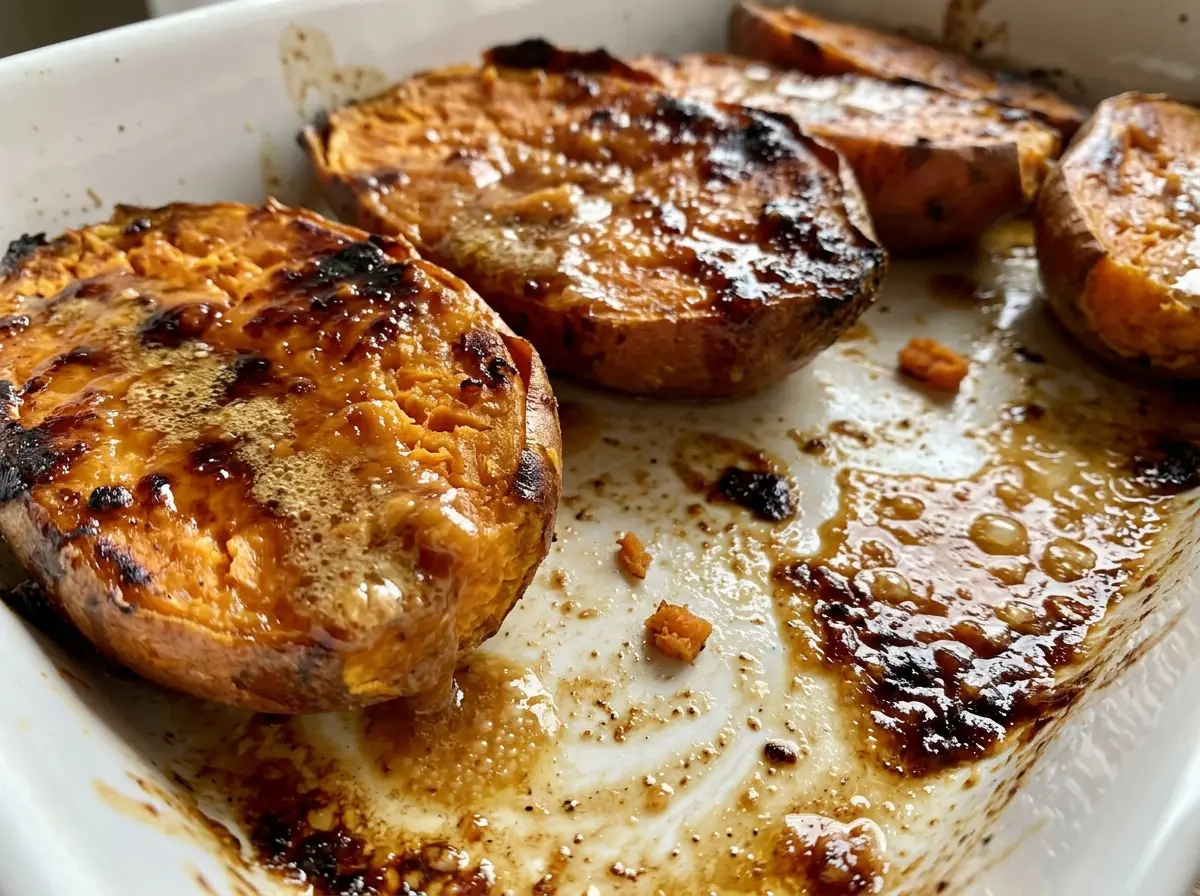
Kitchen Note
Use butter that’s soft enough to stir, not melted. When the miso and maple disappear into it evenly, the topping stays creamy instead of pooling away from the potato.
Save these miso butter sweet potatoes for a side dish with tender centers and a savory-sweet topping that melts right in.
Why the Miso Butter Belongs on the Potato, Not in the Oven
The potatoes need a long, steady bake to soften all the way through. The butter doesn’t. Mixing it separately means the miso and maple stay concentrated in the topping, where they can meet the hot potato as soon as you split it. The contrast matters: soft, plainly baked flesh underneath, then a creamy, savory-sweet finish on top.
It also makes the final seasoning easier to control. Each potato gets its own portion of butter, rather than a coating that could slide onto the baking sheet or spread unevenly. As the butter melts, it runs into the split and coats the center. There’s no need to add extra sauce or dress the potatoes before they bake; the topping has enough character to carry the whole side dish.
What the Sweet Potatoes, Miso, and Butter Each Bring
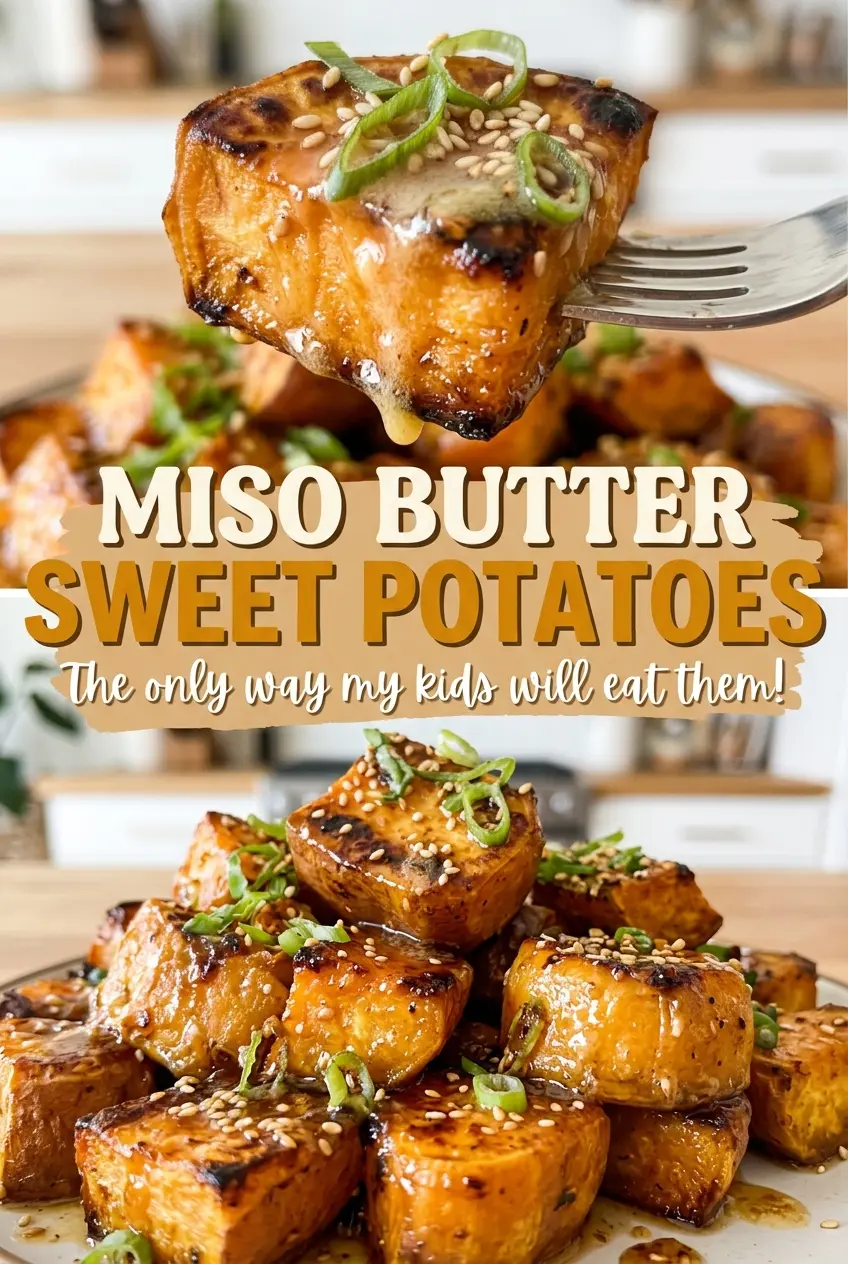
- Sweet potatoes — Choose firm potatoes with unbroken skin and similar size, so they bake at a comparable pace. Medium potatoes around the stated size give the butter a generous center to melt into. Japanese sweet potatoes work too, though their flesh is usually drier and less sweet; the result will feel starchier.
- Olive oil — A light rub helps coat the skins before baking. There’s no need to reach for an expensive bottle here; a basic olive oil is fine. A neutral cooking oil works in its place if you prefer a less distinct oil taste.
- Unsalted butter — Softened butter blends smoothly and lets the miso provide the savory seasoning. Salted butter is usable, but the finished topping will taste saltier, so unsalted gives you more control. For a dairy-free version, use a plant-based butter that softens and stirs smoothly; the topping will taste slightly different but still creamy.
- White miso — Its mild, rounded saltiness suits the sweetness of the potato without overpowering it. Keep it refrigerated after opening, and use a fresh-smelling paste with no dried-out edges. Red miso can stand in, but it’s bolder and saltier; begin with less and add only enough to suit your taste.
- Maple syrup — It softens the savory edge of the miso and gives the butter a gentle sweetness. Pure maple syrup has a cleaner flavor than pancake syrup, but honey can replace it in the same quantity for a more floral, less woodsy note.
From Fork-Pricked Skins to Buttered Centers
Prep the potatoes for an even bake
Heat the oven to 400°F. Scrub the sweet potatoes and dry them well, then prick each one several times with a fork and rub it with olive oil. Set them on a baking sheet with room around them. Pricking gives steam a way to escape as the potatoes bake, and drying the skins first keeps the oil from beading up.
Bake until a knife slides through
Bake for 50 to 65 minutes, checking for tenderness rather than relying on the clock alone. Slide a knife into the center of a potato; it should pass easily without meeting a firm or crunchy spot. If one still resists, return it to the oven and check again after a little more baking. Similar-sized potatoes help them finish closer together.
Stir the butter and finish while hot
While the potatoes bake, stir the softened butter, white miso, and maple syrup together in a small bowl until smooth. When the potatoes are tender, split each one lengthwise while it’s hot. Top each with one-quarter of the miso butter so it begins to soften over the exposed flesh. Serve while the centers are warm and the butter is melting.
Two Ways to Change the Texture or Make It Dairy-Free
Use plant-based butter for a dairy-free topping
Replace the unsalted butter with the same quantity of a plant-based butter that softens easily. Stir it with the white miso and maple syrup as usual. The topping may be a little less rich, but it keeps the creamy, savory-sweet idea of the original.
Turn the split potatoes into a scoopable mash
For a softer, more shared side, scoop the hot baked flesh into a bowl and stir the miso butter through it instead of leaving the potatoes whole. The flavor stays the same, but the texture becomes more uniform and the butter seasons every bite. Keep the skins intact if you’d like to spoon the mash back into them.
Storage and Reheating
- Refrigerator: Store leftovers in an airtight container and use within 3 to 4 days. The chilled flesh will be firmer, and the butter will set.
- Freezer: These freeze, though the sweet potato flesh may soften after thawing. Cool them, wrap individually, and freeze; thaw in the refrigerator before reheating.
- Reheating: Warm in the oven or microwave until hot throughout. The microwave is quick, but long bursts can make the edges dry, so heat in short intervals and check the center.
Questions That Come Up When Making Miso Butter Sweet Potatoes
Miso Butter Sweet Potatoes
Ingredients
Equipment
Method
- Preheat the oven to 400°F.
- Prick each sweet potato several times with a fork.
- Rub the sweet potatoes with the olive oil.
- Arrange the sweet potatoes on a baking sheet.
- Bake for 50 to 65 minutes, until a knife slides easily into the center.
- Stir the softened butter, white miso, and maple syrup together in a small bowl until smooth.
- Split the hot sweet potatoes lengthwise.
- Top each sweet potato with one-quarter of the miso butter.