Deep orange-red, glossy, and packed with peppery tomato flavor, Nigerian chicken stew earns its place on the table because it doesn’t taste rushed. The sauce cooks down until the raw tomato edge is gone and the oil rises to the top, which gives you that rich, concentrated finish that clings to rice and settles around the chicken instead of sliding off it.
The key is patience in two places: marinating the chicken long enough for the seasoning to sink in, and frying the blended pepper base long enough for the water to cook off. If you stop early, the stew tastes sharp and thin. If you let it go until the sauce darkens and the oil separates, you get the deeper, rounder flavor that makes this dish worth repeating.
Below you’ll find the small details that matter most, from how to keep the chicken from turning soggy to the point where the stew is cooked enough to stop tasting raw. I also included a few practical swaps and storage notes, since this is the kind of dish that gets even better the next day.
The sauce cooked down exactly like you said and the chicken stayed tender even after simmering in it. I used habaneros, and the stew had that deep pepper flavor without tasting watery at all.
Save this Nigerian Chicken Stew for the days when you want a deeply cooked pepper sauce and golden chicken over rice.
The Difference Between a Bright Stew and a Deep, Cooked One
The biggest mistake with Nigerian chicken stew is stopping too soon. The blended tomatoes and peppers need a long, steady fry so the sauce loses its raw edge and the oil starts to rise on top. That separation isn’t just about looks. It tells you the water has cooked off and the flavor has concentrated enough to coat the chicken instead of steaming it.
Chicken also needs a head start. Browning it before it goes into the stew gives you better texture and a little extra flavor in the pot. If you add raw chicken straight into the sauce, it can water everything down and leave you with a stew that tastes more boiled than fried. The goal here is tender meat in a sauce that tastes like it has been building all afternoon, even if it hasn’t.
What Each Ingredient Is Doing in This Dish
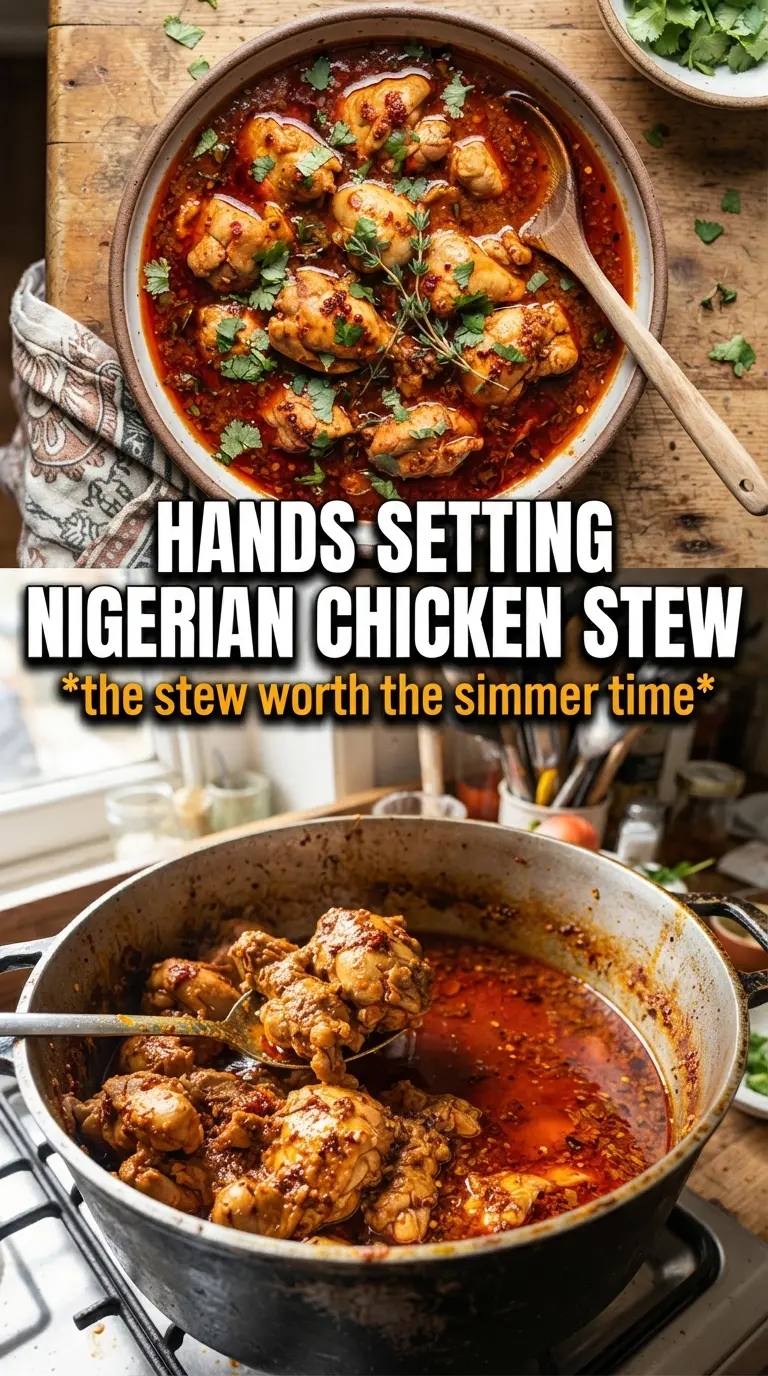
- Chicken pieces, bone-in — Bone-in chicken holds up best here because it can simmer in the sauce without drying out. Thighs and drumsticks are especially good. If you use boneless chicken, cut the simmer time back or it can turn stringy.
- Plum tomatoes — These bring body and sweetness without making the stew too watery. Canned plum tomatoes are fine and often more consistent than fresh ones, especially when you want a sauce that cooks down predictably.
- Red bell peppers and scotch bonnet — The bell peppers give the stew its body and color, while the scotch bonnet brings the heat and that unmistakable West African pepper flavor. If you need less heat, use one pepper or remove the seeds, but don’t skip it entirely unless you have to.
- Onion and garlic — The onion is used twice: first grated into the chicken marinade for flavor that penetrates the meat, then blended into the sauce for sweetness and depth. Garlic isn’t dominant here, but it rounds out the stew and keeps the pepper base from tasting flat.
- Vegetable oil — This isn’t just for cooking. The oil helps fry the pepper mixture until it darkens and separates, which is what gives the stew its final richness. A neutral oil works best; you don’t need anything fancy.
- Thyme, curry powder, and bouillon — These are the seasoning backbone. Thyme gives the stew a herbal note, curry powder adds warmth, and bouillon pushes the savory flavor deeper. If you’re using stock powder, go lighter on salt until the end.
Cooking the Pepper Base Until It Stops Tasting Raw
Marinate the chicken first
Mix the chicken with the grated onion, thyme, curry powder, bouillon, salt, and pepper, then let it sit for at least 30 minutes. That short rest matters because it seasons the meat before it goes into the stew, not just the surface. If you’re rushing, the chicken will still work, but it won’t taste as seasoned all the way through.
Brown the chicken before it meets the sauce
Fry or oven-bake the chicken until it’s golden and mostly cooked through. You want color, not full doneness, because it will finish in the stew later. If the chicken is pale, the finished dish misses that deeper savory edge and the skin or exterior can go limp too fast.
Cook the blended sauce until the oil floats
Blend the tomatoes, peppers, onion, and scotch bonnet until smooth, then fry that puree in hot oil over medium-high heat for 30 to 40 minutes. Stir often and scrape the bottom of the pot, because the sauce will splatter at first and then thicken as the water cooks off. When the color deepens and oil starts to pool on top, the raw tomato taste is gone and you’re in the right place.
Finish the chicken gently
Add the browned chicken to the cooked sauce and simmer for 15 to 20 minutes. This is where the flavors marry, but the heat should be low enough that the sauce doesn’t catch on the bottom. If the stew starts looking dry before the chicken is tender, add a small splash of water, not enough to thin it out, just enough to keep the sauce glossy and moveable.
Three Ways to Make This Stew Fit Your Kitchen
Milder Heat Without Losing the Pepper Flavor
Use one scotch bonnet instead of two, or swap in habanero with the seeds removed. You’ll still get the bright pepper note that makes Nigerian stew taste right, but the finish will be easier on people who don’t love a hard burn.
Oven-Baked Chicken for Less Oil
Bake the seasoned chicken until the skin is golden and the juices run mostly clear, then finish it in the stew. You’ll save on oil and cleanup while still keeping the chicken sturdy enough to stand up to the long simmer.
Gluten-Free and Dairy-Free by Default
This stew already fits both of those needs as written, as long as your bouillon or stock powder is certified gluten-free. The texture stays the same because the body comes from the reduced pepper sauce, not flour or dairy.
Using Fresh Tomatoes Instead of Canned
Fresh tomatoes work, but they often need longer to cook down and can taste sharper at the end. If you use them, expect a longer reduction time and be patient until the sauce loses its bright, almost watery edge.
Storage and Reheating
- Refrigerator: Store in an airtight container for up to 4 days. The flavor deepens overnight, and the sauce will thicken as it chills.
- Freezer: Freezes well for up to 3 months. Cool it completely first, then portion it into freezer-safe containers so the chicken stays submerged in sauce and doesn’t dry out.
- Reheating: Warm gently on the stove over low heat with a splash of water if needed. High heat can make the sauce stick and can toughen the chicken before the center is hot.
Answers to the Questions Worth Asking
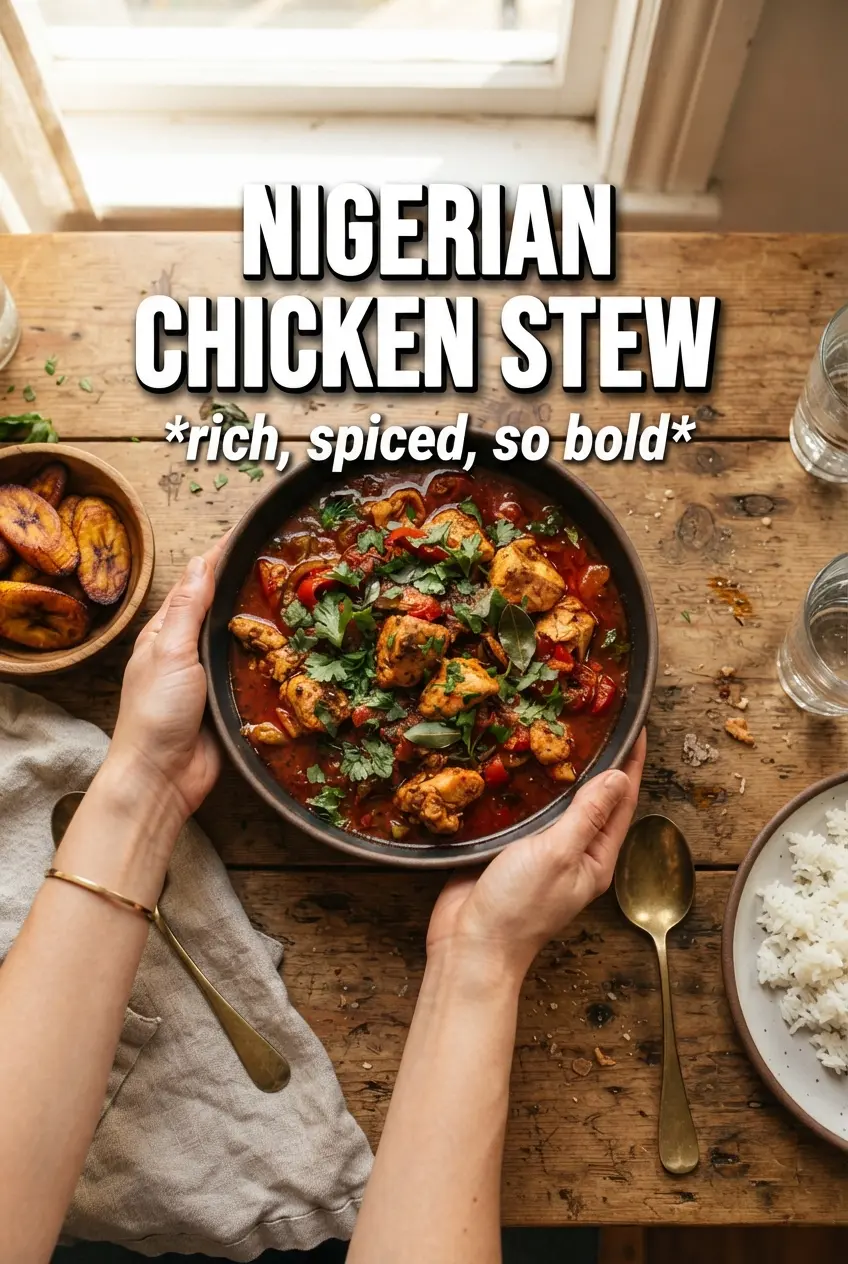
Nigerian Chicken Stew
Ingredients
Equipment
Method
- Season the chicken pieces with half the grated onion, thyme, curry powder, bouillon, salt, and pepper, then rub to coat thoroughly. Marinate for 30 minutes to build flavor.
- Fry or oven-bake the marinated chicken at 375°F for 20–25 minutes, or until golden and mostly cooked through. Set the chicken aside while you cook the sauce.
- Blend plum tomatoes, red bell peppers, scotch bonnet or habanero peppers, and the remaining onion until smooth. If needed, add a splash of water to help the blender run.
- Heat 1/2 cup vegetable oil in a large pot over medium-high heat until shimmering. Carefully add the blended pepper sauce and fry it for 30–40 minutes, stirring frequently, until oil floats on top and the sauce turns darkened and deeply cooked.
- Add the fried chicken to the pot and coat it in the sauce. Simmer for 15–20 minutes until the chicken is heated through and the sauce clings to it.
- Taste and adjust seasoning with salt and pepper as needed. Serve hot over steamed rice with fresh parsley.