When the butter, sugar, and milk start bubbling together, the timing suddenly matters more than the color of the mixture. These no bake coconut cookies set as that hot syrup cools around the oats and coconut, so a minute that’s too short or too long can change how they hold together.
I like this recipe for the chewy, tender clusters you get without turning on the oven. The steps are simple, but it helps to have the baking sheet ready before the syrup is done. Once the oats and coconut are stirred in, you’ll want to portion the mixture while it’s still easy to scoop. Each cookie cools into a sweet bite with plenty of coconut and just enough oat texture to keep it from feeling like candy.
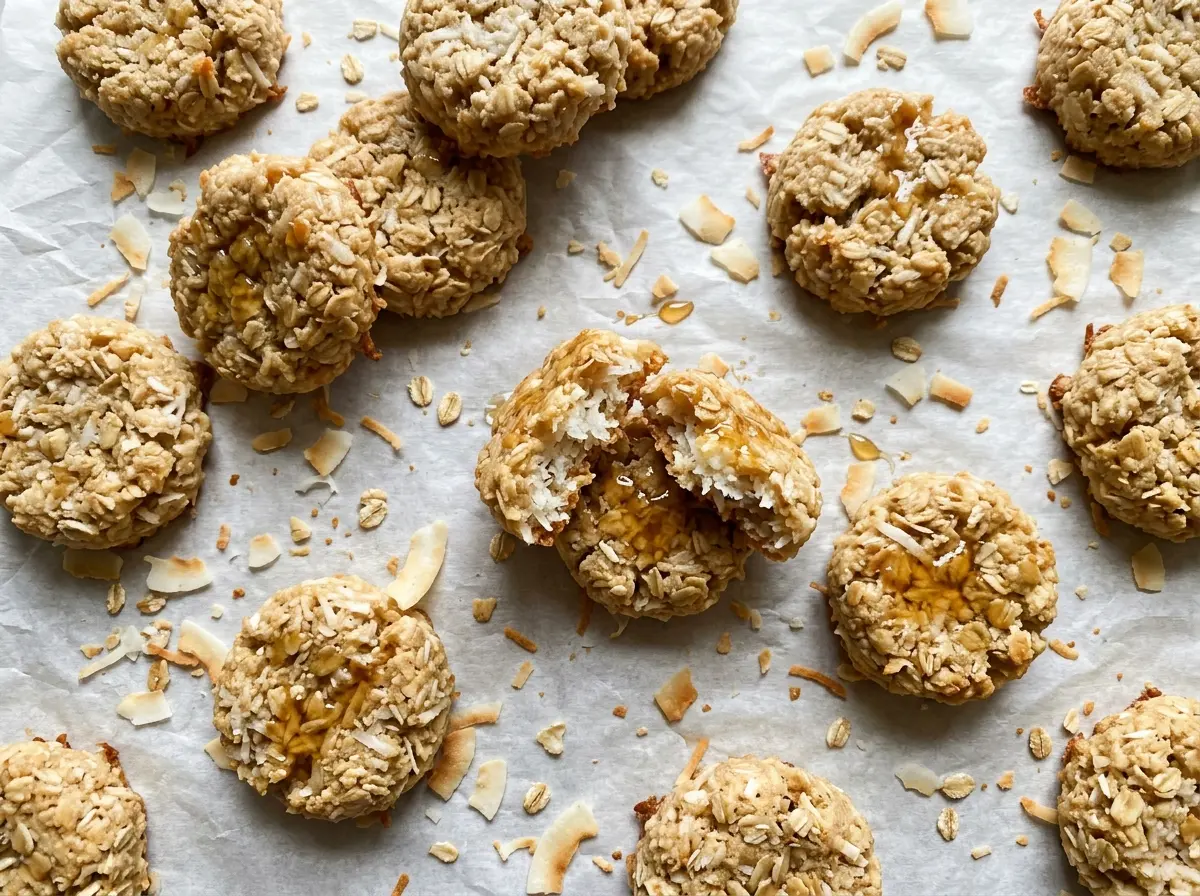
Kitchen Note
I line the baking sheet with parchment before I start the saucepan. Once the oats and coconut are mixed in, the cookies are ready to portion, and having the sheet within reach keeps the process calm.
Save these no bake coconut cookies for a chewy, coconut-packed treat that firms up without an oven.
The One-Minute Boil Is What Gives These Cookies Their Set
These cookies don’t bake into shape; the sugar mixture does the binding as it cools. Heating the butter, sugar, milk, and salt first dissolves the sugar, and bringing everything to a full rolling boil gives the mixture the concentration it needs to hold the oats and coconut together. That’s why the timing is precise rather than a loose estimate.
If the mixture hasn’t reached a full boil, the cookies may stay tacky or slump instead of becoming firm. Letting it boil too long drives off more liquid, which can leave the mixture dry and the finished cookies crumbly. Stir constantly for the full minute, then take the pan off the heat before adding the vanilla, oats, and coconut. The goal isn’t to cook the oats on the stove; it’s to make a syrup that coats them evenly and sets as it cools.
The result should be a soft, chewy cookie rather than a crisp baked one. That texture is part of the point, and the set comes from the syrup cooling around the dry ingredients—not from waiting for the cookies to brown.
Why Quick Oats and Sweetened Coconut Belong Together
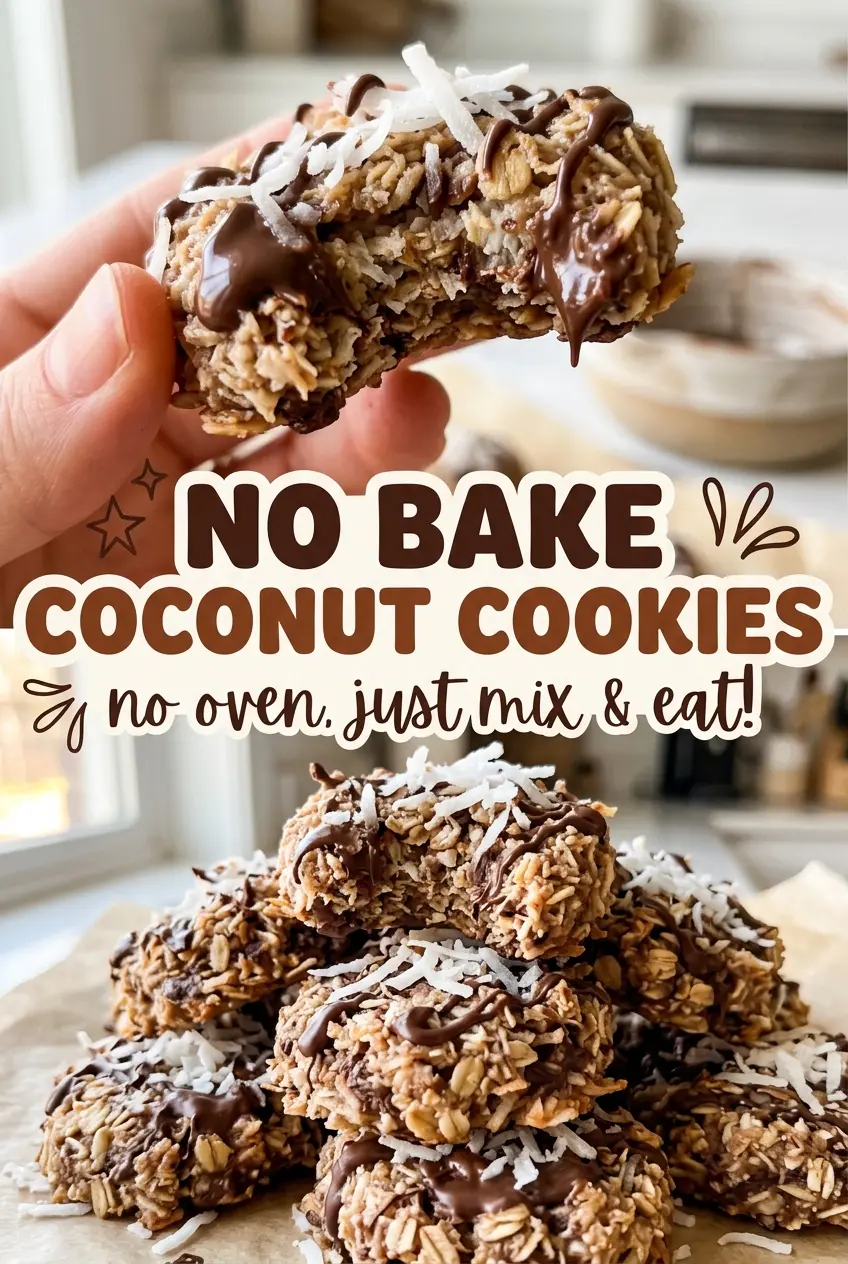
- Quick-cooking oats — Their smaller pieces take up the syrup evenly and make the cookies easier to scoop and hold together. Old-fashioned oats give a coarser, chewier result; if that’s all you have, pulse them briefly in a food processor until they’re smaller, but stop before they turn to flour.
- Sweetened shredded coconut — It brings the recognizable coconut sweetness and a soft, moist chew. Unsweetened coconut changes both the sweetness and the way the mixture feels, so it isn’t a one-for-one swap for this version. Choose the shredded texture rather than large coconut flakes, which make the cookies harder to portion neatly.
- Granulated sugar and whole milk — Together they form the syrup that binds the cookies. Granulated sugar is the reliable choice here; brown sugar has more moisture and a different flavor, so it can change how the cookies set. Whole milk gives the mixture richness, while the dairy-free option below uses a measured replacement.
- Unsalted butter — It adds richness while letting the kosher salt stay in balance. A good everyday butter works well; there’s no need for a specialty brand. If you use salted butter, leave out the added kosher salt.
- Vanilla extract — Stir it in after taking the pan off the heat, along with the oats and coconut. A standard pure or imitation vanilla extract both work; the main thing is adding it at this stage rather than boiling it with the syrup.
Getting the Syrup, Mix, and Set Right
Start with a ready baking sheet
Line a large baking sheet with parchment paper and set it aside before heating the ingredients. This gives the finished mixture a nonstick surface and leaves you ready to scoop as soon as it’s combined. Use a sheet with enough room for the cookies to sit apart while they cool. Rounded tablespoons make portions that are easy to handle.
Bring the butter mixture to a full boil
Combine the butter, sugar, milk, and salt in a medium saucepan over medium heat. Stir until the butter melts and the sugar dissolves, then watch for a full rolling boil: vigorous bubbles should cover the surface, not just appear around the edges. Stir constantly and boil for exactly 1 minute. Remove the pan from the heat as soon as that minute is up.
Coat the oats and coconut evenly
Stir the vanilla into the hot mixture, then add the quick oats and shredded coconut. Keep folding until you can’t see dry pockets and the oats and coconut are evenly coated with syrup. Scrape along the bottom and sides of the pan so the mixture comes together uniformly. If you leave dry patches, those spots won’t bind as well when the cookies cool.
Scoop and let the cookies firm
Drop the mixture by rounded tablespoons onto the parchment-lined sheet. Work steadily so you can portion it while it’s still easy to scoop, and keep the cookies in distinct mounds. Leave them at room temperature until firm, about 30 to 45 minutes. They’re ready when the outside holds its shape and the cookies lift from the parchment without falling apart.
Three Small Changes That Suit Different Kitchens
Make them dairy-free
Use the same measured amount of plant-based stick butter and unsweetened oat milk in place of the dairy butter and whole milk. Choose stick-style butter rather than a soft tub spread, which has a different water content. The cookies will still set, though the buttery flavor will be a little less pronounced.
Make a gluten-free batch
Replace the quick-cooking oats with certified gluten-free quick-cooking oats, keeping the amount the same. Oats are the only grain in the mixture, so this swap keeps the familiar chewy texture while making the cookies suitable for a gluten-free kitchen.
Use salted butter
Swap in salted butter in the same amount and omit the kosher salt. The cookies will taste a touch more savory against the sweet coconut, without changing the basic method.
Storage and Reheating
- Refrigerator: Keep the cookies in an airtight container for up to 5 days. They’ll become firmer when chilled; let them sit at room temperature briefly before serving.
- Freezer: Freeze the fully set cookies in a single layer, then transfer them to an airtight container with parchment between layers. They keep well for up to 2 months; thaw at room temperature.
- Reheating: These cookies don’t need reheating. Skip the microwave, which can heat the sugary centers unevenly; let chilled or frozen cookies soften at room temperature instead.
The Questions That Come Up Before the First Batch
No Bake Coconut Cookies
Ingredients
Equipment
Method
- Line a large baking sheet with parchment paper and set it aside.
- Combine the butter, sugar, milk, and salt in a medium saucepan over medium heat, stirring until the butter melts and the sugar dissolves.
- Bring the mixture to a full rolling boil and boil for exactly 1 minute, stirring constantly.
- Remove the pan from the heat.
- Stir in the vanilla, oats, and coconut until evenly coated.
- Drop the mixture by rounded tablespoons onto the prepared baking sheet.
- Let the cookies cool at room temperature until firm, about 30 to 45 minutes.