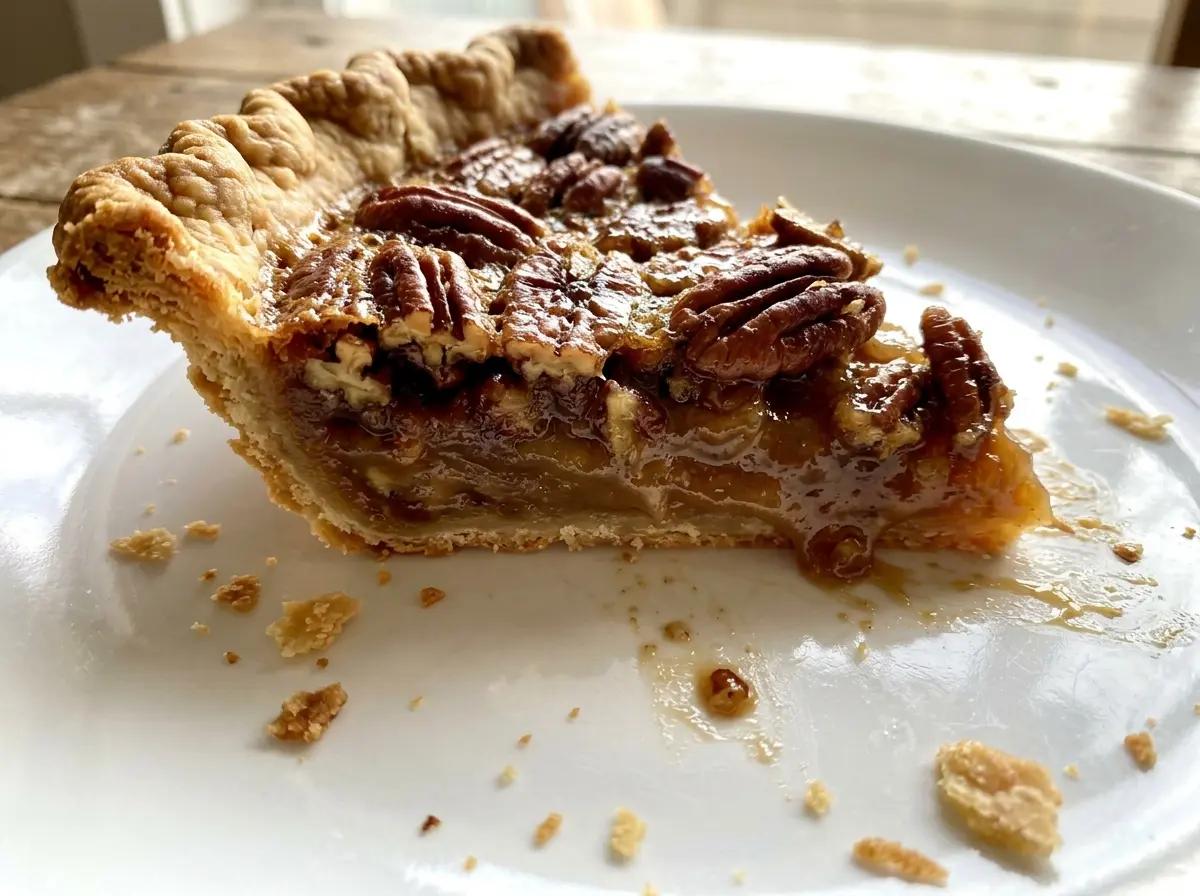
The first clue this pie is close is the gentle wobble in the middle when I nudge the pie plate. It can look a little loose in the oven, but that center firms as the pie cools; waiting for it to look completely set in there is how pecan pie ends up overbaked. In this Old Fashioned Pecan Pie, the filling turns glossy around the pecan halves, while the crimped crust gives each slice a crisp edge.
I keep the filling familiar: eggs, light brown sugar, light corn syrup, butter, vanilla, and pecans. Whisking the eggs first, then blending in the other filling ingredients until smooth, keeps the mixture even without any special equipment. The result is a sweet, tender center with plenty of pecans in every slice, all tucked into a simple 9-inch crust.
Kitchen Note
Let the melted butter cool until it’s warm, not hot, before whisking it into the eggs. That small pause helps the filling stay smooth instead of getting little cooked-egg flecks.
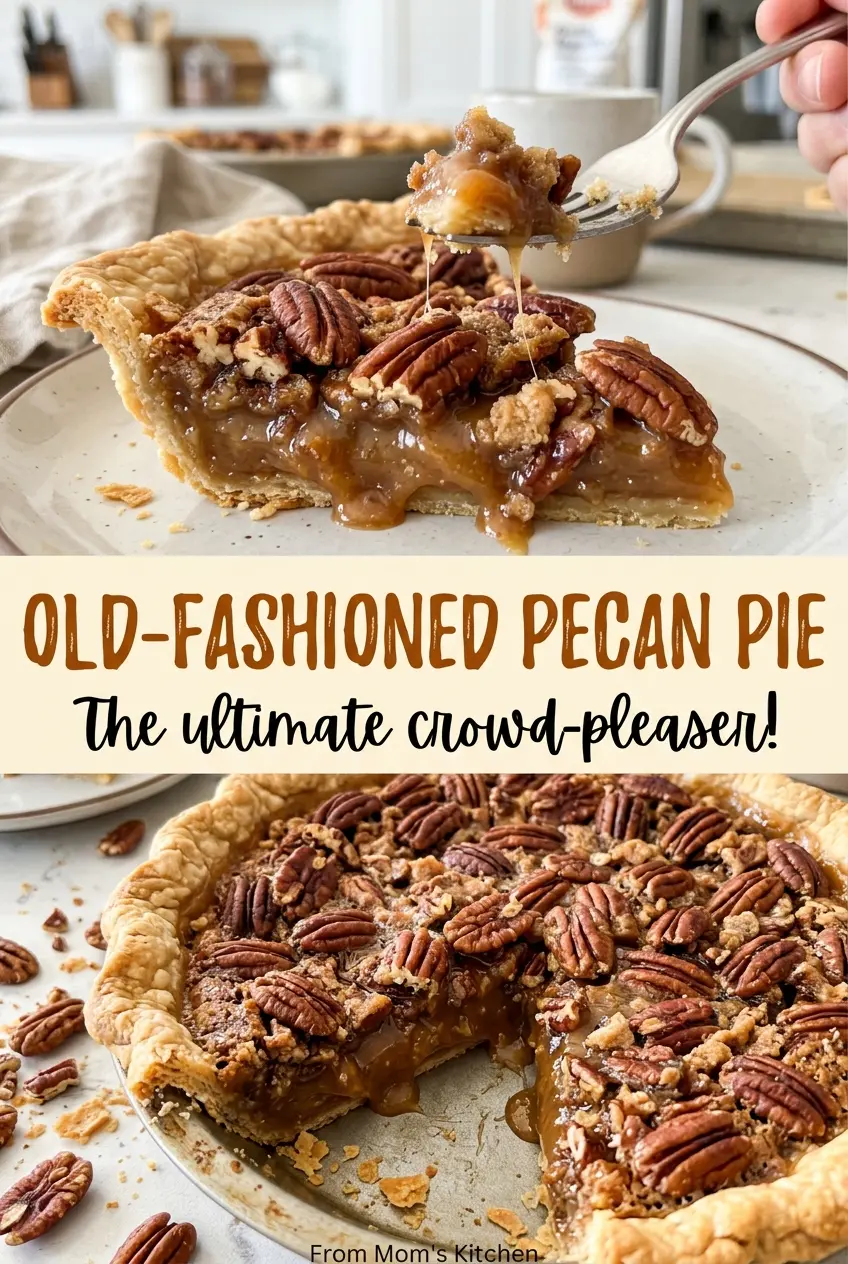
Save this Old Fashioned Pecan Pie for its glossy, pecan-packed filling and classic crimped crust.
Why the Center Should Still Wobble When You Take the Pie Out
Pecan pie doesn’t bake like a cake, where a firm center is the goal. The egg-and-syrup filling needs enough oven time to set around the nuts, but it continues to firm as it cools. Pulling it only when the middle looks completely solid can leave you with a filling that’s too firm instead of tender.
Look at the movement, not just the color. The edges should be set, while the center gives a small, unified wobble when you gently nudge the pie plate. A loose, sloshing center needs more time; a slight jiggle is the cue to stop baking. Cooling on a rack gives the filling time to settle into slices that hold their shape without losing that soft, rich texture.
This is also why the pie can be difficult to judge through the oven window alone. A browned top doesn’t tell you whether the middle has finished setting, and a little movement isn’t a sign that the pie has failed. Use the gentle nudge as your guide, then let the cooling do its work.
What the Syrup, Sugar, and Pecans Each Bring to This Pie
- Light corn syrup — This gives the filling its smooth, cohesive sweetness. A standard grocery-store brand works well; the light variety keeps the flavor mild enough for the pecans and brown sugar to come through. Golden syrup can replace it in the same volume for a more caramel-like taste.
- Packed light brown sugar — Brown sugar adds depth and a soft molasses note that plain white sugar wouldn’t bring. Dark brown sugar works in its place in the same volume, though the finished filling tastes more strongly of molasses.
- Pecan halves — Halves make generous, recognizable bites and give the top its classic look. Fresh pecans matter more than an expensive brand; taste one before baking, since stale or rancid nuts can bring a bitter flavor. Chopped pecans work in the same volume if you prefer smaller pieces throughout.
- Large eggs — Eggs give the syrup filling its structure as it bakes, so use large eggs for the intended balance. There isn’t a dependable egg-free swap that keeps this traditional filling’s texture.
- Unsalted butter and vanilla — The butter rounds out the sweetness, and vanilla gives the filling its familiar warm aroma. Everyday butter and vanilla extract are fine here; if you only have salted butter, leave out the added salt so the pie doesn’t become too salty.
- Refrigerated pie crust — A plain refrigerated crust is a convenient, dependable base, and a store brand works just as well as a premium one. For a gluten-free pie, use a 9-inch gluten-free crust; it may be more delicate to handle, so follow its package handling directions when fitting it into the plate.
From Crimped Crust to Set Filling: The Stages That Matter
Fit and crimp the 9-inch crust
Heat the oven to 350°F and fit the unbaked refrigerated crust into a 9-inch pie plate. Ease it into the plate rather than stretching it, since stretched dough can pull back from the rim as it bakes. Crimp the edges evenly so the crust has a finished border. There’s no blind-baking step here; the filling goes into the unbaked crust.
Whisk the filling until smooth
Whisk the eggs in a medium bowl until blended, then whisk in the brown sugar, corn syrup, melted butter, vanilla, and salt. Keep whisking until the mixture looks even, with no streaks of egg or clumps of brown sugar. If the butter is hot, it can create flecks in the eggs, so let it cool slightly before adding it. A smooth mixture now gives the filling an even texture after baking.
Stir in the pecans and fill the crust
Stir the pecan halves into the smooth filling so they’re coated and distributed through the bowl. Pour the mixture into the prepared crust, guiding the nuts around so they aren’t all bunched in one spot. Take care not to slosh filling over the crimped edge; syrup on the crust can darken before the pie itself is ready. The nuts may shift as you pour, so a quick, gentle redistribution in the crust is enough.
Bake until the edges hold and the center moves slightly
Bake for 50 to 60 minutes, watching for set edges and a center that still wobbles slightly when you nudge the pie plate. If the crust edges brown too quickly, cover them loosely with foil while the filling finishes baking. Don’t wait for the middle to become motionless in the oven. That small wobble is the point to take the pie out.
Cool fully before slicing
Set the pie on a rack and let it cool for at least 3 hours before cutting. The filling needs this time to set, so slicing early leaves the center loose and makes the pieces hard to lift cleanly. Once it has cooled, use a sharp knife and wipe the blade between slices for neater edges. The wait is worth it for a slice that holds together and still has a tender middle.
Three Smart Swaps for a Different Pecan Pie
Use golden syrup for a deeper sweetness
Replace the light corn syrup with the same volume of golden syrup. It keeps the filling cohesive but adds a more caramel-like note, so the finished pie tastes a little richer and less neutral.
Choose chopped pecans for smaller bites
Swap the halves for the same volume of chopped pecans and stir them through the filling. You’ll get a more even scatter of nuts in each slice, though the top won’t have the same bold look as whole halves.
Make it gluten-free with a 9-inch crust
Use a 9-inch gluten-free pie crust in place of the refrigerated wheat crust. The filling stays the same, while the crust may be more fragile to fit and crimp; use its package handling directions for the best chance of a neat edge.
Storage and Reheating
- Refrigerator: Keep the cooled pie covered in the refrigerator for 3 to 4 days. The crust softens a little as it sits.
- Freezer: Freeze individual slices or the whole pie, wrapped tightly, for up to 2 months. Thaw overnight in the refrigerator; the crust may be less crisp after thawing.
- Reheating: Warm slices in a 300°F oven for about 10 minutes, checking that they’re warmed through. Avoid high heat, which can make the filling overly hot before the crust warms.
Questions That Come Up When Baking Pecan Pie
Old Fashioned Pecan Pie
Ingredients
Equipment
Method
- Heat the oven to 350°F.
- Fit the pie crust into a 9-inch pie plate and crimp the edges.
- In a medium bowl, whisk the eggs until blended.
- Whisk in the brown sugar, corn syrup, melted butter, vanilla, and salt until smooth.
- Stir in the pecans.
- Pour the filling into the crust.
- Bake for 50 to 60 minutes, until the edges are set and the center still wobbles slightly when the pie plate is nudged; loosely cover the crust edges with foil if they brown too quickly.
- Cool the pie on a rack for at least 3 hours before slicing so the filling can set.