Golden mushrooms, silky cream, and pasta that cooks right in the sauce make this rigatoni feel far more luxurious than the amount of work it takes. The mushrooms get a real sear first, which means the finished dish tastes deep and savory instead of flat or watery. Sage brings a warm, woodsy note that cuts through the richness and keeps every bite interesting.
The trick here is to build flavor before any liquid goes in. Once the mushrooms have browned and the sage has crisped, the pot already has enough character to carry the sauce through the simmer. Cooking the rigatoni in broth lets the pasta release starch into the pot, which gives the cream and parmesan something to cling to instead of sliding off in a thin coating.
If you’ve ever ended up with pale mushrooms or a sauce that tasted like cream without much else, the method below fixes both problems. You’ll also find the small timing details that keep the pasta tender and the sauce smooth.
The mushrooms browned instead of steaming, and the sauce clung to every ridge of the rigatoni. I thought it would be too rich, but the sage kept it balanced and we wiped the pot clean.
Pin this one-pot mushroom rigatoni for a creamy, sage-scented dinner with browned mushrooms and almost no cleanup.
The Sear That Gives This Pasta Its Depth
Mushrooms need space and heat if you want them to taste like mushrooms instead of damp filler. When they go into a crowded pot, they release liquid, steam, and stay pale. Here, the butter and medium-high heat drive off that moisture before the broth ever touches the pan, which is why the final dish tastes dark, savory, and built from the bottom up.
Sage behaves the same way. A minute or two in the hot butter is enough to make it crisp and fragrant. If it goes in too early and cooks too long, it loses that sharp herbal edge and fades into the background.
What Each Ingredient Is Actually Doing in This Dish
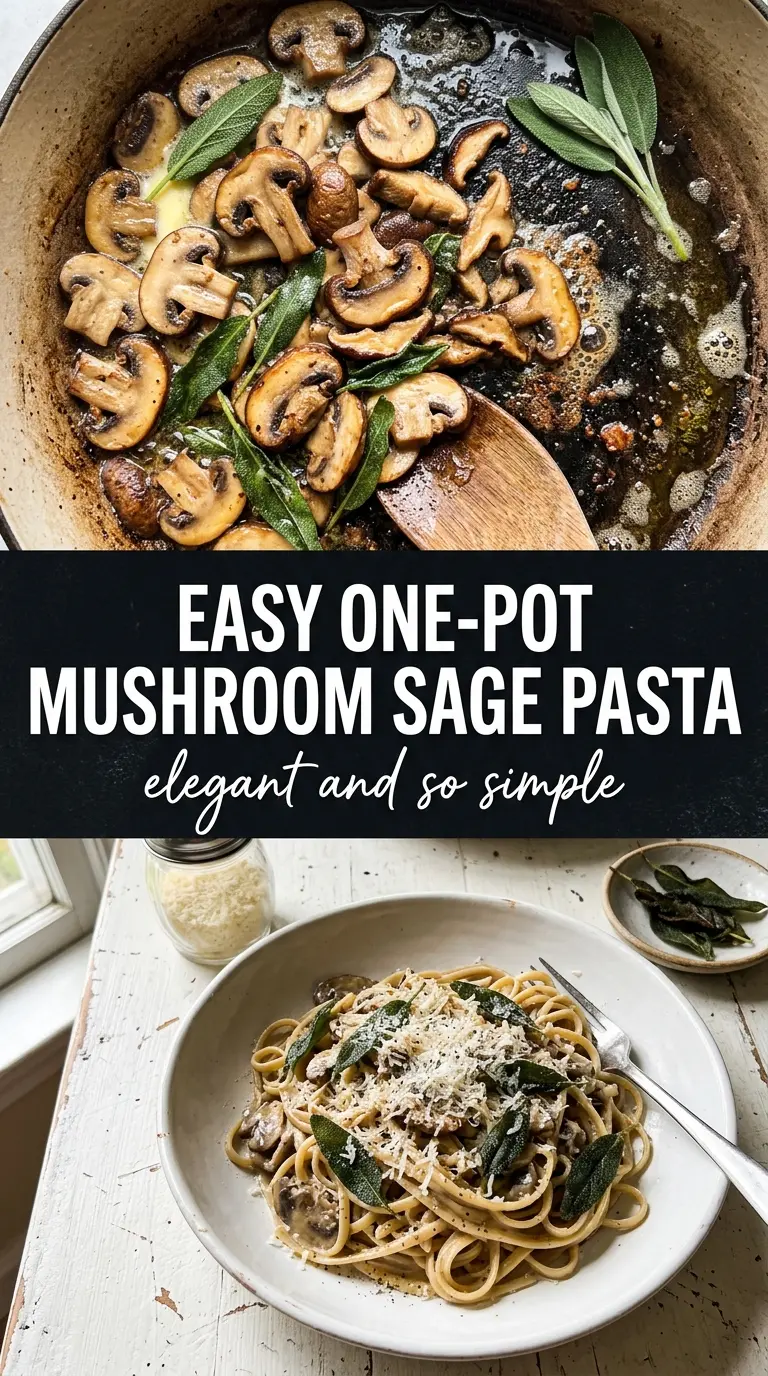
- Mushrooms — These are the backbone of the dish, so use fresh mushrooms that look dry and firm, not slimy. Cremini give you the deepest flavor, but white mushrooms work if that’s what you have. Slice them thick enough to brown before they collapse.
- Butter — Butter carries the sage and helps the mushrooms sear with a round, rich flavor. If you swap in olive oil, you’ll still get browning, but the sauce loses some of the plush finish that makes this dish feel special.
- Sage — Fresh sage is worth using here because it crisps in the butter and perfumes the whole pot. Dried sage won’t give you the same bright, aromatic hit, though a small pinch can stand in if that’s all you have.
- Heavy cream — This goes in at the end so it enriches the sauce without thinning the starch-built body from the pasta and broth. Half-and-half will work in a pinch, but the sauce will be lighter and less silky.
- Parmesan — Finely grated parmesan melts smoothly and helps thicken the sauce. Pre-grated cheese can work, but it sometimes clumps a little more, so stir it in off the heat for the smoothest result.
- Rigatoni — The ridges and hollow center hold onto the creamy sauce better than thinner pasta shapes. If you swap shapes, pick something sturdy like penne or ziti so it can simmer without turning soft.
- Chicken broth — This is the cooking liquid and part of the flavor base, so use one you’d actually drink. Vegetable broth works if you want to keep the dish vegetarian, though the flavor will be a little less savory.
Getting the Pasta Tender Without Ending Up With Soup
Brown the Mushrooms First
Melt the butter in a large pot and add the mushrooms in a single layer if you can. Let them sit long enough to take on color before stirring too often; that’s how you get golden edges instead of a gray, wet pile. If the pan looks dry before they’re browned, the mushrooms probably need another minute rather than more liquid.
Wake Up the Sage and Garlic
Add the garlic and sage only after the mushrooms have some color. Garlic burns fast, so keep it moving and watch for the moment it turns fragrant, not dark. The sage should sound a little crisp when it hits the butter. That brief fry is what gives the finished dish its aromatic top note.
Simmer the Rigatoni in Broth
Pour in the broth, add the rigatoni, and bring everything to a boil before reducing the heat. Cover the pot and simmer until the pasta is tender and the liquid is mostly absorbed. If the pot runs dry before the pasta is done, add a splash more broth or hot water; if you add too much at the end, the sauce won’t have the body it needs.
Finish With Cream and Parmesan Off the Heat
Stir in the cream and parmesan after the pasta is cooked. Keep the heat low, or pull the pot off the burner for a moment, because parmesan can turn grainy if it melts too fast. The sauce should look glossy and thick enough to coat the rigatoni, not slack and soupy. Season at the end so the salt level lands where you want it after the cheese goes in.
How to Adapt This for a Lighter, Dairy-Free, or Meatless Dinner
Make It Vegetarian
Swap the chicken broth for a good vegetable broth. The dish still tastes rich because the mushrooms, butter, and parmesan carry most of the savory flavor, but a well-seasoned broth keeps it from tasting thin.
Go Dairy-Light
Use olive oil instead of butter and swap the heavy cream for half-and-half or a plain unsweetened oat cream. The sauce will be looser and less plush, so let it simmer a little longer before serving to help it cling to the pasta.
Use a Different Pasta Shape
Penne, ziti, or casarecce all work well if you don’t have rigatoni. Pick a sturdy shape with grooves or a tube, since delicate pasta won’t hold up as well in the one-pot simmer.
Make It a Little Heartier
Add shredded rotisserie chicken or sautéed spinach at the end. Spinach wilts in seconds, and chicken turns the pasta into a fuller meal without changing the sauce structure.
Storage and Reheating
- Refrigerator: Store leftovers in an airtight container for up to 4 days. The sauce will thicken as it chills.
- Freezer: This pasta doesn’t freeze well. The cream sauce can turn grainy after thawing and the rigatoni softens too much.
- Reheating: Warm it gently on the stove with a splash of broth or milk over low heat, stirring often. High heat is what breaks the sauce and tightens the pasta into a dry, sticky clump.
Answers to the Questions Worth Asking
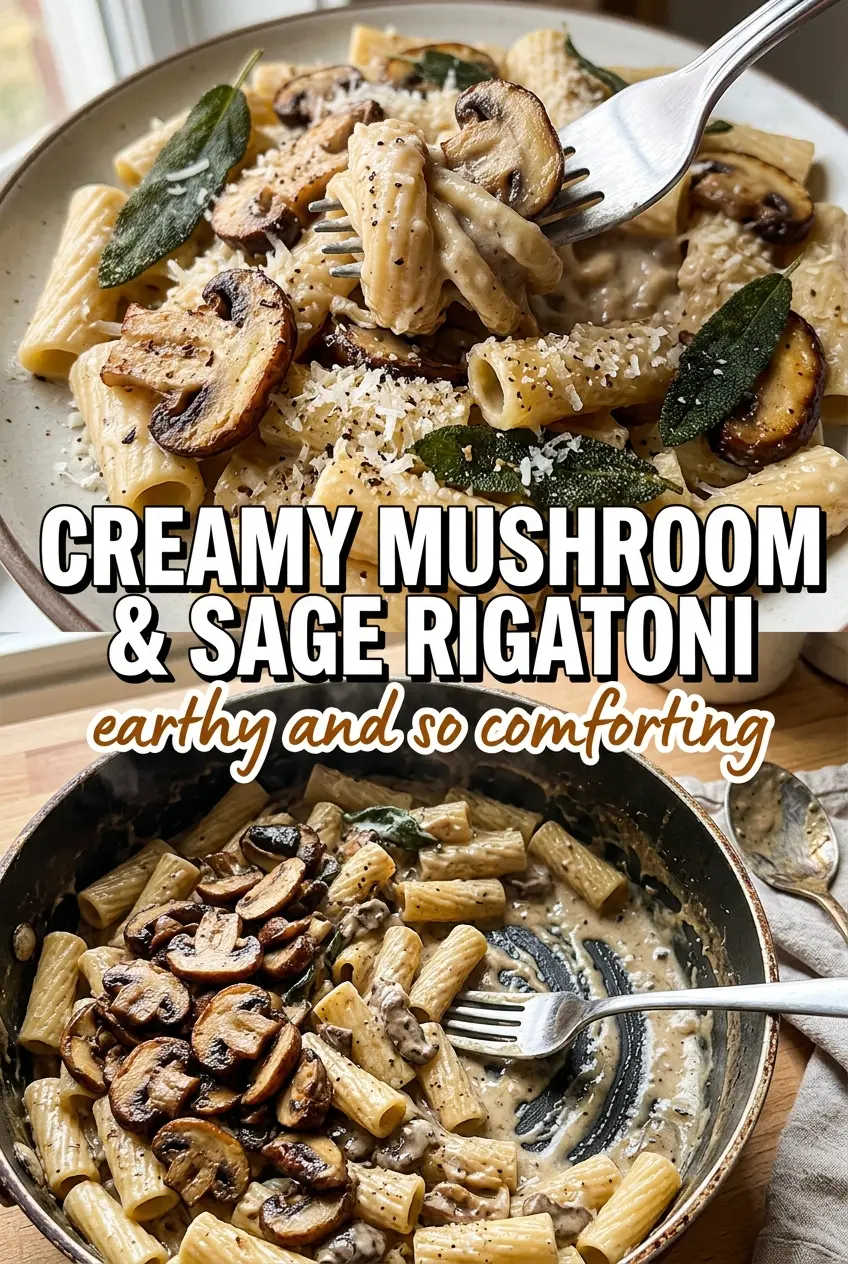
One-Pot Creamy Pan-Seared Mushroom & Sage Rigatoni
Ingredients
Equipment
Method
- Melt the butter in a large pot over medium-high heat and sear the mushrooms until golden brown, about 6–7 minutes, stirring occasionally so they brown evenly.
- Add the garlic and sage leaves, cooking for 1–2 minutes until fragrant and the sage is slightly crisp.
- Add the rigatoni and chicken broth, bringing to a boil, then scrape up any browned bits from the bottom for extra flavor.
- Reduce the heat to a simmer, cover, and simmer for 14–16 minutes until the pasta is tender and most of the liquid is absorbed.
- Stir in the heavy cream and parmesan cheese until melted and creamy, heating gently until the sauce looks smooth and coats the pasta.
- Season with salt and pepper, tasting as you go to balance the richness.
- Serve warm, garnished with extra sage if desired, letting the dish sit briefly so the sauce thickens slightly.