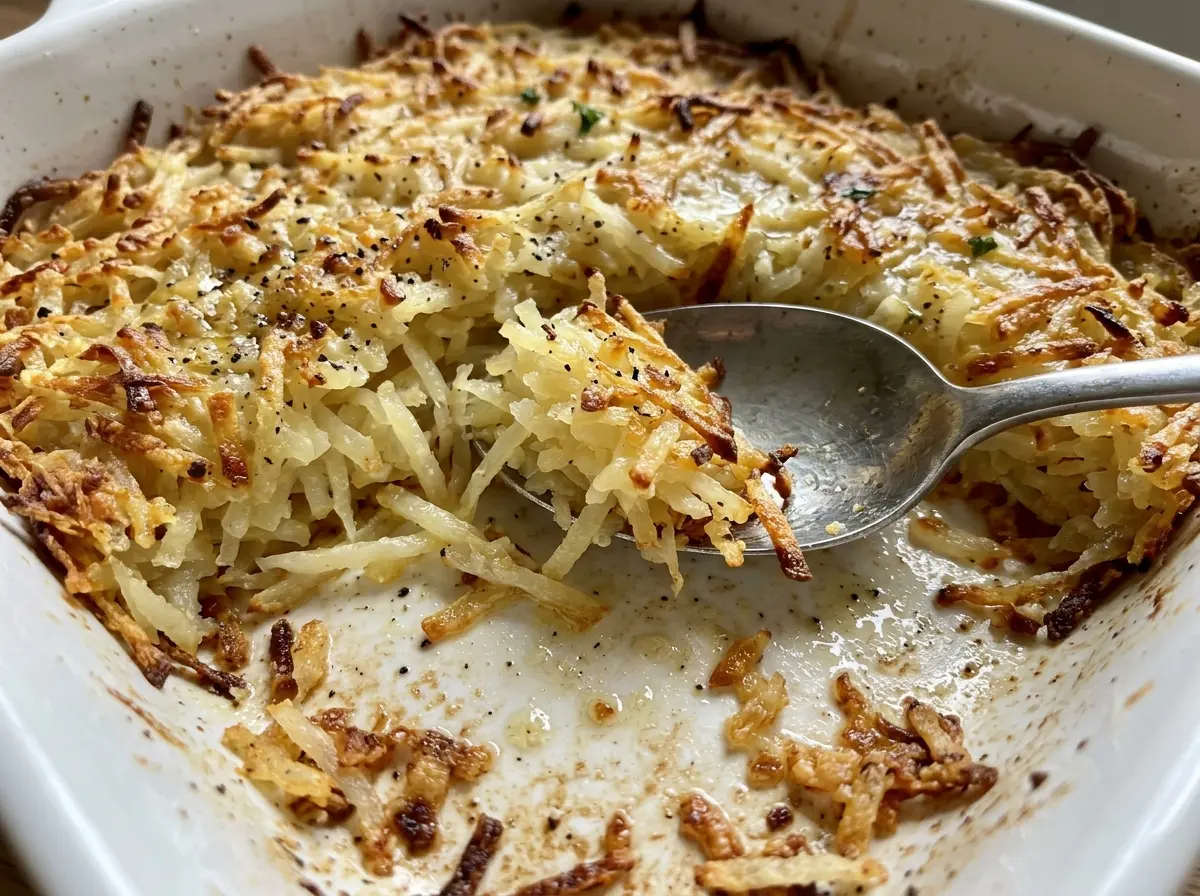
The first sign that these hash browns are working is the way the potato shreds start to turn golden around the edges while the middle is still pale. That contrast is exactly what I want from oven baked hash browns: crisp bits with tender potato underneath, without standing over a skillet and cooking in batches. The oven does the browning across the whole sheet pan, which makes this a practical way to get four servings ready together.
I use russet potatoes and rinse the shreds in cold water before they go onto the pan. That quick rinse and a thorough squeeze help the potatoes bake as separate strands instead of clumping together. Spread them in an even layer on parchment brushed with oil, and they have room to brown instead of steaming in a pile. The finished hash browns come out with crisp edges and a soft center.
Kitchen Note
When you turn the potatoes, work in broad sections with the spatula rather than stirring through the shreds. Keeping those sections together makes the second bake easier and helps the potatoes brown in an even layer.
Save these oven baked hash browns for a hands-off batch with golden edges and tender centers.
Why a Crowded Sheet Pan Gives You Soft Hash Browns
Hash browns need open space around the potato strands. When shredded potatoes sit in a thick heap, the moisture they release has nowhere to go; it collects between the shreds and softens them before they can turn crisp. An even layer gives the potatoes more contact with the hot pan and lets moisture escape as they bake.
The 18×13-inch rimmed baking sheet matters here because it gives two pounds of shredded potatoes room to spread out. If the layer is piled up or gathered into a mound, the edges may brown while the center stays soft. Spread the strands from edge to edge without compressing them into a dense mat. A little space between shreds is useful, but you don’t need to arrange them individually. The goal is a broad, even layer that can brown on both sides.
Russets, Rinsing Water, and Oil: What Makes This Sheet Crisp
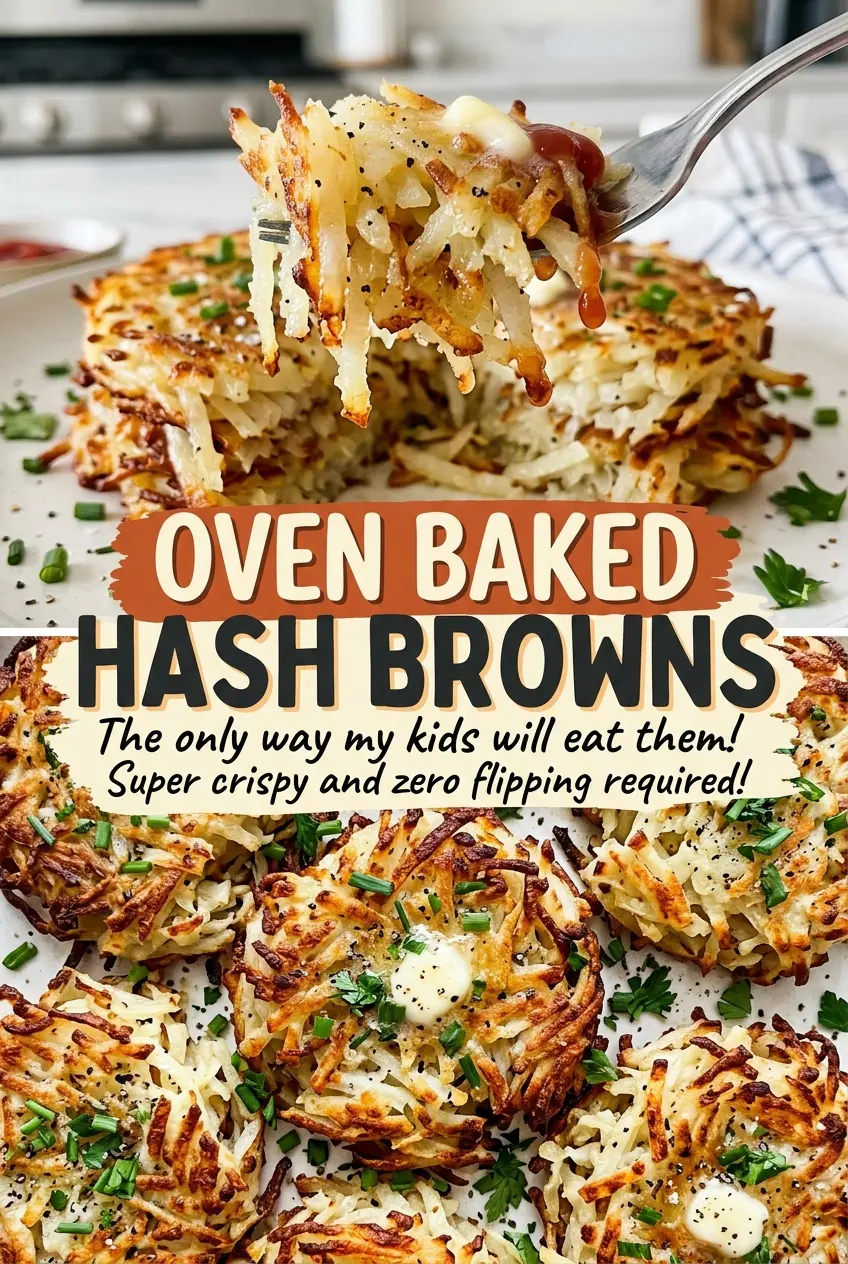
- Russet potatoes — Their starchy, relatively dry flesh is a good fit for crisp hash browns. If you use Yukon Gold potatoes instead, keep the same weight; expect a slightly creamier, less crisp result. Choose firm potatoes without soft spots, and peel them before shredding.
- Neutral oil — It coats the shreds and helps the potatoes brown without adding a strong flavor. A basic canola or vegetable oil is fine; refined avocado oil also works in the same quantity. Avoid strongly flavored oils if you want the potato taste to stay front and center.
- Kosher salt — It seasons the potato all the way through when tossed with the oil. Fine sea salt can stand in, but its smaller grains pack more tightly by volume, so use a lighter hand rather than making a direct volume-for-volume swap.
- Black pepper — Ordinary preground pepper works well here, so there’s no need to buy a special blend. White pepper can replace it for a milder, less visible pepper flavor; use it sparingly because it tastes different from black pepper.
From Grated Potatoes to a Golden Sheet of Hash Browns
Shred and Rinse the Potatoes
Heat the oven to 425°F before you start assembling the pan. Peel the russets, then shred them on the large holes of a box grater so the pieces are coarse rather than fine. Put the shreds in a bowl with the cold water and swish them around to rinse. Drain them well before moving to the towel.
Dry, Season, and Set Up the Pan
Gather the drained potato shreds in a clean kitchen towel and squeeze them very dry. Excess water left in the shreds makes it harder for them to brown, so keep pressing until the towel no longer drips. Line an 18×13-inch rimmed baking sheet with parchment and brush the parchment with 1 tablespoon of the oil. Toss the potatoes with the remaining oil, kosher salt, and black pepper until the strands are coated.
Bake, Turn, and Finish the Edges
Spread the potatoes in an even layer on the prepared sheet and bake for 20 minutes. Use a spatula to turn the potatoes over in sections, then return the pan to the oven for another 15 to 20 minutes. Look for golden brown color and crisp edges before taking the pan out. If the center is still pale and soft, give it more time within that second bake rather than pulling it while the edges alone look ready.
Two Useful Ways to Adapt Your Hash Browns
A Creamier Yukon Gold Batch
Swap the russets for the same weight of Yukon Gold potatoes. The finished hash browns will have a softer, creamier bite and won’t get quite as crisp as the russet version, so dry the shreds thoroughly and keep them spread in an even layer.
Use Refined Avocado Oil
Replace the neutral oil with the same quantity of refined avocado oil for a similarly mild taste and an oil suited to the oven’s high heat. Choose refined rather than unrefined avocado oil to keep the flavor subtle.
Storage and Reheating
- Refrigerator: Refrigerate leftovers in a covered container within 2 hours and use them within 3 to 4 days. They soften as they sit.
- Freezer: Freeze cooled portions in an airtight container for up to 2 months for best quality. The texture may be softer after thawing.
- Reheating: Spread leftovers on a baking sheet and warm them in a 425°F oven until crisp and heated to 165°F in the center. Avoid reheating in a covered dish, which traps steam and leaves the edges soft.
Questions That Come Up When Baking Hash Browns
Oven Baked Hash Browns
Ingredients
Equipment
Method
- Preheat the oven to 425°F.
- Coarsely shred the potatoes using the large holes of a box grater.
- Place the shreds in a bowl with the cold water and swish to rinse.
- Drain well and squeeze the potatoes very dry in a clean kitchen towel.
- Line an 18x13-inch rimmed baking sheet with parchment paper and brush it with 1 tablespoon of the oil.
- Toss the potatoes with the remaining 2 tablespoons oil, salt, and pepper.
- Spread the potatoes in an even layer on the prepared baking sheet and bake for 20 minutes.
- Turn the potatoes over in sections with a spatula and bake for 15 to 20 minutes more, until golden brown and crisp at the edges.