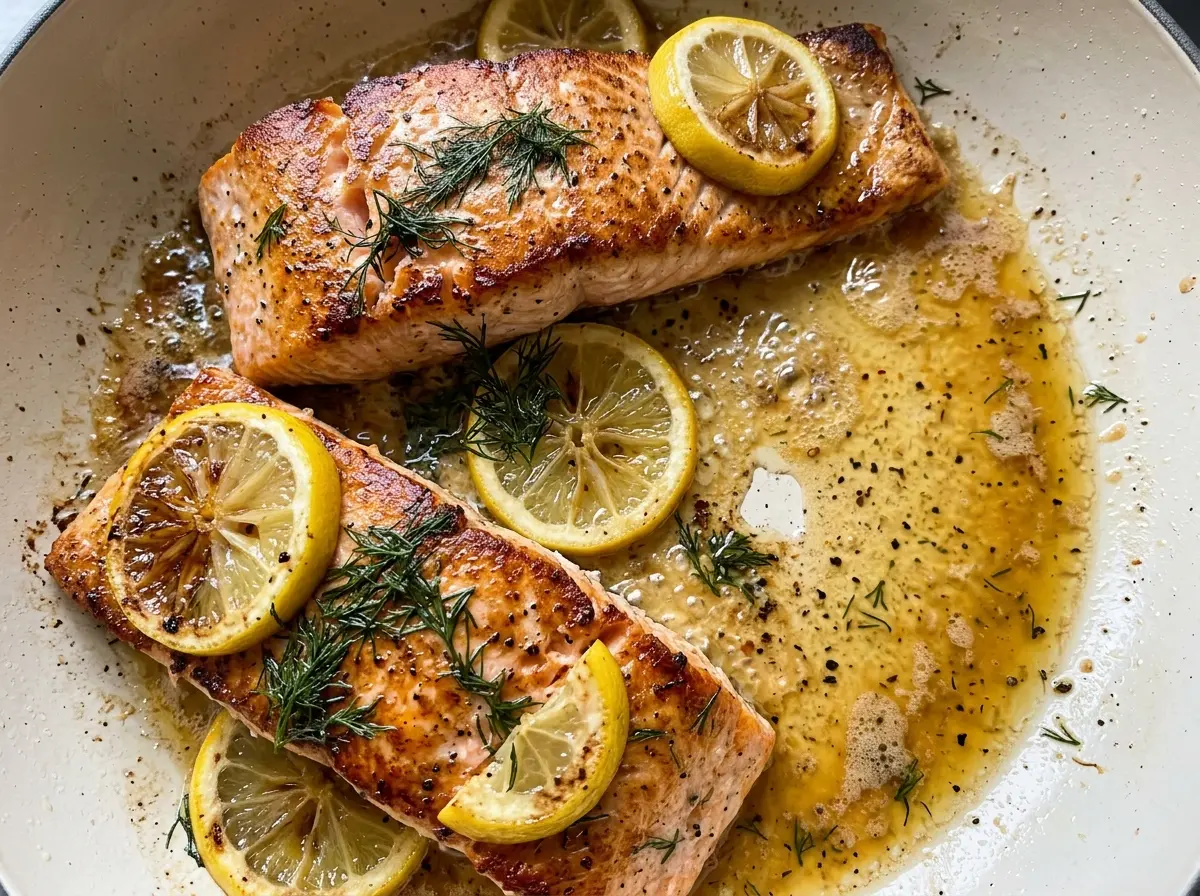
The skin gives a quick sizzle when it meets a properly heated skillet, but it needs a little patience before it turns crisp. I dry the fillets well, set them skin side down, and let the heat work before I reach for the spatula. That short stretch of hands-off cooking is what makes Pan Seared Lemon Dill Salmon feel like more than a quick piece of fish with a garnish.
Skin-on fillets about an inch thick are a good fit for this method: the skin gets time to crisp while the flesh cooks from the bottom up. I cook two fillets at a time in a 12-inch skillet, then repeat with the remaining oil. A squeeze of lemon and chopped fresh dill go on after cooking, when their bright flavors stay clear against the warm, rich salmon. The finished fillets have crisp skin, tender centers, and a fresh lemon-dill finish.
Kitchen Note
I loosely tent the first batch while the second cooks, rather than covering it tightly. That keeps the salmon warm without trapping as much steam against the crisp skin.
Save this Pan Seared Lemon Dill Salmon for crisp skin, tender centers, and a fresh lemon-and-dill finish.
Why Dry Salmon Skin Browns Instead of Steaming
Salmon skin carries surface moisture, and moisture is the enemy of a crisp sear. If the fish goes into the skillet damp, that water has to evaporate before the skin can brown; meanwhile, the flesh starts cooking and the skin is more likely to stay soft. Patting the fillets dry first gives the skin a head start.
The skillet’s two-minute preheat matters for the same reason. Add the oil only after the pan is hot, then lay the fish skin side down so the skin meets an already heated surface. As it cooks, watch the sides: when the salmon looks opaque about halfway up, the skin has had its first 5 to 6 minutes and the fillets are ready to turn. Don’t judge the center by color alone; the thermometer check at the thickest part tells you when the fish is cooked through.
Keeping the batches to two fillets also leaves each piece room to sit against the skillet. If the pan is crowded, the fish won’t make the same even contact with the hot surface. The goal is a crisp skin beneath a tender piece of salmon, not a rushed sear on a damp, crowded pan.
What the Salmon, Canola Oil, Lemon, and Dill Each Bring

- Skin-on salmon — The skin protects the flesh as it sears and gives you the crisp texture that defines this preparation. Fillets close to an inch thick cook at a useful pace here; much thinner or thicker pieces won’t follow the same timing as closely. Choose pieces of similar thickness so they finish at roughly the same time.
- Canola oil — Its neutral taste lets the salmon, lemon, and dill come through, and it suits the medium-high skillet heat. Dividing the oil lets you coat the pan again before the second batch, instead of trying to cook four fillets in one crowded round.
- Kosher salt and black pepper — Seasoning the flesh side before cooking gives the salmon a savory base without hiding the fresh finish. Coarse kosher salt is easy to distribute over the fillets; freshly ground or pre-ground black pepper both work.
- Lemon juice and fresh dill — Add these after the salmon leaves the skillet. Lemon brings a sharp lift, while chopped fresh dill contributes a clean herbal note; cooking either in the pan would mute the bright finish that makes this pairing work.
How to Sear the Skin and Finish the Salmon Without Drying It Out
Dry and Season the Flesh Side
Blot the salmon with paper towels until the surface feels dry, paying attention to the skin as well as the flesh. Season the flesh side with kosher salt and black pepper. Starting with dry fillets helps the skin brown instead of spending its first minutes steaming. Keep the seasoning on the flesh side, where it’s easy to apply evenly.
Heat the Skillet and Crisp the First Batch
Set a 12-inch skillet over medium-high heat for 2 minutes, then add half the canola oil. Place two fillets skin side down in the pan, leaving space between them. Cook for 5 to 6 minutes, until the skin is crisp and the salmon looks opaque about halfway up the sides. If the sides are still translucent, give the skin a little more time before turning.
Turn, Check the Center, and Hold Warm
Turn each fillet and cook the flesh side for 2 to 4 minutes. Check the thickest part with an instant-read thermometer; it should reach 145°F. Transfer the cooked salmon to a plate and tent it loosely with foil while you cook the remaining pieces. The thickest section, not a thin edge, is the spot that gives you the most useful reading.
Repeat the Batch and Add the Fresh Finish
Add the remaining canola oil to the skillet, then cook the last two fillets skin side down and turn them as before. Check their thickest parts rather than assuming the second round will take precisely the same time. Once all four pieces are cooked, drizzle them with lemon juice and sprinkle with chopped fresh dill. Add the finish just before serving so the herbs stay fresh and the lemon remains bright.
Two Simple Ways to Change the Format
Make a Half Batch for Two
Use two fillets and halve each of the other ingredients. Keep the same pan temperature and cooking cues, and use the oil in two portions as you cook; you’ll have fewer leftovers without changing the lemon-dill balance.
Serve It in Large Flakes
For a less formal presentation, break the cooked salmon into large pieces just before serving and distribute the lemon juice and dill over them. The flakes are easy to portion, though you’ll lose the intact fillet shape; keep the crisp skin with the fish rather than breaking it into tiny bits.
Storage and Reheating
- Refrigerator: Store leftovers in a covered container for up to 3 days. The skin will soften as the salmon sits.
- Freezer: Freeze cooked salmon in an airtight container for up to 2 months for the best texture. Thaw it in the refrigerator before reheating; the skin won’t regain its original crispness.
- Reheating: Warm covered in the microwave at reduced power in short intervals, checking that leftovers reach 165°F. Long, high-powered heating dries salmon quickly, so stop as soon as it’s heated through.
Questions That Come Up When Searing Salmon
Pan Seared Lemon Dill Salmon
Ingredients
Equipment
Method
- Pat the salmon dry with paper towels and season the flesh side with the salt and pepper.
- Heat a 12-inch skillet over medium-high heat for 2 minutes, then add 1/2 tablespoon of the oil.
- Place 2 salmon fillets skin side down in the skillet and cook for 5 to 6 minutes, until the skin is crisp and the salmon looks opaque about halfway up the sides.
- Turn the fillets and cook for 2 to 4 minutes, until the thickest part reaches 145°F.
- Transfer the fillets to a plate and loosely tent with foil.
- Add the remaining 1/2 tablespoon oil to the skillet.
- Place the remaining salmon fillets skin side down in the skillet and cook for 5 to 6 minutes, until the skin is crisp and the salmon looks opaque about halfway up the sides.
- Turn the fillets and cook for 2 to 4 minutes, until the thickest part reaches 145°F.
- Drizzle the salmon with lemon juice, sprinkle with dill, and serve.