The first few seconds after salmon hits the pan are quiet; then the skin starts to sizzle, and you can tell whether it landed flat. I pat the fillets dry before they go in, because a damp surface gives off steam instead of browning. For pan seared salmon in garlic butter, that early sear gives the skin its crisp texture while the center stays tender. The butter sauce comes together in the same skillet once the fish is on a plate, so there’s no second pan to wash.
I cook the fillets skin-side down first, then finish them briefly on the other side while I check the thickest part. The garlic butter takes only a minute: garlic goes into melted butter until fragrant, and the skillet comes off the heat before the lemon juice and parsley go in. Spoon that bright, garlicky butter over the salmon while it’s warm, and you’ve got crisp-edged fillets with a silky finish.
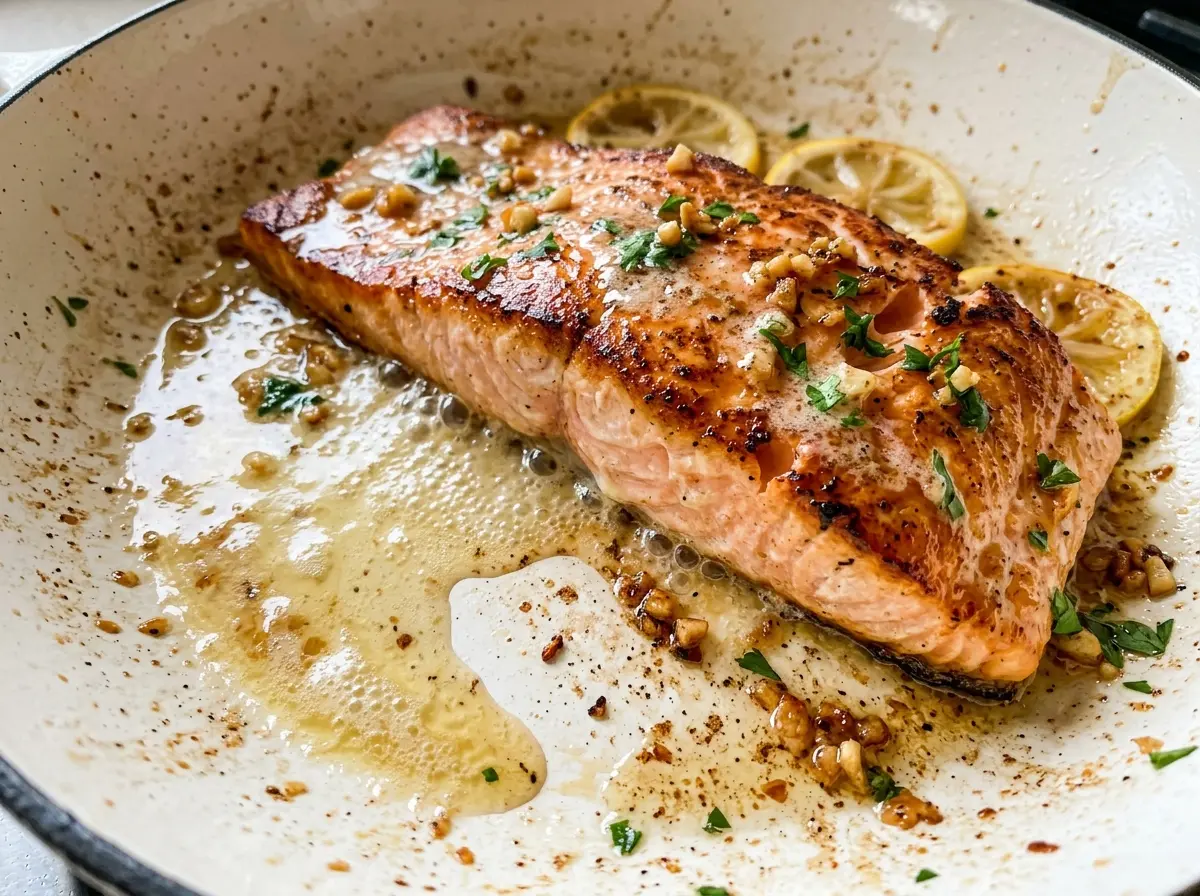
Kitchen Note
Set the plate for the cooked salmon and have the lemon juice and parsley ready before you heat the skillet. Once the garlic is in the butter, there’s only a short window before it’s fragrant and ready to come off the heat.
Save this pan seared salmon in garlic butter for a quick dinner with crisp skin and a lemon-parsley finish.
Why Wet Salmon Steams Before Its Skin Can Brown
Water on the outside of a fillet has to evaporate before browning can begin. That means a damp piece spends its first moments in the skillet shedding moisture instead of building a crisp surface. Patting the salmon dry is a small step, but it changes what happens as soon as the fish meets the hot oil.
The skin needs good contact with the skillet, too. When the surface is dry and the oil is shimmering, the skin can sear rather than sit in a film of moisture. This is why I don’t skip drying the fillets, even when they look dry already. A quick blot is enough; the goal is to remove surface moisture, not to press or squeeze the fish. The result is a better contrast between the browned skin and the tender salmon underneath.
What the Salmon, Garlic, and Lemon Each Bring to the Skillet
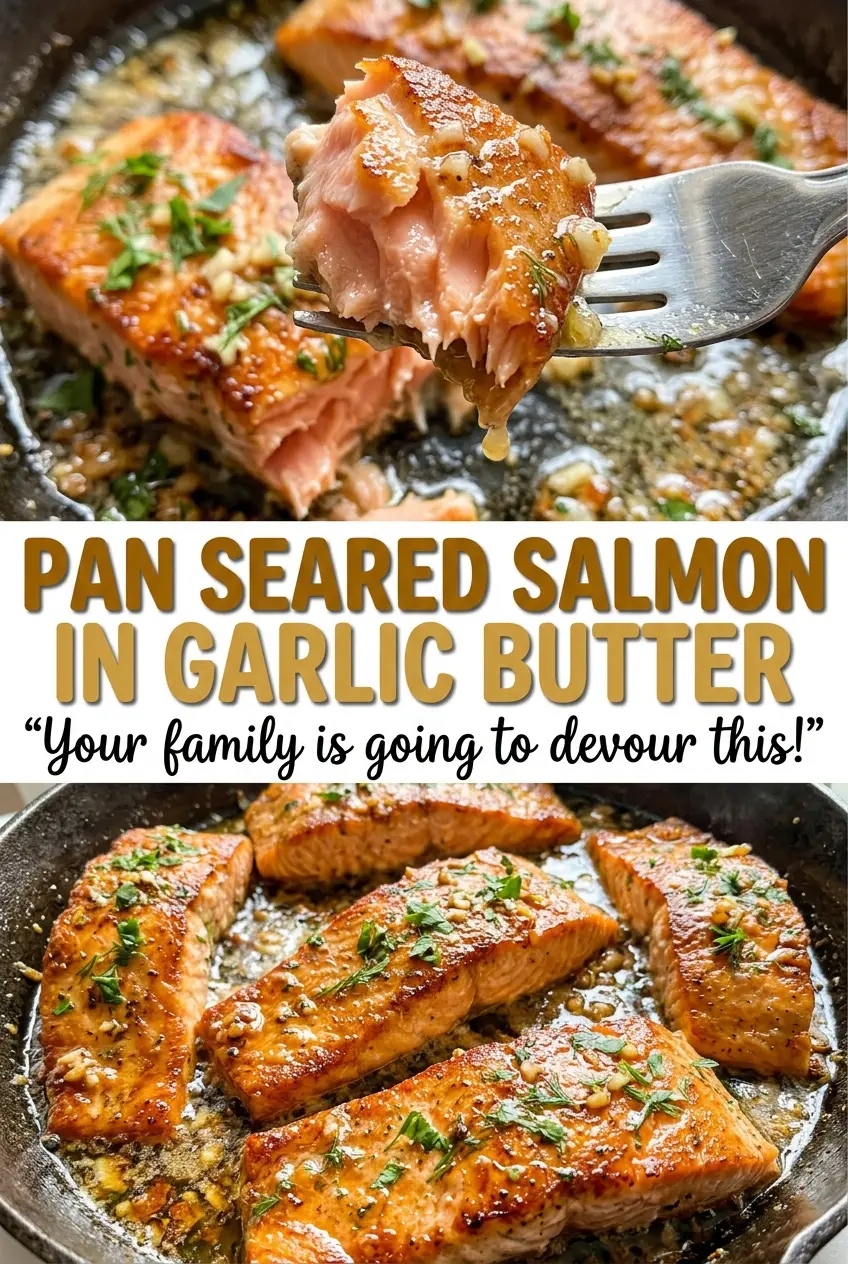
- Skin-on salmon — The skin protects the fish as it sears and gives you a crisp surface to serve. Fillets with similar thickness are easier to cook to the same doneness; premium salmon isn’t essential, but fresh-smelling fish and intact skin make a difference. There isn’t a direct fish swap that keeps the same timing and texture.
- Olive oil — It helps the salmon sear without requiring a thick coating of fat. An everyday olive oil is fine here; save a more delicate finishing oil for another use. It also works as the dairy-free alternative to butter in the sauce, though the result is lighter and less velvety.
- Unsalted butter and garlic — Butter gives the sauce its rich body, while freshly minced garlic releases its aroma quickly in the warm fat. Unsalted butter lets you control the seasoning on the fish. Mince the garlic before it goes into the skillet so it can cook evenly during its short time in the pan.
- Lemon juice and parsley — Lemon cuts through the richness, and parsley brings a fresh, green note to the finish. Bottled lemon juice can stand in for freshly squeezed juice measure-for-measure, though it tastes less bright. Fresh parsley is the better choice here; dried parsley won’t give the sauce the same fresh finish.
Getting the Skin Seared Before the Garlic Goes In
Dry and Season the Fillets
Pat the salmon dry, then season both sides with kosher salt and black pepper. Heat the olive oil in a 12-inch skillet over medium-high heat until it shimmers. Starting with a properly heated skillet helps the fish begin searing as soon as it goes in.
Let the Skin Make Full Contact
Set the salmon in the skillet skin-side down and press gently for the first 10 seconds so the skin makes full contact. Cook for 5–7 minutes without repeatedly moving the fillets around. That contact gives the skin time to brown while the heat works through the fish.
Flip and Check the Thickest Part
Flip the salmon and cook for another 2–4 minutes. Check the thickest part of a fillet with an instant-read thermometer; it should reach 145°F. Transfer the cooked salmon to the waiting plate.
Finish the Garlic Butter Off the Heat
Reduce the heat to medium-low and stir the butter in the skillet until it melts. Add the garlic and cook, stirring, for 30–60 seconds, just until fragrant; don’t wait for it to turn dark. Take the skillet off the heat before stirring in the lemon juice and parsley, then spoon the butter over the salmon.
A Dairy-Free Drizzle and a Simpler Garlic-Lemon Finish
Dairy-Free Olive Oil Finish
Replace the butter with an equal amount of olive oil, then warm it over medium-low and cook the garlic as usual before stirring in the lemon juice and parsley off the heat. The sauce will be thinner and more olive-forward, without the creamy feel butter gives it.
Leave Out the Parsley
Skip the parsley for a cleaner garlic-and-lemon butter. The sauce will lose its fresh herbal note, but the salmon still gets the same buttery, citrusy finish.
Storage and Reheating
- Refrigerator: Store promptly in an airtight container for 3–4 days. The skin softens, and the butter firms up when chilled.
- Freezer: Freeze in an airtight container for up to 2–3 months for best quality, then thaw in the refrigerator. The texture will be softer after thawing.
- Reheating: Cover and warm in the microwave at 50% power in short bursts until the salmon reaches 165°F. High heat can dry out the fish and make the butter greasy.
Questions That Come Up With This Skin-On Salmon
Pan Seared Salmon in Garlic Butter
Ingredients
Equipment
Method
- Pat the salmon dry and season both sides with the salt and pepper.
- Heat the olive oil in a 12-inch skillet over medium-high heat until shimmering.
- Place the salmon skin-side down in the skillet and cook for 5–7 minutes, pressing gently for the first 10 seconds so the skin makes full contact.
- Flip the salmon and cook for 2–4 minutes, until the thickest part reaches 145°F.
- Transfer the salmon to a plate.
- Reduce the heat to medium-low, add the butter to the skillet, and stir until melted.
- Add the garlic and cook for 30–60 seconds, stirring, until fragrant.
- Remove the skillet from the heat and stir in the lemon juice and parsley.
- Spoon the garlic butter over the salmon and serve.