Golden, crisp Parmesan crust and juicy chicken underneath is the kind of dinner that disappears fast, even on a plain weeknight. The coating bakes into a salty, crunchy shell that tastes far richer than the short ingredient list suggests, and the best part is that it goes from pantry staples to the table with almost no cleanup.
The key is the mayonnaise layer. It does two jobs at once: it helps the crust cling evenly and it protects the chicken so the breasts stay moist while the top turns deeply browned. Panko brings the crunch, Parmesan brings the savory finish, and pounding the chicken to an even thickness keeps the thinner ends from drying out before the center is done.
Below, I’ll walk through the parts that matter most, including how to keep the crust from sliding off and how to adapt this for different needs without losing that crisp, baked finish.
The crust came out crunchy all the way across, and the chicken stayed juicy even after the 25 minutes. My picky eater asked for it again the next night.
Like this Parmesan Crusted Chicken? Save it to Pinterest for those nights when you want a crisp baked crust, juicy chicken, and barely any cleanup.
The Reason the Crust Sticks Instead of Sliding Off
The crust on baked chicken usually fails in one of two places: the coating never really adheres, or it browns before the chicken is cooked through. This version avoids both problems by using mayonnaise as the glue and by keeping the coating mixture dry and crumbly instead of pasty. That gives you a coating that presses on firmly and then bakes into a crisp shell instead of turning gummy.
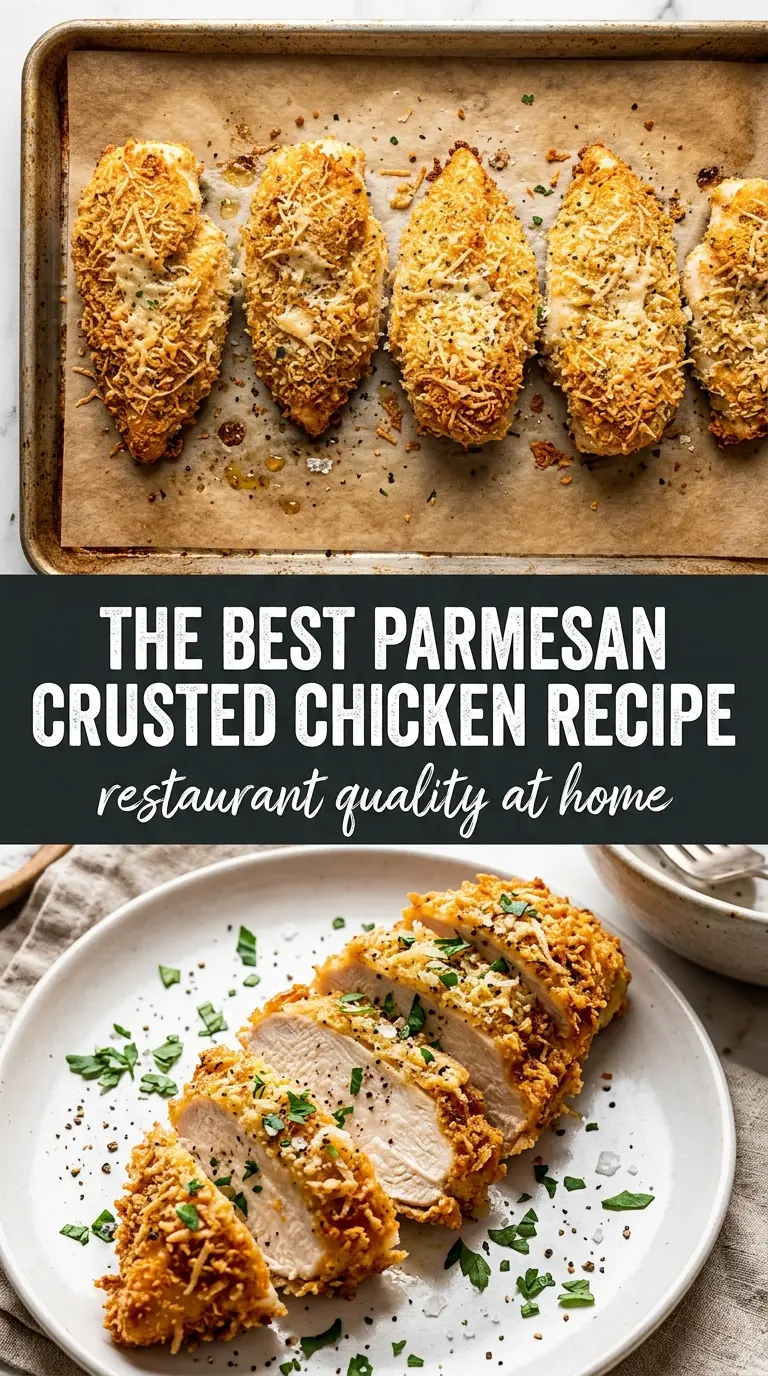
Pounding the chicken to an even thickness matters more than people think. Uneven breasts cook unevenly, which means the thin edges dry out before the center is safe. A uniform piece cooks fast, stays juicy, and lets the Parmesan-panko crust turn golden at the same pace across the whole surface.
- Mayonnaise — This is the moisture insurance here. It won’t taste like mayo once baked; it just melts into the chicken and helps the crust adhere. Greek yogurt can work in a pinch, but the crust won’t brown quite the same way and the coating can look a little drier.
- Parmesan — Use finely grated Parmesan, not big shreds. Fine Parmesan blends into the panko and gives you more even browning and better coverage. Pre-grated works, but the flavor is sharper and the melt is less even than freshly grated.
- Panko breadcrumbs — Panko gives this chicken its light crunch. Regular breadcrumbs make a denser, softer coating, which is fine if that’s what you want, but they won’t give you the same crisp bite from the oven.
- Chicken breasts — Boneless, skinless breasts are the right choice because they’re easy to pound thin and cook quickly. If the breasts are especially large, slice them horizontally first or you’ll fight overcooked coating before the center reaches temperature.
How to Build the Coating So It Bakes Crisp, Not Soggy
Pounding to a steady thickness
Lay the chicken between sheets of parchment or plastic and tap it until the thickest part is about the same thickness as the thin end. That keeps the finished chicken tender instead of stringy at one end and dry at the other. If a breast is huge, split it before pounding so you’re not trying to flatten one giant piece into a shape that cooks evenly.
Coating with the mayo layer
Spread a thin, even coat of mayonnaise over both sides. Thick blobs are the enemy here because they soften the crust and make it patchy. You want just enough to create a tacky surface so the Parmesan mixture clings the second it hits the chicken.
Pressing on the crust
Mix the Parmesan, panko, garlic powder, Italian seasoning, salt, and pepper in a shallow dish, then press each breast firmly into the mixture. Don’t just dip and lift; press hard enough that the crumbs actually embed in the mayo layer. The more contact you get at this stage, the less coating you lose on the baking sheet.
Baking until the top is deeply golden
Put the coated chicken on a parchment-lined sheet and bake at 400°F until the crust is crisp and golden and the center reaches 165°F. The coating should smell nutty before it’s done, and the edges will look a shade darker than the center. If the top looks pale at the end, give it a minute or two longer instead of guessing by color alone.
Three Ways to Make Parmesan Crusted Chicken Fit Your Table
Dairy-Free Version
Swap the Parmesan for a dairy-free Parmesan-style topping and use a thin layer of mayo or plain dairy-free yogurt. The crust will still get crunchy, but it won’t have quite the same salty, nutty finish as real cheese, so season the coating a little more assertively.
Gluten-Free Option
Use gluten-free panko in place of regular panko. The texture stays light and crisp, which is what you want here. Avoid crushed fine crackers or almond flour alone, because they brown faster and can turn the crust heavy instead of airy.
Chicken Thighs Instead of Breasts
Boneless thighs work well if you want darker, juicier meat. They take a little longer to cook and won’t sit as flat, so press them gently before coating and check the temperature near the thickest part. The crust stays excellent, but the shape is less tidy than with breasts.
Storage and Reheating
- Refrigerator: Store leftovers in an airtight container for up to 3 days. The crust softens a bit in the fridge, which is normal.
- Freezer: It freezes, but the coating won’t stay as crisp. Freeze cooked chicken in a single layer, then wrap well once solid.
- Reheating: Reheat on a wire rack in a 375°F oven until hot through. The mistake to avoid is microwaving, which turns the crust limp before the chicken warms evenly.
Questions I Get Asked About This Recipe
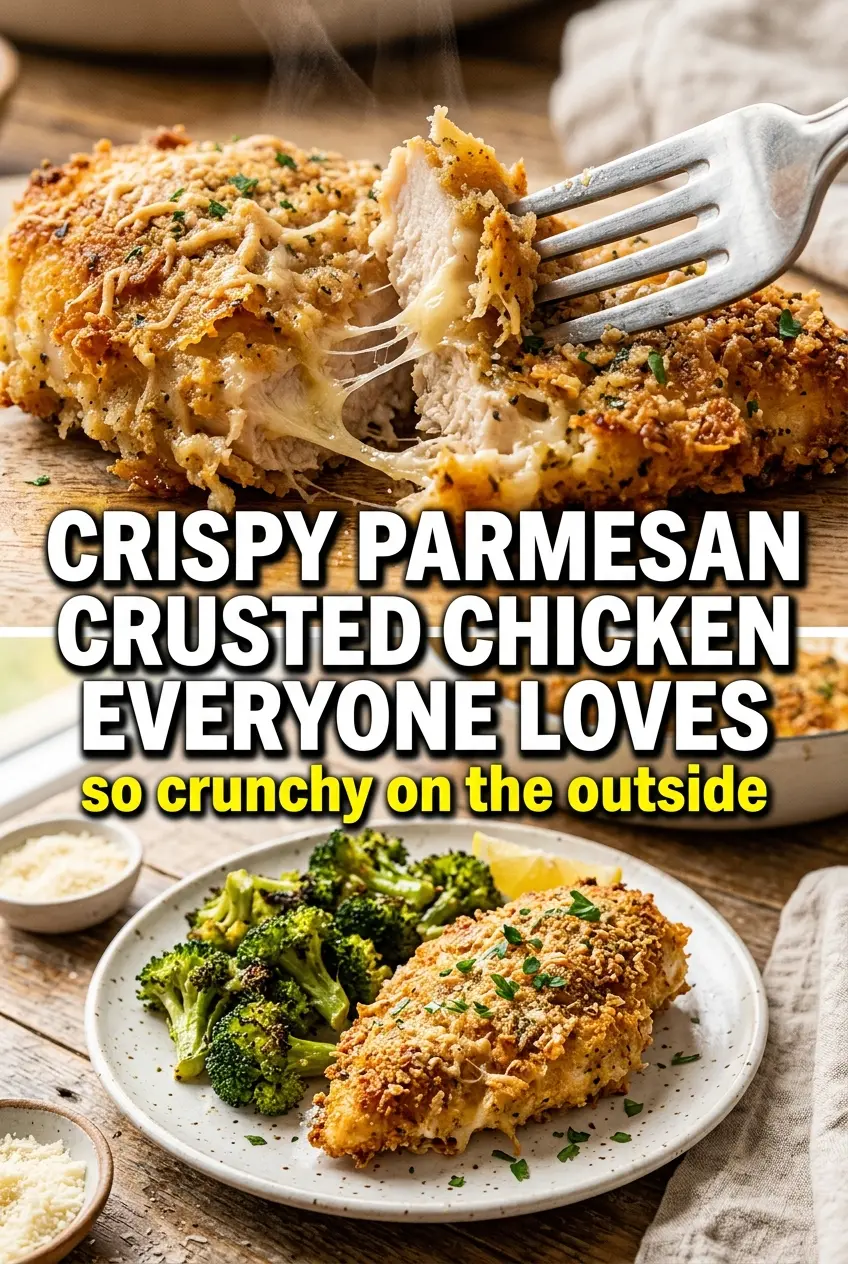
Parmesan Crusted Chicken
Ingredients
Equipment
Method
- Preheat the oven to 400°F and line a sheet pan with parchment paper.
- Pound the chicken breasts to an even thickness so they cook at the same rate.
- Spread a thin, even layer of mayonnaise over both sides of each chicken breast.
- In a shallow dish, combine grated Parmesan, panko breadcrumbs, garlic powder, Italian seasoning, kosher salt, and black pepper.
- Press each chicken breast firmly into the Parmesan mixture, coating both sides completely, then place on the prepared sheet pan.
- Bake at 400°F for 22–25 minutes, until the crust is golden and the internal temperature reaches 165°F.
- Garnish with fresh parsley before serving.