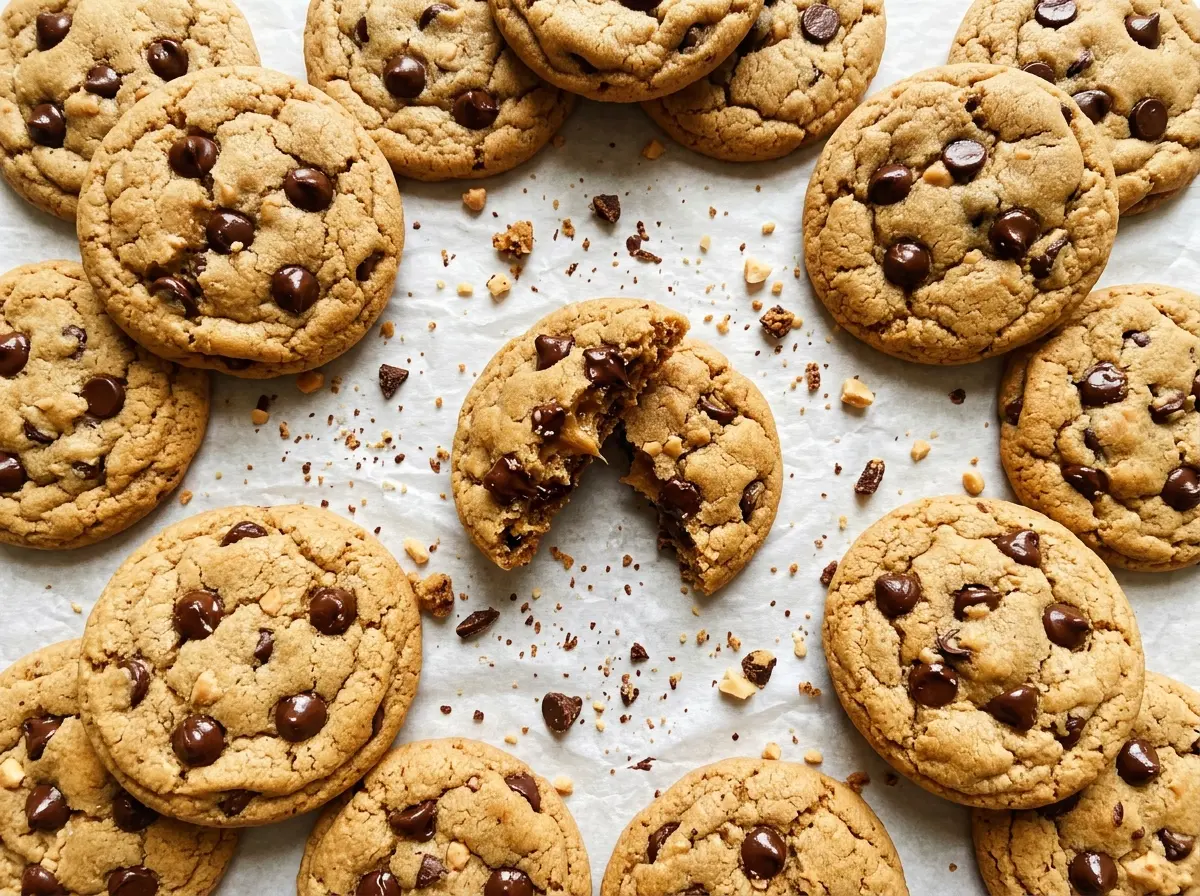
The edges of these cookies turn lightly golden before the centers look fully baked, which is exactly the moment to take them out. They’ll seem a little soft when you lift the pan from the oven, then settle as they cool. That short pause is what gives peanut butter chocolate chip cookies their tender middle instead of a dry, crumbly bite.
The dough brings softened butter and creamy peanut butter together, so you get a cookie that tastes unmistakably peanutty without losing the familiar buttery texture. Semisweet chocolate chips cut through the sweetness, and the dough comes together in one bowl for the wet ingredients and one for the dry. I portion the dough evenly so all 24 cookies bake at about the same pace, with golden edges and soft centers.
Kitchen Note
Bake one sheet at a time on the middle rack. Keeping the second pan out of the oven means each batch gets the same steady heat instead of competing for space.
Save these peanut butter chocolate chip cookies for a bake when you want soft centers, golden edges, and plenty of semisweet chocolate.
Why These Peanut Butter Cookies Need Both Kinds of Sugar
Granulated sugar and brown sugar aren’t interchangeable here. Granulated sugar helps the edges bake up lightly crisp, while packed light brown sugar brings moisture that keeps the centers tender. Together, they give the cookies a little contrast: a delicate edge around a soft, peanut-buttery middle.
That balance matters because peanut butter makes cookie dough feel denser than a plain butter dough. Replacing all the brown sugar with granulated sugar pushes the result toward a drier, crisper cookie; using only brown sugar makes the sweetness feel heavier and the edges less defined. Cream the sugars with both fats until the mixture looks creamy, then stop once the flour is incorporated. More mixing after the flour goes in can make the cookies tougher, and extra flour can mute the peanut butter and chocolate. The goal is a cohesive dough with no dry streaks, not a stiff dough that holds its shape before baking.
What Each Ingredient Brings to the Cookie Dough
- Unsalted butter — Softened butter creams smoothly with the sugars; melted butter won’t give you the same starting texture. A good everyday butter works well here. For a dairy-free batch, use stick-style plant butter in the same amount, not a soft tub spread.
- Creamy peanut butter — Conventional creamy peanut butter gives the dough a consistent texture and a clear peanut flavor. The inexpensive shelf-stable kind is fine; the important part is using creamy rather than a separated, oily natural style if you want the dough to behave predictably.
- Granulated and light brown sugars — Pack the brown sugar so the dough gets its intended moisture, and use brown sugar that’s still soft rather than hardened into lumps. Dark brown sugar works in its place, but its deeper molasses taste will come through more strongly.
- All-purpose flour — Spoon it into the measuring cup and level the top rather than scooping straight from the bag, which can compact extra flour into the cup. That small difference matters in peanut butter dough, where too much flour can leave the baked cookies dry.
- Semisweet chocolate chips — Standard chips hold their shape and keep the chocolate from overwhelming the peanut butter. Any reliable brand works; choose a darker chip if you prefer a less sweet bite.
Mixing and Baking for Soft Centers and Golden Edges
Get the Butter and Sugars Creamy
Heat the oven to 350°F and line two large baking sheets with parchment paper. Beat the softened butter, creamy peanut butter, granulated sugar, and packed light brown sugar in a large bowl for about 2 minutes. The mixture should look creamy and evenly blended, not like separate streaks of butter and peanut butter. If the butter is still cold and lumpy, give it a little more time to soften before you start; melted butter won’t give you the same creamed texture.
Bring the Wet and Dry Mixtures Together
Beat in the egg and vanilla until combined. In a separate medium bowl, whisk the flour, baking soda, and salt so the leavener doesn’t remain concentrated in one spot. Add the dry ingredients to the butter mixture and mix just until no dry streaks remain. Stop there—even a smooth-looking dough can turn tough if you keep beating after the flour disappears.
Fold in the Chips and Portion the Dough
Fold in the semisweet chocolate chips, scraping through the bottom of the bowl so they’re distributed through the dough. Scoop 24 portions, about 1 1/2 tablespoons each, and arrange 12 on each prepared sheet. Leave about 2 inches between portions so the cookies have room to spread. If the last few scoops look noticeably larger than the first, adjust them before baking so the cookies finish at roughly the same time.
Bake Until the Centers Still Look Soft
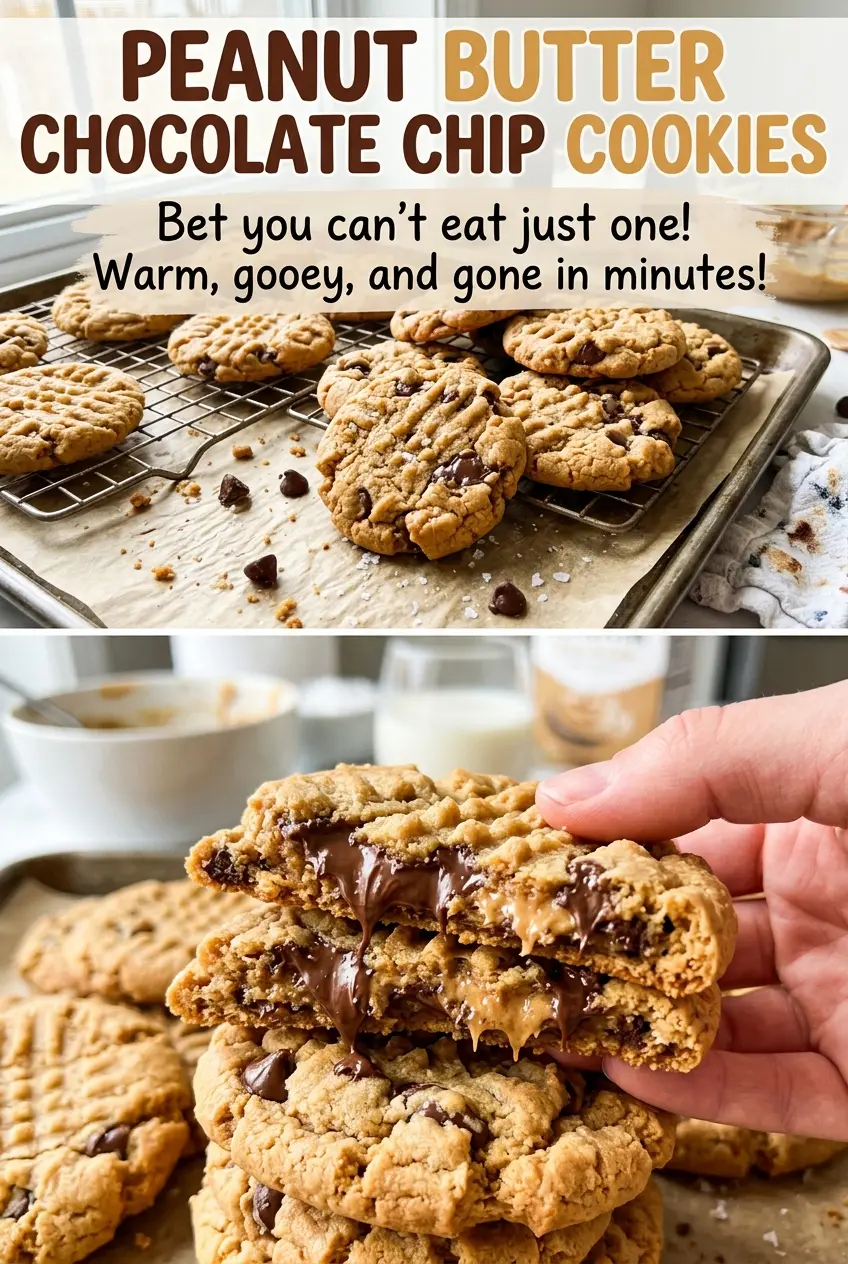
Bake one sheet at a time on the middle rack for 10 to 12 minutes. Look for lightly golden edges while the centers still appear slightly soft; waiting for the middles to look firm in the oven can take the cookies past their best texture. Let each batch cool on its baking sheet for 5 minutes, then transfer the cookies to a wire rack to cool completely. They’re delicate right out of the oven, so give them that short rest before moving them.
Three Simple Ways to Change Up These Cookies
Use Darker Chocolate
Swap the semisweet chips for bittersweet chocolate chips. The cookies will taste less sweet, with a stronger cocoa note alongside the peanut butter; keep the same quantity and fold them in at the same stage.
Make Them Dairy-Free
Replace the unsalted butter with the same amount of stick-style dairy-free plant butter. It keeps the dough workable and gives you a similar cookie, though the flavor and browning can vary by brand. The peanut butter and chocolate chips also need to be dairy-free for the finished cookies to avoid dairy.
Add a Roasted Peanut Crunch
Replace 1/4 cup of the chocolate chips with chopped roasted peanuts. You’ll get crunchy peanut pieces in each bite and a little less chocolate, without changing the dough or its baking time.
Storage and Reheating
- Room temperature: Keep completely cooled cookies in an airtight container for up to 4 days. The edges soften gradually, while the centers stay tender.
- Freezer: Freeze cooled cookies in an airtight container for up to 2 months, with parchment between layers to prevent sticking. Thaw at room temperature.
- Reheating: Warm one cookie in the microwave for about 5 to 8 seconds if you want the chocolate soft again. Longer heating can make the cookie hot and overly soft, so use short bursts.
Questions That Come Up When Baking These Cookies
Peanut Butter Chocolate Chip Cookies
Ingredients
Equipment
Method
- Heat the oven to 350°F.
- Line two large baking sheets with parchment paper.
- Beat the butter, peanut butter, granulated sugar, and brown sugar in a large bowl until creamy, about 2 minutes.
- Beat in the egg and vanilla until combined.
- Whisk the flour, baking soda, and salt in a medium bowl.
- Add the flour mixture to the butter mixture and mix just until no dry streaks remain.
- Fold in the chocolate chips.
- Scoop the dough into 24 portions, about 1 1/2 tablespoons each.
- Arrange 12 portions on each baking sheet, spacing them about 2 inches apart.
- Bake one sheet at a time on the middle rack for 10 to 12 minutes, until the edges are lightly golden and the centers still look slightly soft.
- Cool the cookies on the baking sheet for 5 minutes.
- Transfer the cookies to a wire rack to cool completely.