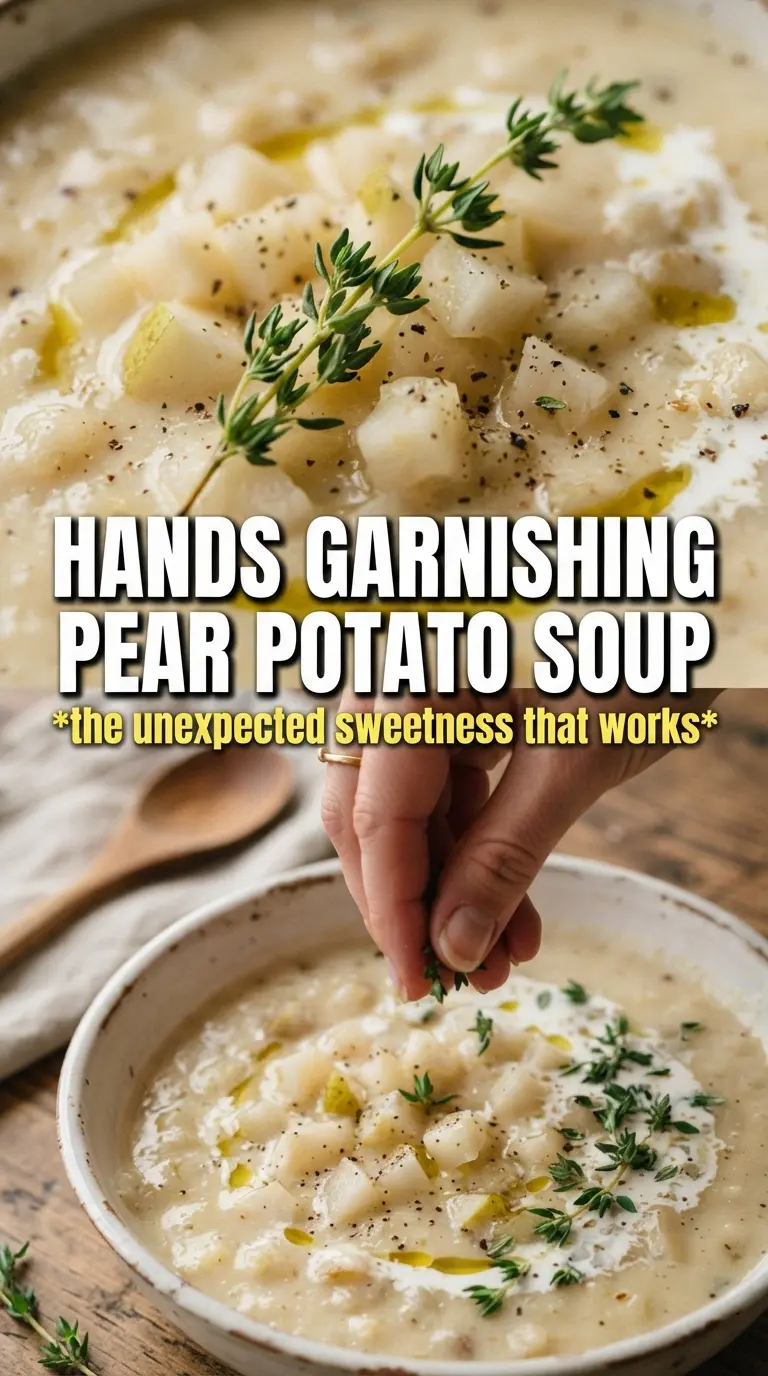
Pear potato soup lands in that sweet spot between comforting and surprising. The potatoes give it body, the pears soften into a mellow, fragrant sweetness, and the final bowl comes out silky instead of heavy. What you get is a pale golden soup with a refined finish, especially when it’s topped with a little blue cheese, crunchy walnuts, and a thin drizzle of honey.
The trick is using ripe pears that are sweet but still intact enough to hold their flavor through simmering, plus Yukon gold potatoes for a naturally creamy texture. I like blending the soup completely smooth before the cream goes in, which keeps the texture velvety and helps the pear flavor stay clean instead of muddled. A little thyme and white pepper keep it from tasting flat, and the gorgonzola on top pulls the whole bowl into savory territory.
Below, I’ve included the part that matters most: how to keep the soup silky, how to balance the sweetness, and what to swap if you want a different finish. The toppings matter here more than you might expect, so don’t skip them.
The pears cooked down just enough to sweeten the soup without making it taste dessert-like, and the gorgonzola on top was the perfect salty finish. Mine blended up completely smooth with no graininess at all.
Love the silky pear potato soup with gorgonzola and honey? Save it to Pinterest for a dinner that feels elegant but comes together in one pot.
The Detail That Keeps Pear Soup From Tasting Too Sweet
Pear soup can go wrong fast if the fruit is the only thing doing the talking. Pears bring perfume and sweetness, but potatoes are what turn this into dinner instead of dessert. Yukon golds are the right choice because they blend into something naturally creamy without turning gluey, and that matters once the soup gets fully pureed.
The other thing that keeps this balanced is the order. The pears and potatoes simmer together until both are completely tender, then the soup gets blended before the cream goes in. If you add cream too early, it can mute the brightness of the pears and make the soup feel heavier than it should. White pepper and thyme finish the job by giving the sweetness something savory to lean against.
What Each Ingredient Is Actually Doing in This Bowl
- Pears — Use ripe pears that smell fragrant at the stem and yield slightly when pressed. They cook down into the soup’s gentle sweetness and give it a softer, more elegant flavor than apples would. Bartlett or Anjou both work well.
- Yukon gold potatoes — These are the backbone of the texture. They break down into a naturally silky puree, which is why the soup feels rich without needing a huge amount of cream. Russets will work in a pinch, but they can make the soup a little starchier.
- Heavy cream — This smooths out the final texture and rounds off the pear flavor. Half-and-half can work, but the soup will be lighter and a little less plush. Stir it in after blending so it stays clean and doesn’t dull the flavor.
- Vegetable or chicken broth — Use a broth you’d actually drink. Since the soup is built from just a handful of ingredients, a flat broth makes the whole pot taste muted.
- Gorgonzola, candied walnuts, and honey — These toppings are not decoration. The cheese adds salt and tang, the walnuts bring crunch, and the honey ties the pear flavor back to the top of the bowl in a way that feels intentional.
Building the Soup So It Stays Silky
Softening the Onion First
Start with butter, onion, and a medium heat that lets the onion turn soft and golden without browning too fast. If the onion still tastes sharp, give it another minute. That first layer matters because it becomes the savory base that keeps the pears from reading as overly sweet.
Letting the Pears and Potatoes Fully Collapse
Add the broth, potatoes, pears, and thyme, then bring the pot to a boil before lowering it to a steady simmer. The vegetables should be completely tender before blending; if the potatoes still have a firm center, the soup will turn grainy instead of smooth. You’re looking for pieces that break apart the moment a spoon hits them.
Blending Before the Cream Goes In
Blend the soup until there are no visible bits left. This is the point where an immersion blender makes life easier, but a countertop blender works too if you do it in batches and vent the lid carefully. Once the soup is smooth, stir in the cream and season with nutmeg, white pepper, and salt. If you blend after adding the cream, the texture can turn a little foamy and the final bowl won’t taste as clean.
Finishing the Bowl
Ladle the soup while it’s hot, then top each bowl with a little gorgonzola, walnuts, and honey. That contrast is what makes the dish feel finished. If you want the best result, add the honey last so it stays visible on top instead of dissolving into the soup.
How to Adapt This for Different Dinners
Make It Dairy-Free Without Losing the Silkiness
Swap the butter for olive oil or a plant-based butter and use full-fat coconut milk or unsweetened oat cream instead of heavy cream. Coconut milk adds a faint sweetness, while oat cream stays neutral. The soup will still be smooth, but it won’t have quite the same rich finish as the dairy version.
Skip the Blue Cheese and Keep It Milder
If you want a softer flavor, top the soup with shaved Parmesan or even a spoonful of sour cream instead of gorgonzola. You lose some tang, but the soup stays elegant and a little more approachable for people who don’t love strong cheese.
Use It as a Vegetarian Main
Use vegetable broth and keep the toppings vegetarian-friendly. A thick slice of crusty bread on the side turns it into a proper meatless main without changing the soup itself.
Storage and Reheating
- Refrigerator: Store in an airtight container for up to 4 days. It thickens as it chills, so expect a slightly denser texture the next day.
- Freezer: It freezes well without the cream. For the best texture, freeze the blended soup base first, then stir in fresh cream after reheating.
- Reheating: Warm it gently over low heat and stir often. Hard boiling can make the cream separate and can dull the pear flavor.
Answers to the Questions Worth Asking

Pear Potato Soup
Ingredients
Equipment
Method
- Melt the unsalted butter in a large pot over medium heat, then sauté the diced onion for 5 minutes until soft and golden. Keep the heat at medium so the onion turns golden but does not brown too fast.
- Add the minced garlic and cook for 1 minute, then add the broth, cubed Yukon gold potatoes, and chopped ripe pears. Stir to coat everything so the pear flavor disperses evenly.
- Add the fresh thyme leaves, bring the mixture to a boil, then simmer for 25 minutes until both the potatoes and pears are completely tender. You should be able to pierce the potatoes easily with a fork.
- Blend completely smooth with an immersion blender until no chunks remain and the soup looks silky. Blend while the pot is still hot for the smoothest texture.
- Stir in the heavy cream, then season with nutmeg, white pepper, and salt to taste. Adjust salt last so the flavor lands well after the cream is mixed in.
- Serve the pear potato soup hot and top each bowl with crumbled gorgonzola or blue cheese, candied walnuts, a drizzle of honey, and fresh thyme. Add toppings just before serving so the walnuts stay crisp.