At the 15-minute mark, the cake looks pale and barely set, which can feel early when you’re used to baking a cake until it’s golden. For pecan pie cake, that first bake is meant to stop short: the batter needs a little structure before the syrupy pecan topping goes on. The 9×13-inch dish gives you a broad layer of cake under a generous pecan topping, with enough squares to serve 16.
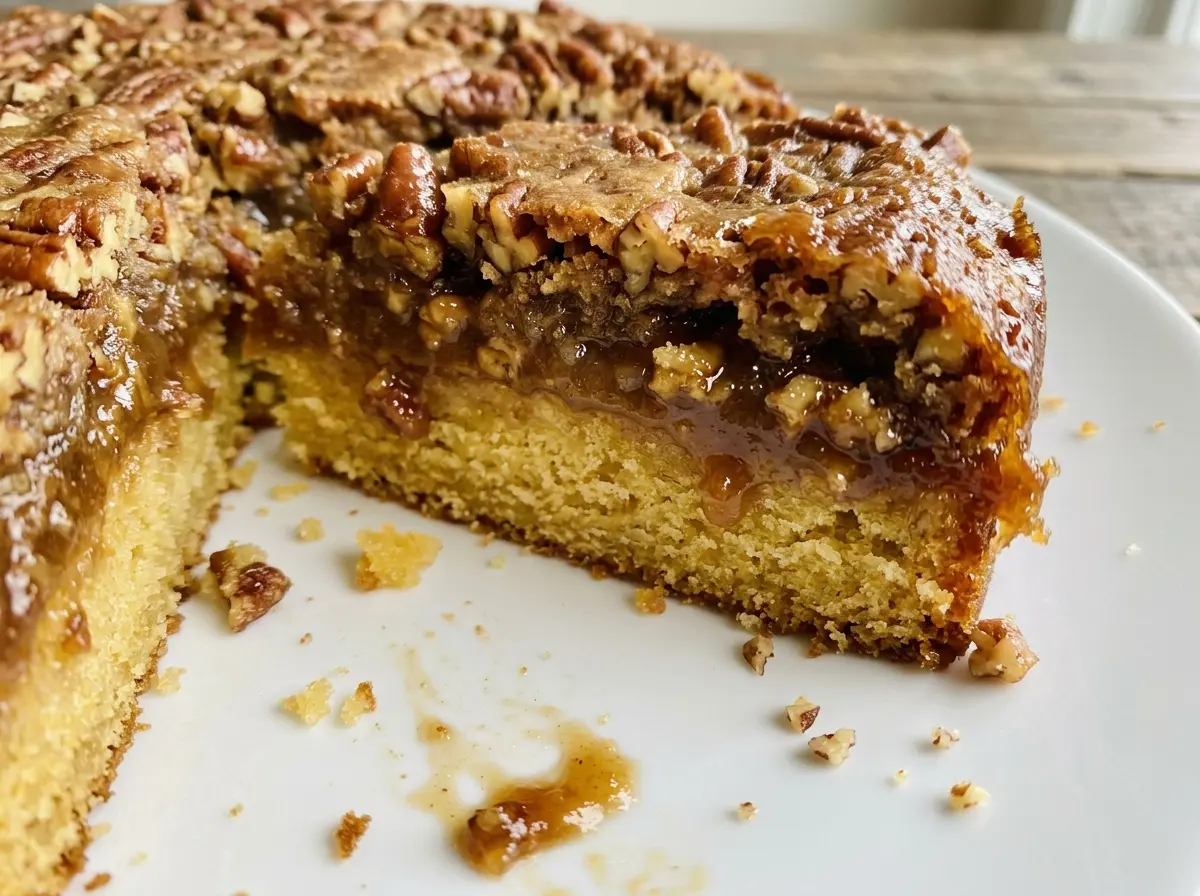
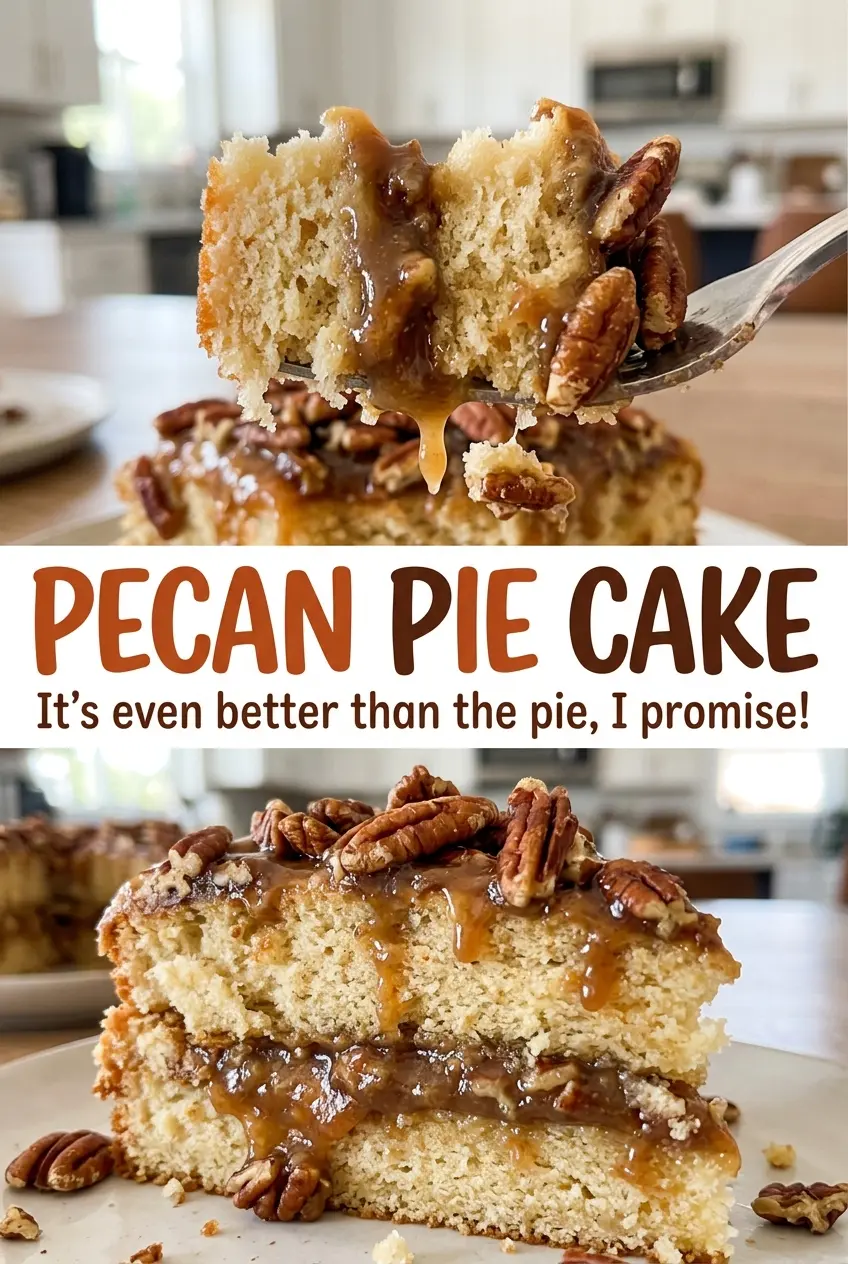
The topping starts as a smooth mixture of eggs, corn syrup, brown sugar, and melted butter, then gets folded with chopped pecans. It bakes right on top of the cake, so every square has a tender base and a glossy, nut-packed top. Let the pan cool completely before cutting, and you’ll get neat squares with a soft cake layer beneath that sticky pecan finish.
Kitchen Note
Once the pan is completely cool, use a sharp knife and wipe the blade between cuts. The syrupy pecan topping clings to the knife, and a clean blade helps keep each square’s top in place.
Save this pecan pie cake for a dessert with a tender cake layer and a glossy, pecan-filled top.
Why the Cake Gets a Head Start Before the Pecan Filling
The cake and topping have different jobs, and they don’t need the same amount of time in the oven. The cake batter needs a few minutes to begin setting into a soft base. The topping is much wetter and heavier, with eggs and corn syrup holding the pecans together. Starting them together would leave that liquid topping sitting on raw batter from the beginning, rather than layering it over a surface that has started to set.
That first bake is intentionally brief. The top should be beginning to set but still pale; it isn’t supposed to look like a finished cake. Once the pecan mixture goes on, both layers finish baking together. The cake stays tender underneath while the topping browns and firms around the nuts. Trust the visual cue more than the color of the cake: a pale surface at this point is exactly what you want.
What the Cake Batter and Pecan Filling Each Need
- All-purpose flour — It gives the cake enough structure to support the topping without turning the base dense. A cup-for-cup gluten-free baking blend made for cakes is the most practical substitute; the crumb may be a little more delicate.
- Unsalted butter — Softened butter creams smoothly into the cake batter, while melted butter blends into the topping. Use unsalted so you can control the salt in each layer. Plant-based baking sticks work in both places for a dairy-free version; avoid tub spreads, which have more water.
- Eggs — The cake eggs help bind and lift the batter, while the topping eggs help it set around the pecans. Bring them to room temperature if you can; they blend more evenly into the butter and syrup mixtures.
- Whole milk — It brings richness and moisture to the cake crumb. Two-percent milk works in the same amount, though the cake will be a little less rich; unsweetened oat milk is a useful dairy-free alternative.
- Light corn syrup — It gives the topping its smooth, cohesive texture and keeps the brown sugar mixture from turning grainy. It’s doing more than adding sweetness, so don’t swap in a thinner syrup without expecting a different set.
- Light brown sugar — Its mild molasses flavor adds depth without overpowering the pecans. Dark brown sugar works in its place for a more pronounced molasses note.
- Chopped pecans — Chopped nuts spread evenly through the filling, so each square gets pecans without becoming difficult to cut. Fresh pecans taste sweeter and cleaner; if yours smell stale or bitter, replace them.
- Vanilla extract — It rounds out both the cake and the filling. Pure vanilla is lovely, but a standard vanilla extract works well here because the brown sugar and pecans carry the bigger flavor.
How to Bake the Cake Layer Before Adding the Pecan Topping
Mix a Smooth, Tender Cake Batter
Whisk the flour, granulated sugar, baking powder, and salt in a medium bowl so the leavening is distributed throughout. In a large bowl, beat the softened butter until creamy, then beat in the eggs one at a time and mix in the vanilla. Add the dry mixture in three additions, alternating with the milk in two additions. Stop mixing as soon as the flour disappears; extra beating can make the cake layer tough.
Give the Base Its First 15 Minutes
Spread the batter evenly in the greased 9×13-inch baking dish, taking it all the way into the corners. Bake at 350°F for 15 minutes. The surface should be beginning to set, but it should still look pale rather than golden. If it’s already browned, the cake has gone farther than intended before the topping is added.
Whisk the Filling and Add the Pecans
While the cake bakes, whisk the topping eggs, corn syrup, brown sugar, melted butter, vanilla, and salt until smooth. Let the melted butter cool slightly before it goes into the egg mixture; hot butter can cook little bits of egg before the topping reaches the oven. Stir in the chopped pecans, then carefully pour the mixture evenly over the partially baked cake. Pour gently so the cake surface stays in place.
Bake Until the Center Only Slightly Jiggles
Return the dish to the oven and bake for 30 to 35 minutes. Look for a browned topping and edges that appear set; the center should move just a little when the dish is nudged. A liquid-looking center needs more oven time, while waiting for absolutely no movement can leave the topping overbaked. Cool the cake completely in the dish, about 2 hours, before cutting.
Three Ways to Adapt Pecan Pie Cake
Use Dark Brown Sugar for a Deeper Filling
Replace the light brown sugar with the same amount of dark brown sugar. The topping will have a stronger molasses note and a slightly darker color, while keeping the same pecan-pie character.
Make It Gluten-Free
Use a cup-for-cup gluten-free flour blend formulated for baking in place of the all-purpose flour. The topping stays the same, while the cake layer may be a little more tender and less springy than the original.
Make It Dairy-Free
Use plant-based baking sticks in place of the butter and unsweetened oat milk instead of whole milk, keeping the same amounts. Choose sticks rather than a soft tub spread so the cake batter and topping retain a closer texture; the cake may taste a little less buttery.
Storage and Reheating
- Refrigerator: Cover the cooled cake and refrigerate for 3 to 4 days. The cake layer firms up when cold, while the pecan topping stays chewy.
- Freezer: Freeze individual squares in an airtight container for up to 2 months. Separate layers with parchment so the sticky topping doesn’t pull against the cake when you thaw a piece.
- Reheating: Let a square soften at room temperature or warm it briefly in the microwave. Long heating can make the syrupy topping run and the cake turn tough.
Questions That Come Up When Baking Pecan Pie Cake
Pecan Pie Cake
Ingredients
Equipment
Method
- Heat the oven to 350°F.
- Grease a 9x13-inch baking dish.
- Whisk the flour, granulated sugar, baking powder, and salt in a medium bowl.
- Beat the softened butter in a large bowl until creamy.
- Beat in the eggs one at a time.
- Mix in the vanilla.
- Add the flour mixture in three additions, alternating with the milk in two additions, mixing just until combined.
- Spread the batter evenly in the prepared dish.
- Bake for 15 minutes, until the surface is beginning to set but is still pale.
- While the cake bakes, whisk the eggs, corn syrup, brown sugar, melted butter, vanilla, and salt in a medium bowl until smooth.
- Stir in the pecans.
- Carefully pour the pecan mixture evenly over the partially baked cake.
- Return the dish to the oven and bake for 30 to 35 minutes, until the topping is browned, the edges are set, and the center jiggles only slightly.
- Cool completely in the dish, about 2 hours.
- Cut into squares.