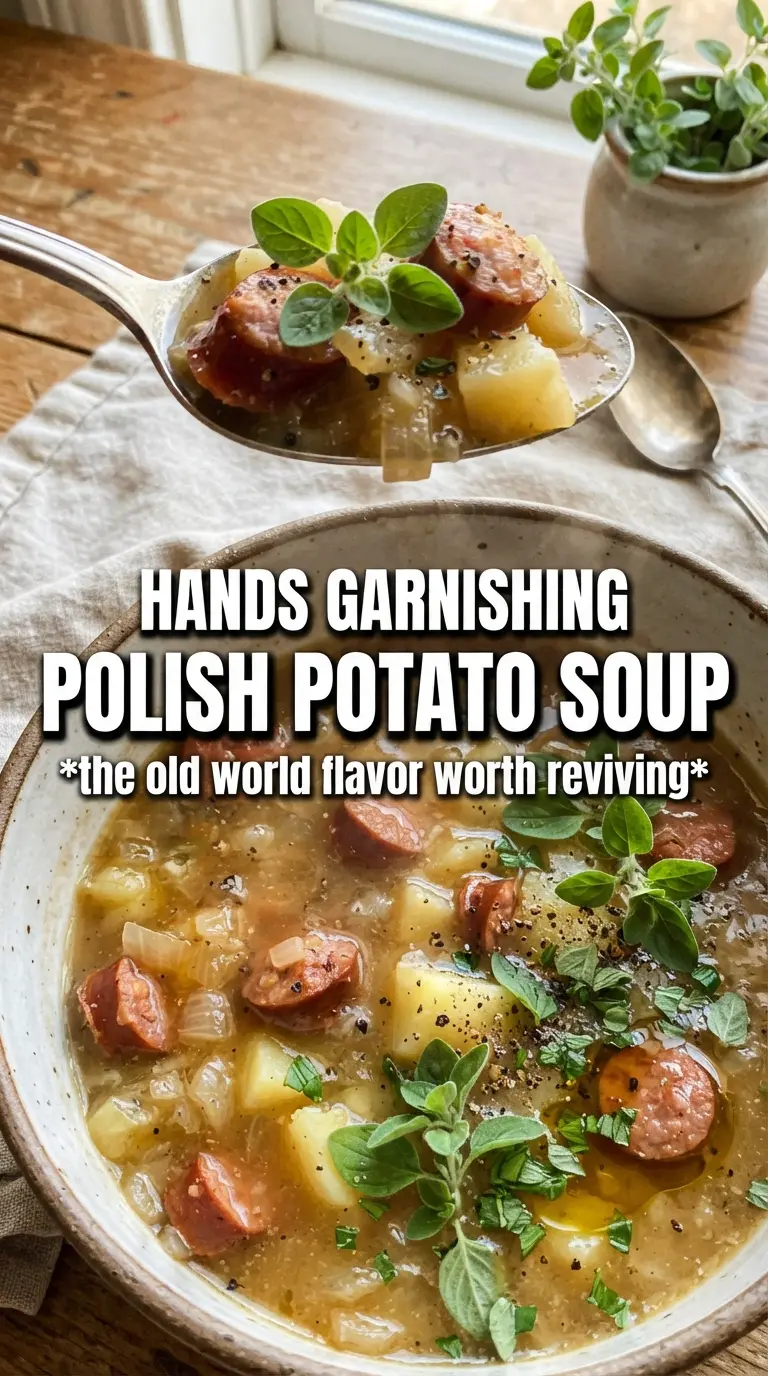
Polish potato soup lands in that sweet spot between humble and deeply satisfying: creamy broth, soft potato chunks, savory kielbasa, and enough dill to keep every spoonful tasting bright instead of heavy. It eats like a full meal, and the texture is what keeps me coming back — thick enough to coat the spoon, but still brothy and rustic, with little pockets of smoked sausage in every bowl.
The trick is building flavor in layers. Browning the kielbasa first gives the pot a smoky base, and those rendered bits help the onions, carrots, and celery pick up more depth before the broth goes in. Then a third of the potatoes get mashed right in the pot, which thickens the soup without flour and keeps it looking like a proper kartoflanki, not a puree.
Below you’ll find the exact order that keeps the cream smooth, plus a few useful swaps if you need to work with sour cream, different sausage, or leftovers that need reviving the next day.
The potatoes broke down just enough to thicken the broth, and the dill at the end kept it tasting fresh. I used sour cream and it stayed smooth because I stirred it in off the heat.
Save this Polish potato soup for a cozy bowl with smoky kielbasa, tender potatoes, and a creamy dill finish.
The Key to a Brothy Soup That Still Eats Like a Meal
The biggest mistake with potato soup is treating it like a cream soup from the start. If you load in the dairy too early or overblend the potatoes, you lose the rustic texture that makes this dish satisfying. This version leans on two things instead: starchy potatoes and a little mashing at the end.
Russets are the right choice here because they break down enough to naturally thicken the broth. Waxy potatoes stay too firm and leave the soup thin unless you add extra help. The kielbasa also matters; it gives the pot salt, smoke, and fat, which is why the base tastes layered instead of flat.
- Russet potatoes — These soften quickly and give the broth body when you mash some of them. Yukon Golds will work in a pinch, but the soup stays a little silkier and less thick.
- Kielbasa — Use a smoked kielbasa with good seasoning. That browned sausage flavor is a big part of the final soup, so bland sausage will leave the broth tasting thin.
- Heavy cream or sour cream — Heavy cream gives a round, smooth finish. Sour cream adds a sharper, more classic tang, but stir it in off the heat or it can look grainy.
- Marjoram and dill — Marjoram belongs in Polish cooking and gives the soup its familiar herbal note. Dill goes in at the end so it stays fresh and doesn’t turn dull or bitter.
What Each Ingredient Is Actually Doing in This Recipe
- Primary ingredient (the star) — Quality matters most. Choose the best you can find.
- Cooking medium (oil, butter, or broth) — This carries flavors and prevents dryness.
- Seasonings (salt, pepper, spices, herbs) — Layer flavors so nothing overpowers. Build depth gradually.
- Aromatics (garlic, onion, herbs) — Cook with fat to bloom flavors. Become the foundation.
- Supporting ingredients — Complement the main ingredient without overpowering it.
- Sauce or liquid (if applicable) — Brings flavors together. Balance richness with acid.
- Acid (lemon, vinegar, wine, or other) — Brightens and prevents flat-tasting results.
- Final finish (garnish, glaze, or sauce) — Prevents one-dimensional taste and adds visual appeal.
Building the Pot So the Dairy Stays Smooth
Brown the Kielbasa First
Start by browning the diced kielbasa in butter until the edges are deep gold and the pan smells smoky. Pull it out before you cook the vegetables so it doesn’t dry out. The rendered fat left behind is part of the flavor, and wiping the pot clean would throw that away.
Cook the Vegetables Until They Lose Their Raw Edge
Add the onion, carrots, and celery to the butter and sausage fat and cook them until the onion turns translucent and the carrots start to soften. This step builds the base and keeps the soup from tasting like boiled potatoes floating in broth. Garlic goes in for just a minute at the end; any longer and it can scorch, which makes the whole pot taste bitter.
Simmer Until the Potatoes Collapse at the Edges
Once the broth, potatoes, marjoram, and bay leaf go in, let the soup simmer until the potatoes are tender enough to cut with almost no resistance. You want them soft, but not disintegrating into mush before you’re ready. If the pot boils hard, the potatoes can break unevenly and the broth can turn cloudy fast, so keep it at a gentle simmer.
Finish With Cream and Dill Off the Heat
Remove the bay leaf, mash about a third of the potatoes, then stir the kielbasa back in. Add the cream or sour cream after you lower the heat, and don’t let the soup boil once it’s in. That’s the easiest way to avoid a broken, grainy finish. Stir in the dill right at the end so it stays bright and fresh.
Three Useful Ways to Adapt This Soup
Use Sour Cream for a More Traditional Tang
Swap the heavy cream for sour cream if you want a sharper finish that tastes closer to old-school kartoflanki. Stir it in after the soup comes off the heat, or whisk a ladle of hot broth into the sour cream first to temper it. That keeps it smooth instead of curdled.
Make It Gluten-Free Without Losing Body
This soup is naturally gluten-free as long as your broth and kielbasa are gluten-free, which is where hidden flour or fillers sometimes sneak in. The potatoes do the thickening work, so you don’t need any starch or roux to get a good texture.
Leave Out the Sausage for a Vegetarian Version
Skip the kielbasa and use vegetable broth, then add a little extra butter or olive oil at the start for depth. You’ll lose the smoky, savory backbone, so the best way to compensate is with a pinch of smoked paprika or a spoonful of miso stirred in at the end.
Stretch It for a Bigger Crowd
This soup scales up cleanly, and a bigger pot only improves the leftovers. Keep the potatoes in even cubes so they cook at the same pace, and add the cream at the very end so the soup doesn’t scorch on the bottom while it sits.
Storage and Reheating
- Refrigerator: Store in an airtight container for up to 4 days. The soup thickens as it chills, so it may look heavier the next day.
- Freezer: It freezes, but the cream can change texture a little when thawed. For the best result, freeze before adding the dairy, then stir in the cream after reheating.
- Reheating: Warm it gently over low heat and add a splash of broth if it’s too thick. Don’t boil it hard, especially if it contains sour cream, or the texture can turn grainy.
Answers to the Questions Worth Asking

Polish Potato Soup (Kartoflanki)
Ingredients
Equipment
Method
- Melt the butter in a large pot over medium heat, then add the diced kielbasa and cook until browned, about 4 minutes, stirring until the edges turn golden.
- Remove the kielbasa to a plate and keep the browned bits in the pot, then sauté the diced onion, carrots, and celery in the butter and rendered fat for 5 minutes, stirring so they soften and lightly shine.
- Add the minced garlic and cook for 1 minute, stirring constantly until fragrant.
- Pour in the broth and add the cubed russet potatoes, marjoram, and bay leaf, then bring the pot to a simmer, watching for steady bubbling around the edges.
- Simmer for 20-25 minutes, until the potatoes and vegetables are very tender when pierced with a spoon.
- Remove the bay leaf, then mash about a third of the potatoes in the pot to thicken the soup into a creamy texture.
- Return the browned kielbasa to the pot and stir in the heavy cream or sour cream, creating a richer, creamy swirl through the broth.
- Simmer for 5 more minutes, then season with salt and pepper to taste, tasting and adjusting until the flavors pop.
- Stir in the fresh dill and serve immediately, with a bright green aroma visible on top.