The syrup bubbles steadily in the saucepan, and then the pace of the job changes: the pecans and vanilla go in, the mixture clouds, and it starts thickening right in front of you. With praline pecans, there isn’t much time to hunt for a baking sheet once the candy is ready, so I line the pan before I turn on the stove. That little bit of preparation makes the final portioning much calmer.
These praline pecans get their tender, slightly crumbly set from cooking a sugar-and-cream mixture to a precise temperature, then stirring the nuts in off the heat. Color alone won’t tell you enough here; the brown sugar and cream make the syrup dark before it’s ready. A candy thermometer gives you a much clearer target, and the cloudy change after adding the pecans tells you when the mixture is ready to scoop.
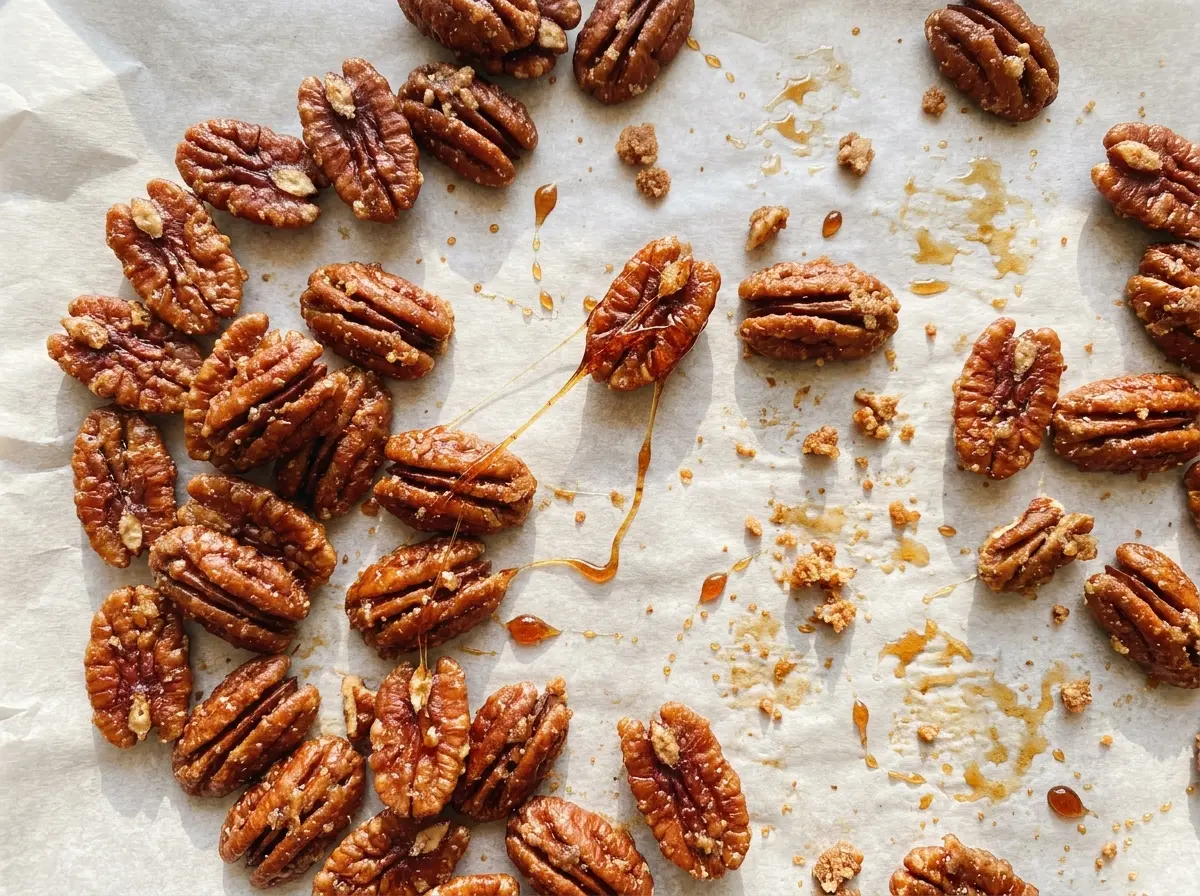
Kitchen Note
Keep the thermometer tip in the syrup without letting it rest against the bottom of the saucepan. Contact with the pan can give you a misleading reading, and this candy needs a dependable one.
Save these praline pecans for a homemade candy tray: tender pecans tucked into sweet, cloudy sugar clusters.
Why Praline Pecans Turn Grainy When You Keep Stirring
Grainy candy often starts with sugar crystals that never fully dissolved or crystals that form again as the syrup cooks. That’s why the timing of the stirring matters: stir the sugars with the cream, butter, and salt while the mixture comes to a boil, then leave the bubbling syrup alone. Stirring once it has reached a boil can encourage crystals to form along the sides of the pan and work their way back into the candy.
A heavy-bottomed saucepan helps the syrup heat more evenly, while the thermometer takes guesswork out of a mixture whose color is already dark. Keep the pan at medium heat and watch the thermometer rather than turning the burner up to hurry things along. A too-hot pan can make the mixture climb in temperature faster than you can respond, and sugar candy doesn’t give much warning before its texture changes. The steady boil and the thermometer reading are more useful cues than how dark or thick the syrup looks in the pan.
Once the mixture reaches its target, taking it off the heat before adding the pecans and vanilla separates the cooking stage from the finishing stage. The syrup is still hot enough to coat the nuts and thicken as you stir, but it isn’t continuing to cook over the burner. That handoff is what gives you time to create individual clusters instead of one hard sheet of candy.
What the Sugars, Cream, and Pecans Each Bring to the Candy
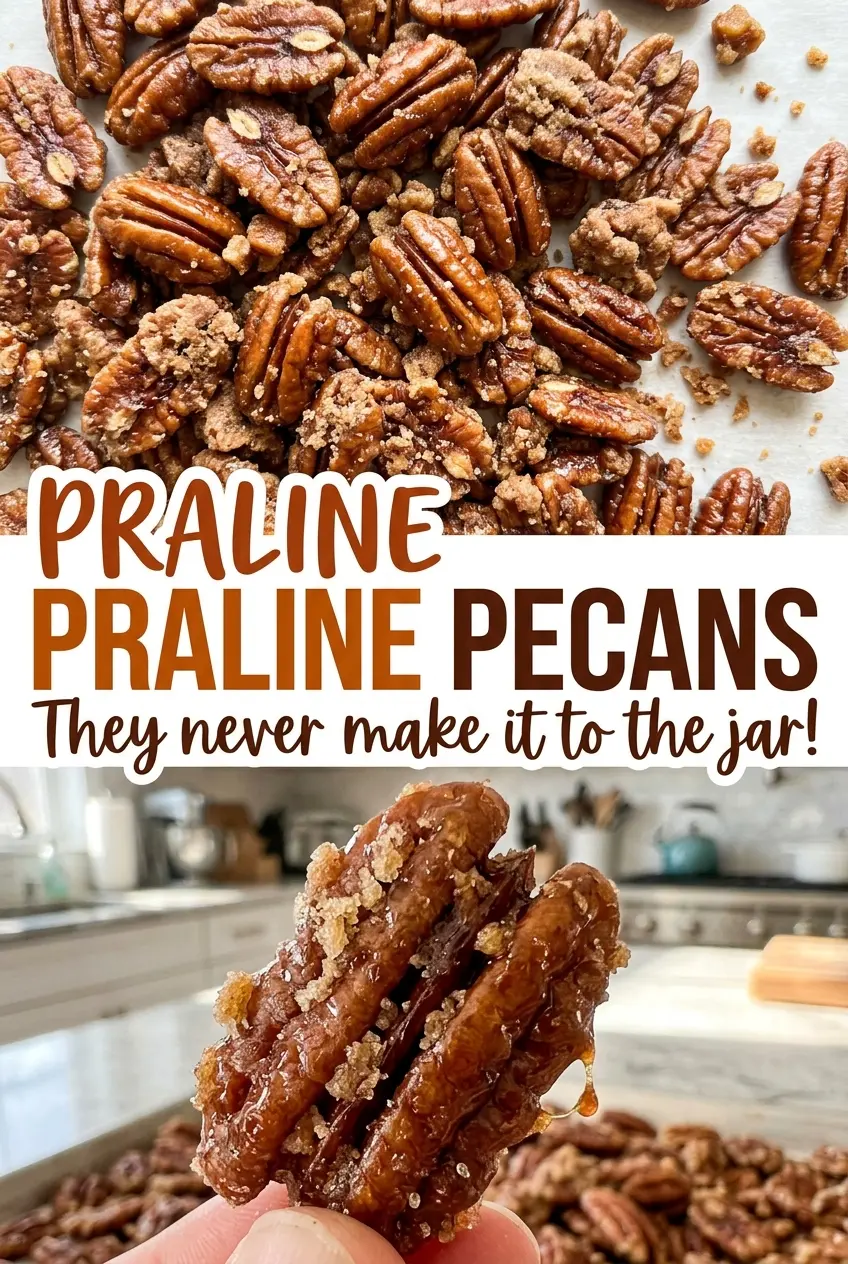
- Granulated sugar and light brown sugar — Together they build the candy’s set and give it a rounder flavor than white sugar alone. Light brown sugar brings a gentle molasses note, while granulated sugar keeps the sweetness clean. Store-brand sugars work well; just break up any hard brown sugar lumps before they go into the pan so they can dissolve evenly.
- Heavy cream — The cream contributes the fat and moisture that make these pralines tender rather than brittle. It isn’t a good place to use a thinner liquid if you want the same texture, and there isn’t a dependable dairy-free swap for this particular candy base.
- Unsalted butter — Regular supermarket butter is fine; the cooked sugar and pecans carry plenty of flavor, so you don’t need a specialty butter. Unsalted butter also lets the small amount of kosher salt stay in balance instead of making the finished candy taste unexpectedly salty.
- Pecan halves — Fresh pecans matter because their buttery, mild flavor is the center of each cluster, and stale nuts taste flat beside the sweet coating. Pecan pieces work in place of halves, though they’ll make smaller, less distinct nut clusters. There’s no need to toast them first for this preparation.
- Vanilla extract — A standard pure or imitation extract is fine here; either adds warmth behind the brown sugar. You don’t need an expensive bottle for a cooked candy where the vanilla is a supporting note.
From a Steady Boil to Cloudy, Scoopable Candy
Line the Pan and Start the Sugar Base
Line a rimmed baking sheet with parchment before you begin cooking. In a 3-quart heavy-bottomed saucepan, combine the granulated sugar, brown sugar, heavy cream, butter, and salt. Keep the baking sheet close by so you can reach it as soon as the candy is ready. Starting with everything measured and the pan lined keeps you from having to leave the hot syrup unattended.
Boil Without Stirring
Bring the mixture to a boil over medium heat, stirring until the sugars dissolve. Once it boils, stop stirring and let it cook until the candy thermometer reads 238°F; this usually takes 8–12 minutes. Keep an eye on the temperature as it climbs, and don’t rely on the syrup’s color to decide when it’s ready. If the temperature is still below target, give it more time rather than turning up the heat.
Stir in the Pecans and Vanilla
Take the saucepan off the heat before adding the pecans and vanilla. Stir for about 1–3 minutes, until the mixture thickens slightly and turns cloudy. That change is your cue that the syrup is coating the nuts and beginning to set. If the mixture is still glossy and loose, keep stirring and watch for the cloudy appearance before portioning.
Drop the Clusters and Let Them Set
Quickly drop heaping tablespoons of the mixture onto the parchment-lined baking sheet, spacing each mound apart. Work steadily; the candy continues to thicken as it sits, and a mixture that’s too firm becomes harder to portion neatly. Let the clusters cool until firm, about 30 minutes. They should lift from the parchment without smearing once they’re set.
Three Small Changes for a Different Praline
Make bite-size mini pralines
Portion smaller spoonfuls instead of heaping tablespoons for a more snackable candy. The smaller pieces set in the same way, but you’ll get more individual clusters and a higher coating-to-pecan ratio in each bite.
Skip the vanilla for a more direct caramel note
Leave out the vanilla and keep the rest of the ingredients and method the same. The candy will taste more plainly of brown sugar and cream, without changing how the pralines set.
Use salted butter when that’s what’s in the fridge
Replace the unsalted butter with salted butter and leave out the kosher salt. The candy will have a slightly saltier finish, but the sugar mixture still cooks and sets the same way.
Keeping Praline Pecans Crisp
- Room temperature: Once completely cool, store the pralines in an airtight container in a cool, dry spot for up to 1 week. Humidity can make the sugary coating tacky.
- Freezer: I don’t recommend freezing them; moisture during thawing can soften the coating and leave it sticky.
- Serving: Serve at room temperature. These candies don’t need reheating, and microwaving can melt the coating unevenly.
Questions That Come Up Before the Candy Sets
Praline Pecans
Ingredients
Equipment
Method
- Line a rimmed baking sheet with parchment paper.
- Combine the granulated sugar, brown sugar, heavy cream, butter, and salt in a 3-quart heavy-bottomed saucepan.
- Bring the mixture to a boil over medium heat, stirring until the sugars dissolve.
- Cook without stirring until a candy thermometer reads 238°F, about 8–12 minutes.
- Remove the pan from the heat and stir in the pecans and vanilla until the mixture thickens slightly and turns cloudy, about 1–3 minutes.
- Quickly drop heaping tablespoons of the mixture onto the prepared baking sheet, spacing them apart.
- Let cool until firm, about 30 minutes.