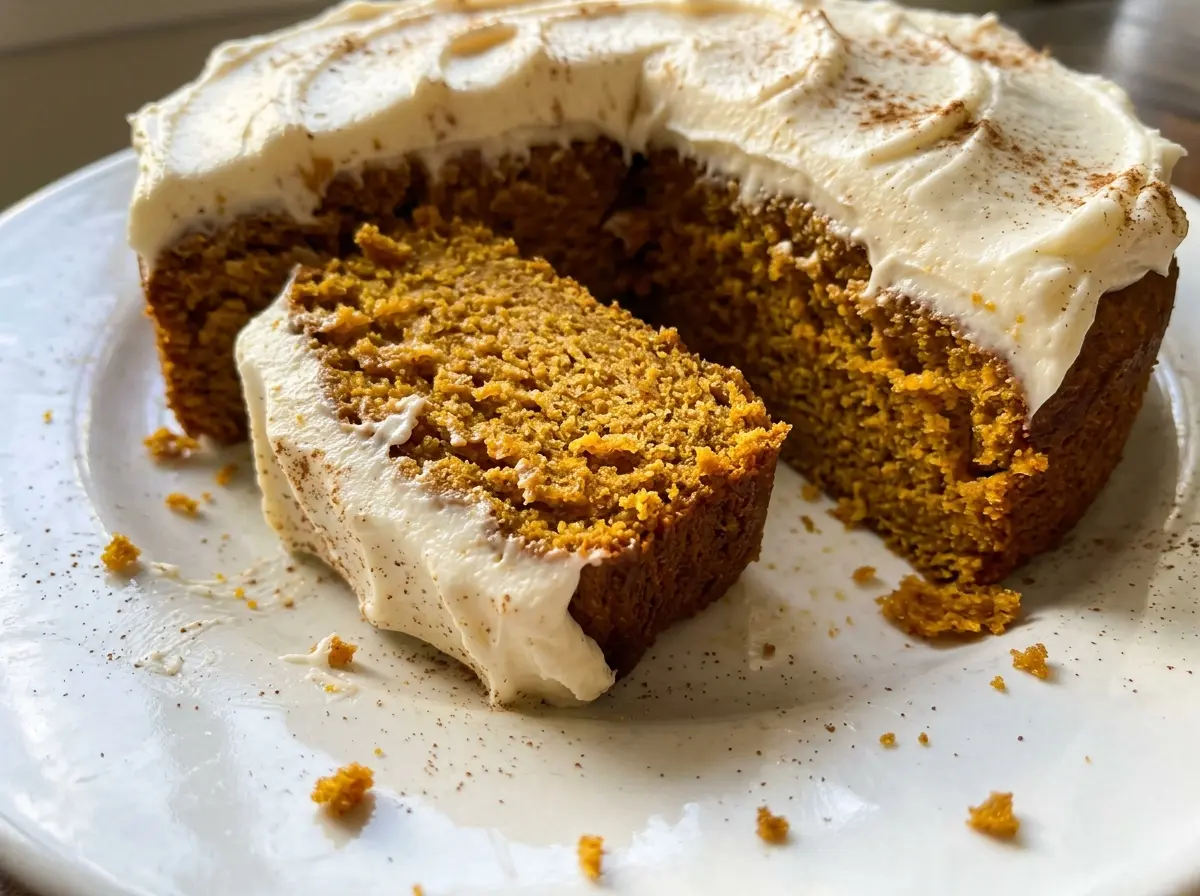
The batter for this pumpkin cake is thick, orange, and fragrant with cinnamon before it even reaches the oven. Once it’s spread into the dish, it bakes into a soft, close-crumbed cake that’s easy to slice into generous squares. I like that the whole cake comes together in a 9×13-inch dish, with no layers to stack or fuss over.
Pumpkin puree and vegetable oil are whisked with the eggs, then the dry ingredients are stirred in just until the flour disappears. That gentle finish helps keep the cake tender instead of dense. Let it cool completely before you add the cream cheese frosting; the cool, tangy topping sits in a thick layer over the warmly spiced crumb.
Each bite has a little cinnamon and ginger, a hint of clove, and enough frosting to balance the pumpkin without burying it. It’s the kind of cake that cuts neatly but stays soft on the fork.
Kitchen Note
Start with softened cream cheese and butter; they should give slightly when pressed but still hold their shape. Cold chunks are stubborn, and beating longer won’t make the frosting as smooth as starting with softened ingredients.
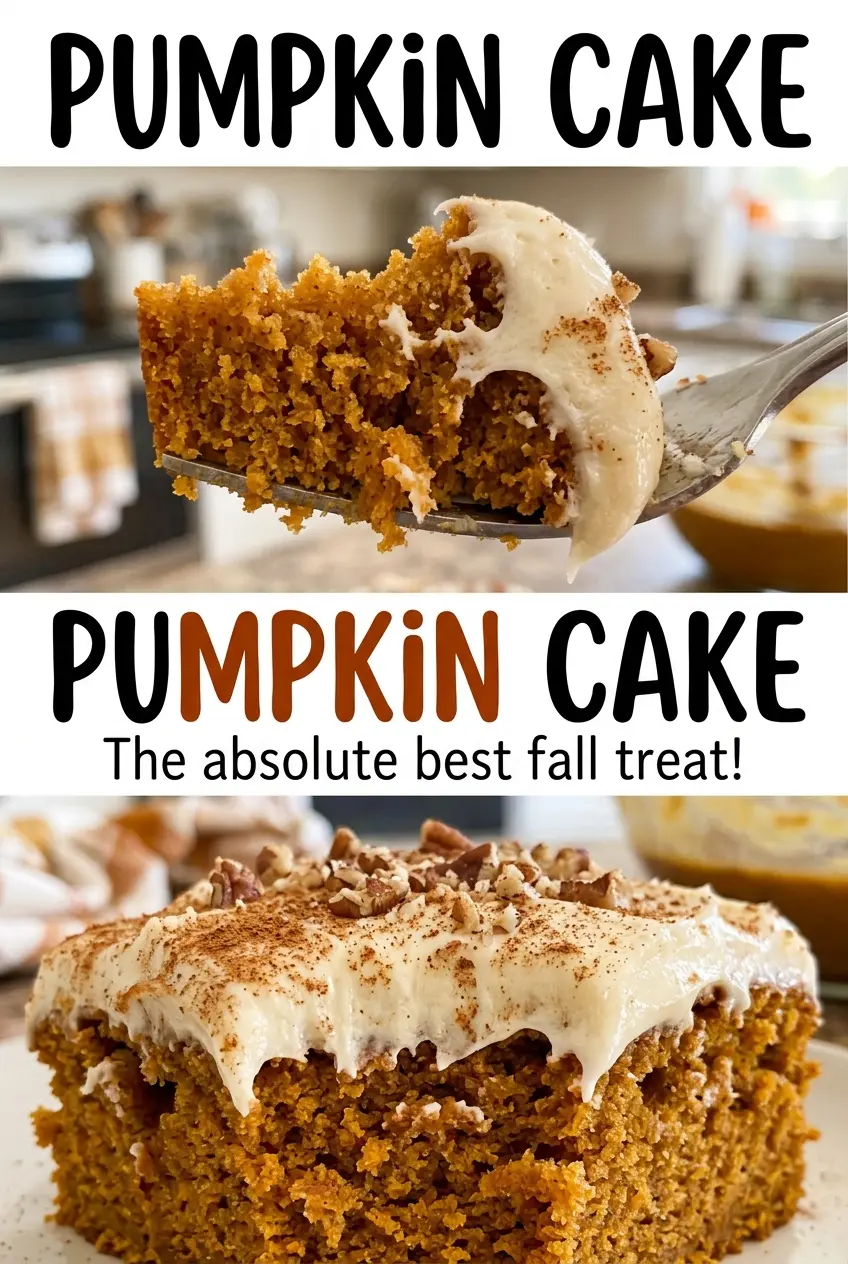
Save this Pumpkin Cake for a tender, warmly spiced crumb topped with tangy cream cheese frosting.
Why This Pumpkin Cake Stays Tender Without a Butter-Creaming Step
This batter doesn’t start with butter and sugar beaten together. Instead, the eggs, pumpkin puree, and vegetable oil are whisked until smooth, then combined with the dry ingredients. That keeps the method straightforward, but it also changes what to watch for: once the flour goes in, stirring just until no dry streaks remain matters more than beating the batter until it looks perfectly uniform.
Pumpkin brings moisture and body, while oil coats the flour and helps the baked crumb stay soft. The eggs help hold that moist mixture together as it sets in the oven. If you keep stirring after the flour has disappeared, you’ll work the flour more than this tender cake needs. A few small lumps in the batter aren’t a reason to keep mixing; dry flour streaks are the cue to stir a little more.
The result is a simple, one-pan cake with a plush texture rather than a light, airy sponge. That’s a good match for the cream cheese frosting, which adds richness and a slight tang to each slice.
Plain Pumpkin Puree and Warm Spices Set the Cake Apart
- Pumpkin puree — Use plain canned pumpkin puree, not pumpkin pie filling, which is already sweetened and spiced. The puree gives the cake its characteristic color and moist crumb; canned puree is convenient and consistent from can to can.
- All-purpose flour — It gives the cake enough structure to hold together without making it bready. For a gluten-free version, use a cup-for-cup gluten-free baking blend in its place; the finished crumb may be a little less supple.
- Vegetable oil — Its neutral taste lets the pumpkin and spices come through, and it contributes to the tender texture. Canola oil is a straightforward neutral-oil substitute; a strongly flavored oil would change the taste.
- Cinnamon, ginger, nutmeg, and cloves — Together they make the cake taste warmly spiced rather than dominated by one note. Fresh, fragrant ground spices make the biggest difference here; if yours smell faint in the jar, the finished cake will taste milder.
- Granulated sugar — It sweetens the pumpkin batter and helps keep the crumb moist. Keep it separate from the powdered sugar used in the frosting; the two sugars don’t behave the same way in this cake.
- Cream cheese and unsalted butter — Cream cheese brings the frosting’s tang, while butter helps it spread smoothly. Unsalted butter lets the small amount of salt in the frosting stay under your control.
Mix, Bake, and Frost the Cake Without Overworking It
Whisk the Dry Ingredients Evenly
Heat the oven to 350°F and grease a 9×13-inch baking dish. In a large bowl, whisk together the flour, granulated sugar, baking powder, baking soda, cinnamon, ginger, nutmeg, cloves, and salt. Break up any little clumps as you whisk so the leaveners and spices are spread through the flour. This is the easiest point to distribute them evenly; don’t wait until the batter is mixed.
Make a Smooth Pumpkin Mixture
In a separate large bowl, whisk the eggs, pumpkin puree, and vegetable oil until smooth. Scrape the sides of the bowl if streaks of pumpkin or oil are clinging there. The mixture should look evenly orange before the dry ingredients go in. Keeping the wet and dry mixtures in separate bowls gives you a clear stopping point once they’re combined.
Stir Just Until the Flour Disappears
Add the dry ingredients to the pumpkin mixture and stir until no dry streaks remain. Don’t beat the batter to chase every small lump; extra mixing can make the cake denser. Spread the batter evenly in the prepared dish so it bakes at a consistent depth. Get it into the oven once it’s mixed rather than letting the batter sit around.
Bake Until the Center Tests Clean
Bake for 30 to 35 minutes. Check the center with a toothpick: it should come out clean or with a few moist crumbs, not coated in wet batter. If wet batter clings to the pick, give the cake more time and check again. Set the dish on a wire rack and let the cake cool completely in the dish, about 2 hours.
Beat the Frosting and Finish the Cooled Cake
Beat the cream cheese and butter with an electric mixer until smooth, about 2 minutes. Add the powdered sugar, vanilla, and salt; beat on low until combined, then on medium until fluffy, about 2 minutes. Starting on low keeps powdered sugar from puffing out of the bowl. Spread the frosting over the completely cooled cake; frosting a warm cake will soften the topping and make it harder to spread neatly.
Two Practical Ways to Adapt This Pumpkin Cake
Make It Gluten-Free
Replace the all-purpose flour with a cup-for-cup gluten-free baking blend intended for cakes. The pumpkin and oil keep the cake moist, though the crumb may be slightly more delicate, so let it cool fully in the dish before cutting.
Make the Frosting Dairy-Free
The cake itself contains no dairy, so you only need to change the topping. Use dairy-free cream cheese and block-style vegan butter in place of the cream cheese and butter; the frosting may taste a little less tangy, and its texture depends on the brands you choose.
Storage and Reheating
- Refrigerator: Cover the frosted cake and refrigerate for up to 4 days. The crumb firms up when cold.
- Freezer: Freeze the completely cooled cake unfrosted, wrapped tightly, for up to 2 months. Thaw it in the refrigerator before adding the frosting.
- Reheating: Reheating isn’t needed; serve chilled or let a slice sit out briefly. Don’t leave the cream cheese-frosted cake at room temperature for more than 2 hours total.
Questions That Come Up While Baking Pumpkin Cake
Pumpkin Cake
Ingredients
Equipment
Method
- Heat the oven to 350°F.
- Grease a 9x13-inch baking dish.
- In a large bowl, whisk together the flour, granulated sugar, baking powder, baking soda, cinnamon, ginger, nutmeg, cloves, and salt.
- In a separate large bowl, whisk the eggs, pumpkin puree, and vegetable oil until smooth.
- Add the dry ingredients to the pumpkin mixture and stir just until no dry streaks remain.
- Spread the batter evenly in the prepared dish.
- Bake for 30 to 35 minutes, until a toothpick inserted in the center comes out clean or with a few moist crumbs.
- Set the cake on a wire rack and cool completely in the dish, about 2 hours.
- In a large bowl, beat the cream cheese and butter with an electric mixer until smooth, about 2 minutes.
- Add the powdered sugar, vanilla, and salt.
- Beat on low until combined, then on medium until fluffy, about 2 minutes.
- Spread the frosting over the completely cooled cake.