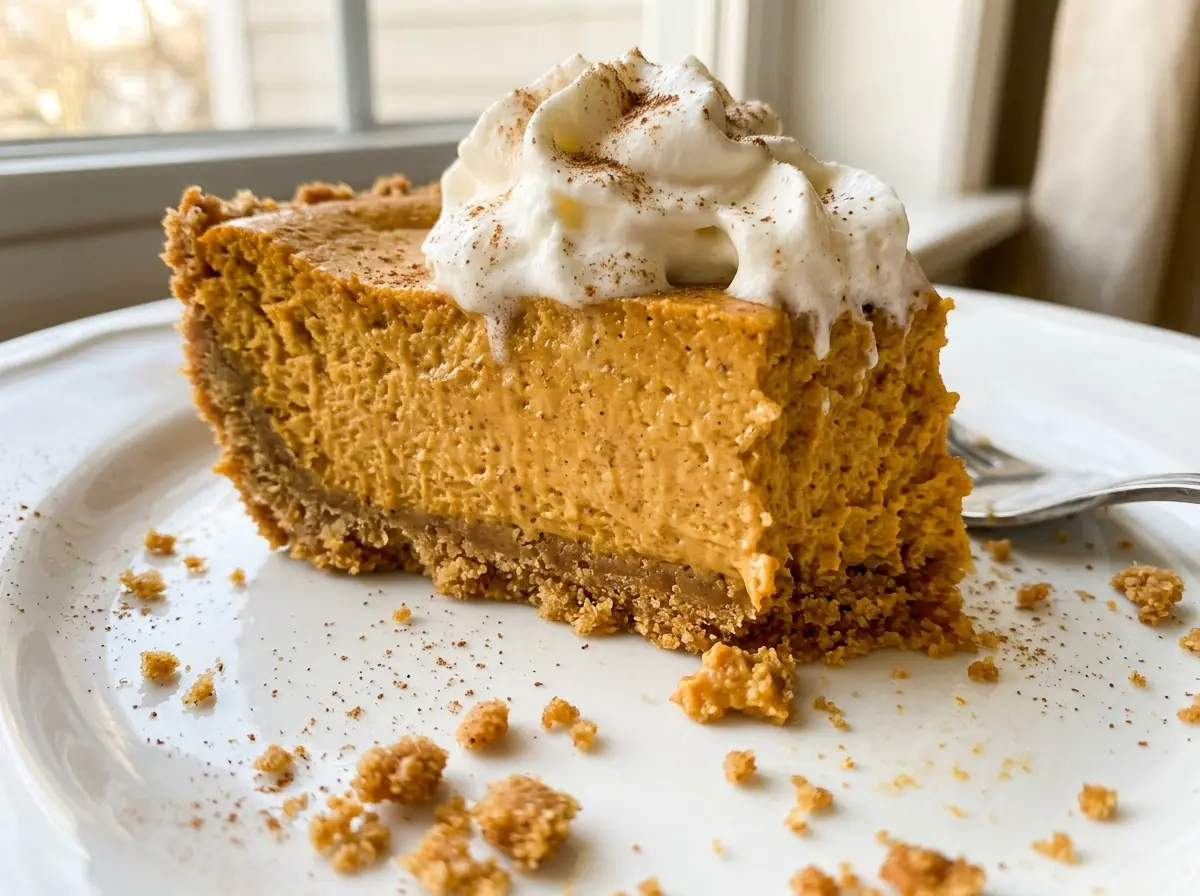
The pumpkin layer can blur into the cheesecake if it hits the crust too fast, and then every slice looks more marbled than layered. I pour it gently over the cream cheese mixture, which gives this pumpkin cheesecake pie its clean two-part filling: a smooth, tangy base under a warmly spiced pumpkin custard.
The graham cracker crust gets a short bake before either filling goes in, so it starts out fragrant and set instead of turning soggy under the custard. I also keep the two fillings separate rather than swirling them together; each has its own texture, and that contrast is what makes a slice feel like both pumpkin pie and cheesecake.
Kitchen Note
I portion the sugar into three small bowls before I start. Each layer gets its own share, and separating them now keeps the cheesecake filling from accidentally getting the pumpkin portion.
Save this pumpkin cheesecake pie for its crisp graham crust and two distinct creamy layers.
Why These Two Fillings Should Stay in Separate Layers
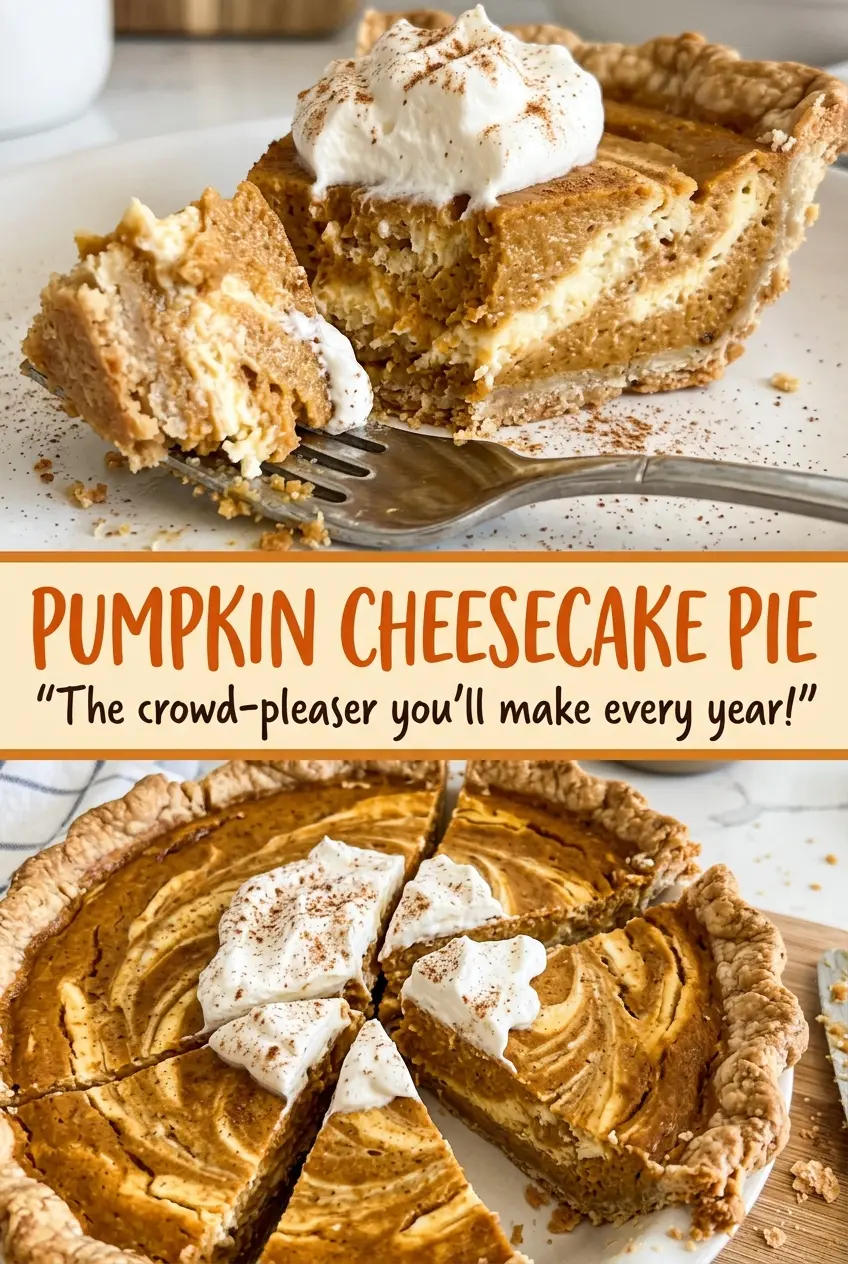
The cheesecake mixture and pumpkin mixture don’t behave alike. Cream cheese makes a thick filling that spreads across the crust, while pumpkin, evaporated milk, and egg form a looser custard. Swirling them together sounds like an easy way to combine the flavors, but it also gives up the distinct creamy layer that makes this pie different from a standard pumpkin pie.
Keep the cheesecake mixture in an even layer, then pour the pumpkin mixture slowly over it. A gentle pour helps the lighter filling settle on top instead of cutting channels through the cream cheese. Don’t try to fix a small uneven spot with a spoon or swirl the fillings together; the surface doesn’t need to be perfectly flat before baking. The edges will set first, while a slight wobble in the center is expected when the pie comes out of the oven.
That wobble matters because the center continues to settle as the pie cools, and the chilled filling becomes firm enough to slice cleanly. Bake until the center reaches 160°F, then give the pie its full cooling and refrigerator time. Rushing either part makes the layers harder to cut neatly.
Why Plain Pumpkin Purée Keeps the Custard in Balance
- Canned pumpkin purée — Choose plain pumpkin, not pumpkin pie filling, so the sweetness and spice stay under your control. A standard store brand works well; the label matters more than the price here.
- Cream cheese — Let it soften before beating. Cold cream cheese is more likely to leave small lumps in the cheesecake layer, and beating it with the sugar until smooth gives that layer a creamy, even texture.
- Evaporated milk — This unsweetened canned milk adds richness to the pumpkin custard without the extra sugar in sweetened condensed milk. Keep those cans distinct when shopping; condensed milk would throw off the filling’s sweetness and consistency.
- Eggs — One egg goes into each filling, where it helps that layer set as it bakes. Divide them before mixing so the cheesecake and pumpkin mixtures each get one.
- Graham cracker crumbs and butter — The crumbs form the base, and melted butter helps hold them together after baking. Finely crushed crumbs press into the sides more evenly than large, uneven pieces.
- Pumpkin pie spice and cornstarch — The spice seasons the pumpkin layer, while cornstarch gives its custard a little extra support as it sets. Whisk the pumpkin mixture until no dry cornstarch remains visible.
Build the Crust and Fill the Layers Without Mixing Them
Set the Graham Cracker Crust
Heat the oven to 350°F, then mix the graham cracker crumbs with the melted butter and the crust’s portion of sugar. Press the mixture evenly over the bottom and up the sides of a 9-inch deep-dish pie plate; an even layer helps it bake uniformly. Bake for 8–10 minutes, until fragrant and set. If the crust still looks loose in the plate, give it the full bake before adding the filling.
Spread the Cheesecake Base
Reduce the oven temperature to 325°F. Beat the softened cream cheese with its portion of sugar until smooth, then beat in one egg and the vanilla extract. Stop to scrape the bowl if you see cream cheese clinging to the sides, since unincorporated bits can leave the filling uneven. Spread the cheesecake mixture over the baked crust in a level layer.
Whisk the Pumpkin Custard
In a separate bowl, whisk the pumpkin purée, remaining egg, evaporated milk, remaining sugar, pumpkin pie spice, cornstarch, and salt. Keep whisking until the mixture looks smooth and the cornstarch is fully dispersed. If dry pockets cling to the bottom of the bowl, scrape them in and whisk again. A smooth mixture pours more evenly over the cheesecake layer.
Bake Until the Center Just Wobbles
Pour the pumpkin mixture gently over the cheesecake layer, then bake at 325°F for 50–60 minutes. Look for set edges and a center that still wobbles slightly; the center should also reach 160°F. If the crust edge browns too quickly, cover that edge with foil while the pie finishes baking. Cool on a wire rack for 2 hours, then cover and refrigerate for at least 4 hours before serving.
Two Small Changes for a Different Pumpkin Cheesecake Pie
Make the Crust Gluten-Free
Replace the graham cracker crumbs with the same amount of gluten-free graham-style crumbs. The crust keeps the familiar buttery crunch, though the exact texture depends on the brand of crumbs you use.
Shift the Sweetness Toward Pumpkin
Move 1 tablespoon of sugar from the cheesecake portion to the pumpkin portion, keeping the total sugar the same. The pumpkin layer will taste a little sweeter, while the cheesecake layer will come through with a slightly tangier contrast.
Storage and Reheating
- Refrigerator: Cover the pie and refrigerate leftovers for up to 3 days. The crust softens a little as it sits beneath the custard.
- Freezer: Freeze fully chilled slices, wrapped tightly, for up to 1 month for best quality. Thaw them overnight in the refrigerator; the filling may be a little softer after thawing.
- Reheating: This pie is best served chilled, so don’t reheat it. Warming it can soften the custard and make the layers harder to slice.
Questions I Get Asked About Pumpkin Cheesecake Pie
Pumpkin Cheesecake Pie
Ingredients
Equipment
Method
- Preheat the oven to 350°F.
- Mix the graham cracker crumbs, melted butter, and 2 tablespoons of the sugar.
- Press the mixture evenly across the bottom and up the sides of a 9-inch deep-dish pie plate.
- Bake for 8–10 minutes, until fragrant and set.
- Reduce the oven to 325°F.
- Beat the cream cheese and 1/4 cup of the sugar until smooth.
- Beat in 1 egg and the vanilla.
- Spread the cheesecake mixture over the crust.
- Whisk the pumpkin, remaining egg, evaporated milk, remaining 3/8 cup sugar, pumpkin pie spice, cornstarch, and salt until smooth.
- Pour the pumpkin mixture gently over the cheesecake layer.
- Bake at 325°F for 50–60 minutes, until the edges are set, the center still wobbles slightly, and the center reaches 160°F.
- Cover the crust edge with foil if it browns too quickly.
- Cool on a wire rack for 2 hours.
- Cover and refrigerate for at least 4 hours before serving.