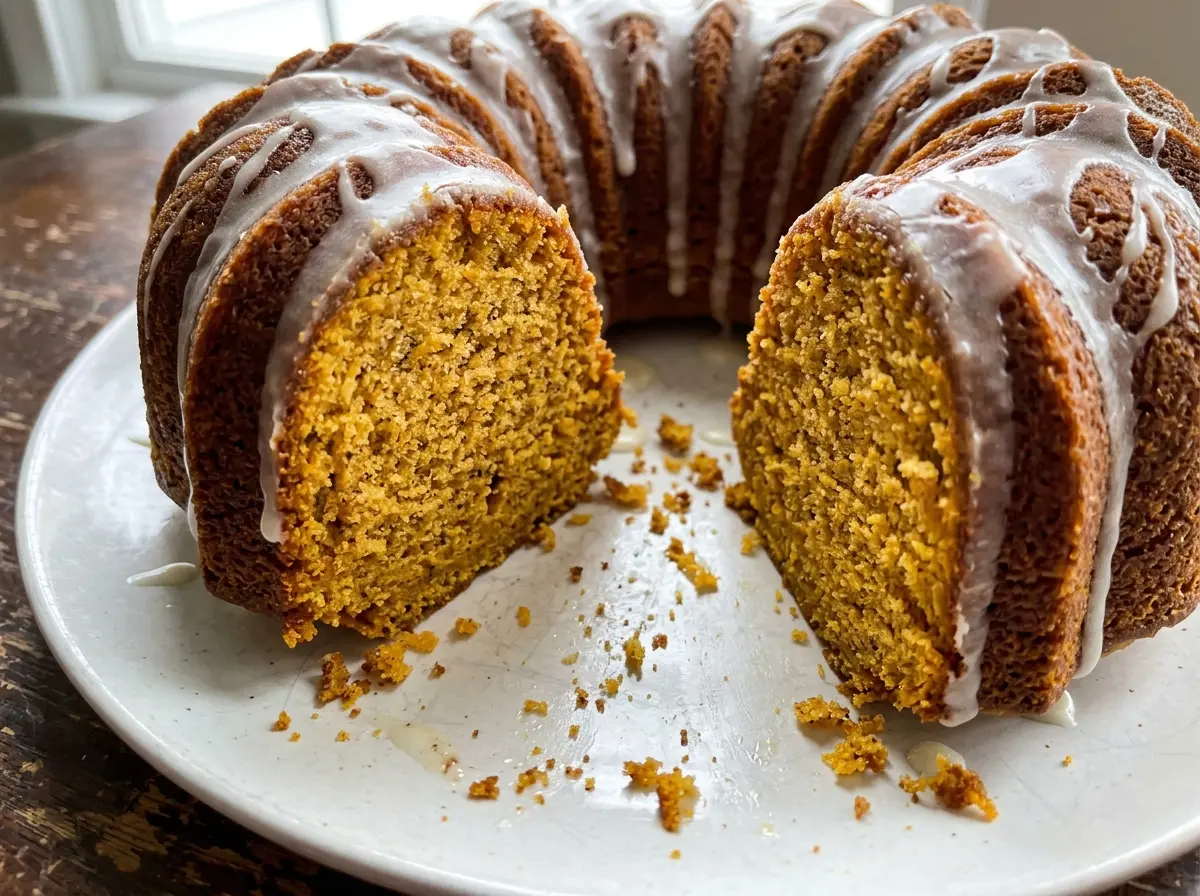
Cinnamon and ginger reach the kitchen before the oven timer does, and the batter for this Pumpkin Spice Bundt Cake turns a deep, pumpkin-orange as it comes together. The finished cake has the cozy spice of a seasonal bake without needing frosting or a complicated finish. I like the Bundt shape here because every slice shows off that golden, warmly spiced crumb.
Pumpkin brings moisture and a gentle earthy sweetness, while the cinnamon, ginger, nutmeg, and cloves keep the flavor rounded rather than relying on one spice to carry the whole cake. The method is straightforward, but a light hand once the flour goes in makes a difference: fold just until the last dry streak disappears. That leaves you with a tender cake that slices cleanly after it cools.
Kitchen Note
Give the cake the full 15 minutes in the pan before you turn it out. While it’s still hot, the crumb is delicate; that short rest lets it firm enough to release without losing the Bundt’s shape.
Save this Pumpkin Spice Bundt Cake for a tender, warmly spiced slice with a simple, classic Bundt shape.
Why Oil Gives This Pumpkin Bundt a Softer Crumb Than Butter
This cake starts by whisking sugar with neutral oil, not by creaming softened butter and sugar. That’s a useful distinction in a pumpkin cake. Oil blends easily with the wet ingredients and stays liquid as the cake cools, so the crumb feels moist and tender rather than firming up the way a butter-based cake often does.
Pumpkin puree also adds moisture, so the batter is naturally thicker and heavier than a simple vanilla cake batter. There’s no need to beat air into it for a lofty, fluffy texture; the baking soda and baking powder provide lift while the pumpkin keeps the inside soft. Keep the oil neutral in flavor so it doesn’t compete with the spices. Canola and vegetable oil both fit that job well, and either keeps the pumpkin and warm spices in the foreground.
What Pumpkin Puree and the Spice Blend Bring to the Crumb

- Pumpkin puree — Use plain canned puree, not pumpkin pie filling. Pie filling is already sweetened and seasoned, which would throw off the cake’s sugar and spice balance. You don’t need a specialty brand; check that the can says pumpkin puree, and give it a stir if it looks separated.
- Ground cinnamon, ginger, nutmeg, and cloves — Together, these make the cake taste warmly spiced without letting the sharper cloves take over. Fresh, fragrant spices make the biggest difference here; if a jar has been open for years and smells faint, the cake will taste flatter. For a gentler finish, replace the ground cloves with the same amount of ground allspice; you’ll keep a warm spice note with less of the clove’s sharp edge.
- All-purpose flour — It gives the cake enough structure to hold its shape in the pan. Spoon flour into the measuring cup and level the top instead of packing it down; too much flour can make the crumb dry and heavy. If you need a gluten-free version, use a measure-for-measure gluten-free baking blend that includes xanthan gum, and expect a slightly different, sometimes more delicate crumb.
- Baking soda and baking powder — Both leaveners help this moist batter rise and set. Check that they’re fresh if they’ve been sitting in the cupboard for a long time; old leaveners can leave the cake dense even when you’ve followed the mixing method carefully.
- Eggs and vanilla — Room-temperature eggs blend more evenly into the oil and pumpkin than cold eggs straight from the refrigerator. Vanilla rounds out the spice and pumpkin without taking over, so a standard bottle of vanilla extract is just right.
- Granulated sugar — It sweetens the cake and helps the crumb stay moist. Regular granulated sugar is the right choice here; swapping in a liquid sweetener would change the batter’s moisture and structure.
From a Smooth Pumpkin Base to a Clean Bundt Release
Prepare the Pan and Distribute the Spices
Heat the oven to 350°F, then coat a 10- to 12-cup Bundt pan thoroughly with baking spray with flour. Get the spray into the grooves and around the center tube, since those are the spots most likely to hold onto cake. In a large bowl, whisk the flour, baking soda, baking powder, salt, cinnamon, ginger, nutmeg, and cloves until the spices look evenly dispersed. Whisking them together now keeps the finished cake from having concentrated pockets of leavener or spice.
Whisk the Pumpkin Mixture
In a separate large bowl, whisk the sugar and neutral oil until combined. Add the room-temperature eggs one at a time, whisking each in before adding the next; the mixture should look smooth rather than streaky. Whisk in the vanilla and pumpkin puree until the pumpkin is evenly incorporated. Scrape the sides of the bowl if a patch of pumpkin is clinging there.
Fold in the Flour Without Overworking
Add the dry ingredients to the pumpkin mixture in three additions, folding with a spatula after each one. Work around the bowl and through the middle so you don’t leave flour tucked underneath the batter. Stop as soon as no dry streaks remain; a few small lumps are less troublesome than mixing until the batter looks perfectly smooth. Too much stirring after the flour goes in can make the cake’s crumb tougher.
Bake, Test, and Turn Out
Scrape the batter into the prepared pan and smooth the top. Bake for 55 to 65 minutes, then insert a skewer into the center; it should come out clean or with a few moist crumbs, not streaked with raw batter. Cool the cake in the pan for 15 minutes, invert it onto a wire rack, and lift off the pan. Let it cool completely before serving so the slices hold their shape.
Three Small Changes That Keep the Cake’s Character
A Gluten-Free Bundt
Replace the all-purpose flour with a measure-for-measure gluten-free baking blend that contains xanthan gum, using the same volume. The cake will still have its pumpkin and spice flavor, though the crumb may be a little more delicate, so let it cool fully before slicing.
A Softer Clove Note
Use ground allspice in place of the ground cloves. It keeps the cake warmly spiced but shifts the flavor toward a rounder, less sharp finish; keep the other spices unchanged.
A Hint of Orange
Whisk finely grated orange zest into the sugar and oil before adding the eggs. The citrus brightens the pumpkin and spices without changing the cake’s overall format; keep the zest finely grated so it blends into the batter.
Storage and Reheating
- Refrigerator: Keep the completely cooled cake covered for up to 5 days. The chilled crumb firms up, so let slices sit at room temperature before serving.
- Freezer: Freeze the cooled cake whole or in slices, wrapped tightly, for up to 2 months. Thaw it while wrapped at room temperature to help keep the surface from drying out.
- Reheating: This cake is best served at room temperature and doesn’t need reheating. If you prefer a warm slice, microwave just that slice briefly; heating it too long can dry the edges.
Questions That Come Up Before Slicing a Pumpkin Bundt Cake
Pumpkin Spice Bundt Cake
Ingredients
Equipment
Method
- Heat the oven to 350°F.
- Thoroughly coat a 10- to 12-cup Bundt pan with baking spray with flour.
- In a large bowl, whisk together the flour, baking soda, baking powder, fine salt, cinnamon, ginger, nutmeg, and cloves.
- In a separate large bowl, whisk the sugar and oil until combined.
- Whisk in the eggs one at a time.
- Whisk in the vanilla and pumpkin puree.
- Add the dry ingredients to the pumpkin mixture in three additions, folding with a spatula just until no dry streaks remain.
- Scrape the batter into the prepared pan and smooth the top.
- Bake for 55 to 65 minutes, until a skewer inserted in the center comes out clean or with a few moist crumbs.
- Cool the cake in the pan for 15 minutes.
- Invert the cake onto a wire rack and lift off the pan.
- Cool completely before serving.