The thumbprint should be deep enough to hold the jam, but not so wide that the cookie loses its shape. I learned that while working out these Raspberry Almond Shortbread Cookies: a light press gives the preserves nowhere to settle, while a firm, deep indentation makes a neat little well.
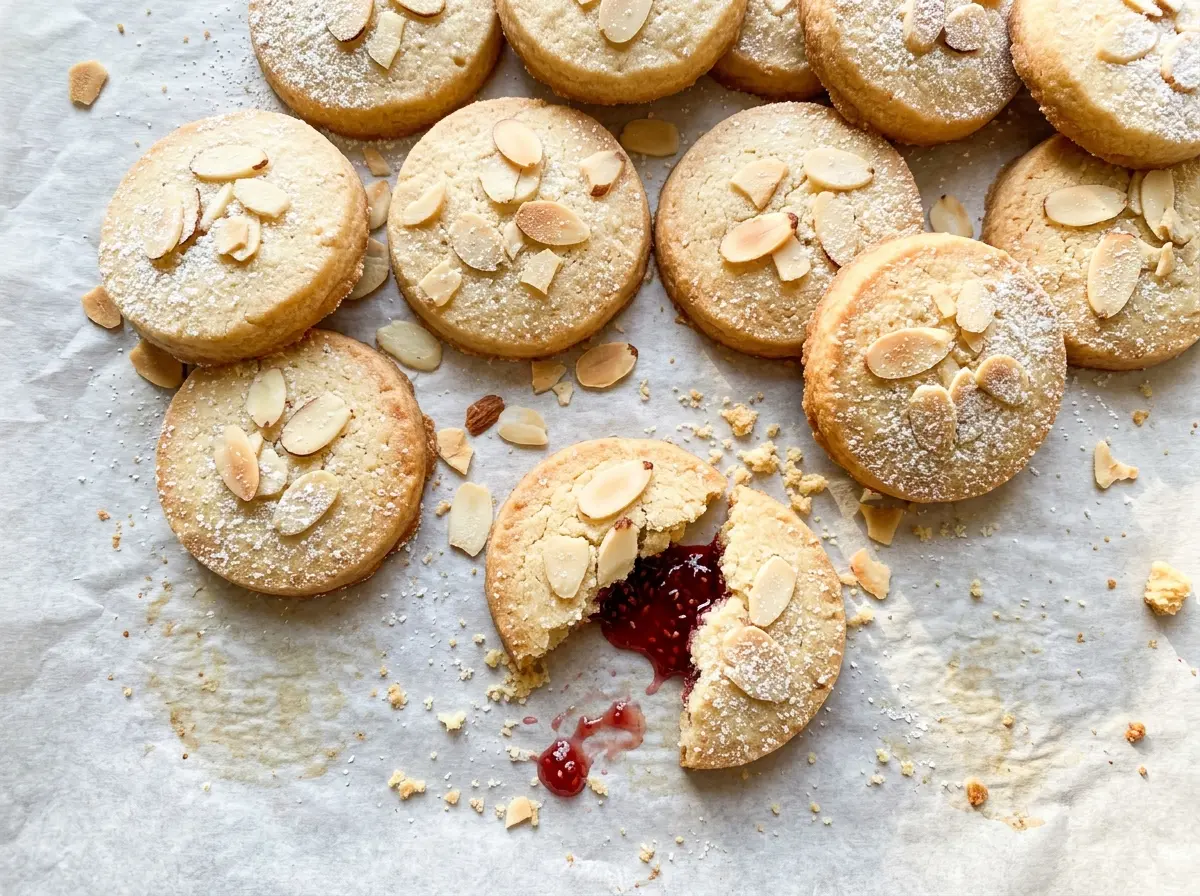
The dough is rich and tender, with almond extract giving it a warm, distinct aroma. Seedless raspberry preserves bring a bright tart note to the center, and the shortbread itself stays simple so neither flavor gets lost.
I chill the dough before shaping, then chill the filled cookies again before they go into the oven. That second rest helps the cookies hold their shape while the edges turn lightly golden. The finished cookies are buttery, delicate, and just sweet enough around their glossy raspberry centers.
Kitchen Note
The butter should be soft enough to beat smoothly, but it shouldn’t look shiny or melted. If it has melted, the dough won’t cream up the same way and the cookies can spread more than you want.
Save these Raspberry Almond Shortbread Cookies for a buttery cookie with a bright raspberry center and a hint of almond.
Why These Cookies Need a Second Chill After the Jam Goes In
Shortbread dough is full of butter, and that butter softens as you handle the dough. By the time you’ve rolled the balls and pressed in the wells, the cookies are warmer than they were when they left the refrigerator. The 15-minute chill on the baking sheets gives the butter a chance to firm up again before baking.
That pause matters even more once the preserves are in place. The jam sits in a small indentation, and a cookie that spreads quickly can flatten the well and push the filling toward the edges. Chilling the shaped cookies helps them keep a round outline and a defined center as they bake. It also gives you a useful window to tidy the tray: if a thumbprint is shallow or uneven, adjust it gently before the cookies go into the oven.
Don’t skip the first chill, either. The dough is soft after mixing, and a 30-minute rest makes it easier to roll into even balls without adding extra flour. Two short rests, at different points, give you dough that’s manageable and cookies that hold their shape.
What the Butter, Yolk, and Preserves Do in This Shortbread

- Butter — Softened unsalted butter gives shortbread its tender, sandy texture and carries the almond aroma. Choose butter you like the taste of, but there’s no need for a specialty brand. Keep it softened rather than melted so it can cream with the sugar.
- Granulated sugar — Sugar adds sweetness and helps the butter turn creamy during mixing. Regular granulated sugar is the right fit here; a coarse sugar won’t dissolve in the same way in this short mixing time.
- Egg yolk — The yolk helps bind the dough while keeping it richer and less cakey than dough made with a whole egg. Separate it cleanly; adding the white brings extra moisture that can change the texture.
- Almond extract — This is what gives the cookies their recognizable almond fragrance. Use an extract with an aroma you enjoy, since it comes through clearly in a short ingredient list. The recipe’s measured amount is enough to perfume the dough without overwhelming the raspberry.
- All-purpose flour — Flour gives the dough structure, so measure it without packing it down. Standard all-purpose flour works well; a different flour blend can absorb moisture differently and change how easily the dough comes together.
- Seedless raspberry preserves — Preserves stay in the center as a concentrated fruit filling, and the smooth texture makes each bite neat. Choose a thick preserve rather than a runny syrup, which is more likely to spread beyond the indentation.
From Creamed Butter to Neat Raspberry Wells
Cream the Butter and Sugar Until Smooth
Beat the softened butter and granulated sugar in a large bowl with an electric mixer for about 2 minutes, until creamy. The mixture should look smooth and lighter, not greasy. Beat in the egg yolk and almond extract until they’re combined. If the butter was too cold, pause until it softens rather than trying to force a lumpy mixture along.
Bring the Dough Together and Chill
Add the flour and salt, then mix on low speed just until a soft dough forms. Stop when the loose flour has disappeared and the dough gathers; continuing to beat after that can make shortbread less tender. Cover the bowl and refrigerate the dough for 30 minutes. It should feel firmer and easier to handle when you take it out.
Shape, Fill, and Chill the Cookies
Heat the oven to 350°F and line two baking sheets with parchment paper. Roll the dough into 24 balls, about 1 inch each, and set them 2 inches apart on the sheets. Press a deep indentation into each ball with your thumb, then spoon 1/2 teaspoon of seedless raspberry preserves into each well. Chill the filled cookies on the sheets for 15 minutes before baking.
Bake Until the Edges Turn Lightly Golden
Bake for 12 to 15 minutes, switching the sheets between oven racks halfway through so the cookies bake evenly. Look for lightly golden edges; the centers should still look pale. Let the cookies cool on the baking sheets for 5 minutes before moving them to a wire rack. They’re delicate while warm, so give them time to firm up before handling.
Three Easy Ways to Change the Flavor or Flour
Try Strawberry or Apricot Preserves
Replace the raspberry preserves with the same amount of thick, seedless strawberry or apricot preserves. Strawberry keeps the filling bright and familiar, while apricot makes it milder and less tart. The dough and baking method stay the same.
Make Them Gluten-Free
Use a measure-for-measure gluten-free flour blend in place of the all-purpose flour, choosing one that includes xanthan gum. Keep the amount the same and mix only until a soft dough forms. The cookies may have a slightly more delicate, crumbly bite, so let them cool fully before lifting them from the rack.
Use Vanilla Instead of Almond
Swap the almond extract for the same amount of vanilla extract if you want a softer, more familiar aroma. The raspberry remains the brightest flavor, while the cookie tastes less distinctly almond-like. This is also a useful change for anyone avoiding almond flavor.
Storage and Reheating
- Refrigerator: Keep the fully cooled cookies in an airtight container for up to 1 week. Chilling firms the shortbread, so let a cookie sit at room temperature before serving if you prefer a more tender bite.
- Freezer: Freeze fully cooled cookies in an airtight container with parchment between layers for up to 2 months. Thaw them in the container at room temperature to limit condensation on the jam.
- Reheating: These cookies are best served at room temperature and don’t need reheating. Avoid microwaving them; the preserves heat faster than the shortbread and can become much hotter than the cookie around them.
Questions That Come Up While Baking Raspberry Almond Shortbread
Raspberry Almond Shortbread Cookies
Ingredients
Equipment
Method
- Beat the butter and sugar in a large bowl with an electric mixer until creamy, about 2 minutes.
- Beat in the egg yolk and almond extract until combined.
- Mix in the flour and salt on low speed just until a soft dough forms.
- Cover and refrigerate the dough for 30 minutes.
- Heat the oven to 350°F.
- Line two baking sheets with parchment paper.
- Roll the dough into 24 balls, about 1 inch each.
- Place the balls 2 inches apart on the prepared sheets.
- Press a deep indentation into each ball with your thumb.
- Spoon 1/2 teaspoon raspberry preserves into each indentation.
- Chill the cookies on the sheets for 15 minutes.
- Bake for 12 to 15 minutes, switching the sheets between oven racks halfway through, until the edges are lightly golden.
- Cool the cookies on the baking sheets for 5 minutes.
- Transfer the cookies to a wire rack to cool completely.