The onion softens first, then the garlic, ginger, and curry paste hit the warm oil and the whole skillet turns fragrant in seconds. I learned not to rush that short step: the paste needs just enough time to wake up before the coconut milk goes in, but the garlic can scorch if you leave it unattended. That quick transition is what gives this salmon coconut curry its deep, savory base.
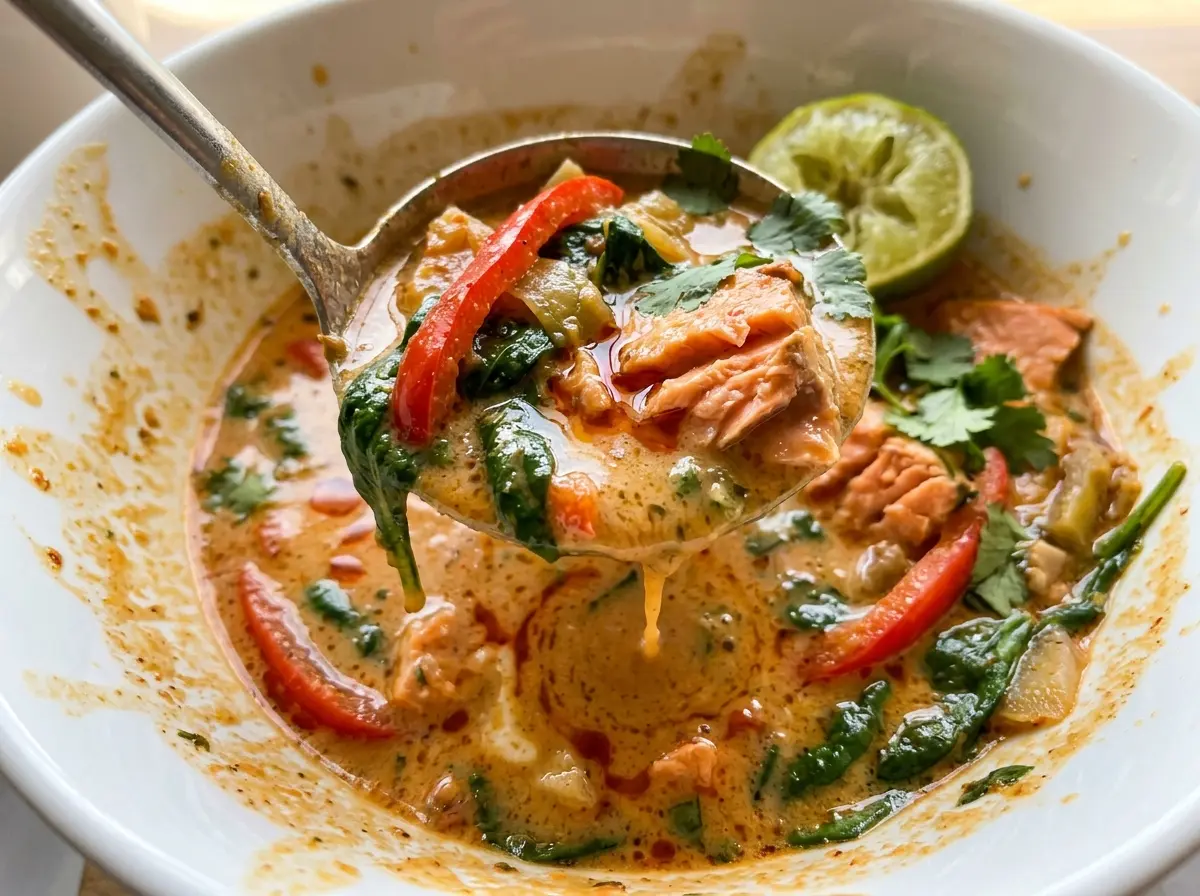
The sauce simmers on its own before the salmon goes in, so the fish cooks gently instead of getting tossed around in a bubbling pan. I use skinless salmon cut into even chunks and check the thickest one rather than guessing from the clock. With lime juice stirred in off the heat and fresh cilantro on top, the finished curry is creamy, bright, and full of tender salmon.
Kitchen Note
The salmon needs only 5 to 8 minutes once it’s nestled into the sauce, and the thickest piece is the one to check. Pulling the skillet from the heat as soon as that piece reaches 145°F keeps the chunks tender instead of chalky.
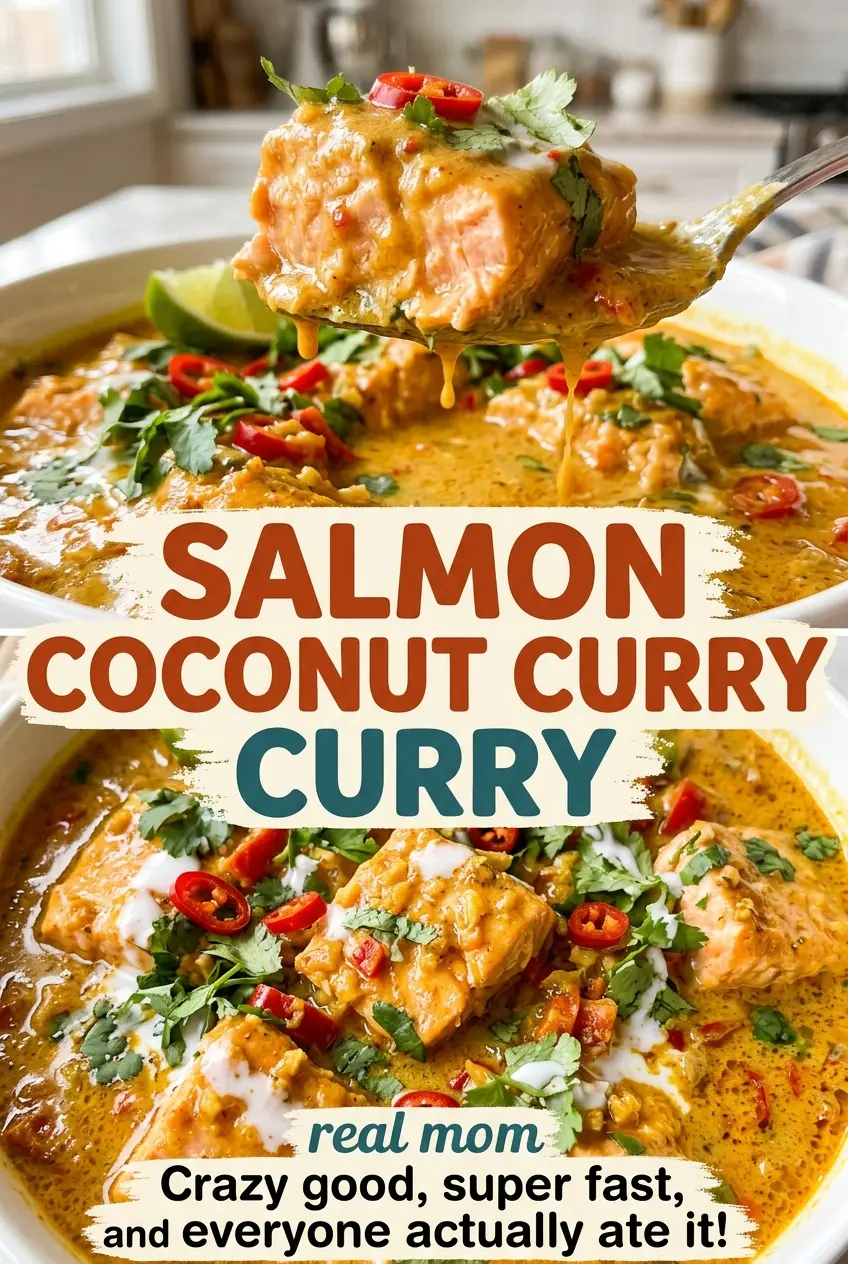
Save this salmon coconut curry for a cozy skillet dinner with tender salmon and a fragrant coconut sauce finished with lime.
Why the Curry Paste Needs Its Own 30 Seconds in the Pan
Red curry paste tastes flat when it goes straight into a pool of coconut milk. Cooking it briefly with the softened onion, garlic, and ginger gives its aromatics a chance to bloom in the oil, so they carry through the whole sauce instead of tasting like a separate, sharp layer. Thirty seconds is enough; you’re looking for a fragrant skillet, not browned garlic or darkened paste.
That small pause also makes the order of the ingredients matter. Add the garlic, ginger, and paste together and keep them moving, then pour in the coconut milk and broth once the aroma rises. If the garlic starts to brown before the paste smells fragrant, lower the heat. Garlic turns bitter quickly, and a bitter base is hard to balance later with the mild sweetness of coconut milk or the final squeeze of lime.
The sauce gets a short simmer before the salmon goes in, giving the fish a steady, flavorful liquid to cook in. Keep that simmer gentle rather than letting the coconut milk boil hard. A calm surface protects the delicate chunks and keeps the sauce smooth, while the curry paste, fish sauce, and brown sugar have time to settle into one savory, lightly sweet base.
What Gives This Coconut Curry Its Savory, Balanced Base
- Red curry paste — This is the concentrated source of spice and aromatic flavor, so its brand makes a noticeable difference in heat and saltiness. Keep the garlic, ginger, and paste moving as they cook; a scorched paste tastes harsh. Green curry paste works in the same amount if you want a more herbal, different-tasting curry.
- Coconut milk — Canned coconut milk gives the broth body and rounds out the sharper flavors. Full-fat coconut milk makes a richer sauce, while a light version will be thinner. Stir the contents of the can before measuring or pouring if the thick cream has settled separately.
- Fish sauce and brown sugar — Fish sauce adds a deep savory note that plain salt doesn’t quite replace, while a little brown sugar softens its salty edge and the heat of the curry paste. If you swap fish sauce for tamari, the sauce will taste cleaner and less funky; use the same amount.
- Fresh ginger, garlic, and yellow onion — Fresh ginger has a brighter, more fragrant bite than ground ginger, and freshly minced garlic brings a fuller aroma than dried garlic. Thinly sliced onion softens into the sauce rather than leaving large crunchy pieces. A basic yellow onion is all you need here.
- Skinless salmon — Cut the fillet into evenly sized chunks so they cook at about the same pace. Fresh or thawed salmon both work; choose pieces that look moist and smell clean, and remove any pin bones you find before cutting.
- Fresh lime and cilantro — Lime juice stirred in after the skillet leaves the heat gives the creamy sauce a bright finish. Fresh cilantro adds a leafy, citrusy note on top; dried cilantro won’t bring the same fresh contrast.
Building the Sauce Before the Salmon Goes In
Soften the onion without browning it
Warm the vegetable oil in a 12-inch skillet with a lid over medium heat, then add the thinly sliced onion. Cook for 4 to 5 minutes, stirring occasionally, until the slices have softened. They should look supple and translucent at the edges, not deeply browned. If they start coloring before they soften, lower the heat so they can finish gently.
Wake up the aromatics
Add the minced garlic, grated fresh ginger, and red curry paste to the softened onion. Stir constantly for 30 seconds, just until the mixture smells fragrant. This is a short step, so stay by the stove; garlic can go from aromatic to scorched in a moment. If the pan looks dry, keep stirring rather than letting the paste sit against the hot surface.
Simmer the coconut curry sauce
Stir in the coconut milk, chicken broth, fish sauce, and packed brown sugar until the paste is blended through the liquid. Bring it to a gentle simmer over medium-high heat, then reduce the heat to medium-low and simmer for 5 minutes, stirring occasionally. Look for small bubbles around the edges, not a hard boil across the whole pan. A gentle simmer gives the sauce time to come together without roughening its texture.
Poach the salmon and finish with lime
Season the salmon chunks with kosher salt and nestle them into the sauce in a single layer. Cover the skillet and cook at a gentle simmer for 5 to 8 minutes, until the salmon is opaque and the thickest piece registers 145°F. Avoid stirring the chunks while they cook, since they can break apart before they’re set. Remove the pan from the heat, stir in the fresh lime juice, and scatter the chopped cilantro over the top.
Easy Changes for a Different Take on Salmon Coconut Curry
Make the curry gluten-free
Use gluten-free red curry paste and chicken broth, then replace the fish sauce with the same amount of tamari. The tamari gives the sauce a round, soy-savory note instead of fish sauce’s distinctive briny depth, but the coconut, ginger, and lime still make a balanced curry.
Use green curry paste for a more herbal bowl
Swap the red curry paste for the same amount of green curry paste. The sauce will lean brighter and more herbaceous, and the heat level may vary by brand, so taste the sauce after its simmer before adding the salmon.
Reduce the added sugar
Replace the packed brown sugar with an equal amount of allulose. It dissolves into the simmering sauce and keeps a touch of sweetness, though you’ll lose the faint molasses note that brown sugar brings.
Storage and Reheating
- Refrigerator: Store leftovers in an airtight container for up to 3 days. The salmon may firm up as it chills, and the sauce will thicken.
- Freezer: Freeze in an airtight container for up to 2 months, though the coconut sauce may separate when thawed and the salmon can lose some tenderness. Thaw overnight in the refrigerator.
- Reheating: Warm gently in a covered skillet over low heat, adding a small splash of chicken broth if the sauce has thickened. Heat leftovers to 165°F; a hard boil can make the salmon dry and break into flakes.
Questions That Come Up When Cooking Salmon Coconut Curry
Salmon Coconut Curry
Ingredients
Equipment
Method
- Heat the oil in a 12-inch skillet with a lid over medium heat. Add the onion and cook, stirring occasionally, for 4 to 5 minutes, until softened.
- Add the garlic, ginger, and curry paste; cook, stirring, for 30 seconds, until fragrant.
- Stir in the coconut milk, chicken broth, fish sauce, and brown sugar. Bring to a gentle simmer over medium-high heat, then reduce the heat to medium-low and simmer for 5 minutes, stirring occasionally.
- Season the salmon with the salt and nestle the pieces into the sauce. Cover and cook at a gentle simmer for 5 to 8 minutes, until the salmon is opaque and registers 145°F in the thickest piece.
- Remove the skillet from the heat and stir in the lime juice. Sprinkle with the cilantro before serving.