The surface of a pumpkin pie can look set while the middle still moves when you nudge the pan. That little wobble is useful information, not a reason to leave it in the oven until the whole filling feels firm. I watch for the edges to set, then let the pie finish settling as it cools. Salted Caramel Pumpkin Pie pairs that soft, spiced custard with a buttery caramel that gets a clean hit of flaky salt right before serving.
I like that the crust and filling go into the oven together, so there’s no blind-baking step to squeeze in first. The two-temperature bake gives the pie a hot start, then a gentler stretch to finish cooking the custard. Meanwhile, the caramel is made on the stovetop and poured over individual slices, keeping its glossy sweetness separate from the chilled filling. Each forkful has a crisp-edged crust, a smooth pumpkin center, and a little sweet-salty finish.
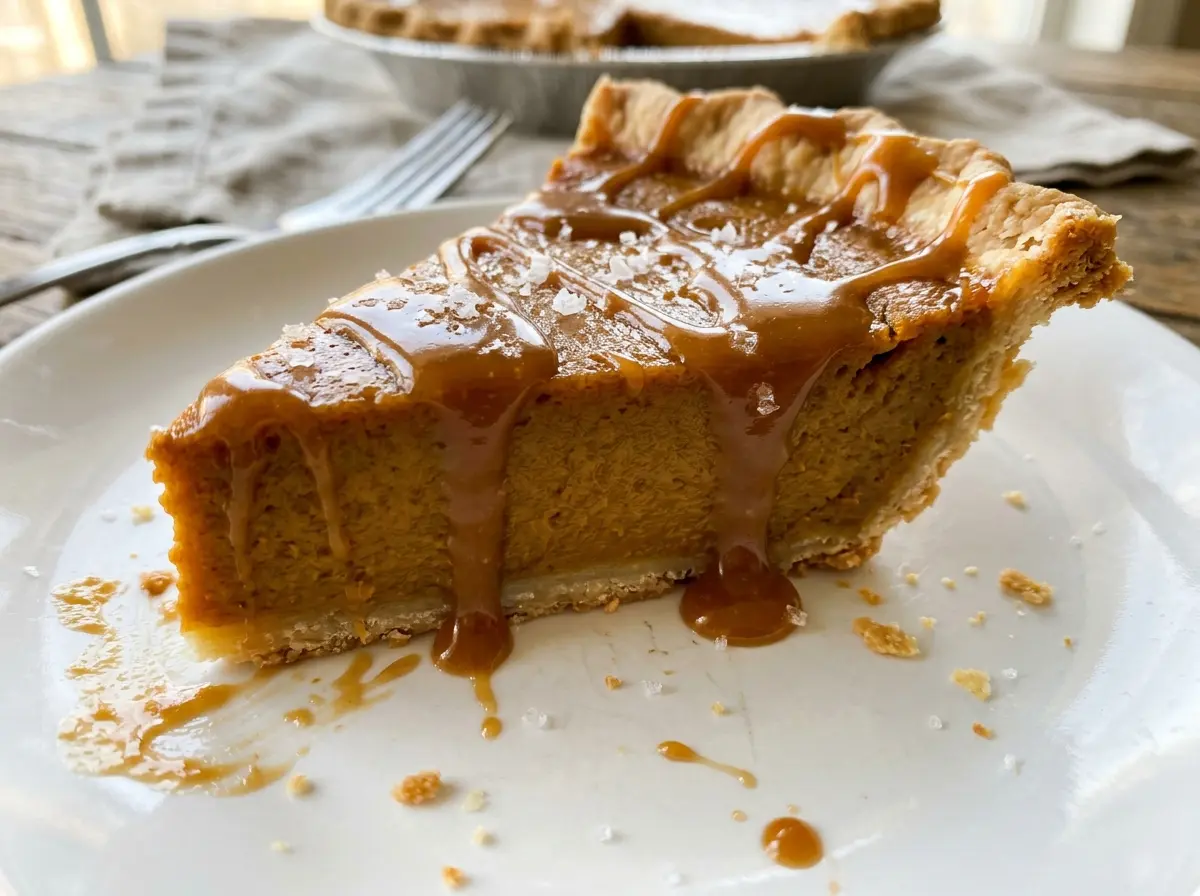
Kitchen Note
When the sugar turns deep amber, take the pan off the heat before adding the butter. Warm the cream first and pour it in gradually; cold cream makes the hot caramel seize more abruptly and harder to whisk smooth.
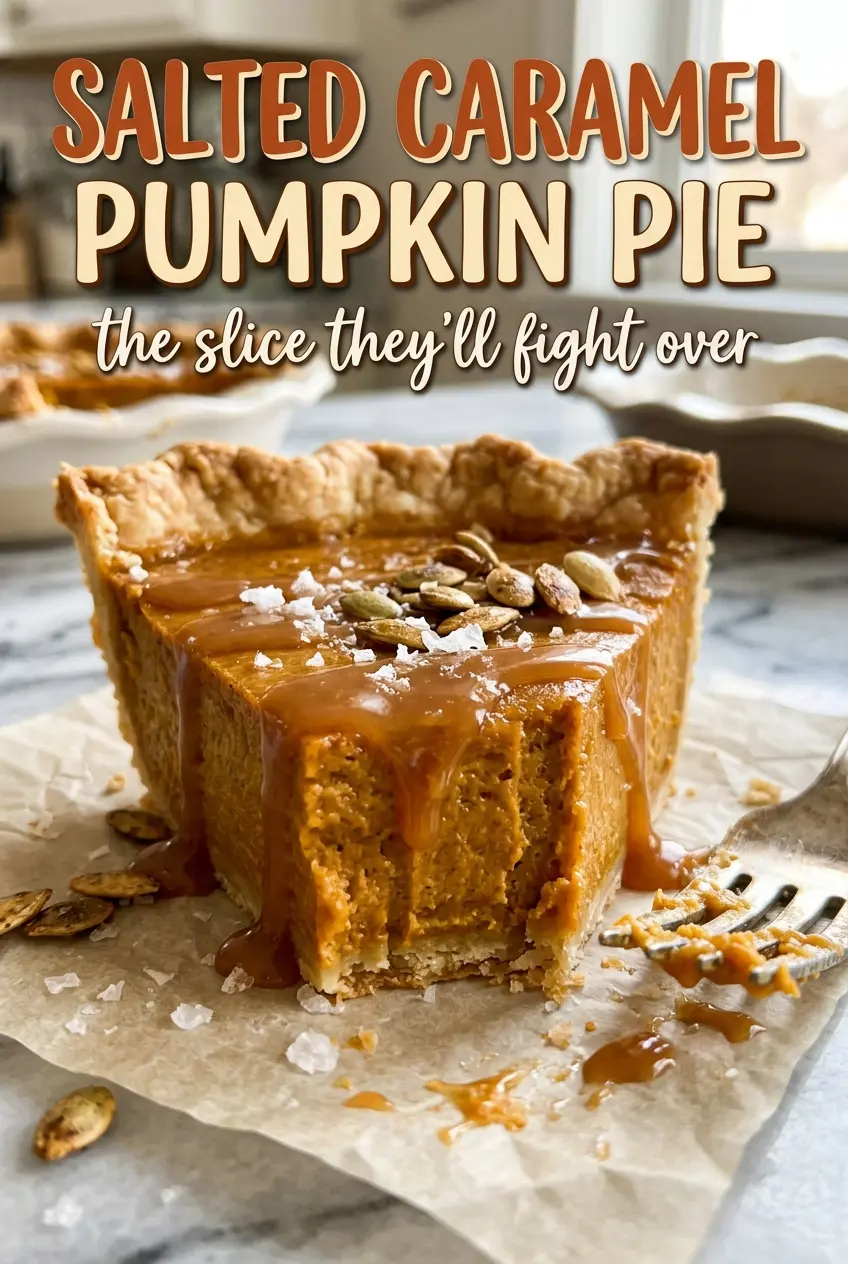
Save this Salted Caramel Pumpkin Pie for its silky spiced filling and a pourable, flaky-salt caramel drizzle made just before serving.
The center should still wobble when you take the pie out
Pumpkin pie is a custard, so baking it until the center looks completely firm can take it past the point you want. The edges set first; the middle needs a little movement when the pan is gently nudged. It will continue to settle during cooling, then firm further as the pie chills. That’s the difference between a smooth slice and a filling that’s dry or cracked.
The temperature change matters here, too. The pie starts in a hot oven at 425°F, then finishes at 350°F rather than staying at high heat the whole time. Follow the visual cue and use an instant-read thermometer in the center: it should reach at least 160°F while retaining a slight wobble. If the center looks completely solid in the oven, it’s likely gone farther than it needs to. Cooling on a rack before refrigerating gives the filling time to settle without trapping heat under the pie plate.
Why pure pumpkin and heavy cream make this filling work
- Pure canned pumpkin — Choose plain pumpkin, not pumpkin pie filling, which is already sweetened and spiced. The canned version gives a consistent base; homemade puree can carry different amounts of moisture and change how the custard sets.
- Light brown sugar and eggs — Brown sugar brings gentle molasses flavor and keeps the filling tender, while the eggs provide the structure that lets it slice. Dark brown sugar can replace light brown sugar in the same volume, though its stronger molasses notes will come through more.
- Heavy cream — Cream gives the filling its rich, smooth texture and also helps the caramel turn pourable. It’s doing two jobs, so swapping in a thinner milk product can leave the pie less rich and the caramel runnier; I stick with heavy cream for both parts.
- The spices — Cinnamon leads, with ginger, nutmeg, and cloves rounding out the pumpkin. Fresh, fragrant spices make a noticeable difference, but there’s no need to buy an expensive brand if the jars in your cupboard still smell lively.
- The crust — A refrigerated crust keeps the prep simple and fits the 9-inch pie plate. A homemade 9-inch crust also works; fit it into the plate and chill it before filling, just as you would the refrigerated one.
- Granulated sugar, butter, and flaky salt — Granulated sugar melts into the caramel, butter enriches it, and flaky sea salt stays distinct in the finished drizzle. Use unsalted butter so the finishing salt stays in balance; flaky crystals give a different little crunch than fine salt.
From chilled crust to smooth caramel, without rushing either
Chill the crust while you mix the filling
Heat the oven to 425°F with a rack in the lower third. Fit the crust into a 9-inch pie plate, crimp the edge, and put the plate in the refrigerator while you whisk the filling. Combine the pumpkin, brown sugar, eggs, 1 cup of the cream, vanilla, spices, and kosher salt in a large bowl. Whisk until the mixture looks smooth, with no visible streaks of egg or pockets of dry spice, then pour it into the chilled crust.
Give the custard its hot start, then lower the heat
Set the filled pie plate on a rimmed baking sheet and bake for 15 minutes at 425°F. Lower the oven to 350°F and continue baking for 35 to 45 minutes. The outer edges should be set while the center retains a slight wobble, and the center should register at least 160°F. Avoid waiting for the whole surface to look firm; the filling continues to settle after it leaves the oven.
Cool the pie before it goes into the refrigerator
Move the pie to a cooling rack and leave it there for 2 hours. Don’t rush it straight into the refrigerator while it’s still hot; the recipe relies on this gradual cooling before chilling. Once it has cooled on the rack, refrigerate it until chilled. The filling will firm up, making the pie easier to cut cleanly than it would be while warm.
Cook the caramel by color, not by stirring
Warm the remaining cream in a microwave-safe cup for about 20 to 30 seconds, until steaming. In a 2-quart saucepan, combine the sugar and water and cook over medium heat without stirring, swirling the pan occasionally. It usually takes 8 to 12 minutes to reach deep amber, but watch the color as it approaches that point. Take the pan off the heat, whisk in the butter until melted, then gradually whisk in the warm cream. Return the pan to low heat and simmer for 1 minute, until smooth; stir in the flaky salt and cool until pourable.
Three ways to adjust the pie without losing its balance
Use a gluten-free crust
Replace the refrigerated wheat crust with a 9-inch refrigerated gluten-free pie crust. Fit and chill it in the same way; the pumpkin filling and caramel remain unchanged. The crust’s texture will depend on the brand, but this keeps the filling itself the same.
Make it a classic spiced pumpkin pie
Leave off the caramel and serve the chilled pumpkin pie on its own. You’ll still have the brown-sugar-and-spice custard in its pastry crust, with a less sweet finish and one less stovetop component to prepare.
Make the caramel without the salt
Omit the flaky sea salt from the caramel for a straightforward butter caramel drizzle. It will taste sweeter and less contrasty against the pumpkin, so this version suits anyone who prefers the pie without a salty finish.
Storage and Reheating
- Refrigerator: Keep the covered pie refrigerated for 3 to 4 days. The crust gradually softens as it sits beside the custard.
- Freezer: Freeze the chilled pie without caramel, wrapped tightly, for up to 1 month. Thaw it in the refrigerator; the filling may be a little less silky after freezing.
- Reheating: This pie is best served chilled, so there’s no need to reheat it. Drizzle the caramel over slices just before serving rather than warming the whole pie.
Questions that come up while baking this pumpkin pie
Salted Caramel Pumpkin Pie
Ingredients
Equipment
Method
- Heat the oven to 425°F with a rack in the lower third.
- Fit the refrigerated pie crust into a 9-inch pie plate and crimp the edge.
- Chill the crust while you make the filling.
- In a large bowl, whisk the pure pumpkin, brown sugar, eggs, 1 cup of the heavy cream, vanilla extract, cinnamon, ginger, nutmeg, cloves, and kosher salt until smooth.
- Pour the filling into the chilled crust.
- Set the pie plate on a rimmed baking sheet and bake for 15 minutes.
- Reduce the oven to 350°F and bake for 35 to 45 minutes more, until the outer edges are set and the center reaches at least 160°F but still has a slight wobble.
- Cool the pie on a rack for 2 hours.
- Refrigerate the pie until chilled.
- Warm the remaining 1/3 cup heavy cream in a microwave-safe cup until steaming, about 20 to 30 seconds.
- Combine the sugar and water in a 2-quart saucepan.
- Cook over medium heat without stirring, swirling the pan occasionally, for 8 to 12 minutes until deep amber.
- Remove the pan from the heat and whisk in the butter until melted.
- Gradually whisk in the warm cream.
- Return the pan to low heat and simmer for 1 minute until smooth.
- Stir in the flaky sea salt.
- Cool the caramel until pourable.
- Drizzle the caramel over slices just before serving.