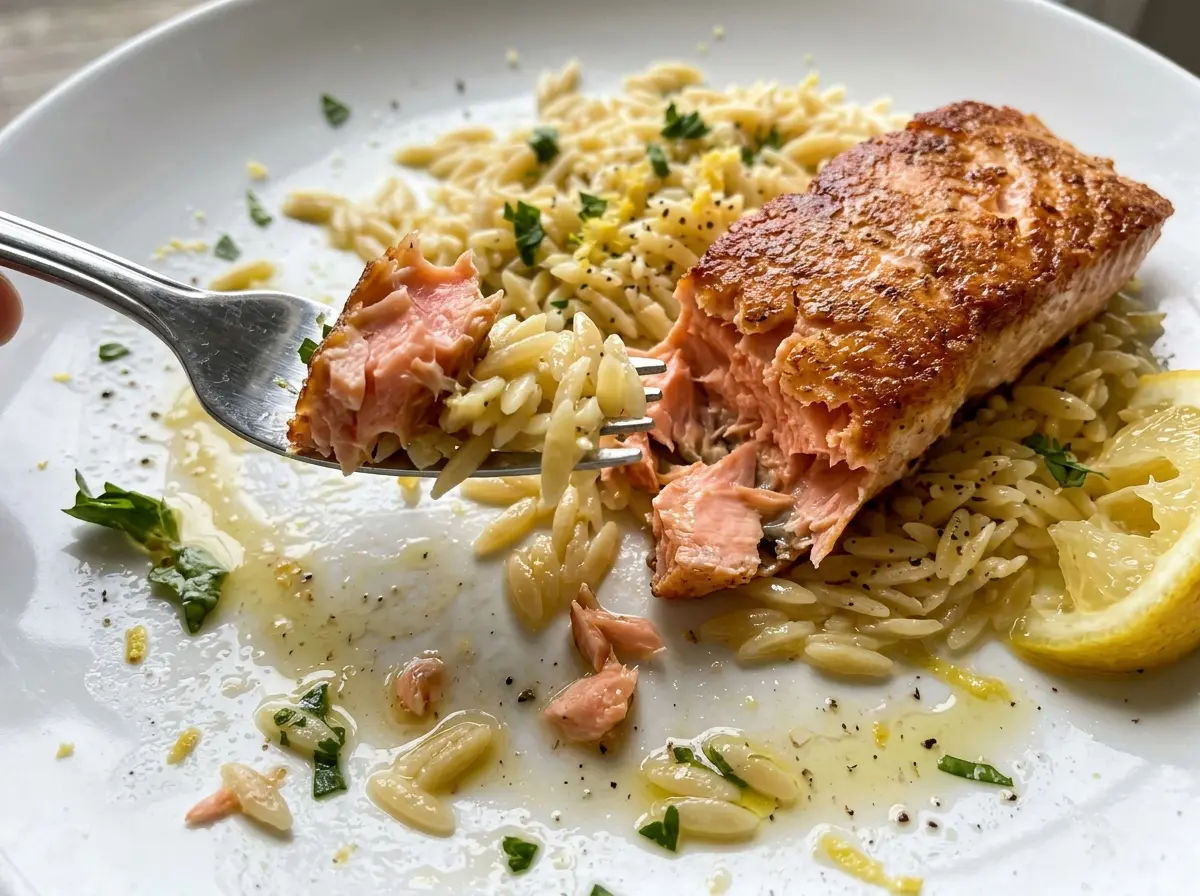
When salmon skin hits shimmering oil, it should sizzle right away. That first contact sets up the crisp skin that makes this dinner feel like more than fish and pasta on a plate. I cook the orzo first, then sear the salmon while the lemony pasta stays covered and warm.
For the orzo, I save a little of its cooking water before draining it. That starchy water helps the butter and finely grated Parmesan coat the pasta instead of collecting at the bottom of the pan. The lemon goes in as both zest and juice, so the finished orzo tastes bright without losing its buttery, savory character. With the salmon cooked skin-side down first, you get a crisp base, tender flakes, and a bowl of lemon orzo ready to catch every bit of flavor.
Kitchen Note
Save the 1/4 cup of orzo water before you drain the pasta; it’s much harder to rescue the sauce once that water is gone. Stir it in with the butter and cheese while the orzo is hot, and the sauce turns glossy instead of dry.
Save this Seared Salmon with Lemon Orzo for a weeknight when crisp-skinned fish and bright, buttery pasta sound just right.
Why the Salmon Skin Needs a Dry Start—and a Hot, Shimmering Pan
Crisp skin comes from contact with the pan, not from cooking the fish longer after you flip it. If the surface is wet, that moisture has to evaporate before the skin can brown, so the fish steams at the very moment you want it to sear. Patting the fillets dry all over gives the skin a better chance to crisp during its first stretch in the skillet.
The oil should be shimmering before the salmon goes in. That visual cue tells you the pan is ready; adding the fish to oil that’s still cool can leave the skin pale and more likely to stick. Set each fillet skin-side down and let it cook undisturbed for 5–6 minutes. The opaque color creeping about halfway up the sides is your cue to flip, not a reason to turn it early. Once flipped, the fish needs only 2–4 minutes more, until the thickest part reaches 145°F. The skin does its best work during that first sear, while the gentler finish keeps the salmon moist.
The Small Orzo Details That Make the Lemon and Parmesan Cling

- Orzo — This small pasta cooks quickly and gives the butter, lemon, and cheese plenty of surface to cling to. Use the package timing as a guide and stop at al dente; a larger pasta shape won’t have the same texture or cooking window.
- Fresh lemon — The zest brings fragrant citrus oils, while the juice adds acidity. Bottled juice can supply tartness but can’t replace the zest, so a fresh lemon matters most here.
- Finely grated Parmesan — Fine shreds melt into the hot pasta more evenly than coarse pieces. A good-quality wedge is nice, but finely grated packaged Parmesan works when convenience matters; leaving it out makes the orzo less savory and less creamy.
- Unsalted butter — Butter rounds out the lemon and helps the pasta feel silky. Olive oil can replace it, though the orzo will taste fruitier and won’t have the same buttery finish.
- Skin-on salmon — The skin is what gives this sear its crisp contrast. Skinless fillets will still cook, but they can’t deliver that texture; choose fillets of even thickness so they cook at a similar pace.
- Fresh parsley — It adds a clean, herbal finish that keeps the buttery pasta from feeling heavy. You can leave it out, but the finished orzo will taste less fresh; chop it shortly before stirring it in.
How to Time the Orzo and Salmon Without Letting Either Sit
Cook the Orzo Until It Still Has a Little Bite
Bring 6 cups of water and 1 tablespoon of kosher salt to a boil in a 3-quart saucepan. Add the orzo and cook according to the package directions, about 7–9 minutes, stirring occasionally. Taste a piece near the end; it should be tender but still have a slight bite in the center. Reserve 1/4 cup of the cooking water, then drain the orzo.
Finish the Lemon Orzo While It’s Hot
Return the drained orzo to the saucepan and stir in the reserved cooking water, butter, lemon zest and juice, Parmesan, and chopped parsley. The hot pasta helps the butter melt and the cheese coat the grains. If the mixture looks a little loose at first, keep stirring until the sauce settles around the orzo. Cover the pan to keep it warm while you sear the salmon.
Dry and Season the Salmon
Pat the salmon dry, including the skin, then season all over with the remaining 3/4 teaspoon of kosher salt and the black pepper. Heat the olive oil in a 12-inch skillet over medium-high heat. Wait until the oil is shimmering before adding the fish; an unwarmed pan won’t give the skin the same direct sear.
Sear, Flip, and Rest
Lay the salmon in the skillet skin-side down and cook for 5–6 minutes, until the skin is crisp and the fish is opaque about halfway up the sides. Flip each fillet and cook for 2–4 minutes, checking the thickest part for 145°F. Transfer the salmon to plates and let it rest for 3 minutes before serving it with the lemon orzo. If the fillets vary in thickness, check each one separately rather than assuming they’ll finish together.
Two Useful Ways to Change the Salmon-and-Orzo Format
A dairy-free lemon orzo
For a dairy-free version, replace the 2 tablespoons of butter with 2 tablespoons of olive oil and leave out the Parmesan. The olive oil keeps the pasta from tasting dry, but the sauce will be less creamy and won’t have Parmesan’s savory depth.
Fold the salmon into the orzo
For a one-pan-style bowl, let the salmon rest, then break the flesh into large flakes and fold it gently through the finished lemon orzo. This spreads the fish through each serving, but the skin will lose its crispness once mixed in; keep the fillets whole if that contrast matters most.
Storage and Reheating
- Refrigerator: Refrigerate leftovers within 2 hours and use them within 3–4 days. The orzo will firm up as it chills, and the salmon skin will soften.
- Freezer: Freeze salmon and orzo in an airtight container for up to 2 months. The fish may be drier and the pasta softer after thawing, so the texture is best when freshly made.
- Reheating: Reheat gently in a covered skillet or microwave with a small splash of water, until the leftovers reach 165°F. High heat can dry out the salmon before the center warms through.
Questions That Come Up While Cooking Salmon and Lemon Orzo
Seared Salmon with Lemon Orzo
Ingredients
Equipment
Method
- Bring the water and 1 tablespoon of the kosher salt to a boil in a 3-quart saucepan.
- Add the orzo and cook according to package directions, about 7–9 minutes, stirring occasionally, until al dente.
- Reserve 1/4 cup of the cooking water, then drain the orzo.
- Return the orzo to the saucepan and stir in the reserved cooking water, butter, lemon zest and juice, Parmesan, and parsley; cover to keep warm.
- Pat the salmon dry and season all over with the remaining 3/4 teaspoon kosher salt and the black pepper.
- Heat the olive oil in a 12-inch skillet over medium-high heat until shimmering.
- Add the salmon skin-side down and cook for 5–6 minutes, until the skin is crisp and the fish is opaque about halfway up the sides.
- Flip the salmon and cook for 2–4 minutes, until the thickest part reaches 145°F.
- Transfer the salmon to plates and rest for 3 minutes.
- Serve with the lemon orzo.