A sheet pan can make salmon feel almost too easy, until the asparagus is still firm and the fish is ready to come out. This Sheet Pan Lemon Garlic Butter Salmon solves that timing problem with one small adjustment: the asparagus starts roasting before the salmon joins it. Then everything finishes together under a bright coating of melted butter, garlic, and lemon.
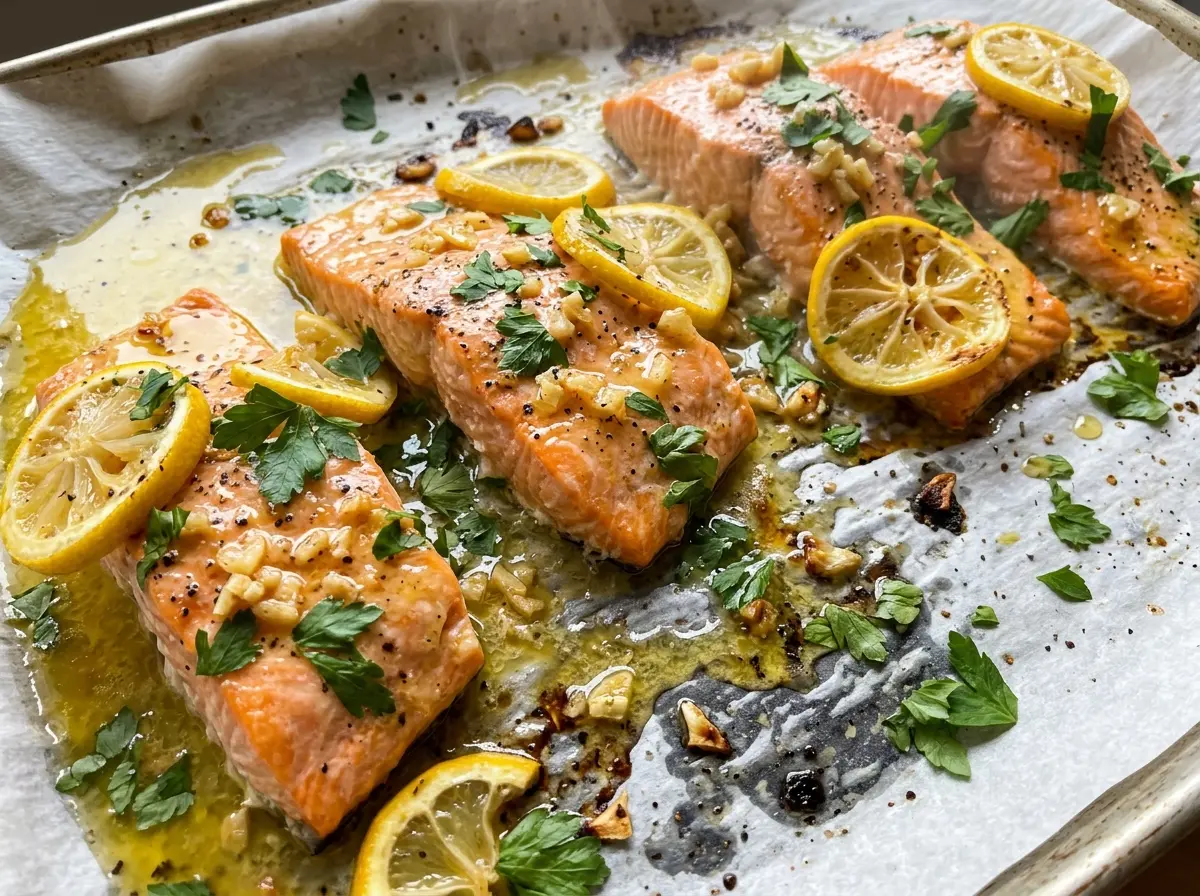
I like skin-on salmon for this dinner because it sits securely on the pan while the butter gathers over the top. The lemon zest gives the butter a fragrant lift, and the juice keeps it from tasting heavy. Once the parsley goes on, you have tender asparagus and flaky salmon with the kind of lemony pan juices you’ll want to spoon over every bite.
Kitchen Note
Mince the garlic finely before stirring it into the butter. Larger pieces can slide off the salmon, leaving some bites more garlicky than others.
Save this Sheet Pan Lemon Garlic Butter Salmon for a night when you want flaky fish, tender asparagus, and lemon-garlic butter without juggling separate pans.
Why the Asparagus Needs a Head Start on the Salmon
Salmon portions cook quickly, while asparagus needs a little more time in the oven to turn tender. Putting both on the pan at once can leave you choosing between underdone vegetables and fish that has stayed in the heat too long. Giving the asparagus a head start lets its thicker stalks begin softening before the salmon goes on.
Spread the asparagus in an even layer so the stalks roast instead of sitting in a crowded pile. Medium asparagus is a good match here: very thin stalks soften quickly, while unusually thick ones may need more time than the salmon. Trim the woody ends, and keep the pieces in a single layer. With that simple timing adjustment, the salmon gets its shorter bake while the asparagus gets a longer stretch of heat, and both are ready for the same serving platter.
What the Salmon, Butter, and Lemon Each Bring to the Pan
- Medium asparagus — Similar-sized stalks cook at a more even pace, so choose a bunch with a consistent thickness. Trim off the tough ends before roasting. If you can only find thin asparagus, keep an eye on its tenderness as it bakes alongside the salmon.
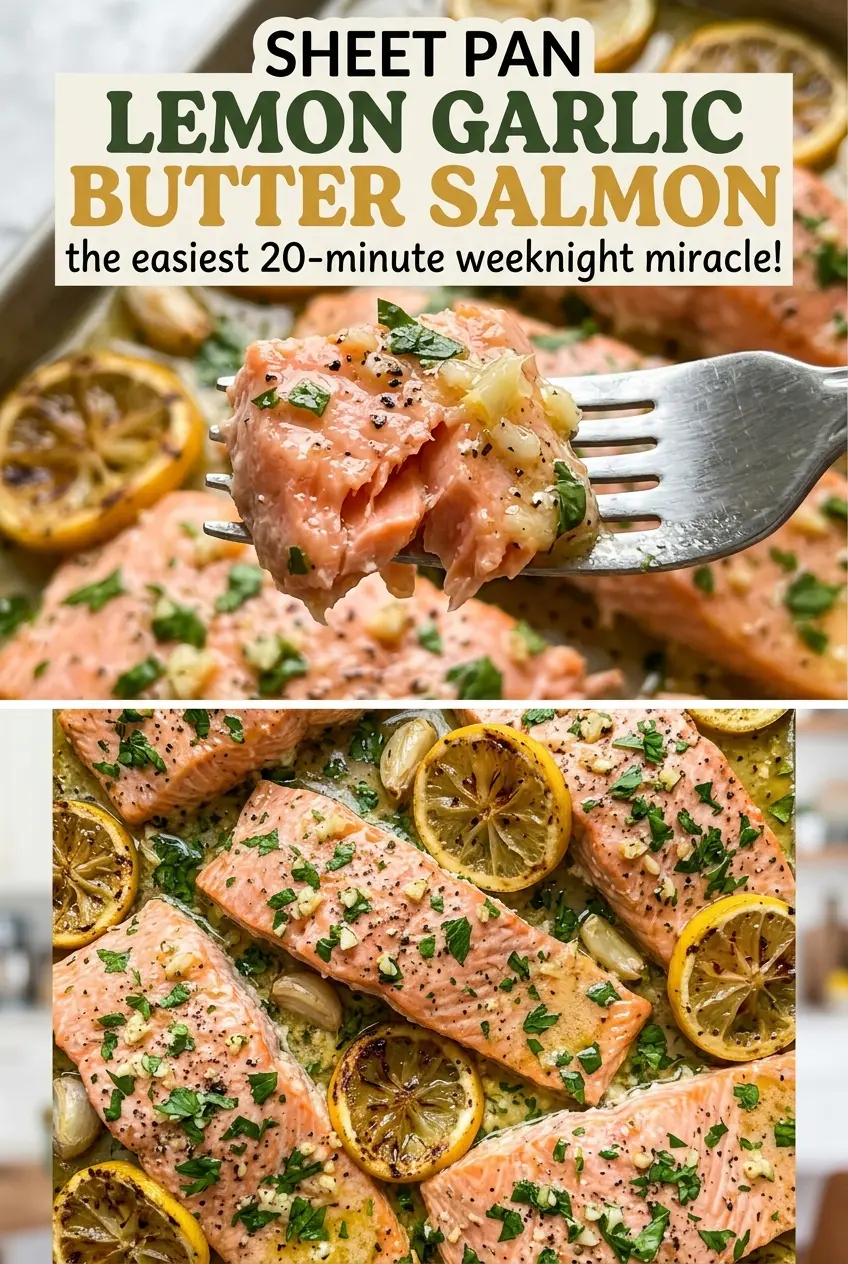
- Skin-on salmon — Skin helps the portions hold together on the pan and creates a buffer between the fish and the hot surface. Ask for four equal portions, or cut them evenly yourself; thickness matters more than whether each piece has a perfectly identical shape. Frozen salmon works after it has thawed fully.
- Unsalted butter — It carries the garlic and lemon over the fish, while unsalted butter lets the added kosher salt stay in control. An everyday unsalted butter is fine here; there’s no need to buy a specialty brand. For a dairy-free adaptation, olive oil can replace the butter, though the coating will be lighter and less rich.
- Fresh lemon — The zest brings fragrant citrus oils, while the juice supplies the sharp, bright note that cuts through the butter. Zest the lemon before juicing it, and use both parts. Bottled juice can add acidity, but it won’t replace the aroma of fresh zest.
- Garlic and parsley — Fresh garlic gives the butter its savory backbone, and chopped parsley adds a clean herbal finish. Fresh parsley is best for sprinkling over the finished pan; if you don’t have it, leave it off rather than adding a large amount of dried herbs as a garnish.
How to Roast the Asparagus Before the Salmon Goes On
Give the asparagus its first stretch in the oven
Heat the oven to 400°F and line a rimmed 18×13-inch sheet pan with parchment paper. Toss the trimmed asparagus on the pan with olive oil, half of the kosher salt, and a quarter of the black pepper, then spread it into an even layer. Roast it for 5 minutes before adding the fish. That early roast begins softening the stalks without asking the salmon to stay in the oven longer.
Stir together the lemon-garlic butter
While the asparagus roasts, stir the melted butter, minced garlic, lemon zest, and lemon juice together in a small bowl. Mix until the zest and garlic are distributed through the butter. The lemon juice may not blend into the butter completely, so give the mixture another stir just before brushing if it has separated while waiting.
Set the salmon skin-side down
Arrange the four salmon portions on the pan with the skin against the parchment. Season the tops with the remaining salt and pepper, then brush them with the lemon-garlic butter. Keep the portions spaced apart rather than pressing them against one another, so heat can circulate around each piece.
Bake to temperature, then let the fish rest
Bake for 12 to 15 minutes, until the thickest part of the salmon reaches 145°F and the asparagus is tender. The exact point within that range depends on the thickness of the portions, so check the thickest piece rather than judging by the edges alone. Sprinkle the parsley over the pan, then let the salmon rest for 3 minutes before serving. The rest gives the juices a moment to settle before you move the portions.
Three Simple Ways to Adapt the Lemon Garlic Butter Salmon
Make it dairy-free with olive oil
Replace the melted butter with olive oil and stir it with the garlic, lemon zest, and juice just as you would the butter. The coating will taste lighter and won’t have the same creamy richness, but it still carries the lemon and garlic over the salmon.
Keep the lemon bright, but soften its edge
Leave the zest out of the butter and keep the lemon juice. You’ll still get a fresh, tart finish, but the citrus aroma will be less pronounced. This is a useful adjustment if you prefer the garlic and salmon to lead.
Skip the garlic for a gentler finish
Omit the garlic and brush the salmon with the lemon butter as usual. The result is milder, with the lemon and salmon coming through more clearly. Keep the parsley for a fresh finish, or leave it off too if you want the simplest version.
Storage and Reheating
- Refrigerator: Store the salmon and asparagus in an airtight container for up to 3 days. The asparagus will soften as it sits.
- Freezer: The cooked salmon can be frozen in an airtight freezer-safe container for up to 2 months. Asparagus is safe to freeze, but it will be much softer after thawing, so freezing the fish alone gives the better texture.
- Reheating: Warm the salmon covered in a 300°F oven until it reaches 165°F in the center. Gentle heat helps keep the fish from drying out; high heat can make the edges tough before the middle warms through.
Questions That Come Up When Making This Salmon
Sheet Pan Lemon Garlic Butter Salmon
Ingredients
Equipment
Method
- Heat the oven to 400°F and line a rimmed 18x13-inch sheet pan with parchment paper.
- Toss the asparagus with the olive oil, 1/2 teaspoon salt, and 1/4 teaspoon pepper on the pan.
- Spread the asparagus in an even layer and roast for 5 minutes.
- Stir the melted butter, garlic, lemon zest, and lemon juice together in a small bowl.
- Arrange the salmon portions skin-side down on the pan.
- Season the salmon with the remaining salt and pepper.
- Brush the tops of the salmon with the lemon-garlic butter.
- Bake for 12 to 15 minutes, until the thickest part of the salmon reaches 145°F and the asparagus is tender.
- Sprinkle with the parsley.
- Let the salmon rest for 3 minutes before serving.