As the beef browns, little savory bits collect on the bottom of the skillet; that’s the start of the stew’s deep, beefy flavor. I used to think the slow cooker did all the work, but taking a few minutes at the stove first makes a noticeable difference in this Slow Cooker Beef Stew. By dinnertime, the chuck is tender enough to break apart with a fork, and the potatoes and carrots have softened without disappearing into the broth.
This version keeps the work in a few straightforward stages: brown the beef, build a quick broth in the same skillet, then let the slow cooker take over. I like that the final thickening happens at the end, so the vegetables and beef have time to become tender before the stew gets its gravy-like consistency. It’s a steady, cozy bowl with tender beef, soft vegetables, and a broth that clings to the spoon.
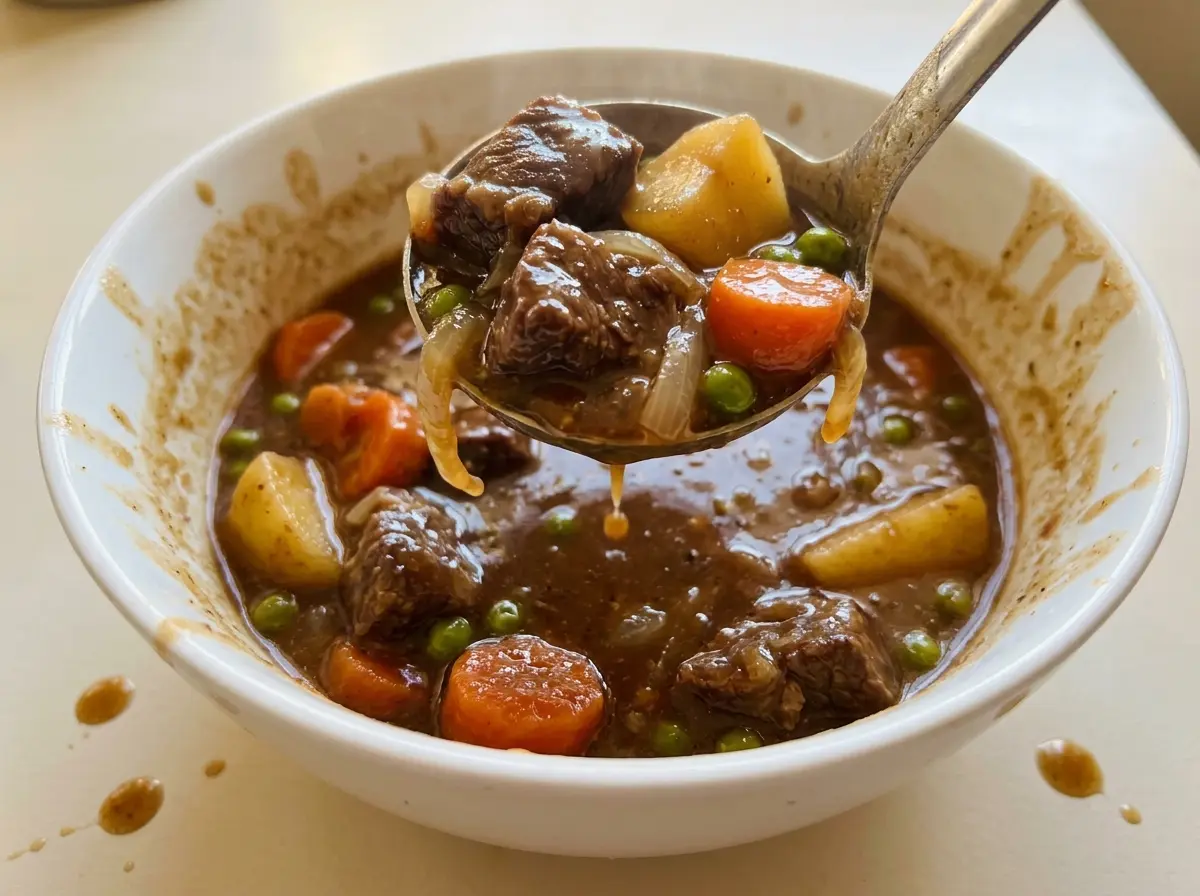
Kitchen Note
Whisk the cornstarch into cold water until you don’t see any dry pockets before it goes into the stew. A smooth slurry disperses easily, while dry cornstarch stirred straight into hot liquid can leave little lumps.
Save this Slow Cooker Beef Stew for a hands-off dinner with tender chuck, soft vegetables, and rich skillet-built broth.
Why the skillet matters before the slow cooker ever turns on
A slow cooker makes beef tender, but it doesn’t brown meat. If you put the floured beef straight into the cooker, you’ll miss the browned crust and the concentrated bits left behind in the skillet. Those bits dissolve into the broth when you scrape the pan, giving the stew a deeper, more rounded taste than broth alone can provide.
The same skillet also gives the onion, garlic, and tomato paste a brief turn in the beef’s cooking juices before the broth goes in. That short stop at the stove helps the tomato paste lose its raw edge and makes it easy to lift the flavorful browned bits from the pan. It’s not extra busywork for its own sake; each part of the base gets a chance to contribute before the long, gentle cook begins.
Flour on the beef adds another small advantage. It helps the broth develop some body as the stew cooks, while the cornstarch slurry at the end gives you control over the finished thickness. The result is a stew with a richer base and a smoother finish, rather than a thin broth carrying separate pieces of beef and vegetables.
What gives this stew its beefy broth and sturdy vegetables
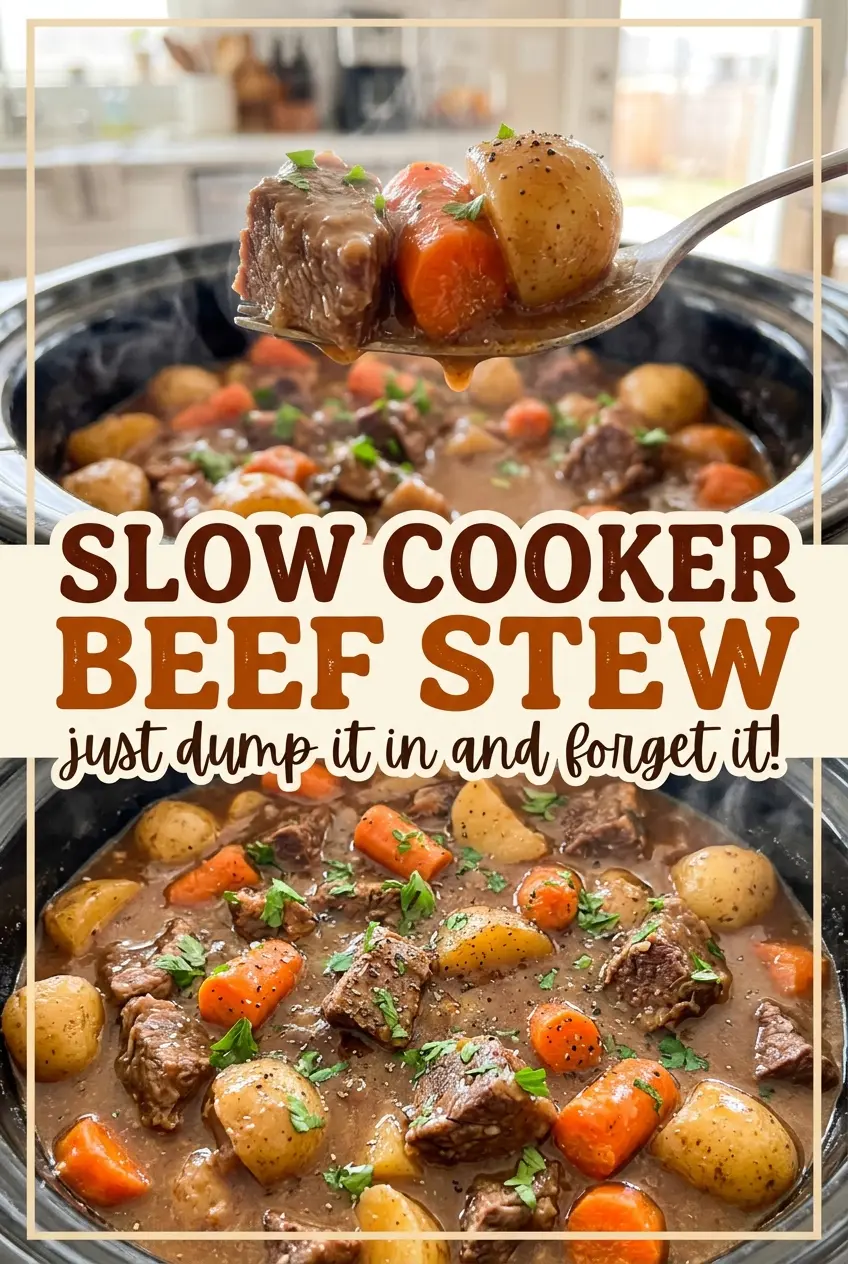
- Beef chuck — Chuck has enough connective tissue to become tender during a long, moist cook, which is what gives stew its satisfying, soft texture. Choose cubes with some marbling rather than very lean beef; lean cuts are more likely to turn dry before they become tender.
- Yukon Gold potatoes — These hold their shape while turning creamy at the edges. Red potatoes are a useful swap if that’s what you have; they’re also waxy and tend to stay intact. Keep the pieces close to the same size so they cook at a similar pace.
- All-purpose flour — The light coating helps brown the beef and contributes body to the broth. If you need a gluten-free version, use a gluten-free all-purpose flour blend for the coating; the finished texture may be a little different, but the separate cornstarch thickener still helps finish the stew.
- Beef broth and Worcestershire sauce — Broth provides the savory base, and Worcestershire adds a tangy, savory note that makes the broth taste fuller. A good-quality broth matters more here than a premium brand of Worcestershire; use a broth you enjoy tasting on its own.
- Tomato paste and dried thyme — Tomato paste brings concentrated savory depth without making the stew taste like tomato soup, while thyme gives the broth a gentle herbal note. A tube of tomato paste is handy when you don’t use a full can, but either works.
- Carrots, celery, and onion — These form the familiar savory vegetable base and become tender over the slow cook. Fresh, firm carrots are worth choosing because they keep a pleasant bite better than limp ones; the onion and celery soften into the broth.
Brown the beef, build the broth, and let time do the rest
Coat and brown the beef in batches
Pat the thawed beef dry, then toss it with the flour, kosher salt, and black pepper until the pieces are evenly coated. Heat the vegetable oil in a 12-inch skillet over medium-high heat. Brown the beef in batches for about 2 to 3 minutes per side, then move each batch to a 6-quart slow cooker. If the skillet is crowded, the beef releases moisture and steams instead of developing browned surfaces.
Turn the browned bits into the broth base
Add the chopped onion to the same skillet and cook for 3 to 4 minutes, stirring occasionally. Stir in the minced garlic and tomato paste and cook for 30 seconds; the garlic should smell fragrant, not scorched. Pour in the beef broth and Worcestershire sauce, scraping the bottom of the skillet to loosen the browned bits. Stir in the dried thyme before taking the pan off the heat.
Layer in the vegetables and slow-cook until tender
Add the cubed potatoes, carrot pieces, sliced celery, and bay leaf to the slow cooker with the browned beef. Pour the broth mixture over everything and stir to combine. Cover and cook on LOW for 8 to 9 hours or on HIGH for 4 to 5 hours. The beef should be fork-tender, and the vegetables should be tender when pierced.
Thicken the stew after the beef is tender
Take out the bay leaf before serving. Whisk the cornstarch with cold water to make a smooth slurry, then stir it into the stew. Cover and cook on HIGH for 15 to 20 minutes, until the broth has thickened. Give the stew a good stir before ladling so the thickened broth coats the beef and vegetables.
Two thoughtful ways to change the flavor or fit a gluten-free table
Use rosemary for a woodier herb note
Replace the dried thyme with half a teaspoon of dried rosemary. Rosemary has a more piney, pronounced flavor, so using less keeps it from taking over the beef broth.
Make the stew gluten-free
Use a gluten-free all-purpose flour blend in place of the flour for coating the beef, and choose gluten-free Worcestershire sauce. The stew may have a slightly different body, but the cornstarch slurry still thickens the broth at the end.
Storage and Reheating
- Refrigerator: Refrigerate leftovers within 2 hours and keep them in an airtight container for 3 to 4 days. The potatoes may soften a little as they sit.
- Freezer: Freeze cooled stew in airtight, freezer-safe containers for up to 2 to 3 months. The potatoes can be softer after thawing, but the beef and broth freeze well.
- Reheating: Warm a portion gently in a saucepan, stirring occasionally, or heat it in the microwave and stir partway through. Reheat leftovers to 165°F; avoid a hard boil, which can make the beef seem dry and break up the vegetables.
Questions that come up when making slow cooker beef stew
Slow Cooker Beef Stew
Ingredients
Equipment
Method
- Pat the thawed beef dry, then toss it with the flour, kosher salt, and black pepper until evenly coated.
- Heat the vegetable oil in a 12-inch skillet over medium-high heat and brown the beef in batches, about 2 to 3 minutes per side. Transfer it to a 6-quart slow cooker.
- Add the chopped yellow onion to the skillet and cook for 3 to 4 minutes, stirring occasionally.
- Stir in the garlic and tomato paste and cook for 30 seconds.
- Pour the beef broth and Worcestershire sauce into the skillet, scraping up the browned bits, and stir in the dried thyme.
- Add the Yukon Gold potatoes, carrots, celery, and bay leaf to the slow cooker.
- Pour the broth mixture over the vegetables and beef, then stir to combine.
- Cover and cook on LOW for 8 to 9 hours or HIGH for 4 to 5 hours, until the beef is fork-tender and the vegetables are tender.
- Remove the bay leaf, whisk the cornstarch with the cold water, and stir the slurry into the stew.
- Cover and cook on HIGH for 15 to 20 minutes, until thickened.