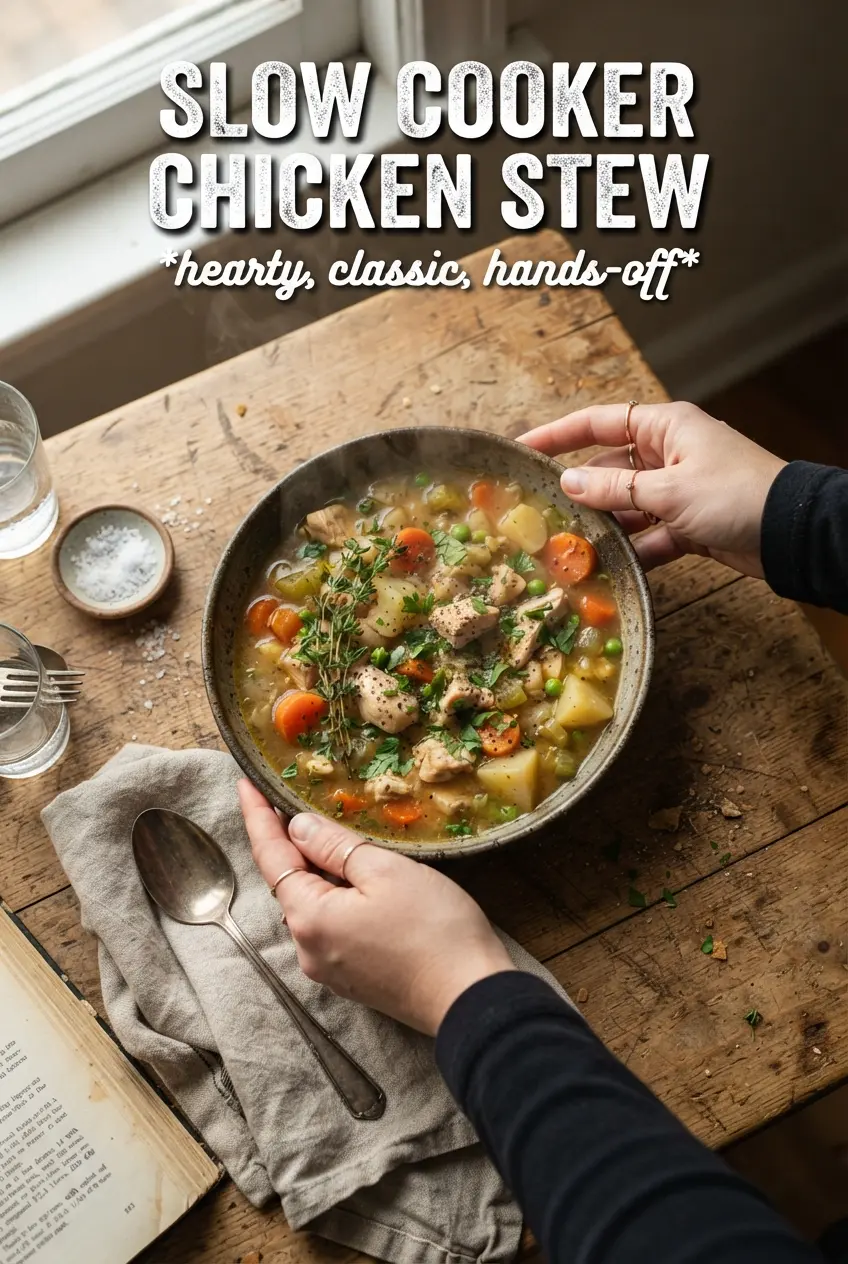
Slow cooker chicken stew earns its place in the rotation because it finishes thick, savory, and deeply comforting without asking for constant attention. The chicken turns tender enough to fall off the bone, the potatoes hold their shape, and the broth tightens into a gravy that clings to every spoonful instead of sliding right off the vegetables.
The part that makes this version work is the order. The vegetables go in first so they sit in the cooking liquid and soften evenly, while the chicken rests on top and bastes as everything simmers. A little tomato paste gives the broth more backbone, and the cornstarch slurry goes in at the end, after the chicken is shredded, so the stew thickens cleanly instead of turning pasty in the slow cooker.
Below, I’ll walk through the one timing step that keeps the texture right, plus a few swaps and storage notes that make this a practical dinner, not just a good one on paper.
The gravy got thick and glossy after the cornstarch went in, and the chicken shredded without any effort. I loved that the potatoes stayed intact instead of turning mushy.
Save this slow cooker chicken stew for a night when you want fall-apart chicken, tender vegetables, and a rich gravy with almost no hands-on time.
The Slow Cooker Trick That Keeps the Vegetables From Turning to Mush
The biggest mistake with chicken stew in a slow cooker is dumping everything in and walking away. That works for flavor, but it can wreck texture. Potatoes and carrots need a buffer from the hottest part of the insert, and chicken thighs do better sitting above the vegetables so they braise gently instead of overcooking on the bottom.
The other trap is thickening too early. Cornstarch needs heat to activate, but it also needs a short finish, not six hours of simmering. Add the slurry only after the chicken is shredded and the bay leaf is out, then give it enough time to go from thin and cloudy to glossy and spoon-coating.
- Chicken thighs — Bone-in thighs bring better flavor and stay juicy through a long cook. Boneless thighs work too, but they shred a little more easily and won’t give the broth quite as much richness.
- Baby potatoes — These hold their shape better than large starchy potatoes. If you use russets, they’ll break down and thicken the stew in a different way.
- Cream of chicken soup — This adds body and a little built-in seasoning. If you swap it for cream of mushroom, the stew gets earthier; if you want to skip canned soup, use an extra 1/2 cup broth plus 1/2 cup heavy cream at the end, though the texture will be looser.
- Tomato paste — Just two tablespoons deepen the gravy and keep the stew from tasting flat. It doesn’t make the stew taste like tomato; it just gives the broth more roundness.
- Thyme, rosemary, and bay leaf — This is the backbone of the stew’s savory flavor. Fresh thyme can replace dried thyme at a 3-to-1 ratio, but keep the rosemary dried or use it very sparingly if you switch to fresh, since it can take over fast.
- Cornstarch slurry — Mixing the cornstarch with cold water before adding it keeps it from clumping. If you skip the slurry and stir dry cornstarch straight into the pot, you’ll get little white streaks instead of a smooth gravy.
What Each Ingredient Is Actually Doing in This Recipe

- Primary ingredient (the star) — Quality matters most. Choose the best you can find.
- Cooking medium (oil, butter, or broth) — This carries flavors and prevents dryness.
- Seasonings (salt, pepper, spices, herbs) — Layer flavors so nothing overpowers. Build depth gradually.
- Aromatics (garlic, onion, herbs) — Cook with fat to bloom flavors. Become the foundation.
- Supporting ingredients — Complement the main ingredient without overpowering it.
- Sauce or liquid (if applicable) — Brings flavors together. Balance richness with acid.
- Acid (lemon, vinegar, wine, or other) — Brightens and prevents flat-tasting results.
- Final finish (garnish, glaze, or sauce) — Prevents one-dimensional taste and adds visual appeal.
Why the Last 20 Minutes Matter More Than the First 6 Hours
Layer the vegetables where they can soften evenly
Spread the potatoes, carrots, celery, and onion across the bottom of the slow cooker in an even layer. That keeps the vegetables in the cooking liquid so they soften instead of drying out at the edges. If the layer is piled up too high, the potatoes at the top can stay underdone while the bottom turns too soft.
Build the broth on top, not around the chicken
Set the chicken thighs over the vegetables, then add the garlic, broth, cream of chicken soup, tomato paste, thyme, rosemary, and bay leaf. As the stew cooks, the chicken releases juices into the liquid below and seasons the whole pot from the top down. If the soup looks clumpy at first, that’s normal — it melts into the broth as the heat builds.
Shred the chicken before thickening the stew
When the chicken is tender, lift it out and discard the skin and bones before shredding the meat. Removing the bones at this stage keeps the stew from getting greasy, and shredding before thickening helps the final texture stay even. Pull the bay leaf out before it goes back in the pot; a bay leaf that’s left in too long can leave a bitter edge.
Finish with the slurry and wait for the gloss
Stir the cornstarch and water together until smooth, then mix it into the hot stew and cook on High for about 20 minutes. The liquid should go from thin and slightly cloudy to thick enough to coat a spoon. If it still seems loose after 20 minutes, give it another 5 to 10 minutes — cornstarch thickens as it heats, and rushing this part leaves you with broth instead of stew.
Make it dairy-free without losing body
Use a dairy-free cream soup substitute or swap in 1 cup unsweetened dairy-free cream at the end with the slurry. The stew will still be rich, but the flavor will be a little less round than the version made with cream of chicken soup.
Use boneless chicken thighs for easier shredding
Boneless thighs shave off a little prep time and shred faster at the end. You’ll lose some of the deep flavor that comes from simmering the bones, so the broth may need an extra pinch of salt and a little more thyme.
Swap the potatoes for a lower-carb stew
Cauliflower florets can replace the potatoes, but add them during the last 45 to 60 minutes so they don’t disappear into the broth. The stew will be lighter and less hearty, but the thyme and rosemary still carry the same cozy, savory note.
Storage and Reheating
- Refrigerator: Store in an airtight container for up to 4 days. The stew thickens as it chills, so it may look almost too firm straight from the fridge.
- Freezer: Freezes well for up to 3 months. Cool it completely first, then freeze in portions; the potatoes soften a little after thawing, but the flavor holds up well.
- Reheating: Warm it gently on the stove or in the microwave with a splash of broth if needed. High heat can make the chicken stringy and can tighten the starch so much that the stew turns gluey.
Answers to the Questions Worth Asking
Slow Cooker Chicken Stew
Ingredients
Equipment
Method
- Add baby potatoes, carrots, celery, and onion to the bottom of the slow cooker for even layering.
- Nestle bone-in chicken thighs on top, then sprinkle in minced garlic to start seasoning throughout the cook.
- Pour in chicken broth, then add cream of chicken soup, tomato paste, dried thyme, dried rosemary, and bay leaf.
- Cook on Low for 6-8 hours until the chicken is very tender and easily shreds, then check at the low end of the time range for doneness.
- Remove the chicken, discard skin and bones, and shred the meat for a hearty, fall-apart texture.
- Remove the bay leaf, then stir the cornstarch slurry into the stew until it looks smoother and slightly thickened.
- Cook on High for 20 minutes, stirring occasionally, until the gravy reaches a thick, spoon-coating consistency.
- Return the shredded chicken to the slow cooker and season with salt and pepper to taste.
- Garnish with fresh parsley and serve hot with crusty bread if desired.