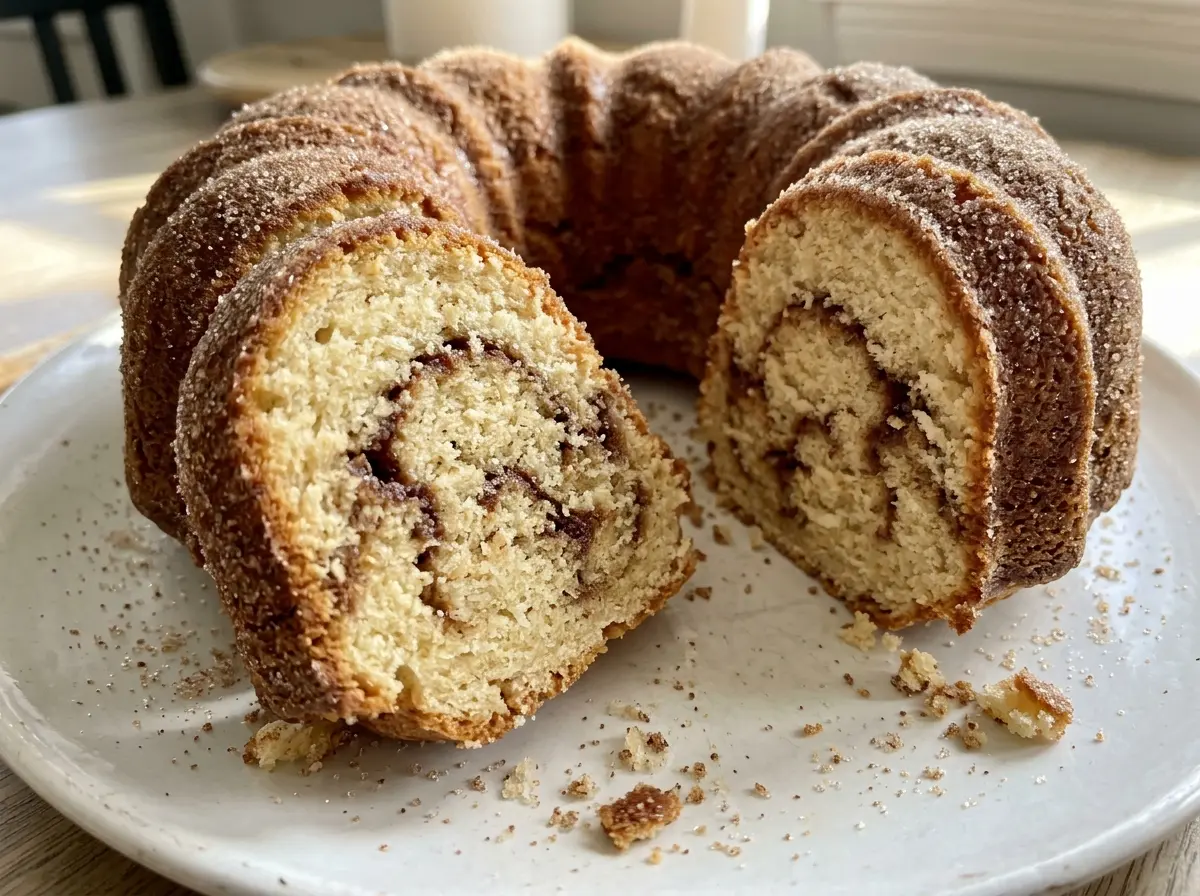
A Bundt cake can be perfectly baked and still lose a few chunks when it sticks in the pan. I learned to take the spray job seriously: this snickerdoodle Bundt cake has plenty of ridges for batter to cling to, and every crevice needs a thorough coat of baking spray with flour. Once it releases cleanly, the cinnamon-sugar finish turns the outside into the best part to catch with your fork.
The batter gets its tender, close crumb from creamed butter and sugar, room-temperature eggs and sour cream, and a gentle hand once the flour goes in. I alternate the dry ingredients with the sour cream so the batter comes together without extra mixing. Cinnamon and cream of tartar bring the familiar snickerdoodle character, while a buttery cinnamon-sugar coating covers the cooled cake. Each slice has a soft center and a sweet, lightly crisp exterior.
Kitchen Note
Coat the Bundt pan slowly, working the baking spray with flour into every groove. A quick mist across the top can miss the narrow crevices, and those are the spots most likely to hold on to the cake.
Save this Snickerdoodle Bundt Cake for its tender cinnamon crumb and buttery cinnamon-sugar crust.
Why the Mixing Order Matters More Than Extra Beating
A Bundt cake needs to be sturdy enough to hold its shape, but working the flour too long can make the crumb tougher than you want. Creaming the softened butter and sugar first creates a light base, and adding the eggs one at a time helps them blend in evenly. After that, the mixer should slow down: each addition of flour needs only enough mixing to disappear.
Alternating the flour mixture with sour cream keeps the batter from turning into a stiff mass all at once. Starting and ending with flour gives the mixture a smooth finish, while the sour cream brings moisture and tang. The order also gives you a useful visual cue: once the final flour addition is incorporated, stop. A few seconds of unnecessary mixing can change a soft cake into a denser one.
This balance matters especially in a Bundt pan, where the cake has a long bake and a large center to cook through. The goal isn’t a whipped, airy sponge; it’s a tender cake that slices neatly and can support its cinnamon-sugar coating. Gentle mixing after the flour goes in helps land there.
What Gives This Cake Its Snickerdoodle Flavor
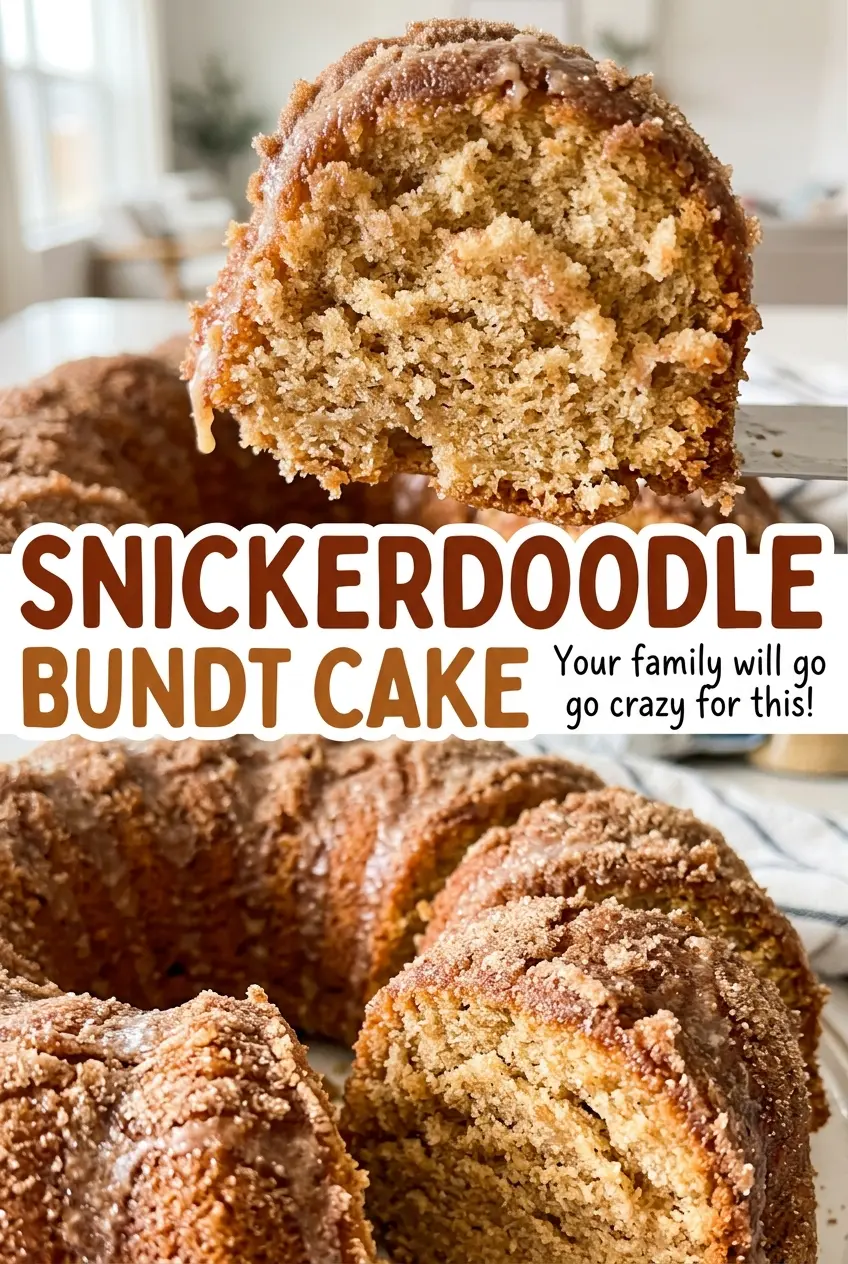
- Cream of tartar and cinnamon — Cinnamon gives the cake its warm spice, and cream of tartar adds the gentle tang associated with snickerdoodles. Keep both in the batter for a flavor that goes beyond plain cinnamon cake.
- Sour cream — Its thickness adds moisture without making the batter runny, and its tang complements the cream of tartar. Plain full-fat Greek yogurt is the most useful swap; replace the sour cream measure for measure, knowing the crumb may be a little less tender.
- Unsalted butter — Butter brings richness and helps create the cake’s texture when creamed with the sugar. Choose butter that is softened rather than melted; the quality of an everyday unsalted butter is fine here.
- Eggs and vanilla — Room-temperature eggs blend into the creamed butter more smoothly than cold ones, and vanilla rounds out the cinnamon. Use pure or imitation vanilla according to what you keep on hand; cinnamon remains the leading flavor.
- Granulated sugar for the coating — Its crystals stay distinct when mixed with cinnamon and pressed onto the butter-brushed cake. The coating adds a fine sugary crunch that powdered sugar won’t provide.
- All-purpose flour — It gives this tall cake enough structure to release and slice cleanly. Standard all-purpose flour is the dependable choice; a gluten-free variation is included below for cooks who need it.
How to Mix, Bake, and Coat the Bundt Cake
Prepare the Pan and Dry Ingredients
Heat the oven to 325°F and thoroughly coat a 12-cup Bundt pan with baking spray with flour. Take time to cover the ridges and center tube, not just the broad surfaces. Whisk the flour, baking powder, baking soda, salt, cinnamon, and cream of tartar together in a medium bowl. Breaking up any small lumps now helps the dry ingredients distribute evenly through the batter.
Cream the Butter Before Adding the Eggs
Beat the softened butter and granulated sugar in a large bowl with an electric mixer on medium speed until light and fluffy, about 3 minutes. The mixture should look paler and hold soft ridges rather than appear glossy or melted. Add the eggs one at a time, mixing well after each, then mix in the vanilla. If the butter is too warm and soft, it won’t cream properly, so start with softened—not melted—butter.
Alternate the Flour and Sour Cream
Add the flour mixture in three additions, alternating with the sour cream in two additions; begin and end with flour. Mix on low just until the batter comes together, scraping the bowl if dry streaks remain. Scrape the batter into the prepared pan and smooth the top. Bake for 60 to 75 minutes, until a toothpick inserted in the center comes out with a few moist crumbs.
Cool Fully Before Adding the Cinnamon Sugar
Let the cake cool in the pan for 15 minutes, then invert it onto a wire rack and lift off the pan. Allow the cake to cool completely before coating; warm cake can soften the sugar before it has a chance to cling. Melt the butter and stir the granulated sugar and cinnamon together in a shallow dish. Brush the cooled cake all over with melted butter, then sprinkle and gently press the cinnamon-sugar mixture over the entire surface.
Simple Ways to Adjust the Cinnamon and Coating
A gluten-free Bundt cake
Replace the all-purpose flour with a cup-for-cup gluten-free baking blend formulated for cakes, ideally one that includes xanthan gum. Keep the rest of the ingredients and mixing method the same. The crumb may be a little more delicate, so let the cake cool fully before turning it out.
A milder cinnamon cake
Leave the cinnamon out of the cake batter but keep the cinnamon-sugar coating. The slices will taste more like a buttery sour cream cake, while the outside still carries the familiar cinnamon-sugar flavor.
A less-sweet, lightly coated finish
For a subtler finish, brush and coat only the top ridges of the cooled cake rather than covering the entire surface. The cake keeps its soft cinnamon crumb, with less buttery sugar on each slice; you won’t need to use all of the coating.
Storage and Reheating
- Refrigerator: Store the cake in an airtight container for up to 4 days. The crumb firms up when chilled, so let a slice sit briefly before eating.
- Freezer: Freeze slices wrapped tightly for up to 2 months. The cinnamon-sugar coating may soften a little as the slices thaw.
- Reheating: Microwave an individual slice for about 10 seconds to take off the chill. Longer heating can dry out the crumb and melt the coating.
Questions That Come Up While Baking This Bundt Cake
Snickerdoodle Bundt Cake
Ingredients
Equipment
Method
- Preheat the oven to 325°F.
- Thoroughly coat a 12-cup Bundt pan with nonstick baking spray with flour, making sure to cover all the crevices.
- Whisk the flour, baking powder, baking soda, salt, cinnamon, and cream of tartar together in a medium bowl.
- Beat the softened butter and sugar in a large bowl with an electric mixer on medium speed until light and fluffy, about 3 minutes.
- Beat in the eggs one at a time, mixing well after each addition.
- Mix in the vanilla.
- Add the flour mixture in three additions, alternating with the sour cream in two additions; begin and end with the flour mixture, mixing on low just until combined.
- Scrape the batter into the prepared pan and smooth the top.
- Bake for 60 to 75 minutes, until a toothpick inserted in the center comes out with a few moist crumbs.
- Cool the cake in the pan for 15 minutes.
- Invert it onto a wire rack and lift off the pan.
- Cool completely.
- Melt the butter.
- Stir the sugar and cinnamon together in a shallow dish.
- Brush the cooled cake all over with the melted butter.
- Sprinkle and gently press the cinnamon-sugar mixture over the entire surface.