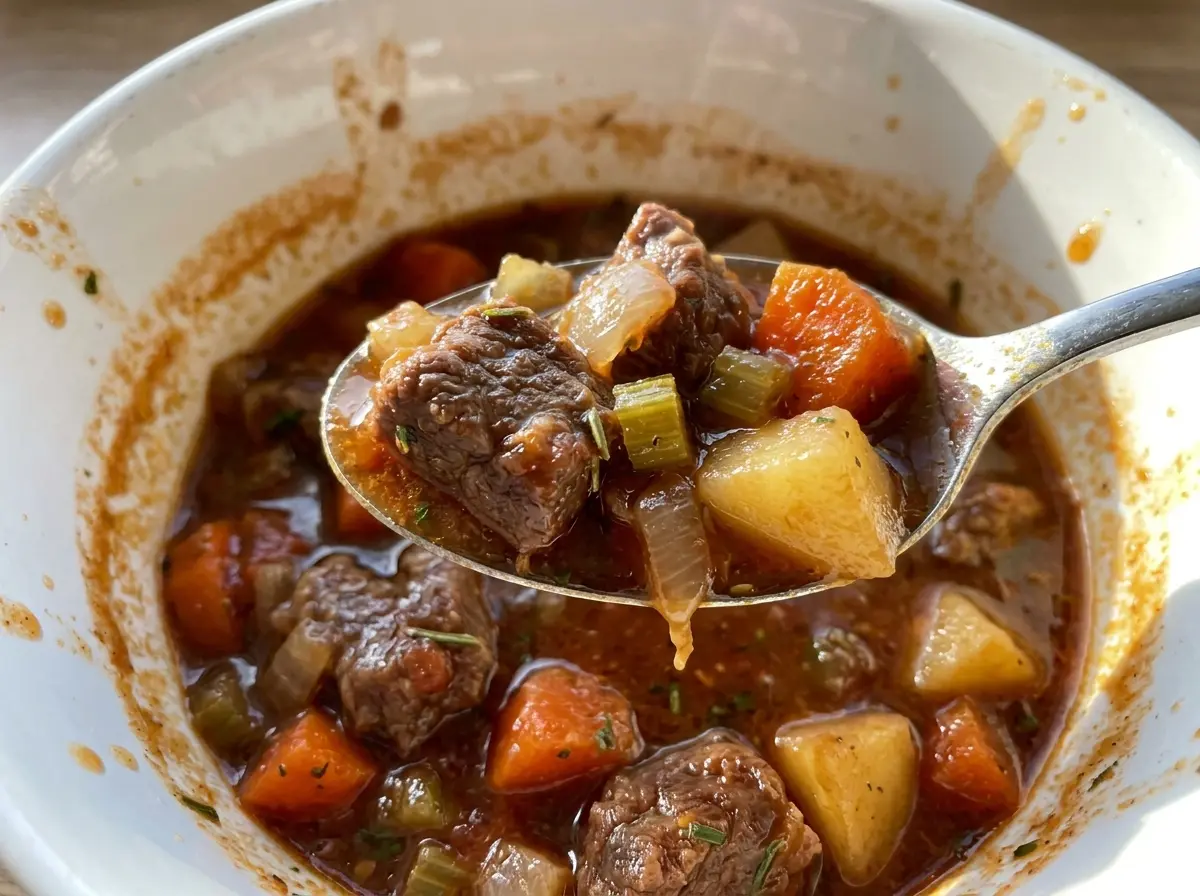
When the beef hits the Dutch oven, the first few minutes are all about building color. Soon the pot is full of browned edges and savory bits stuck to the bottom, and the onion softens as it picks them up. That’s the start of Spezzatino Italian Beef Stew, a one-pot dinner with tender chunks of chuck, carrots, Yukon Gold potatoes, and a rich tomato-and-wine broth.
I like the way this stew develops in layers: tomato paste darkens in the pot, red wine loosens the browned bits, and the beef gets a long, gentle braise before the vegetables join in. The broth turns savory without needing a complicated sauce, and the potatoes give each bowl a satisfying, hearty feel. Ladle it while the parsley is still bright on top and the broth is hot around the tender beef.
Kitchen Note
Brown the chuck in batches, leaving space around each piece instead of filling the pot all at once. Give each side its full 3 to 4 minutes so the beef gets color rather than steaming against its neighbors.
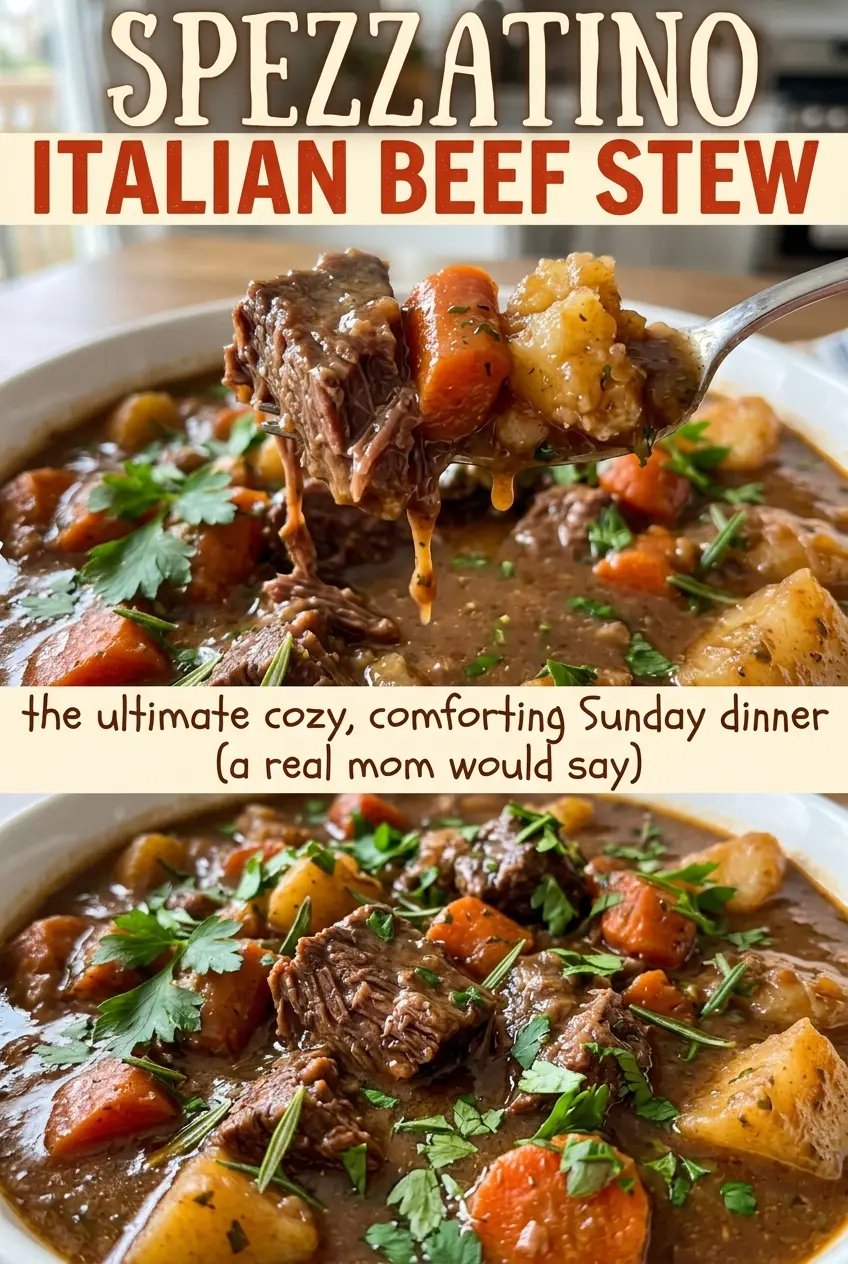
Save Spezzatino Italian Beef Stew for a cozy dinner with tender chuck, potatoes, and a wine-rich tomato broth.
Why the Carrots and Potatoes Wait for the Beef
Chuck needs a long stretch in the pot before its connective tissue softens, but carrots and potatoes don’t need that same head start. Add them at the beginning and they’ll spend the entire braise cooking alongside the beef; by the time the meat is tender, the vegetables may have lost their shape. Giving the beef its first hour and a half on its own lets it begin to soften before the vegetables go in.
The timing also gives you a useful doneness check. After the carrots and potatoes have simmered in the broth, test the beef as well as the vegetables. A fork should slide into the chuck without a chewy pull, while the potatoes should be tender but still hold their cut edges. The range in the cooking time accounts for differences in the size of your pieces and how steadily your pot simmers. Keep the heat low enough for a gentle bubble, not a rolling boil that tosses the vegetables around.
This staggered timing is what lets the finished stew have both: beef that yields easily and vegetables you can still recognize in the bowl.
What the Chuck, Wine, and Yukon Golds Contribute
- Beef chuck — Chuck has enough connective tissue to become tender during a slow braise and give the broth a fuller, beefier body. Trim away large pieces of excess fat and keep the cubes close to the same size so they cook at a similar pace.
- All-purpose flour — A light coating clings to the seasoned beef and helps it brown; it also gives the finished broth a little body. For a gluten-free version, use a cup-for-cup gluten-free flour blend in its place.
- Dry red wine — The wine loosens the browned bits and adds depth to the broth. Use a dry red you’d be happy to drink, but there’s no need to buy an expensive bottle; sweet wine would push the stew in a different direction.
- Tomato paste and diced tomatoes — Tomato paste brings concentrated savory flavor, while the canned tomatoes add their juices to the braising liquid. Cook the paste until it darkens slightly rather than leaving it raw and bright.
- Yukon Gold potatoes — These potatoes turn tender and creamy while keeping their shape better than a floury potato would. Choose potatoes that feel firm, and cut the chunks evenly so they finish together.
- Onion, celery, and garlic — These aromatics build the base without overwhelming the beef. Fresh garlic gives the pot its fragrant note; everyday yellow onions and celery work well here.
- Frozen peas and fresh parsley — The peas go in near the end so they keep their color and don’t disappear into the long-cooked stew. Fresh parsley gives the finished pot a clean, herbal lift.
Building Spezzatino in the Dutch Oven Without Losing the Browned Bits
Season and Coat the Chuck
Pat the beef dry before seasoning it with some of the kosher salt and the black pepper. Sprinkle on the flour and toss until the cubes are evenly coated, without thick patches of dry flour. Dry surfaces brown more readily, and an even coating keeps the pot from picking up floury clumps. Set out a plate for the browned pieces before you start cooking.
Brown the Beef, Then Soften the Aromatics
Heat the olive oil in a 6-quart Dutch oven over medium-high heat. Brown the beef in batches for 3 to 4 minutes per side, transferring each batch to the plate as it colors. Add the onion and celery, lower the heat to medium, and cook for 5 minutes while stirring and scraping the bottom. When they’ve softened, stir in the garlic and tomato paste for 1 minute, until fragrant and slightly darker.
Deglaze and Start the Braise
Pour in the red wine and simmer for 2 to 3 minutes, scraping the pot so the browned bits loosen into the liquid. Stir in the diced tomatoes and their juices, beef broth, bay leaves, rosemary, and the remaining salt. Return the beef and any juices from the plate to the Dutch oven. Bring the stew to a gentle simmer, cover it, and cook over low heat for 1 1/2 hours.
Add the Vegetables and Finish the Pot
Stir in the carrots and potatoes, cover the pot again, and simmer for 35 to 45 minutes. Check that the beef and vegetables are fork-tender before moving on; the potatoes should yield easily without crumbling when stirred. Add the frozen peas and cook uncovered for 5 minutes. Remove the bay leaves, stir in the chopped parsley, and serve the stew hot.
Practical Swaps for Spezzatino, Plus How to Keep Leftovers
Make the Beef Coating Gluten-Free
Replace the all-purpose flour with the same amount of a cup-for-cup gluten-free flour blend when coating the beef. The stew keeps its hearty texture, though the broth may have a slightly different body depending on the blend.
Make It Without Red Wine
Use 1 cup of beef broth in place of the red wine. You’ll still have a savory, beefy stew, but the broth will be less layered and have less of the wine’s acidity.
Storage and Reheating
- Refrigerator: Store in a covered container for 3 to 4 days. The potatoes soften a little as they sit in the broth.
- Freezer: Freeze in airtight containers for up to 2 to 3 months, leaving room for expansion. Thaw overnight in the refrigerator; the potatoes may be softer after freezing.
- Reheating: Warm gently in a saucepan over medium-low heat, stirring carefully, until the stew reaches 165°F. Avoid a hard boil, which can break up the potatoes and carrots.
Questions That Come Up While the Stew Simmer
Spezzatino Italian Beef Stew
Ingredients
Equipment
Method
- Pat the beef dry.
- Season the beef with 1 teaspoon of the salt and the black pepper.
- Sprinkle the flour over the beef and toss until evenly coated.
- Heat the olive oil in a 6-quart Dutch oven over medium-high heat.
- Brown the beef in batches for 3 to 4 minutes per side, then transfer it to a plate.
- Add the onion and celery to the pot and cook over medium heat for 5 minutes, stirring and scraping up browned bits, until softened.
- Stir in the garlic and tomato paste and cook for 1 minute, until fragrant and the paste darkens slightly.
- Pour in the red wine and simmer for 2 to 3 minutes, scraping the bottom of the pot to loosen any browned bits.
- Stir in the diced tomatoes, beef broth, bay leaves, rosemary, and remaining 1/2 teaspoon salt.
- Return the beef and its juices to the pot.
- Bring the stew to a gentle simmer, cover, and cook over low heat for 1 1/2 hours, keeping it at a gentle simmer.
- Stir in the carrots and potatoes, cover, and simmer for 35 to 45 minutes, until the beef and vegetables are fork-tender.
- Stir in the frozen peas and cook uncovered for 5 minutes.
- Remove the bay leaves and stir in the parsley.