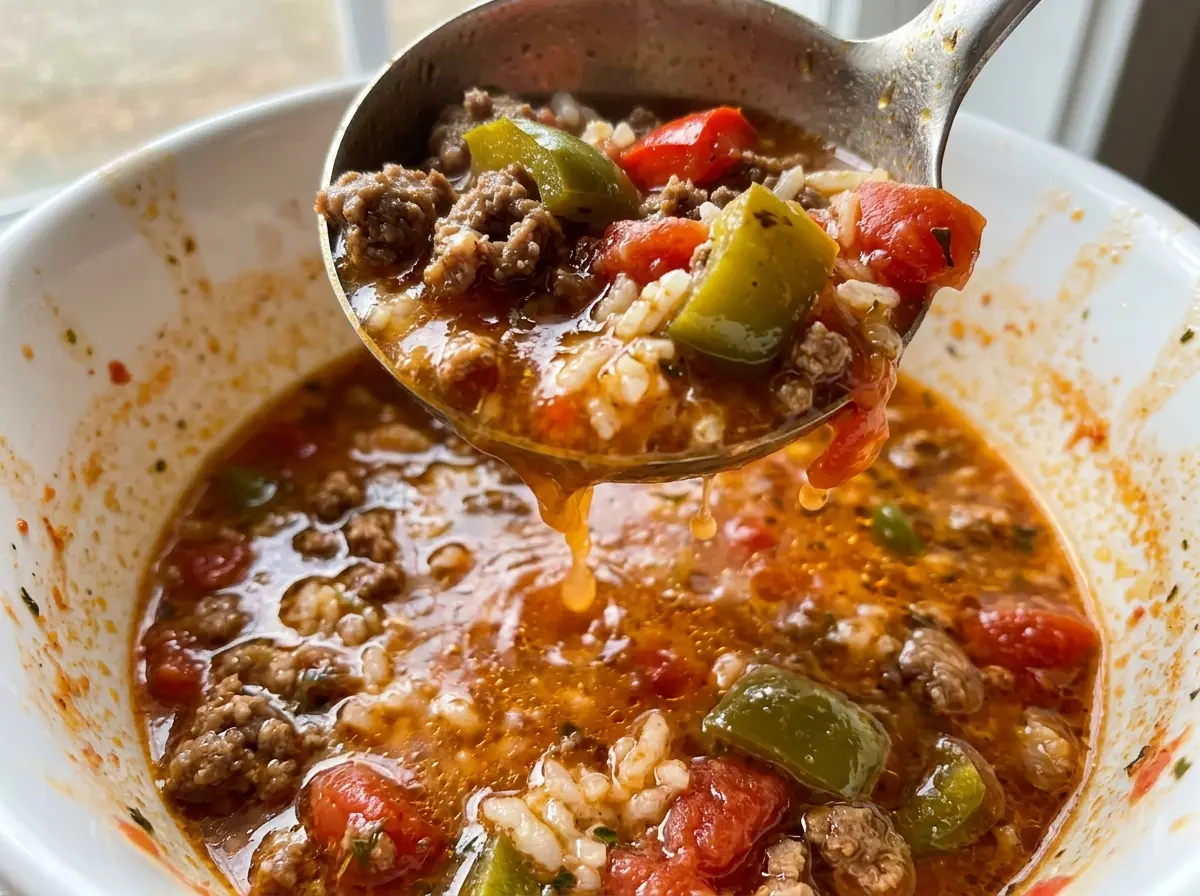
The first thing that hits the pot is the sound of ground beef browning, followed by the sweet smell of onion and green pepper softening in the same Dutch oven. That one-pot start gives this stuffed pepper soup a savory base before the broth and tomatoes go in, and the rice makes it filling without turning it into a heavy stew.
I use a 6-quart Dutch oven so there’s room to brown the beef and then stir in all the broth, tomatoes, vegetables, and rice without crowding the pot. The rice cooks right in the simmering soup, picking up the tomato and beef flavors as it turns tender. Each bowl has a little of everything: soft pepper, beef, tomato, and long-grain rice.
Kitchen Note
A 6-quart Dutch oven gives you enough room for the beef to brown before the vegetables and broth go in. A cramped pot makes it harder to get an even sear and trickier to stir the finished soup.
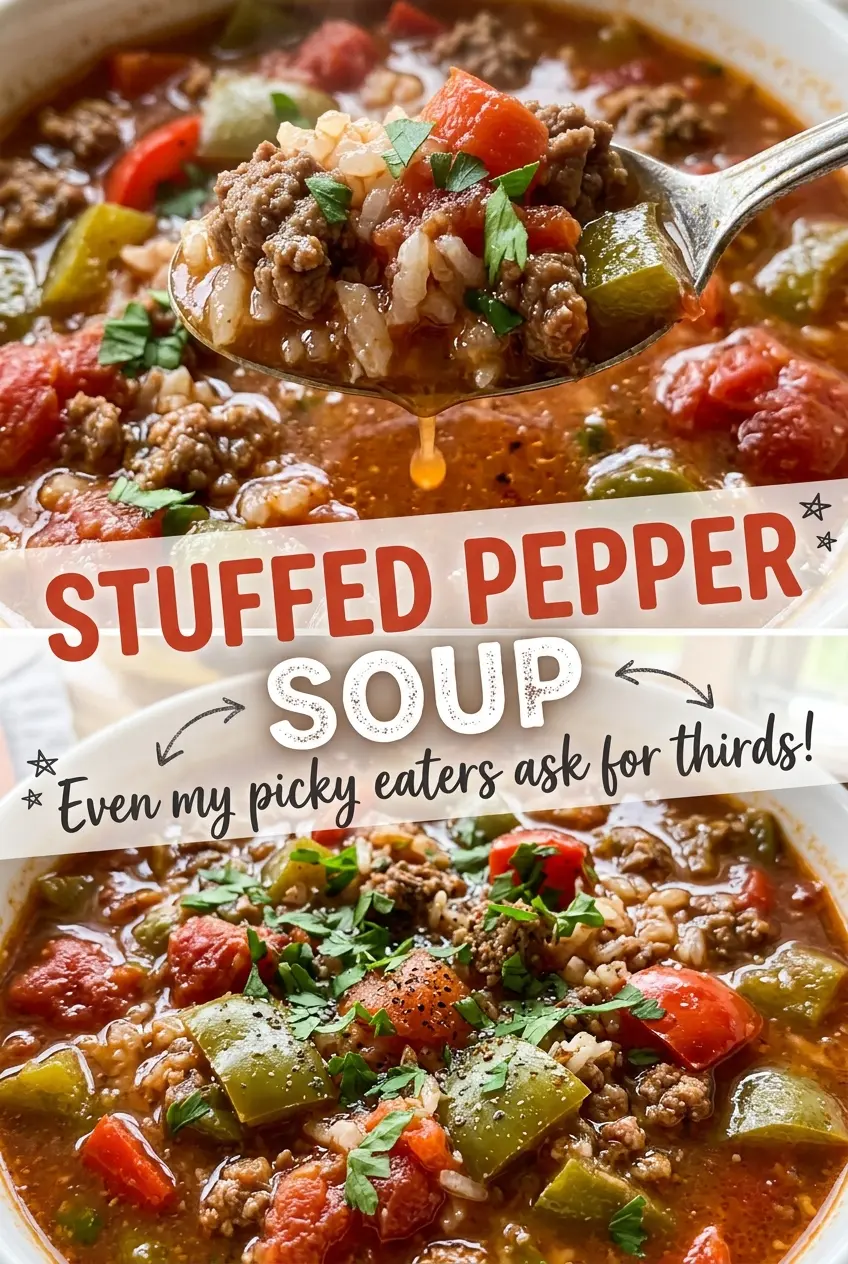
Save this stuffed pepper soup for a cozy dinner: browned beef, green peppers, tomato broth, and tender rice all simmer together in one pot.
Why the Rice Belongs in the Simmering Soup, Not the Starting Pot
Rice changes the soup as it cooks. The grains take up some of the liquid and release a little starch, giving the tomato broth more body than it has at the start. Adding the rice only after the broth reaches a boil means it begins cooking in hot liquid, while lowering the heat afterward keeps the grains from being knocked around by a rolling boil.
That balance is what keeps this bowl recognizably soup rather than a pot of rice with a little broth around it. The amount of rice is modest next to the broth and tomatoes, so you still get a spoonful of liquid along with the beef and vegetables. Stirring occasionally helps the grains cook evenly and keeps them from settling in one patch at the bottom. Look for rice that’s tender but still holds its shape; once it turns soft and bloated, the soup’s texture starts to lose its definition.
How the Beef, Green Peppers, and Tomato Build the Broth
- Ground beef — The 85% lean beef brings enough fat for a rounded, savory flavor, while draining the excess after browning keeps the broth from feeling greasy. Choose plain ground beef rather than a seasoned blend so the soup’s Italian seasoning stays in balance.
- Green bell peppers — Green peppers give the soup its familiar savory, slightly grassy note. Choose peppers that feel firm and have taut skin; soft or wrinkled ones can be watery and harder to dice cleanly. Seed them before cutting so the pieces stir easily into the soup.
- Yellow onion and garlic — The onion softens into the base, while the garlic adds a sharper aromatic note. A firm onion is fine even if it isn’t perfectly round. Mince the garlic before it goes into the pot so it can cook briefly and evenly rather than leaving large, raw-tasting pieces.
- Beef broth — Low-sodium broth leaves room for the canned tomatoes and seasoning without making the finished soup taste overly salty. Broth quality matters most in a simple soup like this, but a standard store-brand option works well; the beef and tomato add plenty of flavor of their own.
- Diced tomatoes and tomato sauce — The diced tomatoes bring tender pieces and a little texture, while the sauce makes the liquid feel more cohesive. Regular canned versions are a practical choice here. The tomato sauce should be smooth, not a pasta sauce with extra herbs or cheese.
- Long-grain white rice — These grains cook through in the soup’s short simmer and stay distinct when tender. Keep it uncooked when it goes into the pot; using already-cooked rice would change how much liquid the soup absorbs and how long the ingredients need to cook together.
- Italian seasoning — A dried herb blend spreads seasoning through the broth without adding another preparation step. Use a fresh-smelling jar; if the herbs smell dusty, their aroma won’t come through as clearly against the beef and tomato.
Brown the Beef First, Then Let the Rice Simmer Gently
Brown the Beef in the Dutch Oven
Set the Dutch oven over medium-high heat and cook the ground beef for 6 to 8 minutes, breaking it into small pieces as it cooks. Wait for the meat to brown and reach 160°F rather than judging it by color alone. If the beef is still pink in the middle of larger pieces, break those pieces up and give them time to finish. Drain the excess fat before adding the vegetables.
Soften the Onion and Peppers
Add the olive oil, diced onion, and seeded, diced green peppers, then cook over medium heat for 5 to 7 minutes, stirring occasionally. The vegetables should soften without collapsing; the onion will look more translucent and the pepper pieces will lose their raw, rigid edges. Stir in the minced garlic and cook for 30 seconds. Keep it moving so the garlic doesn’t scorch while the vegetables finish.
Bring the Tomato Broth to a Boil
Stir in the beef broth, diced tomatoes, tomato sauce, Italian seasoning, kosher salt, and black pepper. Scrape around the bottom of the pot as you stir so the beef and vegetables are evenly distributed through the liquid. Raise the heat to high and bring the soup to a boil. Don’t add the rice while the broth is still only warm; wait until you see an active boil across the surface.
Simmer Until the Rice Is Tender
Stir in the uncooked rice, then reduce the heat until the soup holds a gentle simmer. Cook uncovered for 18 to 22 minutes, stirring occasionally so the rice doesn’t settle and stick. The surface should bubble lightly rather than boil hard, which can break up the vegetables and make the rice cook unevenly. Start checking the grains near the end of the cooking window and stop when they’re tender.
Simple Ways to Change the Pepper or Make a Gluten-Free Pot
A Sweeter Bell Pepper Version
Use red bell peppers in place of the green ones. They bring a sweeter, less grassy flavor, so the finished soup tastes rounder and a little less like the classic green-pepper filling.
A Leaner Beef Bowl
Choose 90% lean ground beef instead of 85% lean. You’ll get a slightly leaner broth with less excess fat to drain, though the beef won’t taste quite as rich.
A Gluten-Free Adaptation
Choose gluten-free low-sodium beef broth and gluten-free Italian seasoning. Those swaps keep the same savory direction and soup texture while avoiding gluten-containing versions of those packaged ingredients.
Storage and Reheating
- Refrigerator: Keep leftovers covered for 3 to 4 days. The rice will continue absorbing broth and soften as it sits.
- Freezer: This soup freezes well in airtight freezer-safe containers for up to 2 to 3 months, though the rice will be softer after thawing. Leave a little room at the top for expansion.
- Reheating: Warm gently in a saucepan, stirring now and then, until the soup reaches 165°F. Avoid a hard boil, which can make the rice break down and the vegetables mushy.
Questions That Come Up When Making Stuffed Pepper Soup
Stuffed Pepper Soup
Ingredients
Equipment
Method
- In a 6-quart Dutch oven over medium-high heat, cook the ground beef for 6 to 8 minutes, breaking it into small pieces, until browned and cooked to 160°F; drain excess fat.
- Add the olive oil, onion, and bell peppers to the pot and cook over medium heat for 5 to 7 minutes, stirring occasionally, until softened; stir in the garlic and cook for 30 seconds.
- Stir in the beef broth, diced tomatoes, tomato sauce, Italian seasoning, salt, and black pepper, then bring the soup to a boil over high heat.
- Stir in the rice, reduce the heat to maintain a gentle simmer, and cook uncovered for 18 to 22 minutes, stirring occasionally, until the rice is tender.