Tangy sundried tomatoes, tender pasta, and a bright herby dressing make this the kind of pasta salad people go back for before the rest of the table has even settled in. The sundried tomato oil pulls double duty here, carrying that concentrated tomato flavor straight into the dressing instead of letting it drain away into the jar. Every bite gets a little punchy, a little creamy, and a little fresh from the basil and cucumber.
What sets this version apart is the balance. The red wine vinegar keeps the richness in check, the mozzarella softens the sharper edges, and the pasta gets dressed while it’s still neutral enough to soak everything up. If you’ve ever had pasta salad that tasted flat after an hour in the fridge, this is the fix: enough acid, enough salt, and ingredients that still taste like themselves after chilling.
Below, you’ll find the little details that matter most — when to add the cheese, how long this needs to sit, and the best swaps if you want to work with what you already have in the fridge.
The dressing soaked into the pasta just enough after chilling, and the sundried tomato oil gave it a deeper flavor than any bottled Italian dressing ever has. I made it the night before a cookout and there wasn’t a spoonful left.
Save this Sundried Tomato Pasta Salad for cookouts, potlucks, and make-ahead lunches — it gets brighter after a chill in the fridge.
The Reason This Pasta Salad Tastes Better After a Chill
Most pasta salads fail because the dressing sits on the outside instead of getting into the pasta, and the whole bowl tastes like separate ingredients. This one avoids that by using a dressing built from sundried tomato oil and vinegar, which clings to the pasta and keeps its flavor even after it chills. The pasta also gets rinsed cold, which stops the cooking fast and keeps the texture firm enough to hold up in the fridge.
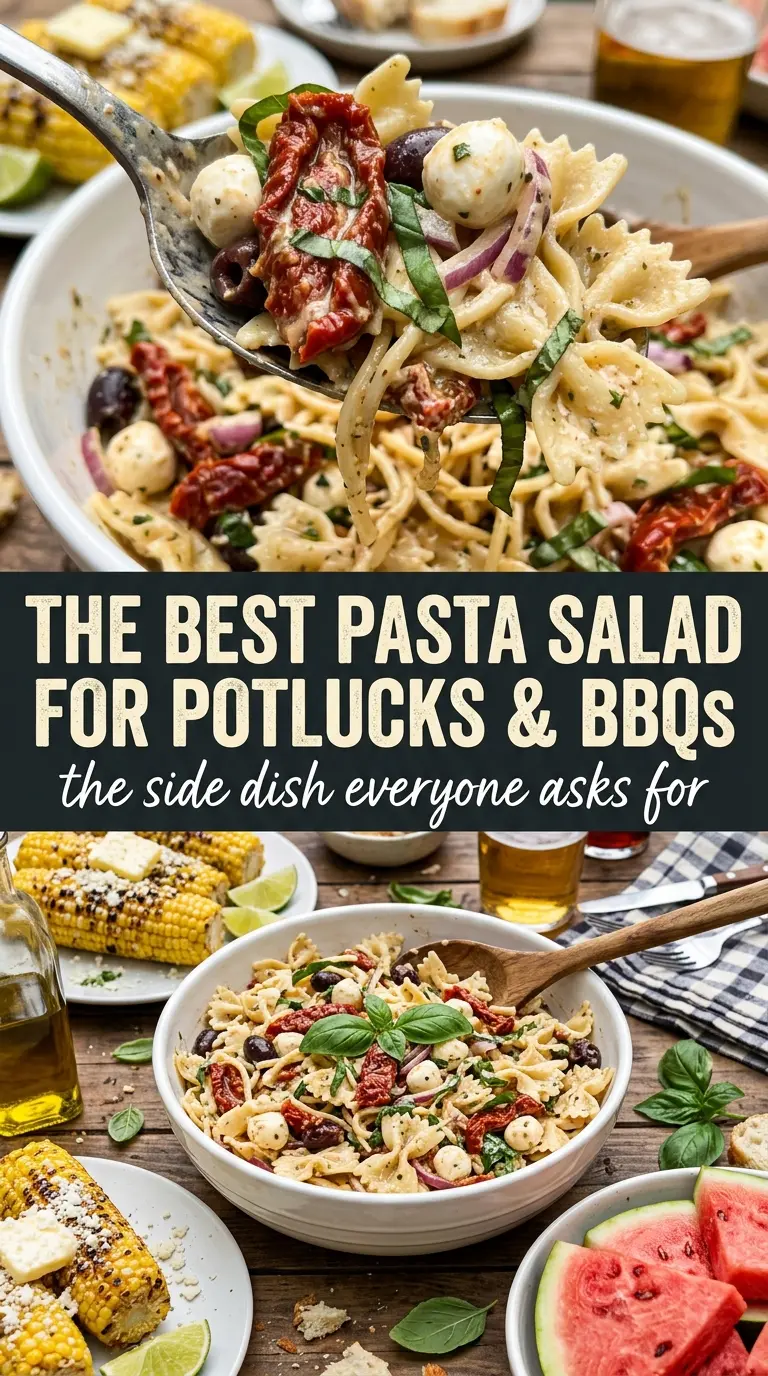
The other mistake people make is adding all the fresh ingredients too early. Basil turns dark, mozzarella weeps, and cucumbers go watery if they sit in acid for too long. Toss everything together in the right order and you get a salad that stays bright, not soggy.
- Rotini or fusilli — The curls trap the dressing and little pieces of tomato. Straight pasta works in a pinch, but it won’t hold the sauce as well.
- Sundried tomatoes in oil — These bring a deeper, sweeter tomato flavor than dry-packed tomatoes. If you only have dry sundried tomatoes, soak them in hot water for 10 minutes, then use olive oil in the dressing.
- The reserved sundried tomato oil — This is where the flavor starts. Regular olive oil works if needed, but you’ll lose some of that concentrated tomato richness.
- Mozzarella pearls or cubed mozzarella — Use the freshest mozzarella you can find, but don’t add it until the end. It stays creamy when folded in just before serving.
- Fresh basil — Dried basil won’t give the same lift. If basil is unavailable, parsley is the best backup because it stays bright and doesn’t overpower the tomatoes.
How to Keep the Pasta from Turning Soft and Blah
Cooking the Pasta Just to Al Dente
Boil the pasta in well-salted water until it still has a little bite in the center. Pasta salad needs a firmer texture than hot pasta dishes because it keeps absorbing dressing as it cools. Drain it, then rinse under cold water right away so the cooking stops before the noodles go soft. If you skip the rinse, the residual heat will keep going and you’ll end up with a mushy salad after chilling.
Whisking the Dressing in the Bowl, Not the Bottle
The reserved sundried tomato oil, vinegar, garlic, seasoning, salt, and pepper need to be whisked together until the garlic looks evenly dispersed. That oil carries a lot of flavor, so don’t rush this step or you’ll miss the point of using it. The dressing should smell sharp, garlicky, and a little sweet from the tomatoes. If it tastes flat here, it will taste flat later, so adjust the salt before it hits the pasta.
Adding the Fresh Ingredients at the Right Moment
Toss the cooled pasta with the sundried tomatoes, cherry tomatoes, cucumber, and red onion first so the dressing coats the base ingredients evenly. Fold in the mozzarella, basil, and Parmesan just before serving so the cheese stays intact and the basil stays vivid. Parmesan adds a salty finish, but too much too early can make the salad taste one-note, so let it land at the end.
How to Adapt This for What You Have on Hand
Dairy-Free Without Losing the Creamy Bite
Skip the mozzarella and Parmesan, then add a handful of chopped kalamata olives or a spoonful of capers for a briny punch. The salad will still taste complete because the sundried tomato oil and vinegar carry plenty of flavor on their own.
Gluten-Free Pasta Salad That Still Holds Together
Use a sturdy gluten-free rotini or fusilli and cook it just shy of the package time if the shape looks delicate. Gluten-free pasta can soften faster after chilling, so keep the pasta a little firm and dress it while it’s completely cool.
Turning It Into a Fuller Meal
Add chopped salami, grilled chicken, or chickpeas if you want this to eat more like lunch than a side. Chickpeas keep it vegetarian and add structure, while salami gives the salad a saltier, more picnic-style edge.
Storage and Reheating
- Refrigerator: Keeps well for up to 3 days. The pasta absorbs more dressing over time, so the texture gets a little less glossy but the flavor improves.
- Freezer: Don’t freeze it. The cucumbers, tomatoes, and mozzarella turn watery and grainy once thawed.
- Reheating: This salad is best served cold or cool from the fridge. If it tightens up too much, stir in a spoonful of olive oil or a splash of vinegar to loosen the dressing before serving.
Answers to the Questions Worth Asking
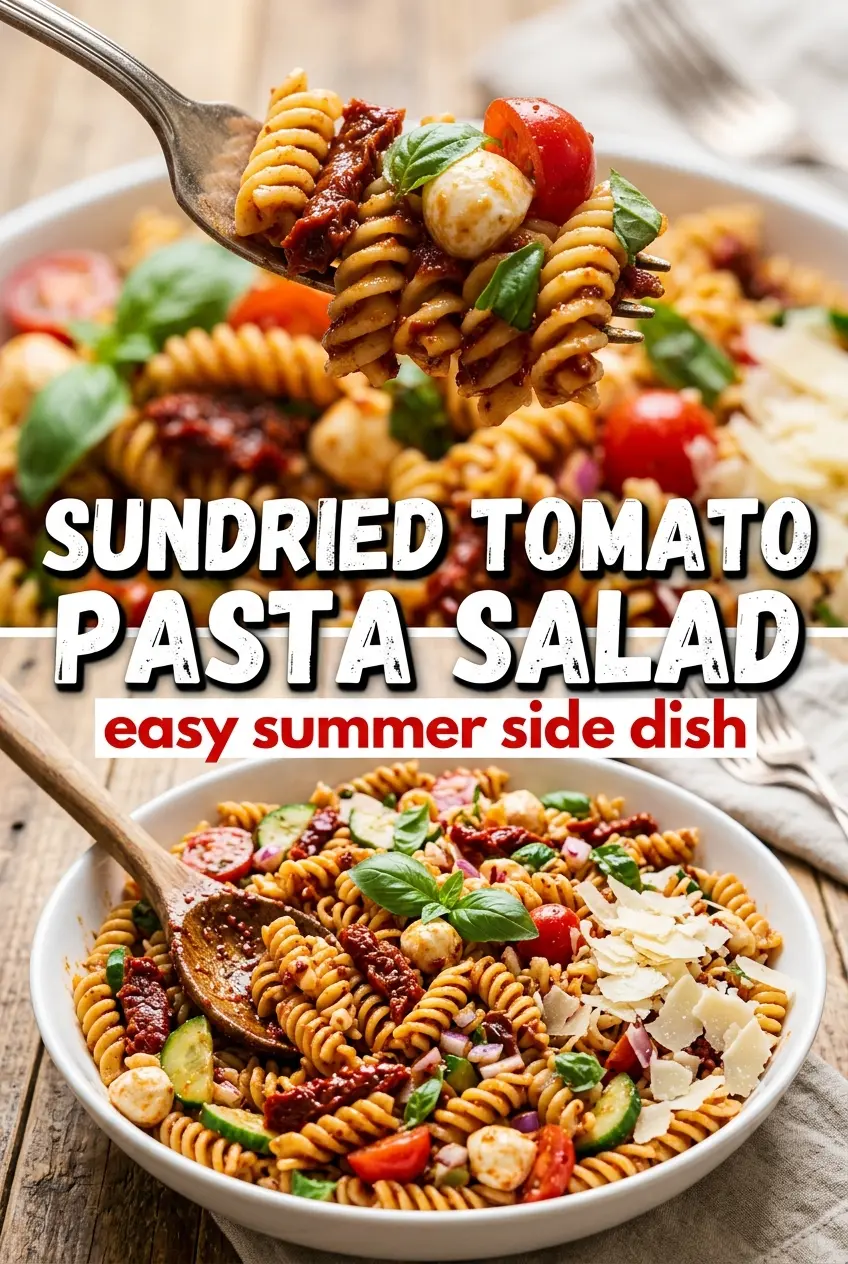
Sundried Tomato Pasta Salad
Ingredients
Equipment
Method
- Bring a pot of salted water to a boil and cook the rotini or fusilli pasta according to package directions until al dente, stirring occasionally (no oven temperature). Drain and rinse under cold water to stop the cooking, then spread it to cool for quick handling.
- In a small bowl, whisk together the reserved sundried tomato oil, red wine vinegar, minced garlic, Italian seasoning, kosher salt, and black pepper until smooth and evenly blended (no oven temperature), about 30 seconds.
- In a large bowl, combine the cooled pasta, chopped sundried tomatoes, halved cherry tomatoes, diced cucumber, and thinly sliced red onion (no oven temperature) and toss gently to distribute evenly.
- Pour the dressing over the salad and toss well until every piece looks lightly coated, then pause and let it sit 5 minutes so the pasta absorbs some flavor (no oven temperature, no stirring during the pause).
- Fold in the mozzarella, chopped basil, and grated Parmesan just before serving (no oven temperature) and toss gently so the cheese stays creamy rather than soggy.
- Cover and chill the pasta salad for at least 30 minutes or up to 2 days for the best flavor development (no oven temperature).