When the foil comes off, the sweet potatoes should be tender beneath a glossy layer of apple cider sauce, with the pecans still waiting to toast on top. That timing is what gives this Sweet Potato and Apple Casserole its contrast: soft, sweet vegetables and apples underneath, then a nutty finish rather than pecans that have steamed under the cover.
I arrange the slices in overlapping rows so each bite gets some sweet potato and apple, then pour the butter, cider, brown sugar, cinnamon, and salt over everything. The first covered bake gives the thicker sweet potato slices time to soften without letting the sauce cook away. After that, the uncovered finish lets the pecans toast and the sauce bubble around the edges. It’s a cozy casserole, but the Granny Smith apples keep the sweetness in check.
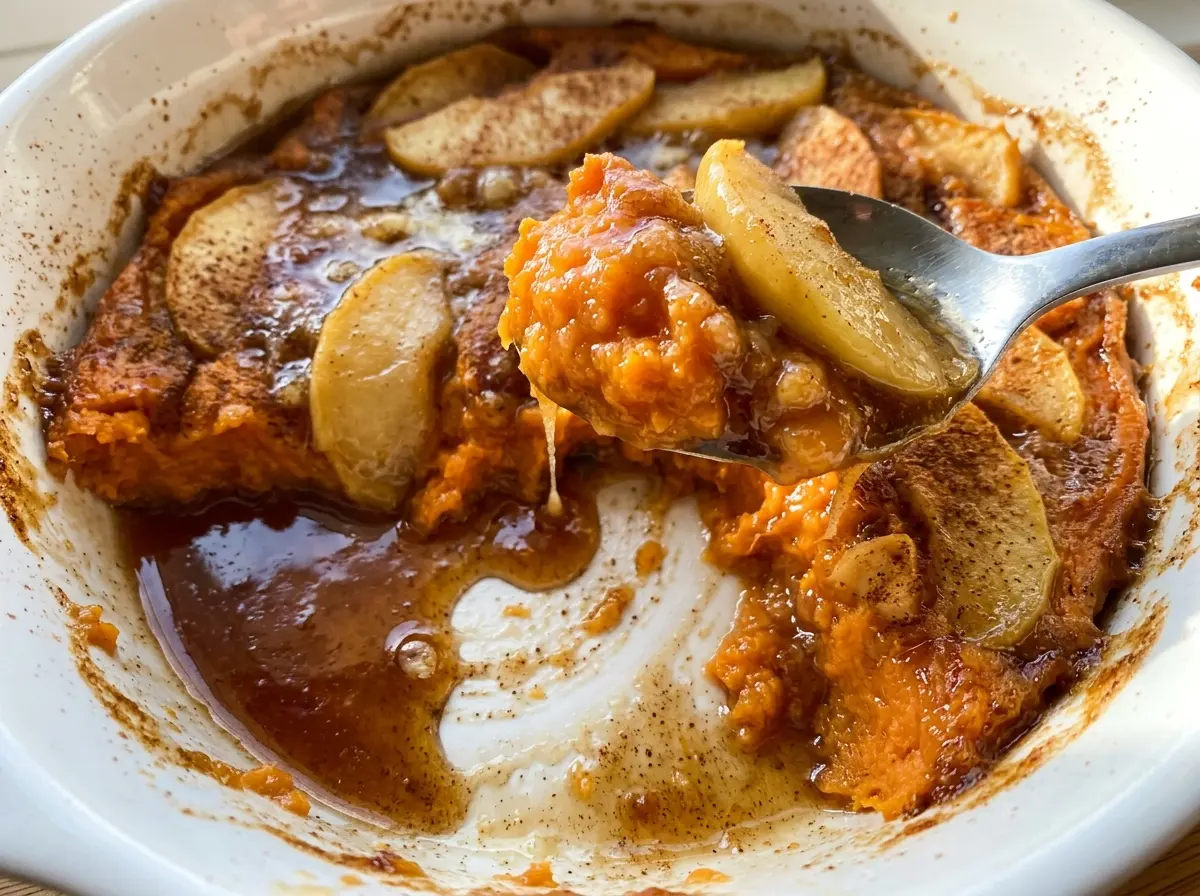
Kitchen Note
Give the casserole its full 10-minute rest before serving. The sauce is bubbling when it comes out, and those few minutes let it settle so it doesn’t run across the plate.
Save this Sweet Potato and Apple Casserole for its tender layers, cider-brown sugar sauce, and toasted pecan topping.
Why Even Slices Matter More Than a Neat-Looking Top
Sweet potatoes take longer to soften than thin apple slices, so uneven cutting can leave you with a casserole that’s tender in some places and stubbornly firm in others. Cutting the sweet potatoes crosswise into even 1/4-inch rounds gives them a better chance of cooking at the same pace. Keep the apples in slices of the same thickness, too. The overlapping rows don’t need to look perfect; consistent slices matter more than a tidy pattern.
The covered portion of the bake is doing more than keeping the top from browning. It holds in moisture while the sweet potatoes cook through, and the cider mixture has time to work its way between the layers. Uncovering only after the sweet potatoes are easy to pierce changes the job: now the pecans can toast and the sauce can bubble. Taking the foil off too soon risks a dry top before the centers are tender, so use the knife test rather than appearance alone to judge that first stage.
How the Tart Apples Balance the Cider and Brown Sugar
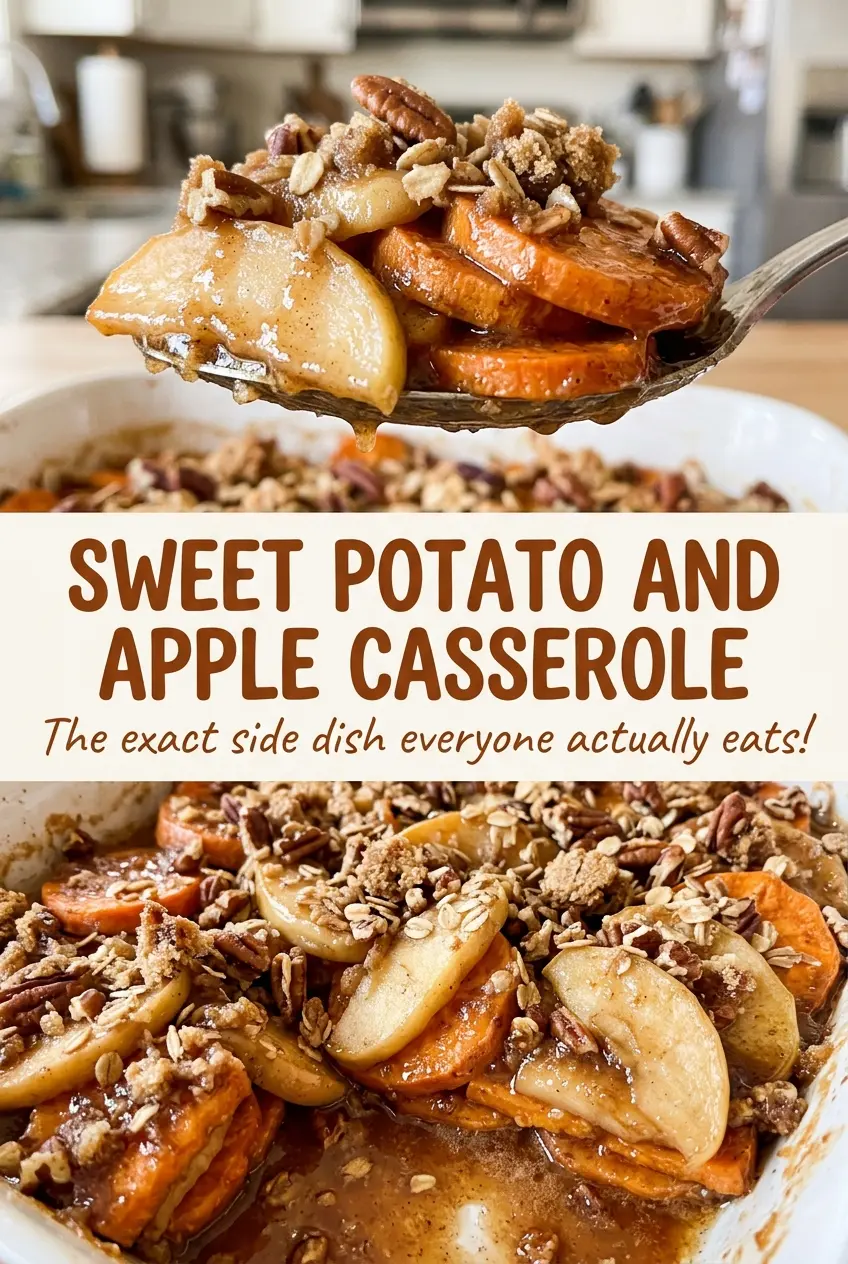
- Granny Smith apples — Their tartness keeps the brown sugar and sweet potatoes from making the whole dish taste one-note sweet. They also hold their shape during baking better than a soft apple. Peel, core, and slice them evenly so each piece bakes at a similar rate.
- Sweet potatoes — They make the casserole hearty and absorb the buttery cider mixture as they soften. Peeling them gives you a more even, tender texture, and consistent crosswise slices help avoid firm centers beside over-soft edges.
- Apple cider — Cider brings a clear apple flavor and loosens the butter and sugar into a sauce that can coat the layers. Use apple cider, not a product labeled vinegar; the tartness here should come from the apples, not an acidic seasoning.
- Unsalted butter and light brown sugar — Melted butter carries the cinnamon across the casserole, while packed brown sugar dissolves into the cider and adds a rounded sweetness. Unsalted butter lets the fine salt in the mixture do its job without making the seasoning harder to control.
- Chopped pecans — The pieces toast quickly once exposed to the oven’s heat, adding a crisp contrast to the soft layers. Fresh-tasting pecans matter more than whether you chop them yourself; uniformly chopped pieces are easiest to spread across the top.
Building Tender Layers Before Toasting the Pecans
Arrange the Sweet Potatoes and Apples
Heat the oven to 375°F and grease a 9×13-inch baking dish with cooking spray. Arrange the peeled sweet potato rounds and apple slices in overlapping rows, alternating them so both show through the top. Aim for even coverage without compressing the slices into a solid stack. An open, overlapping arrangement gives the cider mixture room to run between the pieces.
Whisk and Pour the Cider Mixture
Whisk the melted butter, apple cider, packed light brown sugar, cinnamon, and fine salt together in a bowl. Keep whisking until the sugar is dispersed through the liquid rather than sitting in a dense layer at the bottom. Pour the mixture evenly over the rows, moving across the whole dish instead of soaking just the center. That even pour helps prevent one corner from tasting much sweeter or richer than another.
Cover Until a Knife Slides Through
Cover the dish tightly with foil and bake for 45 to 55 minutes. A loose cover lets moisture escape, so press the foil securely around the dish. Start checking near the end of the baking window by piercing a sweet potato with a paring knife. It should go in easily; if the center still resists, keep baking and check again rather than uncovering for the topping.
Toast the Pecans and Let the Casserole Rest
Remove the foil only after the sweet potatoes are tender, then sprinkle the chopped pecans evenly over the top. Bake uncovered for 15 to 20 minutes, until the sauce is bubbling and the pecans look toasted. Watch the nuts as the casserole finishes; they should turn fragrant and lightly browned, not dark. Let the dish rest for 10 minutes before serving.
Three Simple Ways to Adjust the Sweetness and Topping
A nut-free casserole
Leave off the pecans for a nut-free version. The top won’t have the toasted crunch, but the sweet potato and apple layers still bake in the cider sauce as usual.
A less-sweet version
Omit the brown sugar if you prefer the tart apples and sweet potatoes to lead. The sauce will be less syrupy, and the finished casserole will have a more savory-sweet balance.
A cinnamon-free finish
Skip the cinnamon for a cleaner apple-and-cider taste. The casserole loses its warm spice note, while the butter and brown sugar still make a glossy sauce.
Storage and Reheating
- Refrigerator: Refrigerate leftovers in a covered container for 3 to 4 days. The apples and sweet potatoes soften further as they sit.
- Freezer: Freeze portions in an airtight container for up to 2 months for best quality. Thaw them in the refrigerator; the fruit and sweet potatoes will be softer after freezing.
- Reheating: Reheat individual portions covered in the microwave until hot throughout, reaching 165°F. Leaving portions uncovered can dry out the edges before the middle heats.
Questions That Come Up Before Baking This Casserole
Sweet Potato and Apple Casserole
Ingredients
Equipment
Method
- Heat the oven to 375°F.
- Grease a 9x13-inch baking dish with cooking spray.
- Arrange the sweet potatoes and apples in overlapping rows in the prepared dish.
- Whisk the melted butter, apple cider, brown sugar, cinnamon, and salt in a bowl.
- Pour the mixture evenly over the sweet potatoes and apples.
- Cover the dish tightly with foil and bake for 45 to 55 minutes, until a paring knife pierces the sweet potatoes easily.
- Remove the foil.
- Sprinkle the pecans evenly over the casserole.
- Bake for 15 to 20 minutes, until the sauce is bubbling and the pecans are toasted.
- Let the casserole rest for 10 minutes before serving.