The sausage leaves little browned bits in the skillet before the sweet potatoes even go in, and that’s where this hash starts to taste like more than a pile of breakfast ingredients. I used to rush the potatoes straight into the pan and wonder why their outsides stayed pale. Giving them a covered stretch first solves that problem: they soften inside before the skillet has to do the browning.
For Sweet Potato Breakfast Hash, I cook the pork sausage first, then use the same skillet for the onion, bell pepper, and potatoes. The sausage drippings and olive oil carry flavor through the vegetables without needing a separate sauce or another pan.
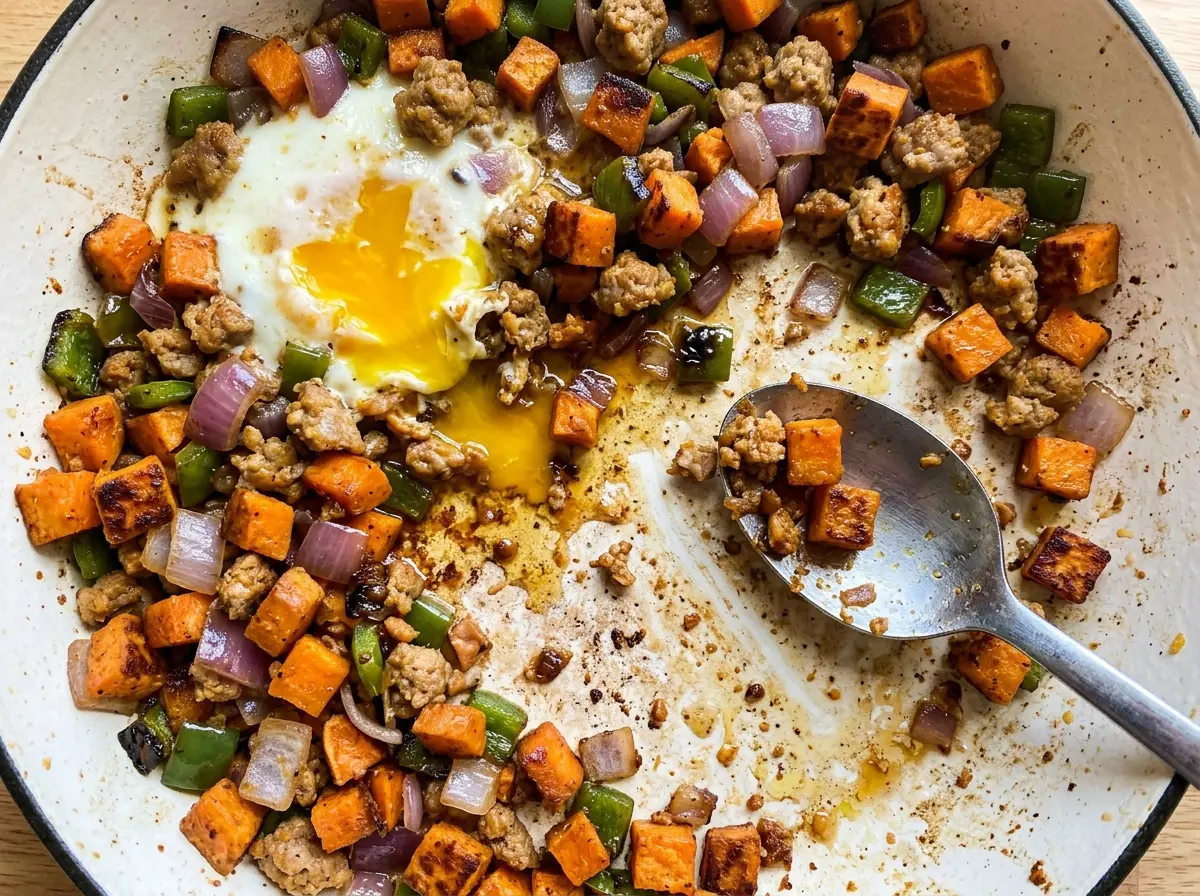
The finished hash has browned edges, tender sweet potato centers, and savory sausage tucked throughout. It’s a satisfying skillet breakfast that’s just as welcome at the table for dinner.
Kitchen Note
Break the sausage into small pieces while it cooks instead of leaving a few large clumps. Smaller crumbles brown more evenly and tuck into the sweet potatoes in every serving.
Save this Sweet Potato Breakfast Hash for a skillet breakfast with browned potatoes and savory sausage in every bite.
Why the Sweet Potatoes Need a Covered Phase Before They Can Brown
Sweet potatoes need time to soften all the way through, but browning happens best when their surfaces aren’t surrounded by steam. Trying to get both results at once can leave you with cubes that are dark outside and firm in the middle, or tender pieces that never pick up much color. This hash handles the two jobs in sequence.
A small splash of water and a lid create the steamy conditions the centers need. Once the cubes are fork-tender, uncovering the skillet lets that moisture escape so the potatoes can brown against the hot pan. The shift from medium-low to medium-high heat matters here: the gentler covered cooking softens the potatoes, and the hotter uncovered finish builds those golden edges.
Stir occasionally during the browning stage, not constantly. Every turn moves the potatoes away from direct contact with the skillet, and they need that contact to develop color. You’re looking for browned patches on several sides, not an unbroken crust on every cube.
What the Sausage, Sweet Potatoes, and Smoked Paprika Bring to the Skillet

- Sweet potatoes — Choose firm potatoes with smooth skins; soft spots can mean uneven texture. Peeling and cutting them into uniform cubes helps them soften at the same pace. Orange-fleshed sweet potatoes bring natural sweetness and brown readily; Yukon Gold potatoes work as a different, less sweet hash, but they won’t taste quite the same.
- Ground pork breakfast sausage — Raw sausage brings both seasoning and fat to the skillet, so it contributes more than just protein. Use ground breakfast sausage rather than fully cooked links if you want the browned bits that build flavor in the vegetables. For a gluten-free version, choose certified gluten-free ground pork breakfast sausage.
- Yellow onion and red bell pepper — Yellow onion softens into a mild, savory base, while red bell pepper adds sweetness and color. White onion can stand in for yellow onion, though its flavor is a little sharper. Orange or yellow bell pepper can replace the red one without changing the method.
- Smoked paprika — This brings a gentle smoky note that works well with pork and sweet potatoes. Regular paprika can provide color if that’s what you have, but the hash will lose the smoky edge. Keep the sweet potatoes evenly diced so the spice coats their surfaces rather than collecting in the pan.
- Olive oil — Olive oil helps the sausage and vegetables brown while carrying the paprika across the skillet. A neutral cooking oil can take its place; use an oil suited to skillet cooking rather than a strongly flavored finishing oil.
Build the Hash in Four Stages, from Sausage Browning to Golden Potatoes
Brown the Pork Sausage First
Heat 1 tablespoon of olive oil in a 12-inch skillet over medium-high heat, then add the ground pork breakfast sausage. Cook for 5–7 minutes, breaking it into small pieces as it browns. It should reach 160°F before you transfer it to a plate. Leave the browned bits in the skillet; they’ll season the vegetables that follow.
Soften the Onion and Bell Pepper
Add the remaining 1 tablespoon of olive oil, diced onion, and diced red bell pepper to the skillet. Cook over medium heat for 3–4 minutes, stirring occasionally. The vegetables should begin to soften but still hold their shape. If the onion starts to darken quickly, lower the heat so it softens instead of scorching.
Steam the Sweet Potatoes Until Fork-Tender
Stir in the sweet potatoes, kosher salt, black pepper, and smoked paprika, then add the water. Cover the skillet and cook over medium-low heat for 8–10 minutes, stirring once halfway through. The cubes are ready for the next stage when a fork slides into the center without much resistance. Keep the pieces close to 1/2 inch so they cook through in this window.
Uncover and Brown Before Returning the Sausage
Remove the lid and turn the heat to medium-high. Cook the potatoes for 8–12 minutes, stirring occasionally, until browned; if they’re still pale, give them more time in contact with the hot skillet between turns. Stir the sausage back in and cook for 1–2 minutes, just until heated through. The finished cubes should be tender inside with browned patches outside.
Two Smart Ways to Adapt This Sweet Potato Hash
Make It Gluten-Free with Certified Gluten-Free Sausage
Replace the regular ground pork breakfast sausage with the same amount of certified gluten-free ground pork breakfast sausage. The savory, seasoned character stays close to the original, though the exact spice blend depends on the sausage you choose. Brown it using the same skillet method and cook it to the same safe temperature for ground pork.
Trade the Red Pepper for a Poblano
Use one diced poblano in place of the red bell pepper for a less sweet, earthier hash with a mild chile note. Remove the stem and seeds before dicing if you want the pepper’s flavor without extra heat. The pieces soften along with the onion in the same skillet stage.
Storage and Reheating
- Refrigerator: Refrigerate the hash in an airtight container within 2 hours and use it within 3–4 days. The potatoes soften as they sit, so they won’t keep the same browned edges.
- Freezer: Freeze cooled portions in airtight freezer-safe containers for up to 2–3 months for best quality. The potatoes may be softer after thawing, but the hash is still suitable for reheating.
- Reheating: Warm leftovers in a skillet over medium heat, stirring occasionally, until they reach 165°F throughout. Avoid high heat, which can darken the potatoes before the center is hot.
Questions That Come Up When Making Sweet Potato Breakfast Hash
Sweet Potato Breakfast Hash
Ingredients
Equipment
Method
- Heat 1 tablespoon olive oil in a 12-inch skillet over medium-high heat.
- Add the sausage and cook for 5–7 minutes, breaking it into small pieces, until browned and it reaches 160°F.
- Transfer the sausage to a plate.
- Add the remaining 1 tablespoon olive oil, onion, and bell pepper to the skillet and cook over medium heat for 3–4 minutes, stirring occasionally, until beginning to soften.
- Stir in the sweet potatoes, salt, black pepper, and smoked paprika.
- Add the water and cover the skillet; cook over medium-low heat for 8–10 minutes, stirring once halfway through, until the sweet potatoes are fork-tender.
- Uncover and cook over medium-high heat for 8–12 minutes, stirring occasionally, until the sweet potatoes are browned.
- Stir the sausage back in and cook for 1–2 minutes until heated through.