The sweet potatoes mash with almost no effort, but the filling can turn loose if too much syrup follows them into the bowl. Draining the cans first gives you a thick, spoonable base that bakes up tender instead of watery. That’s what makes this sweet potato casserole with canned sweet potatoes such a practical dish when you want the comfort of a baked casserole without peeling or cooking sweet potatoes from scratch.
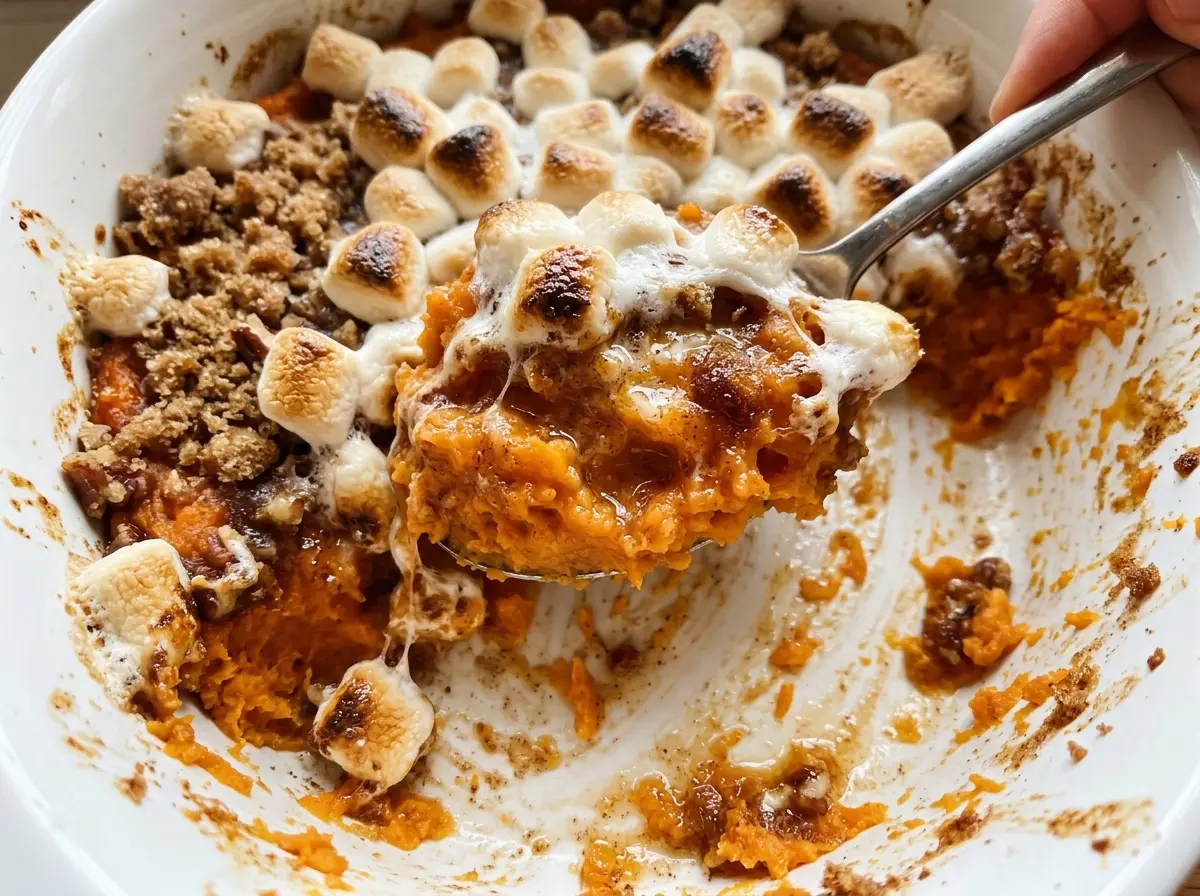
I mash the potatoes until mostly smooth, then stir in the butter, eggs, milk, and warm spices. A buttery pecan topping adds a crisp contrast to the soft filling, and it takes only a bowl and your fingertips to bring together. After a short rest, each scoop holds its shape with a golden top and a smooth, gently sweet center.
Kitchen Note
Keep the butter cold for the pecan topping, and stop working it in as soon as the mixture looks like coarse crumbs. If the butter smears into the flour, the topping loses that loose, crumbly texture.
Save this sweet potato casserole with its smooth canned sweet potato filling and buttery pecan crumble for a cozy side dish that’s easy to put together.
Why Draining the Syrup Matters More Than Mashing the Sweet Potatoes
Canned sweet potatoes are already soft, so turning them into a smooth filling isn’t the hard part. The syrup is what needs attention. If it stays with the potatoes, it adds liquid and sweetness that the rest of the filling wasn’t balanced for. Once that extra syrup is drained away, the mashed potatoes can hold the butter, eggs, and milk without becoming soupy.
Let the cans drain well before you start mashing, rather than tipping the contents straight into the bowl. You’re not trying to dry the sweet potatoes out; they should still look moist and soft. You’re just removing the packing syrup so the casserole bakes up with a creamy, cohesive center instead of a loose layer under the topping.
This also helps keep the sweetness in check. The canned potatoes and brown sugar both contribute sweetness, so there’s no need to add syrup from the cans back into the mixture. The result should taste like sweet potatoes with warm cinnamon and a buttery topping, not like a spoonful of syrup.
What Each Ingredient Brings to This Canned Sweet Potato Casserole

- Canned sweet potatoes — The pieces are tender enough to mash directly, which keeps prep simple. Use the canned cut sweet potatoes in syrup for the intended balance; fresh-cooked potatoes can vary in moisture and sweetness. Drain the cans before mashing so the filling stays thick.
- Brown sugar, cinnamon, and vanilla — Brown sugar brings a soft molasses note, while cinnamon and vanilla round out the sweet potato flavor without covering it. Dark brown sugar works in place of light brown for a deeper molasses taste. Use fresh-smelling cinnamon and vanilla; old spices can leave the filling tasting flat.
- Eggs and whole milk — The eggs help the filling set as it bakes, and whole milk keeps the mashed potatoes from feeling dense. Lactose-free whole milk is a direct swap. I wouldn’t omit the eggs; without them, the center won’t hold together in the same way.
- Unsalted butter — Melted butter blends into the filling, while cold pieces make the topping crumbly. Regular grocery-store butter works well here. For a dairy-free version, use plant-based butter sticks and unsweetened oat milk; the result will be a little less rich.
- Flour and pecans — Flour gives the topping its crumb structure, and pecans bring a toasty crunch. Fresh pecans matter more than an expensive brand; if they smell stale or bitter, they’ll stand out against the sweet filling. A cup-for-cup gluten-free baking flour blend works in the topping, though its crumbs may be a little less delicate.
Build the Filling and Pecan Topping Without Guesswork
Set Up the Baking Dish
Heat the oven to 350°F and grease a 9×13-inch baking dish. Drain the sweet potatoes while the oven heats, then put them in a large bowl. Having the dish ready before you mix makes it easy to spread the filling as soon as it’s combined. The wide dish gives the casserole room to bake with an even layer of topping.
Mash and Season the Sweet Potatoes
Mash the potatoes until they’re mostly smooth; a few small soft pieces are fine. Stir in the melted butter, brown sugar, lightly beaten eggs, milk, vanilla, cinnamon, and salt until the mixture looks evenly combined. Scrape the bottom and sides of the bowl so no streaks of egg or butter stay behind. The filling should be thick enough to spread, not pour like a thin batter.
Make the Pecan Crumbs
Combine the flour and brown sugar in a medium bowl, then work in the cold butter with your fingertips. Stop when you have coarse crumbs rather than a uniform paste. Stir in the chopped pecans so they’re spread through the mixture. If you keep squeezing after the crumbs form, the butter warms and the topping becomes more compact.
Top, Bake, and Rest
Spread the filling evenly in the greased dish, then sprinkle the pecan mixture over the surface. Bake for 30 to 40 minutes, until the topping is golden and the center reaches 160°F. If the edges look set before the middle is ready, use the center temperature to judge doneness rather than relying on the edges alone. Let the casserole rest for 10 minutes before serving so the filling settles and is easier to scoop.
Easy Changes for the Topping and Dietary Needs
Use Walnuts Instead of Pecans
Swap chopped walnuts for the pecans in the topping. They give you the same crunchy contrast with a slightly earthier, less buttery nut flavor.
Make the Casserole Gluten-Free
Replace the all-purpose flour in the topping with the same measure of a cup-for-cup gluten-free baking blend. Choose a blend meant for baking; the topping may be a touch more sandy, but it will still make a crisp, crumbly layer.
Make It Dairy-Free
Use plant-based butter sticks in both the filling and topping, and replace the whole milk with unsweetened oat milk. The filling will be a little less rich, and the topping’s texture depends on the plant butter, so choose a firm stick-style product rather than a soft tub spread.
Storage and Reheating
- Refrigerator: Cover leftovers and refrigerate for 3 to 4 days. The pecan topping softens as it sits, while the filling stays tender.
- Freezer: Freeze cooled portions tightly wrapped for up to 2 to 3 months. Thaw them in the refrigerator before reheating; the topping will be softer than when freshly baked.
- Reheating: Reheat covered portions in a 350°F oven until the center reaches 165°F. Uncover near the end if you want to dry the topping a little; leaving it uncovered the whole time can dry out the pecans before the middle warms through.
Questions That Come Up When Making This Sweet Potato Casserole
Sweet Potato Casserole with Canned Sweet Potatoes
Ingredients
Equipment
Method
- Heat the oven to 350°F.
- Grease a 9x13-inch baking dish.
- Put the drained sweet potatoes in a large bowl and mash until mostly smooth.
- Stir in the melted butter, brown sugar, eggs, milk, vanilla, cinnamon, and salt until combined.
- In a medium bowl, combine the flour and brown sugar.
- Work in the cold butter with your fingertips until the mixture forms coarse crumbs, then stir in the pecans.
- Spread the sweet potato mixture evenly in the prepared baking dish.
- Sprinkle the pecan topping over it.
- Bake for 30 to 40 minutes, until the topping is golden and the center reaches 160°F.
- Let the casserole rest for 10 minutes before serving.