When coarse sweet potato hits a hot skillet, the edges start to sizzle while the center is still soft. That contrast is what I want in sweet potato fritters: a deeply golden outside with tender strands inside, not a loose pile of hash browns that breaks when you turn it.
I mix the grated sweet potatoes with scallions, egg, flour, and seasoning until every strand is coated, then shape the mixture into eight patties. Keeping them a half-inch thick gives the sweet potato time to turn tender as the outside browns. The first side needs a few minutes undisturbed; once the patties are deeply golden, they’re much easier to flip and hold together.
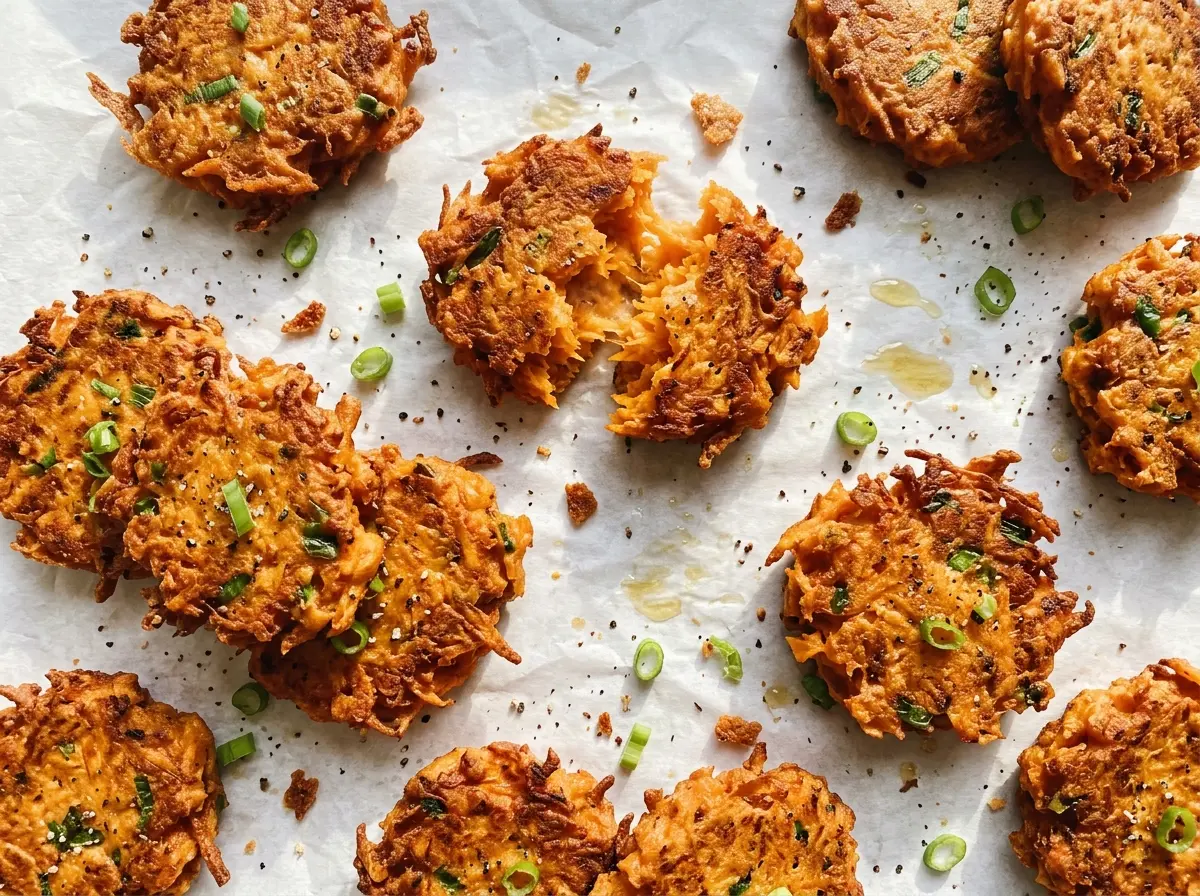
Each batch comes out crisp at the edges, soft in the middle, and flecked with scallion. They’re satisfying straight from the skillet, while the centers are still warm.
Kitchen Note
Give each cooked fritter a full minute on the paper towel-lined plate before serving. That brief drain catches surface oil without letting the patties sit long enough to lose their crisp edges.
Save these Sweet Potato Fritters for a crisp-edged, tender-centered skillet supper made with grated sweet potatoes and scallions.
Why These Sweet Potato Fritters Need Coarse Grates, Not a Fine Shred
Grating the potatoes coarsely leaves distinct strands in the finished fritter. Those strands soften as they cook, but they still give the center a little texture instead of turning it into a dense, uniform cake. A fine grate breaks the potato down much more; with egg and flour mixed in, that can make the mixture feel pasty before it even reaches the pan.
The egg and flour coat the strands and help them stay together, while the sweet potato brings its own moisture. There’s no need to squeeze the grated potato dry before mixing. Instead, work the mixture until the flour and egg are spread throughout, then portion and flatten it into an even patty. If the center is much thicker than the edges, the outside can get dark before the middle has softened. Keeping each fritter at a consistent half-inch thickness helps the center cook through on the same schedule as the crust browns.
That balance is what makes these different from a loose vegetable pancake: you can see the strands, but each portion still turns as one patty. The mixture should look evenly coated rather than dusty with flour or wet with egg pooled at the bottom of the bowl.
What Holds the Sweet Potato Strands Together (And What Each Ingredient Adds)

- Sweet potatoes — Choose firm potatoes with smooth skin; the inexpensive ones work just as well as specialty varieties. Peel them before coarsely grating so the strands mix evenly with the binder. There isn’t a close one-for-one vegetable swap that keeps the same sweet flavor and tender texture.
- Scallions — Fresh scallions bring a mild onion note without dominating the potato. Slice them thinly so they disperse through the mixture instead of leaving thick pieces in a few bites. Finely chopped chives are a useful, milder alternative; the variation below gives the swap.
- Egg — The large egg helps the potato strands cling to one another as the patties cook. Use a fresh egg and mix it through well; a pocket of unmixed egg can leave one area loose and another dry. It’s doing more than adding richness here, so leaving it out changes how well the fritters hold together.
- All-purpose flour — Flour catches the moisture on the grated potato and helps make a cohesive mixture. Fresh flour from an ordinary pantry is fine; there’s no need for a specialty brand. A one-to-one gluten-free all-purpose blend is the best practical swap if you need to avoid wheat.
- Neutral oil — Canola oil keeps the frying flavor clean and lets the sweet potato and scallions come through. A similarly mild vegetable oil works too. Use an oil that stays neutral in a hot skillet rather than an assertively flavored oil that will compete with the fritters.
How to Get Golden Edges Without Leaving the Centers Firm
Coat Every Strand Before You Shape
Put the coarsely grated sweet potatoes and thinly sliced scallions in a large bowl with the egg, flour, salt, and black pepper. Mix until the strands look evenly coated and you don’t see dry flour gathered at the bottom. You want the mixture to hold together when scooped, not to look like a smooth batter. Portion it only after the coating is evenly distributed.
Heat the Oil Until It Shimmers
Heat two tablespoons of neutral oil in a 12-inch skillet over medium heat. Watch the surface rather than guessing by the clock: the oil should shimmer before the potatoes go in. If it’s smoking, the pan is too hot, and the fritters can darken before the centers turn tender. Starting at medium gives you room for the patties to brown steadily.
Shape the First Four Patties Evenly
Divide the mixture into eight equal portions, using a scant half cup for each one. Carefully place four portions in the skillet and flatten each into a half-inch-thick patty. Cook for 3–4 minutes per side, until the surfaces are deeply golden and a fork slides into the center easily. If a patty still feels firm when pierced, give it the time it needs within that browning process rather than judging by color alone.
Cook the Second Batch in Fresh Oil
Transfer the first four fritters to a paper towel-lined plate. Add the remaining two tablespoons of oil to the skillet, then cook the other four portions the same way, flattening them to the same thickness and browning both sides. The second batch gets fresh oil, so it can brown cleanly instead of picking up the dark bits left behind by the first batch. Serve after the brief drain in the Kitchen Note.
Two Simple Swaps for Changing These Sweet Potato Fritters
Make Them Gluten-Free
Replace the all-purpose flour with a one-to-one gluten-free all-purpose flour blend, using the same measure. The fritters may be a little more delicate when you turn them, so wait until the first side is deeply golden before flipping.
Trade the Scallions for Chives
Use the same volume of finely chopped chives in place of the thinly sliced scallions. Chives give the fritters a gentler, more delicate onion flavor, and their smaller pieces blend neatly into the grated sweet potato.
Storage and Reheating
- Refrigerator: Keep cooked fritters in an airtight container for 3–4 days. They’ll soften in the refrigerator, but reheating brings some crispness back.
- Freezer: They freeze well once cooked and cooled. Freeze in a single layer until firm, then transfer to an airtight container for up to 2 months.
- Reheating: Warm refrigerated or frozen fritters on a baking sheet in a 375°F oven until hot and crisp, about 8–12 minutes from the refrigerator or 15–20 minutes from frozen. Avoid stacking them or reheating in the microwave if you want to bring back the crisp edges.
Questions That Come Up When Making Sweet Potato Fritters
Sweet Potato Fritters
Ingredients
Equipment
Method
- In a large bowl, mix the sweet potatoes, scallions, egg, flour, salt, and pepper until the strands are evenly coated.
- Heat 2 tablespoons of the oil in a 12-inch skillet over medium heat until shimmering.
- Form the mixture into 8 equal portions, using a scant 1/2 cup for each.
- Carefully place 4 portions in the skillet and flatten each into a 1/2-inch-thick patty.
- Cook for 3–4 minutes per side, until deeply golden and tender when pierced with a fork.
- Transfer the fritters to a paper towel-lined plate and add the remaining 2 tablespoons oil to the skillet.
- Cook the remaining 4 fritters the same way.
- Let drain for 1 minute before serving.