Crisp cabbage, juicy chicken, and a punchy peanut-lime dressing give Thai chicken salad the kind of crunch-and-creamy contrast that keeps you going back for another forkful. The vegetables stay snappy, the chicken soaks up the dressing without turning heavy, and the peanuts land at the end with a toasted bite that makes the whole bowl feel complete.
What makes this version work is the balance in the dressing. Peanut butter brings body, lime brightens it, soy sauce adds salt and depth, and a little honey rounds the edges so it tastes cohesive instead of sharp. A splash of warm water loosens everything just enough to coat the cabbage without clumping, which matters more than people think when you want every bite dressed evenly.
Below, I’ll walk through the one texture trick that keeps the salad crisp, the ingredient swaps that still hold the dish together, and the best way to make it ahead without losing that fresh crunch.
The dressing turned silky once I added a spoonful of warm water, and it coated every bit of cabbage without pooling at the bottom. I packed the leftovers for lunch and the peanuts stayed crunchy because I waited to add them until right before serving.
Thai Chicken Salad with peanut-lime dressing and the crunchiest cabbage you’ll want to make on repeat
The Trick to Keeping Thai Chicken Salad Crisp Instead of Watery
The part that ruins most chicken salads like this is simple: the dressing goes on too early, or the cabbage sits around after it’s been dressed. Cabbage holds up better than lettuce, but it still softens fast once the salt and acid start drawing moisture out of it. If you want that clean crunch in every bite, the dressing should cling lightly, not soak the bowl.
Using shredded green and purple cabbage instead of leafy greens gives this salad a sturdier base that can handle a thick peanut dressing. The carrots add sweetness and extra snap, while the cilantro wakes everything up without needing a heavy hand. Add the peanuts last so they stay distinct instead of turning soft in the dressing.
That small timing change makes the salad eat like a main dish instead of a soggy side.
What Each Ingredient Is Actually Doing in This Salad
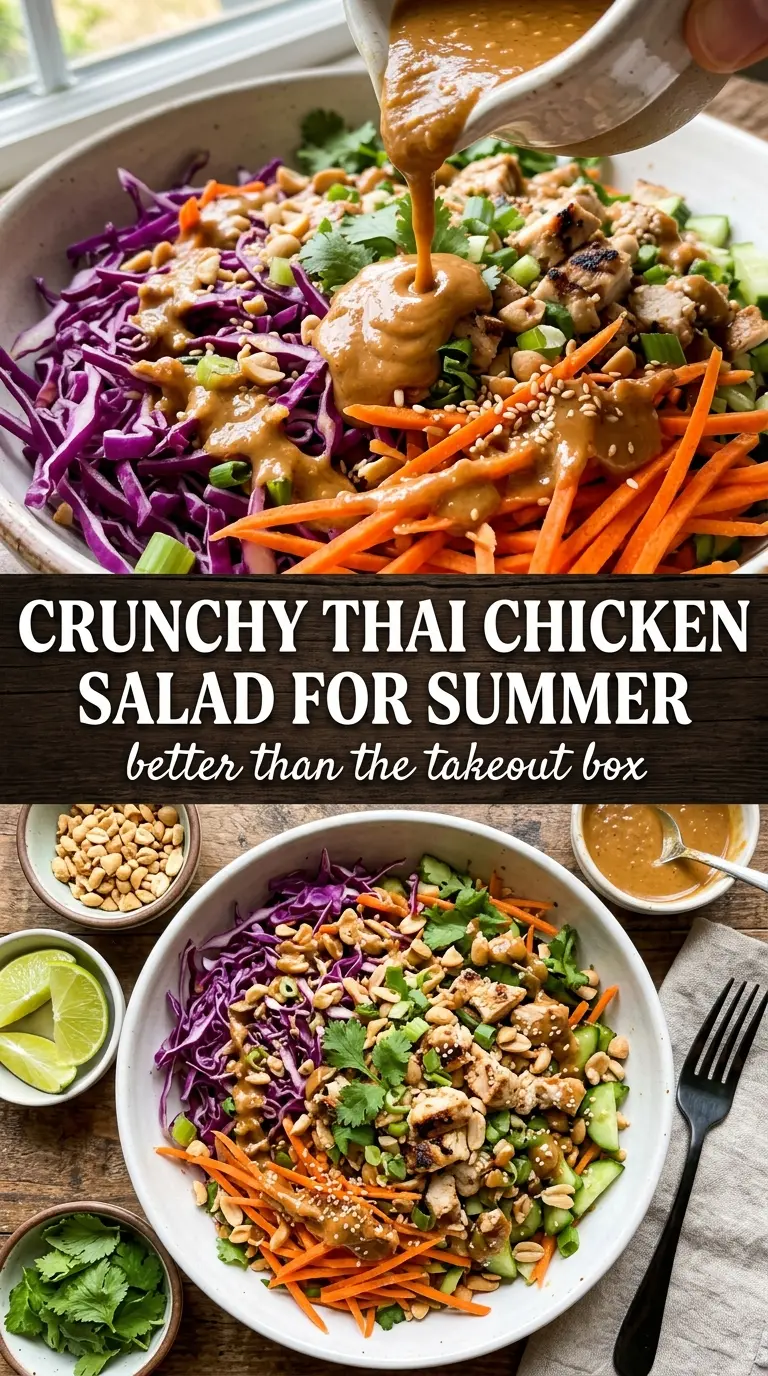
- Cooked shredded chicken — Use breast meat for a lean, clean base that lets the dressing stand out. Rotisserie chicken works well here, and it saves time, but pull off the skin so the salad doesn’t get greasy.
- Green and purple cabbage — This is the backbone of the salad. Freshly shredded cabbage gives the best crunch; bagged coleslaw mix works in a pinch, though it tends to be a little more uniform and less crisp.
- Shredded carrots — They add sweetness and color, but they also help bulk up the salad without making it heavy. Grate them yourself if you can, since the pre-shredded kind is usually drier.
- Creamy peanut butter — This gives the dressing body and that unmistakable peanut base. Natural peanut butter works, but stir it well first so the dressing doesn’t separate.
- Lime juice — Fresh lime juice is worth using here because bottled juice tastes flatter and less bright. The acidity keeps the dressing from feeling heavy.
- Soy sauce, honey, sesame oil, garlic, and ginger — These are the flavor builders. Soy sauce brings salt and depth, honey smooths out the sharp edges, sesame oil adds a nutty finish, and the garlic and ginger keep the dressing from tasting one-note.
- Roasted peanuts — They’re not just garnish. They give the final hit of texture and a toasted note that makes the salad taste finished. Chop them right before serving so they stay crunchy.
How to Build the Dressing So It Turns Smooth, Not Gluey
Mix the dressing before it touches the vegetables
Whisk the peanut butter, lime juice, soy sauce, honey, sesame oil, garlic, and ginger in a small bowl until the mixture loosens and looks glossy. Peanut butter starts out thick and stubborn, so the lime juice and honey need a minute to pull it together. If it looks pasty, keep whisking before adding water. The goal is a pourable dressing that still has enough body to coat the cabbage.
Use warm water only if the dressing needs it
A spoonful or two of warm water is enough to take the dressing from thick to silky. Add it slowly, because too much turns the sauce thin and makes it slide off the salad instead of clinging to it. This is the point where a lot of people go wrong and add cold water, which slows everything down and keeps the peanut butter lumpy. Warm water helps the emulsion come together faster.
Toss the salad just until every bit is coated
Combine the chicken, cabbage, carrots, and cilantro in a large bowl, then pour the dressing over the top and toss with purpose. Stop as soon as the vegetables look evenly coated and glossy. If you keep tossing after that, the cabbage starts breaking down and the salad loses its sharp texture. Finish with the chopped peanuts right before serving so they stay crunchy.
Make It Gluten-Free
Swap the soy sauce for tamari or coconut aminos. Tamari gives the closest flavor and salt level, while coconut aminos taste a little sweeter and softer, so you may want to cut back slightly on the honey. The rest of the salad stays exactly the same.
Make It Dairy-Free and Naturally Gluten-Free
This salad already fits both of those needs as written, which makes it an easy one to keep in the regular dinner rotation. Just double-check the soy sauce if you’re avoiding gluten, and use a peanut butter with a short ingredient list for the cleanest dressing texture. No other changes are needed.
Turn It Into a Vegetarian Main
Replace the chicken with crisp pan-fried tofu or shelled edamame. Tofu gives you more chew if you press and cube it first, while edamame keeps the salad protein-rich with a softer bite. Either way, keep the dressing amount the same.
Storage and Reheating
- Refrigerator: Store the dressed salad for up to 1 day, though the cabbage softens a little after several hours. For the best texture, keep the dressing separate and toss right before serving.
- Freezer: Don’t freeze this salad. The cabbage and carrots lose their crunch and turn watery once thawed.
- Reheating: There’s nothing to reheat here. If you want the chicken warm, heat it separately before adding it to the bowl, then dress the salad just before eating so the vegetables stay crisp.
Questions I Get Asked About This Recipe
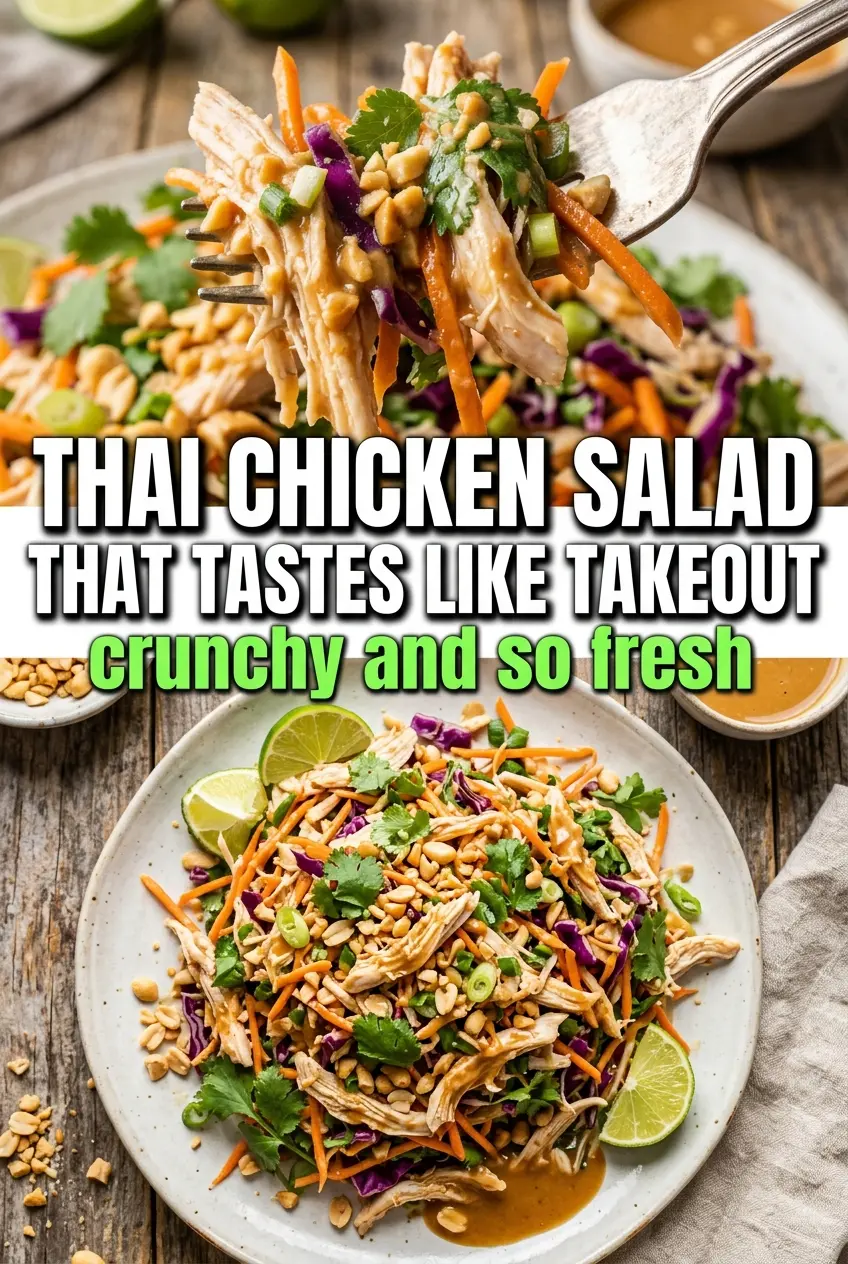
Thai Chicken Salad
Ingredients
Method
- In a large bowl, combine the shredded chicken, green cabbage, purple cabbage, carrots, and cilantro.
- In a separate small bowl, whisk together the peanut butter, lime juice, soy sauce, honey, sesame oil, garlic, and ginger until smooth, adding 1–2 tablespoons of warm water only if the dressing is too thick.
- Pour the dressing over the salad and toss well to coat everything evenly.
- Top with chopped roasted peanuts.
- Serve immediately for the best crunch, or chill for up to 30 minutes to let the flavors meld.
- If making ahead, store leftover dressing separately and toss just before serving to keep the cabbage crisp.