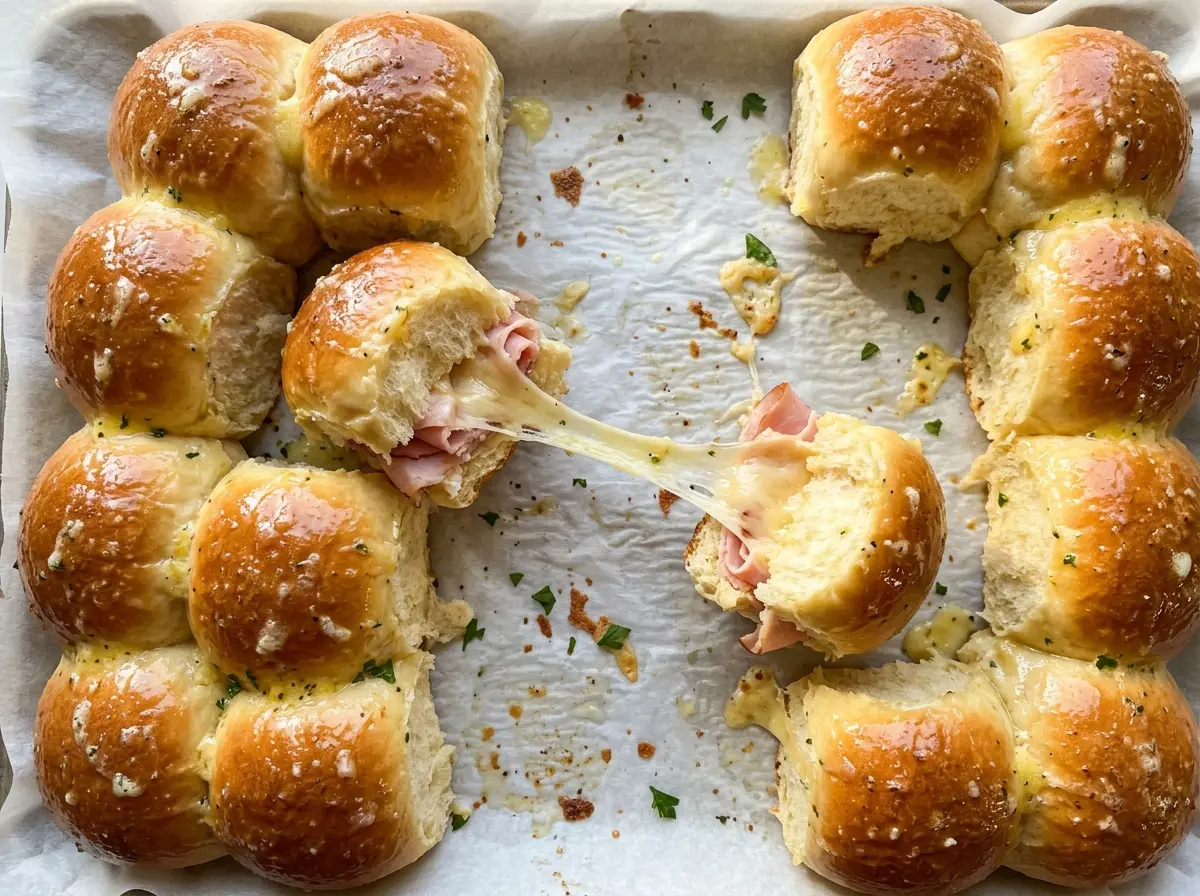
When the foil comes off, the rolls are soft and the Gouda is already melting into the turkey; a few more minutes in the oven give the tops their color. That two-part bake is what makes Turkey Gouda Party Rolls easy to serve warm without turning the sweet rolls hard before the cheese is ready. I like how the Dijon cuts through the mild, creamy Gouda, while the buttery topping brings a savory finish to every little sandwich.
Keeping the Hawaiian rolls attached while you slice the slab makes assembly much less fussy. You can build the whole layer of turkey and cheese at once, put the top back on in one piece, and brush the topping across a broad surface instead of dealing with twelve loose buns. The result is a tray of soft, golden rolls with melted Gouda tucked into each one.
Kitchen Note
Keep the rolls joined when you slice the slab horizontally. It’s easier to lift and layer the filling evenly, and the tops stay lined up when you set them back over the turkey and Gouda.
Save these Turkey Gouda Party Rolls for your next gathering: sweet rolls, savory turkey, melted Gouda, and a buttery poppy seed topping.
Why the Foil Comes Off Before the Tops Brown
The covered portion of the bake gives the cheese time to melt while the rolls stay soft. If you leave the dish uncovered the whole time, the tops can brown and dry before the filling has had enough heat to turn gooey. Foil holds in the heat around the assembled slab, so the turkey warms and the Gouda softens without asking the bread’s surface to do all the work.
Once the cheese is melted, uncovering the dish changes the job. The exposed tops can dry slightly and pick up a light golden color, while the inside stays tender. Keep an eye on the final stretch: the goal is lightly browned tops, not a dark crust. That contrast is what makes each roll feel soft and buttery on top with a warm, cheesy center.
The topping has its own role, too. Worcestershire adds a savory note to the melted butter, and poppy seeds and onion powder give the tops a little more character than plain butter would. Brushing it over the slab before baking helps it spread across the connected rolls instead of pooling between separate buns.
What the Sweet Rolls, Dijon, and Gouda Each Bring to the Slab

- Hawaiian sweet rolls — Their soft crumb and gentle sweetness balance the savory filling. Keeping the rolls attached gives you a stable top and bottom for layering; a package with an intact slab is much easier to handle than buns that have already separated.
- Dijon mustard — The tangy edge keeps the sweet bread and mild cheese from tasting too rich. Spread it in an even layer so each portion gets some; a thick patch in one spot can make that bite sharper than the rest.
- Thinly sliced deli turkey — Thin slices make a flexible layer that sits neatly over the bottom half of the rolls. A deli-style slice works better here than a thick piece because it warms evenly and is easier to cut through with the rolls.
- Sliced Gouda — Gouda melts into a smooth, mild layer that pairs well with Dijon. Sliced cheese is convenient for covering the turkey without leaving large gaps; keep the pieces arranged across the slab so each roll gets some melted cheese.
- Unsalted butter — Softened butter greases the baking dish, while melted butter carries the savory topping across the roll tops. Unsalted butter keeps the topping from getting saltier than intended alongside deli turkey and cheese.
- Worcestershire sauce, poppy seeds, and onion powder — Worcestershire gives the butter a savory depth, while the poppy seeds add a delicate crunch and the onion powder spreads its flavor evenly. Stir them into the melted butter before brushing so the seeds and seasoning don’t stay concentrated in the bowl.
Build the Turkey-and-Gouda Slab in Four Stages
Set Up the Dish and Slice the Rolls
Heat the oven to 350°F and grease a 9×13-inch baking dish with the softened butter. Keep the rolls attached as you slice the whole slab horizontally, then place the bottom half in the dish. A level cut helps the top sit evenly after filling; if one side is much thicker, the finished slab can be harder to portion neatly.
Layer the Mustard, Turkey, and Gouda
Spread the Dijon over the bottom half, then layer on the thinly sliced turkey and Gouda. Arrange the filling across the bread rather than piling it in the center, where the outside rolls would get less. Replace the top half gently, keeping the slab aligned with the bottom so the filling stays inside when you cut the rolls apart.
Brush on the Savory Butter
Melt the butter in a small microwave-safe bowl, then stir in the Worcestershire sauce, poppy seeds, and onion powder. Brush the mixture over the tops of the rolls, working across the entire surface. Stir again if the poppy seeds settle while you’re brushing; that keeps the topping distributed instead of leaving most of the seeds in the bowl.
Bake Covered, Then Uncovered
Cover the dish with foil and bake for 15–18 minutes, until the Gouda is melted. Uncover and bake for 5–8 minutes, until the tops are lightly browned. Let the rolls rest for 5 minutes before cutting them apart and serving; cutting immediately can make the warm filling shift as you separate the portions.
Small Tweaks That Change Each Bite
Spread the Dijon Across Both Cut Faces
For a more even mustard note, divide the Dijon between the cut sides of the rolls instead of spreading it all on the bottom. Use the same amount overall. The flavor reaches the top layer more directly, though the mustard taste will seem a little more prominent in each bite.
Let Gouda Frame the Turkey
Arrange some of the sliced Gouda beneath the turkey and the rest over it, keeping the total amount the same. The cheese makes contact with both pieces of bread as it melts, giving the filling a more layered, cheesy feel. This is a useful tweak if you want the cheese to feel more evenly distributed through the slab.
Storage and Reheating
- Refrigerator: Refrigerate leftovers within 2 hours and keep them covered for 3–4 days. The rolls soften as they sit, so the tops won’t stay as crisp as they are fresh from the oven.
- Freezer: They freeze well after baking and cooling. Wrap individual portions tightly, freeze for up to 2 months, and thaw overnight in the refrigerator before reheating.
- Reheating: Cover portions with foil and warm them in a 350°F oven until the centers reach 165°F. Avoid reheating uncovered for the whole time, which can dry out the bread before the filling is hot.
The Questions That Come Up Before Serving Turkey Gouda Party Rolls
Turkey Gouda Party Rolls
Ingredients
Equipment
Method
- Heat the oven to 350°F.
- Grease a 9x13-inch baking dish with the softened butter.
- Keeping the rolls attached, slice the whole slab horizontally.
- Place the bottom half in the dish.
- Spread with Dijon.
- Layer on the turkey and Gouda.
- Replace the top half.
- Melt the butter in a small microwave-safe bowl.
- Stir in the Worcestershire sauce, poppy seeds, and onion powder.
- Brush the mixture over the tops of the rolls.
- Cover the dish with foil and bake for 15–18 minutes, until the cheese is melted.
- Uncover and bake for 5–8 minutes, until the tops are lightly browned.
- Rest the rolls for 5 minutes.
- Cut the rolls apart.
- Serve.