A hot Dutch oven should answer with a steady sizzle when the beef goes in. If the pieces crowd the pot, they steam instead of browning, and you lose the savory bits that make the broth taste like it simmered all afternoon. I brown the chuck in two batches, then build this vegetable beef soup in the same pot, letting the browned edges mingle with onion, carrots, celery, tomatoes, and beef broth.
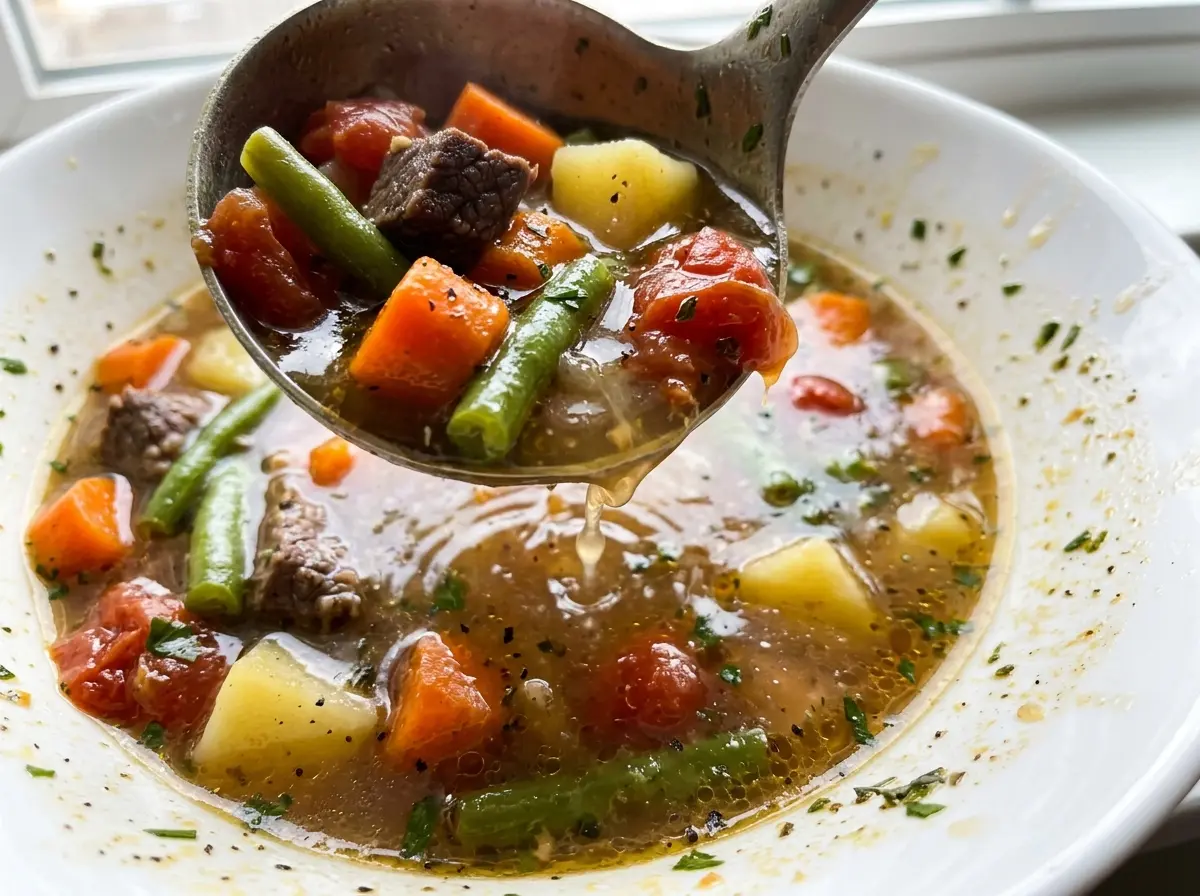
The long, covered simmer gives the beef time to turn fork-tender, while the vegetables go in later so they keep their shape. I like this as a practical one-pot dinner: the beef brings richness, Yukon Gold potatoes make it filling, and frozen mixed vegetables add color without another round of chopping. Each spoonful has tender beef and vegetables in a tomato-tinged broth.
Kitchen Note
Cut the chuck into even 1-inch pieces before you season it. Pieces close in size brown evenly and reach fork-tenderness at about the same point during the long simmer.
Save this vegetable beef soup for a cozy dinner with fork-tender chuck, Yukon Gold potatoes, and a slow-simmered tomato broth.
Why the Potatoes Wait Until the Beef Is Tender
Beef chuck needs a long, gentle braise to soften. Yukon Gold potatoes don’t need that much time: if they simmer alongside the beef from the beginning, they can break down before the meat is ready. Adding them after the beef is fork-tender gives each ingredient the cooking time it needs, instead of asking the potatoes to survive the whole braise.
The frozen mixed vegetables go in after the potatoes have had a head start. They need only a brief simmer to heat through, so adding them with the potatoes would leave them cooking longer than necessary. That staggered order keeps the finished soup from turning into one soft, indistinct mixture. You get tender beef, potatoes that still hold their shape, and vegetables you can recognize in every bowl.
What Chuck and Yukon Gold Potatoes Bring to This Brothy Pot
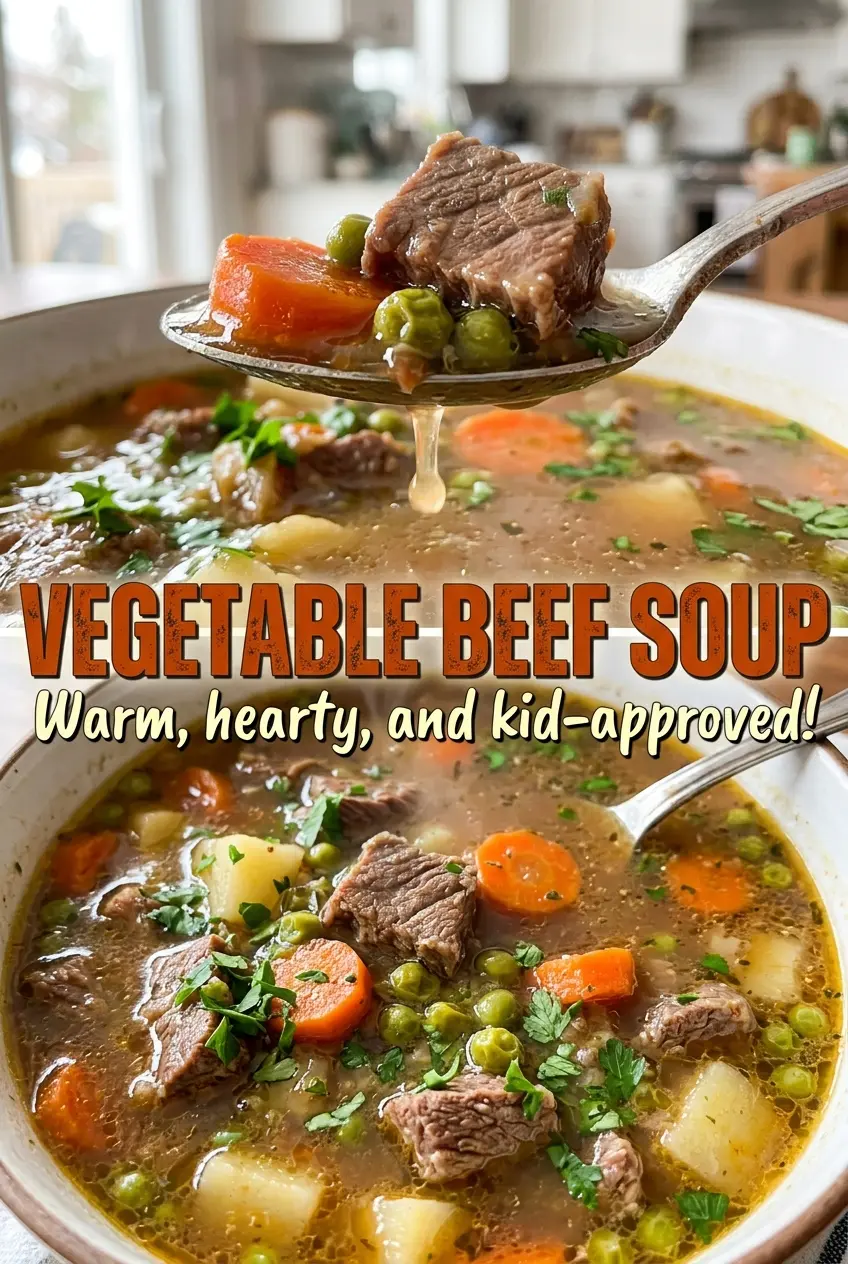
- Beef chuck stew meat — Chuck has enough connective tissue and marbling to become tender during a long simmer. Pre-cut stew meat is convenient, but pieces can vary; if you cut your own, use chuck and keep the pieces close in size. Boneless beef short rib cut into similar pieces is a richer, pricier substitute and may need the same fork-tenderness check.
- Yellow onion, carrots, celery, and garlic — These build the savory base before the broth goes in. A white onion can stand in for yellow onion without changing the method. Fresh garlic gives the clearest flavor here; mince it just before cooking so it doesn’t sit around drying out.
- Tomato paste and diced tomatoes — The paste gives the broth concentrated tomato depth, while the canned tomatoes bring pieces of tomato and their juice. Crushed tomatoes can replace the diced tomatoes in the same can size; the broth will turn a little thicker and less chunky.
- Beef broth — Broth is the main liquid, so its salt level and flavor matter more than a fancy brand. A regular grocery-store broth works well. Low-sodium beef broth is a useful swap if you prefer more control over the finished saltiness.
- Yukon Gold potatoes — Their creamy texture and ability to hold together suit a soup with a long-cooked beef base. Red potatoes, cut to the same size, are a good substitute and stay a touch firmer. Russets break down more easily, so the broth may become cloudier.
- Frozen mixed vegetables — They bring several vegetables into the pot without extra prep, and going in near the end keeps them from simmering for the full braise. A frozen peas-and-carrots blend works in their place, though the soup will have less variety in each spoonful.
- Dried thyme and bay leaf — Thyme lends an earthy background, and the bay leaf quietly seasons the broth as it simmers. Dried oregano can replace the thyme for a more assertive herbal note; if you don’t have a bay leaf, leave it out rather than trying to substitute another whole spice.
Building the Broth Before the Vegetables Go In
Brown the Chuck in Two Batches
Heat the olive oil in a 6-quart Dutch oven over medium-high heat. Season the beef with the first teaspoon of kosher salt and the black pepper, then brown it in two batches, turning the pieces until several sides are browned, about 3 to 4 minutes per batch. Transfer the beef to a plate as each batch finishes. Crowding the pot makes browning harder, so give the pieces room rather than trying to fit them all at once.
Soften the Aromatics and Toast the Paste
Add the onion, carrots, and celery to the pot and cook over medium heat, stirring occasionally, for about 5 minutes, until the onion begins to soften. Stir in the garlic, tomato paste, and thyme and cook for 1 minute. The tomato paste should coat the vegetables and smell fragrant, not scorch on the bottom of the pot. This short cook gives the paste a chance to meld into the base before the broth loosens it.
Simmer Until the Chuck Gives Easily
Return the beef to the Dutch oven, then add the bay leaf, beef broth, diced tomatoes, and the remaining teaspoon of kosher salt. Bring the soup to a boil, cover the pot, and lower the heat to a gentle simmer. Cook for 1 1/2 to 2 hours, until a fork slides into the beef easily. If the surface is bubbling hard, lower the heat; a steady, quiet simmer is what you want.
Finish with Potatoes and Frozen Vegetables
Stir in the potatoes and simmer uncovered for 15 to 20 minutes, until they’re nearly tender when pierced with a fork. Add the frozen mixed vegetables and simmer for another 5 to 8 minutes, until they’re heated through and the potatoes are tender. Take out the bay leaf before serving. If a potato still feels firm in the center, give it a little more time before ladling the soup.
Three Small Changes That Give the Soup a Different Spin
Make It Gluten-Free
Replace the beef broth with an equal amount of gluten-free beef broth, and use gluten-free packaged ingredients throughout. The flavor stays savory and beef-forward, with no change to the stovetop method.
Use Fire-Roasted Tomatoes
Swap the regular diced tomatoes for a 14.5-ounce can of fire-roasted diced tomatoes. They add a gentle smoky edge without changing the amount of liquid or the timing.
Add a Little Chile Heat
Stir a pinch of crushed red pepper into the pot with the garlic, tomato paste, and thyme. It warms the broth without taking over the beef and vegetable flavors; add more only if you want a clearly spicy soup.
Storage and Reheating
- Refrigerator: Store in a covered container for 3 to 4 days. The potatoes may absorb some broth and soften as the soup sits.
- Freezer: Freeze in airtight containers for up to 2 to 3 months. The soup freezes well, though the potatoes may be softer after thawing.
- Reheating: Warm on the stovetop over medium-low heat, stirring occasionally, until the soup reaches 165°F. Avoid a hard boil, which can break up the potatoes and make the beef feel less tender.
Questions That Come Up While This Soup Cooks
Vegetable Beef Soup
Ingredients
Equipment
Method
- Heat the olive oil in a 6-quart Dutch oven over medium-high heat.
- Season the beef with 1 teaspoon salt and the black pepper.
- Brown the beef in two batches, turning the pieces until browned on several sides, about 3 to 4 minutes per batch; transfer the beef to a plate.
- Add the onion, carrots, and celery to the pot and cook over medium heat, stirring occasionally, until the onion begins to soften, about 5 minutes.
- Stir in the garlic, tomato paste, and thyme and cook for 1 minute.
- Add the beef, bay leaf, broth, diced tomatoes, and remaining 1 teaspoon salt.
- Bring the soup to a boil, then cover and simmer over low heat for 1 1/2 to 2 hours, until the beef is fork-tender.
- Stir in the potatoes and simmer uncovered for 15 to 20 minutes, until the potatoes are nearly tender.
- Stir in the frozen mixed vegetables and simmer for 5 to 8 minutes, until heated through and the potatoes are tender.
- Remove the bay leaf before serving.