Vegetable beef soup turns into the kind of bowl people go back to all week when the broth is deep, the beef is tender, and the vegetables still have their own texture. The best versions don’t taste like beef broth with random vegetables floating in it. They taste built, layered, and cooked long enough for the tomato, onion, and browned beef to work together into something rich and satisfying.
The part that matters most is the order. Browning the beef first gives the broth a darker, fuller base, and cooking the tomato paste with the onions and garlic wakes it up so it tastes rounded instead of flat. Potatoes need enough time to soften without disappearing, while the green beans and corn go in at the end so they stay bright instead of turning to mush. That balance is what keeps this soup hearty instead of heavy.
Below, I’ll walk through the little details that make a difference: when to salt, why the beef gets seared in batches, and how to keep the vegetables from overcooking. If you’ve ever ended up with bland broth or soft, tired vegetables, this version fixes both.
The broth got so rich after the tomato paste and Worcestershire went in, and the potatoes held their shape instead of falling apart. My husband kept saying it tasted like it had been simmering all day.
Save this vegetable beef soup for a broth-rich, hearty dinner with tender beef and vegetables that still have a little bite.
The Step That Gives the Broth Its Depth
The sear is doing more work here than most people realize. If the beef goes straight into the liquid, the soup still tastes fine, but it misses that darker, roasted edge that makes a homemade soup taste like it had a head start. Brown the beef in batches so the pan stays hot enough to actually sear instead of steam. Crowding the pot is the fastest way to end up with gray meat and thin-tasting broth.
The other quiet upgrade is the tomato paste. Cooking it with the onion, carrots, celery, and garlic for a couple of minutes takes away the raw tomato taste and turns it into a savory base that blends into the broth. That small step gives the soup more body, especially once the Worcestershire and thyme go in. If your vegetable beef soup ever tastes flat, this is usually the reason.
What Each Ingredient Is Actually Doing in This Soup
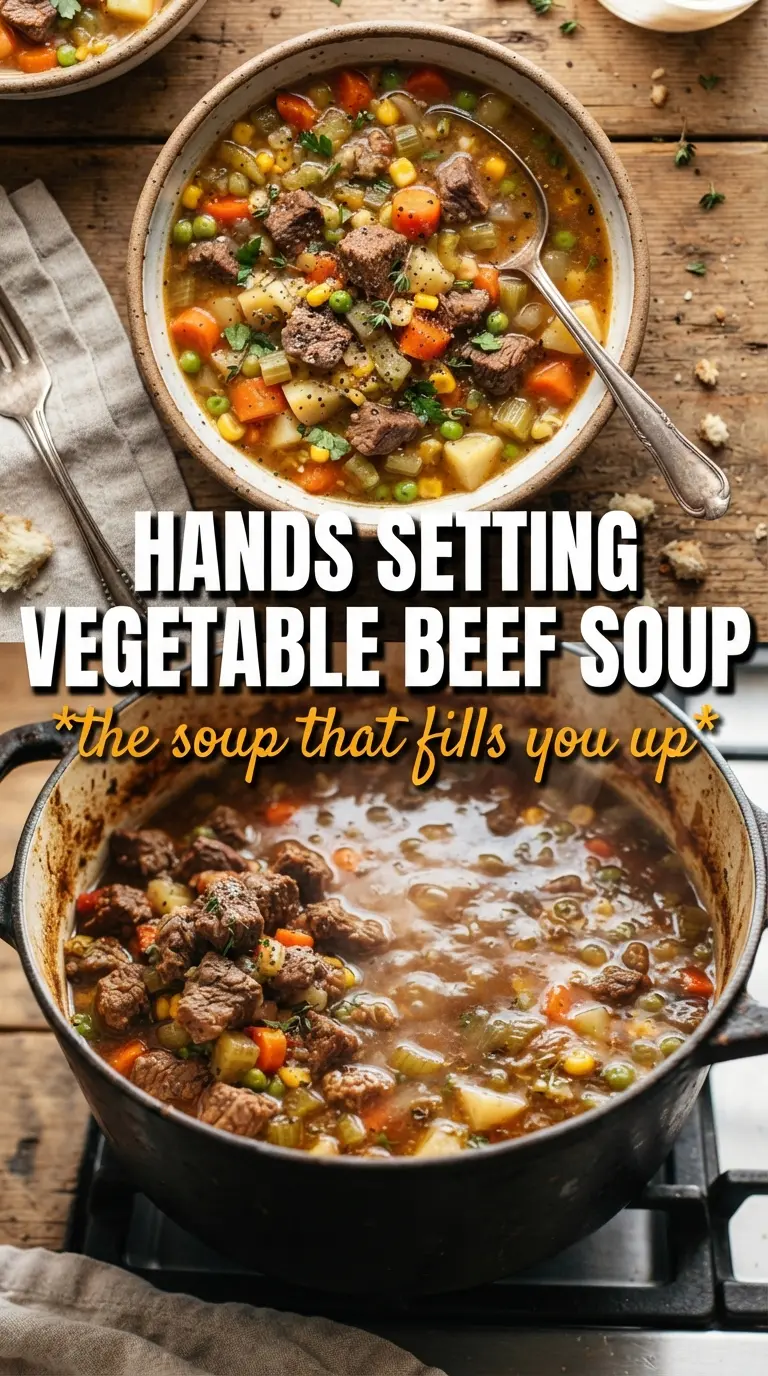
- Beef stew meat — This needs time to relax and turn tender, so cubes with some marbling work better than very lean cuts. If you want to swap, chuck roast cut into chunks is the closest match and often becomes even more tender.
- Tomato paste and diced tomatoes — The paste gives the broth body and color, while the diced tomatoes add brightness. Don’t skip the paste; it’s one of the main reasons the soup tastes rich instead of watery.
- Beef broth — Use one you’d drink on its own if you can. A thin broth makes a thin soup, and this recipe leans on the broth because there isn’t a cream or flour base to hide behind.
- Potatoes — They thicken the soup a little as they cook and make it feel like a full meal. Yukon Golds hold their shape well, while russets soften more and make the broth slightly starchier.
- Green beans and corn — These go in near the end so they stay sweet and distinct. Frozen corn is perfect here, and frozen green beans work in a pinch if that’s what you have.
The Timing That Keeps the Vegetables From Going Mushy
Searing the Beef First
Heat the olive oil until it shimmers, then brown the beef in a single layer, working in batches. You want a real crust on the meat, not just a gray exterior, so let each side sit long enough to pick up color before turning. If the pot looks crowded or starts collecting liquid, pull the meat out and keep going in smaller rounds. That patience pays off in the broth later.
Building the Aromatic Base
Cook the onion, carrots, and celery until the onion softens and the edges of the carrots just start to lose their raw look. Add the garlic and tomato paste after that, and stir until the paste darkens slightly and smells sweeter. If the garlic goes in too early, it can scorch before the paste has time to cook through. This step is what gives the soup its round, savory backbone.
Simmering Until the Beef Softens
Once the broth, tomatoes, Worcestershire, thyme, and bay leaf are in, bring the pot up to a boil and then drop it to a steady simmer. You want a few bubbles breaking the surface, not a hard boil that makes the beef tighten up. Thirty minutes gets the meat moving toward tenderness, but the real payoff happens once the potatoes go in and the broth has time to settle around everything.
Adding the Sturdy Vegetables Last
Stir in the potatoes and cook them until a fork slips in without resistance but the cubes still hold their shape. Add the green beans and corn near the end so they heat through without losing their color or bite. If you add them too early, the beans turn dull and the corn gets soft and bland. Taste at the end and season with salt and pepper only after the broth has reduced a bit.
How to Adapt This Vegetable Beef Soup Without Losing the Good Parts
Make It Gluten-Free
This recipe is naturally close to gluten-free, but the beef broth and Worcestershire sauce need a quick label check. Use broth and Worcestershire that are certified or clearly marked gluten-free, and the soup keeps the same texture and depth without any other changes.
Swap the Beef for Ground Beef in a Pinch
Ground beef changes the texture, but it works when that’s what you have. Brown it well, drain off excess fat if needed, then build the soup the same way; the broth will be a little less luxurious, but the flavor still lands in the right place and the cooking time gets shorter.
Use What’s in the Freezer
Frozen corn and frozen green beans fit this soup well because they’re added late and don’t need a long cook. If you use frozen carrots or potatoes, expect a softer finish, since those vegetables lose some of their structure after freezing.
Make It Thicker and Heartier
For a thicker stew-like bowl, simmer uncovered for the last 10 to 15 minutes so some liquid evaporates. The potatoes will help thicken the broth naturally, and reducing the liquid gives the soup a denser finish without adding flour or cream.
Storage and Reheating
- Refrigerator: Store in an airtight container for up to 4 days. The broth may thicken a bit as the potatoes sit.
- Freezer: It freezes well for up to 3 months, though the potatoes soften some after thawing. Cool it completely before freezing in portioned containers.
- Reheating: Reheat gently on the stove over medium-low heat until steaming. Don’t boil it hard or the potatoes can break down and the beef can dry out.
Answers to the Questions Worth Asking
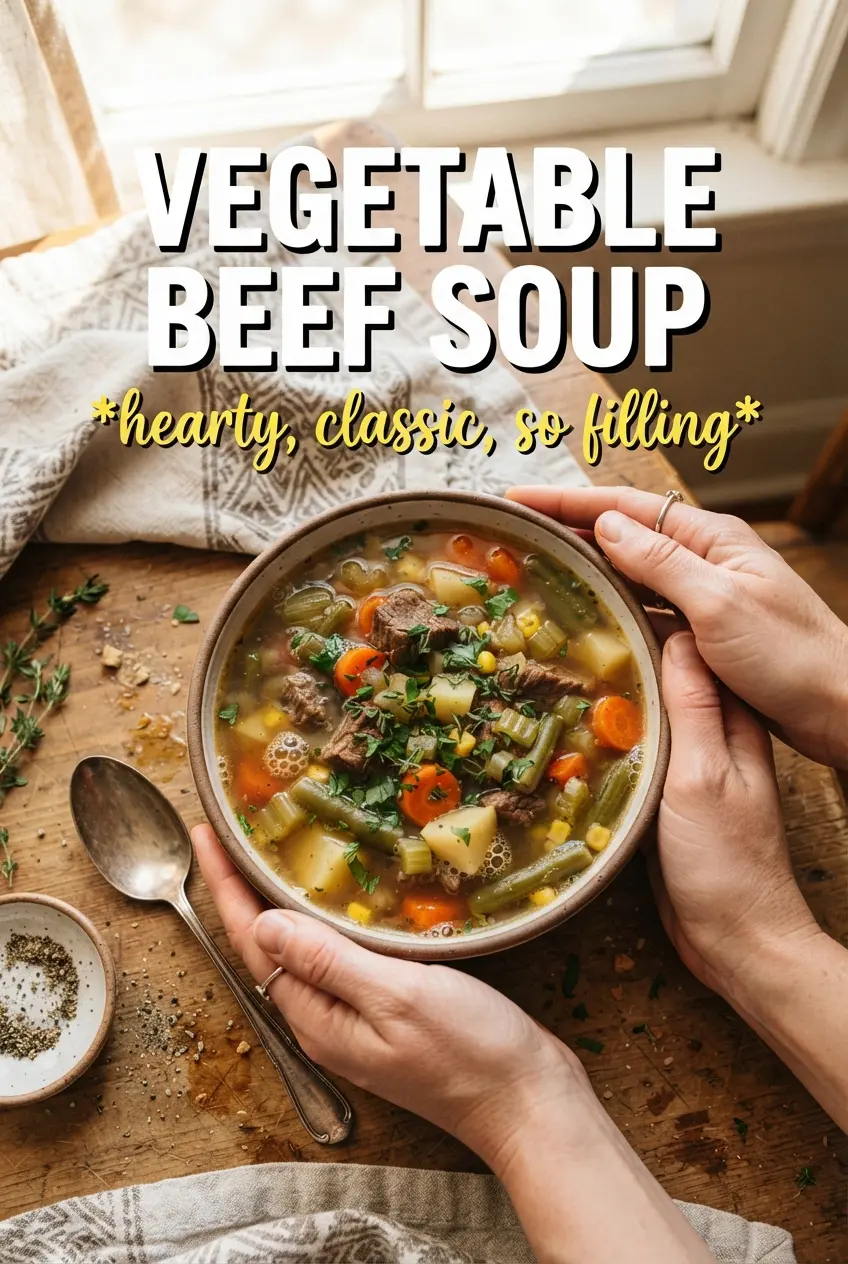
Vegetable Beef Soup
Ingredients
Equipment
Method
- Heat 2 tablespoons olive oil in a large Dutch oven over medium-high heat, until it shimmers. Add beef stew meat in batches and sear until browned on all sides, then remove to a plate.
- Sauté onion, carrots, and celery in the Dutch oven for 5 minutes, stirring until the vegetables start to soften. Add garlic and tomato paste and cook for 2 minutes, until fragrant and slightly darkened.
- Return the browned beef to the pot. Add beef broth, diced tomatoes, Worcestershire sauce, dried thyme, and bay leaf.
- Bring the soup to a boil over high heat, then reduce to a simmer. Simmer for 30 minutes, keeping a steady gentle bubble.
- Add potatoes and cook for 15 minutes, stirring occasionally until they begin to tenderize. Add green beans and frozen corn for the last 8 minutes, so they stay bright.
- Remove the bay leaf from the soup. Season with salt and pepper to taste and serve hot.