At the first pour, bubbles climb through the cider and turn a simple two-ingredient drink into something that feels right at a brunch table. Apple Cider Mimosas have a crisp, dry finish followed by a clear hit of apple, without needing a shaker or a long list of extras. I like that the proportions are easy to repeat: each flute gets the same cider base, then sparkling wine to finish.
The balance comes from pairing apple cider with dry sparkling wine, rather than using a sweeter bottle that competes with the cider. Both ingredients go into the glasses chilled, and the cider goes in before the wine. That order keeps the pour straightforward when you’re filling a dozen flutes, and the finished drink is at its liveliest right after it’s poured.
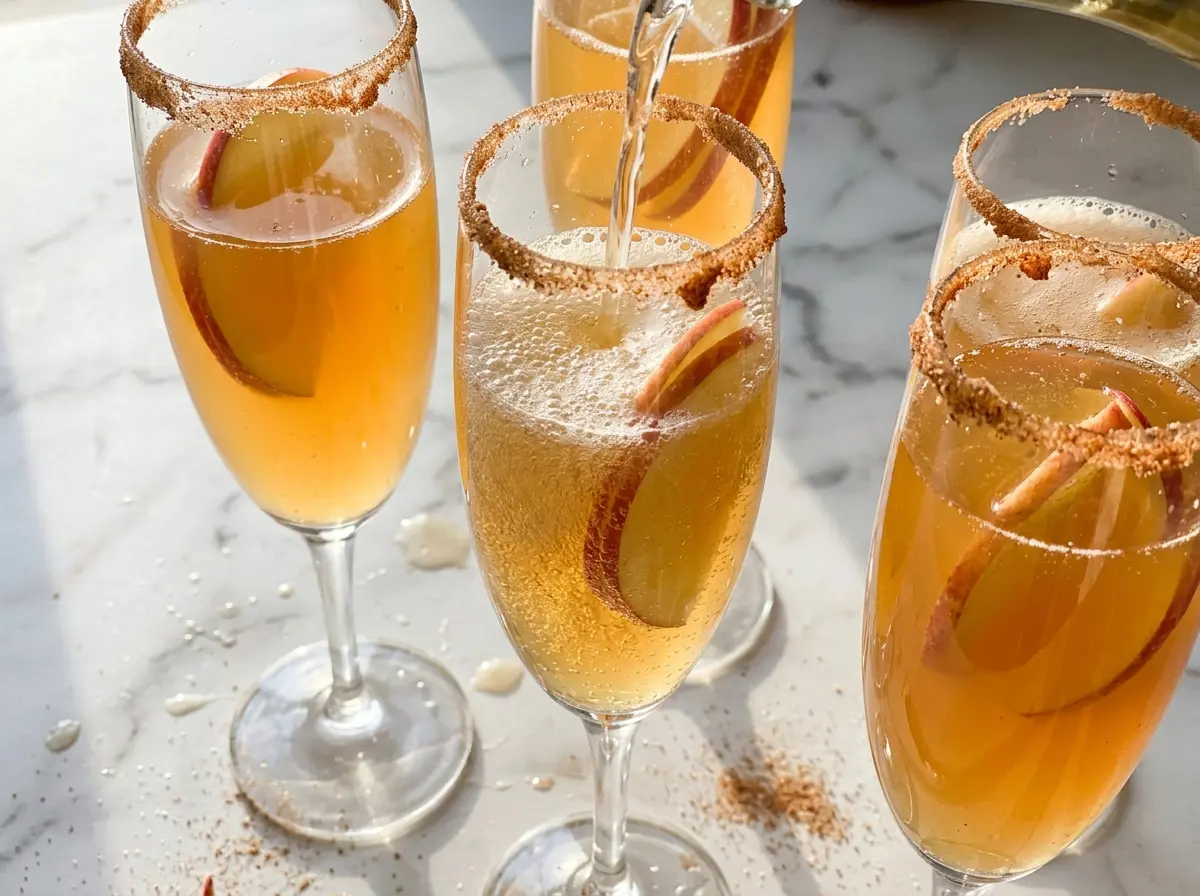
Kitchen Note
I set out all 12 flutes before I start pouring. That way, I can divide the sparkling wine evenly instead of pausing halfway through to find more glasses.
Save these Apple Cider Mimosas for a brunch pour with crisp apple flavor and dry, sparkling wine.
Why the Cider-to-Wine Balance Matters More Than a Fancy Bottle
Apple cider brings plenty of recognizable apple flavor, so it doesn’t need a sweet sparkling wine to make the drink taste fruity. A dry wine gives the cider room to show through and keeps the finish brisk. That balance is also why I stick to the measured cider portion instead of filling each flute halfway with cider and leaving only a splash of bubbles on top.
The proportions are designed to serve 12: three cups of cider make 1/4 cup for each glass, and one bottle of sparkling wine is divided across the same 12 servings. The wine isn’t an afterthought; it supplies the lift and dry edge that keep the cider from reading as plain juice. Pouring a little extra cider into a few glasses can make the last ones taste noticeably different, so even portions are worth the small effort.
This is a light, sparkling drink rather than a strong cider cocktail. Each flute gets a consistent base, with the wine filling out the glass and bringing the bubbles. If you’re pouring for a group, keeping that ratio intact is more useful than choosing a particularly expensive bottle.
The Dry Sparkling Wine That Keeps Apple Cider in Balance
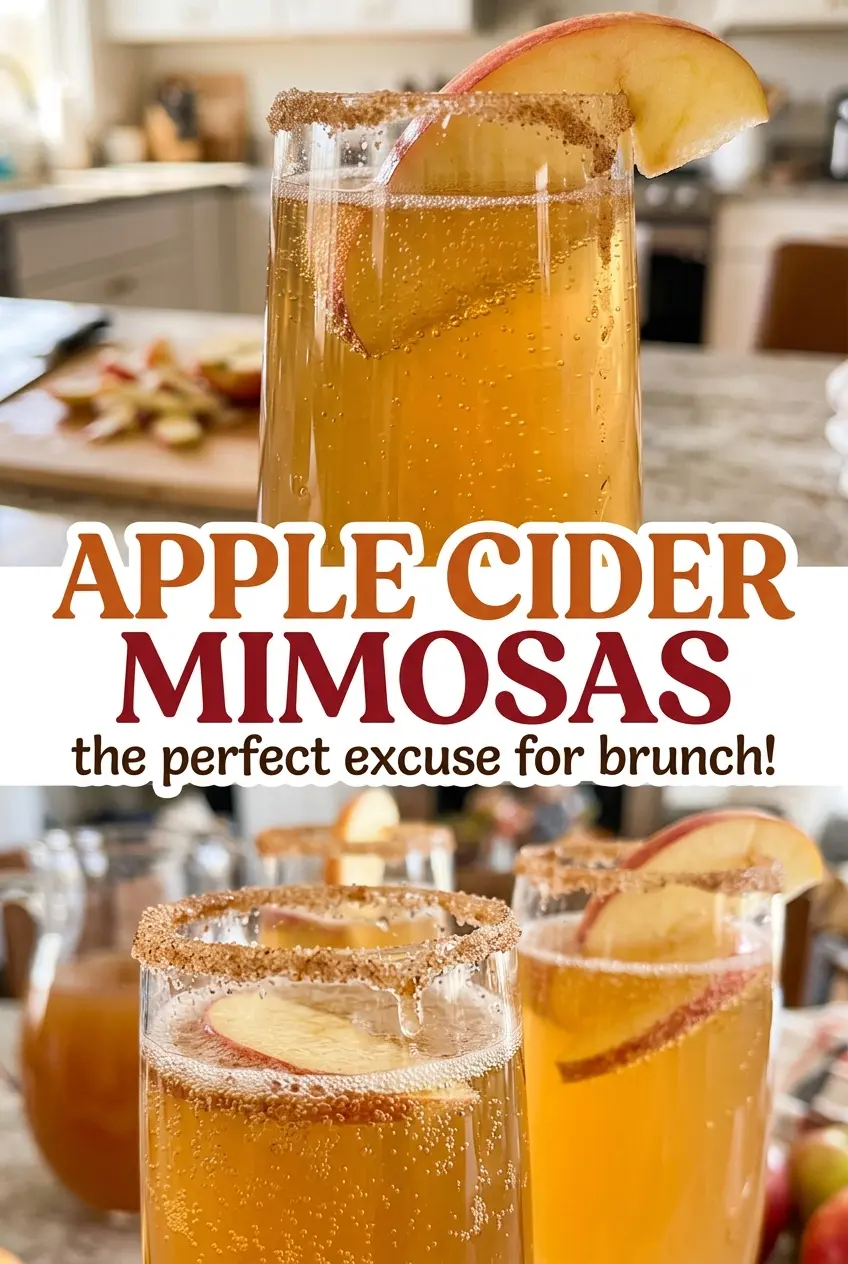
- Apple cider — The cider provides the drink’s apple character and round sweetness. Pick a cider whose flavor you enjoy on its own; this recipe has no spices or other mixers to cover it up. Apple cider can vary in sweetness and texture by brand, so a different bottle may make the finished drink taste a little different. If you’re considering apple juice instead, it will work as a practical stand-in, but expect a thinner, often sweeter result with less cider depth.
- Dry sparkling wine — Dryness is what gives the apple sweetness a clean counterpoint, while the bubbles make the drink feel bright. Prosecco and Champagne are both good choices here, and there’s no need to buy a costly bottle for a mixed drink. Choose a bottle you’d be happy to sip; its character still comes through. Keep it chilled before pouring, and avoid substituting still wine, which would lose the defining sparkle.
Filling Twelve Flutes Without Losing the Sparkle
Start With the Ingredients Chilled
Use chilled apple cider and a chilled bottle of dry sparkling wine. Cold ingredients make a refreshing drink without needing ice in the flutes, which would dilute the cider as it melts. Set the champagne flutes within reach before opening the bottle so you can move directly from pouring the cider to topping the glasses. There’s no cooking or mixing vessel to prepare.
Portion the Cider First
Pour 1/4 cup of cider into each of the 12 champagne flutes. A measuring cup helps keep the cider portion consistent from the first glass to the last. Check the glasses before opening the wine; each should have the same cider base. This step gives you an even starting point for dividing the bottle.
Top Each Glass and Serve
Top each cider-filled flute with sparkling wine, dividing the full bottle evenly among the glasses. Pour with a steady hand and leave enough room at the rim for the bubbles rather than filling a glass to the very top. Once every flute has its sparkling wine, serve the drinks immediately. The freshly poured bubbles are part of what makes this simple combination feel lively.
Three Easy Ways to Adapt the Pour
Choose Champagne for a drier edge
Use dry Champagne in place of Prosecco, keeping the same cider portion and dividing one bottle among the 12 flutes. Champagne tends to bring a more restrained, toasty character, while Prosecco often tastes fruitier. Both work with the apple; the choice just shifts the wine’s presence in the glass.
Make a zero-proof version with sparkling cider
Replace the sparkling wine with an equal-size bottle of nonalcoholic sparkling cider and pour it over the measured apple cider in each flute. The result keeps the bubbles but leans sweeter and more apple-forward, without the dry finish from wine. It’s a useful option when you want a nonalcoholic glass alongside the original.
Pour a half batch for six
For six flutes, use 1 1/2 cups of cider and half a 750-milliliter bottle of sparkling wine, or 375 milliliters. Keep the same cider portion in each glass and share the wine evenly. The smaller batch keeps the original balance without leaving you with a full dozen servings.
Make-Ahead and Serving
- Before serving: Chill the cider and sparkling wine separately. You can set out the flutes ahead, but wait to pour the sparkling wine until you’re ready to serve.
- Holding: Serve the finished drinks right after pouring; the bubbles fade as they stand.
- Leftovers: Mixed glasses don’t keep their sparkle well, so pour only what you plan to serve. Keep any remaining cider or wine chilled separately.
Questions That Come Up When Pouring Apple Cider Mimosas
Apple Cider Mimosas
Ingredients
Equipment
Method
- Pour 1/4 cup apple cider into each of 12 champagne flutes, then top each glass with sparkling wine, dividing the bottle evenly.
- Serve immediately.