Brown stew chicken earns its place in the rotation because the gravy turns deep and glossy while the chicken stays tender enough to pull apart with a fork. The flavor comes from two places at once: the marinade that seasons the meat all the way through, and the caramelized sugar that gives the finished sauce that dark, savory-sweet edge Jamaicans know well. When it’s done right, the pan smells like browned onions, thyme, garlic, and peppers simmered into something richer than the sum of its parts.
The trick is not rushing the browning. The chicken needs time in the marinade so the seasoning gets under the skin and into the meat, and the sugar needs to hit the right color before anything else goes into the pot. Too pale, and the stew tastes flat. Too dark, and it goes bitter fast. Keep the heat controlled, brown the chicken in batches if needed, and let the broth reduce until the gravy clings to the spoon.
Below you’ll find the step that matters most, the ingredient choices that change the finished flavor, and a few practical swaps for making this dish work with what you already have.
The chicken came out so tender and the gravy got that deep brown color without tasting burnt. I let it marinate overnight and the seasoning went all the way through the meat.
Save this brown stew chicken for when you want deep mahogany gravy, tender chicken thighs, and that classic Jamaican pepper-thyme finish.
The Caramelized Sugar Is What Gives This Stew Its Depth
The biggest mistake with brown stew chicken is treating the color as a garnish instead of a foundation. That first spoonful of sugar is what builds the dark, rich base, and it needs to melt into a deep amber before the chicken goes in. If you add the meat too early, the stew turns pale and sweet in a one-note way instead of developing the layered, savory finish you want.
Pat the chicken dry enough that it browns instead of steaming. The marinade already brings salt, thyme, garlic, and seasoning into the meat, so the browning step can focus on color and flavor, not rescue work. Keep the heat at medium and watch the sugar closely; once it shifts from golden to amber, move fast and start browning the chicken so the caramel doesn’t tip into bitterness.
What Each Ingredient Is Doing in This Dish
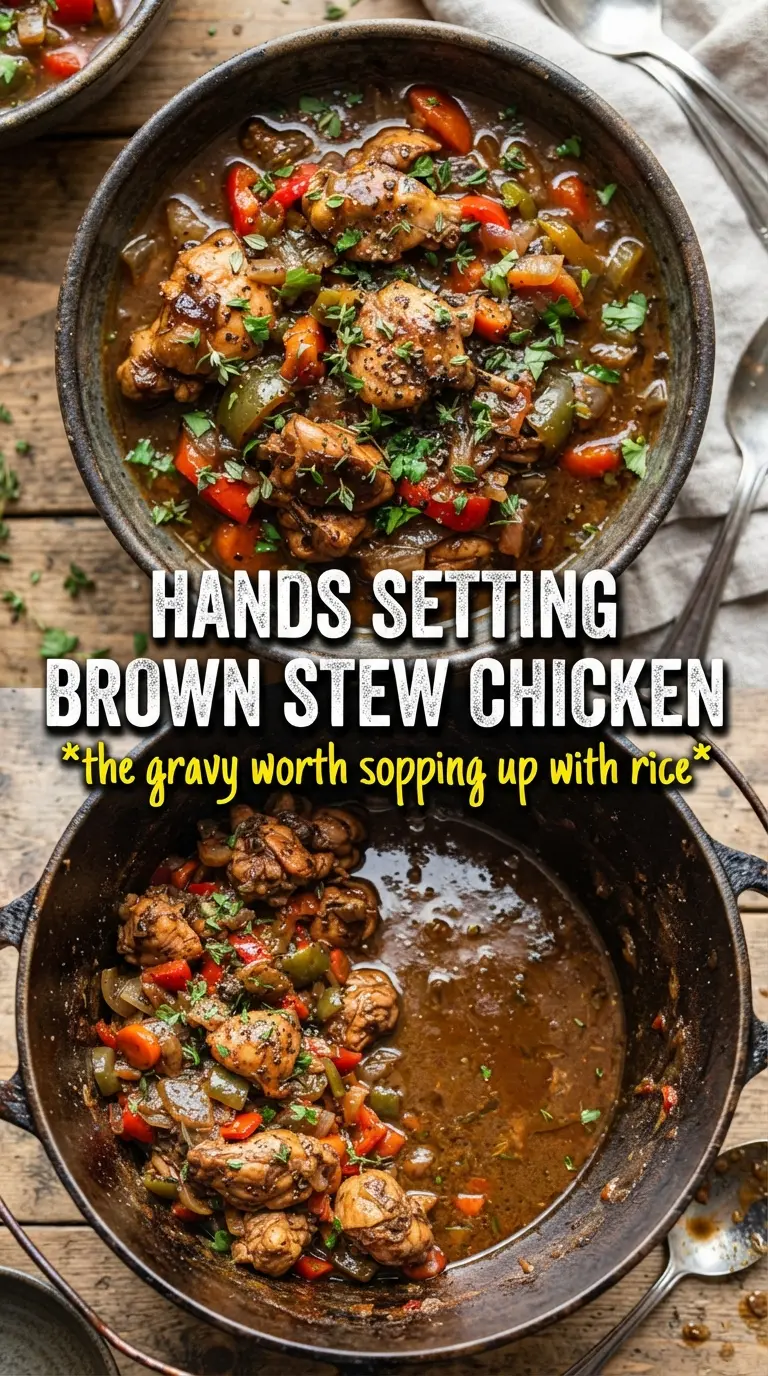
- Bone-in chicken thighs and drumsticks — Dark meat stays juicy through the long simmer and gives the gravy more body than boneless pieces would. Bone-in pieces also hold up better when you brown them first and then simmer them in broth.
- Browning sauce — This is where the signature color starts in the marinade. It helps the stew look deep and mahogany before the caramelized sugar even goes in, and that layered color translates to better flavor in the pot.
- Scotch bonnet or habanero — The pepper brings heat and fruitiness, not just fire. If you want less heat, use half a pepper or leave it out entirely, but don’t replace it with a mild chile if you want the same sharp, bright finish.
- Bell peppers, onion, garlic, and green onions — These build the body of the gravy after the chicken comes out of the pan. Slice them so they soften without disappearing; you want them sweet and tender, not dissolved.
- Sugar — The sugar is not for sweetness alone. It’s there to caramelize, deepen the color, and give the sauce its characteristic roasted note. Watch it carefully, because a few seconds too long can turn the whole pot bitter.
- Chicken broth — This loosens the browned bits from the pan and turns them into gravy. Water will technically work, but the broth gives the stew a fuller, rounder taste that stands up to the caramel and pepper.
Build the Stew in Stages, Not All at Once
Marinating for Flavor That Reaches the Bone
Mix the chicken with the browning sauce, all-purpose seasoning, garlic powder, onion powder, thyme, salt, and pepper, then let it sit for at least 2 hours or overnight if you can. The longer rest helps the seasoning sink in, which matters because this stew isn’t relying on a sauce poured over the top at the end. If you rush this step, the outside tastes seasoned while the meat underneath stays flat.
Caramelizing the Sugar Without Burning It
Heat the oil in a large skillet or Dutch oven, then add the sugar and watch it closely as it melts. You want a golden-brown caramel that smells nutty and toasty, not smoke-filled and acrid. If it goes past amber, stop and start over; burnt sugar will take the whole stew with it.
Browning the Chicken for the Real Flavor
Slide the marinated chicken into the caramel oil and brown it on all sides until it looks deeply colored, not pale gray. This step gives the stew its backbone and builds the browned bits that later dissolve into the gravy. Don’t crowd the pan if you can help it, because too much chicken at once drops the heat and the pieces will steam instead of sear.
Turning the Pan Drippings Into Gravy
After the chicken comes out, sauté the onion, bell peppers, garlic, green onions, and scotch bonnet for about 4 minutes, just until softened and fragrant. Return the chicken to the pot, pour in the broth, and bring everything to a boil before lowering the heat. Simmer covered for 35 to 40 minutes until the chicken is tender enough to pull apart and the gravy has thickened enough to coat the back of a spoon.
What to Change When You Need a Different Version
Dairy-Free and Naturally Gluten-Free
This recipe already lands in dairy-free territory, and it can stay gluten-free if your all-purpose seasoning and browning sauce are labeled gluten-free. That label matters because those two ingredients can hide wheat-based additives. The rest of the dish is straightforward enough that the swap doesn’t change the texture or the finished sauce.
Less Heat Without Losing the Jamaican Backbone
Skip the scotch bonnet or use a small piece with the seeds removed if you want only a gentle warmth. The thyme, browning sauce, and caramelized sugar still carry the flavor, so the dish won’t go bland. What you lose is the pepper’s bright, fruity bite, which is part of the signature finish.
Using Only Chicken Thighs
All thighs give you the most tender result and the easiest eating, especially if you’re serving the stew over rice. They cook a little faster and stay more forgiving during the simmer. If you use only thighs, check them a few minutes early so the meat doesn’t go from tender to stringy.
Storage and Reheating
- Refrigerator: Store in an airtight container for up to 4 days. The gravy thickens as it chills, which is normal.
- Freezer: Freeze for up to 3 months. Cool it fully first, then pack it with some gravy so the chicken doesn’t dry out when reheated.
- Reheating: Warm it gently on the stove over low to medium-low heat with a splash of broth or water. The common mistake is blasting it on high heat, which toughens the chicken and can make the gravy separate.
Answers to the Questions Worth Asking
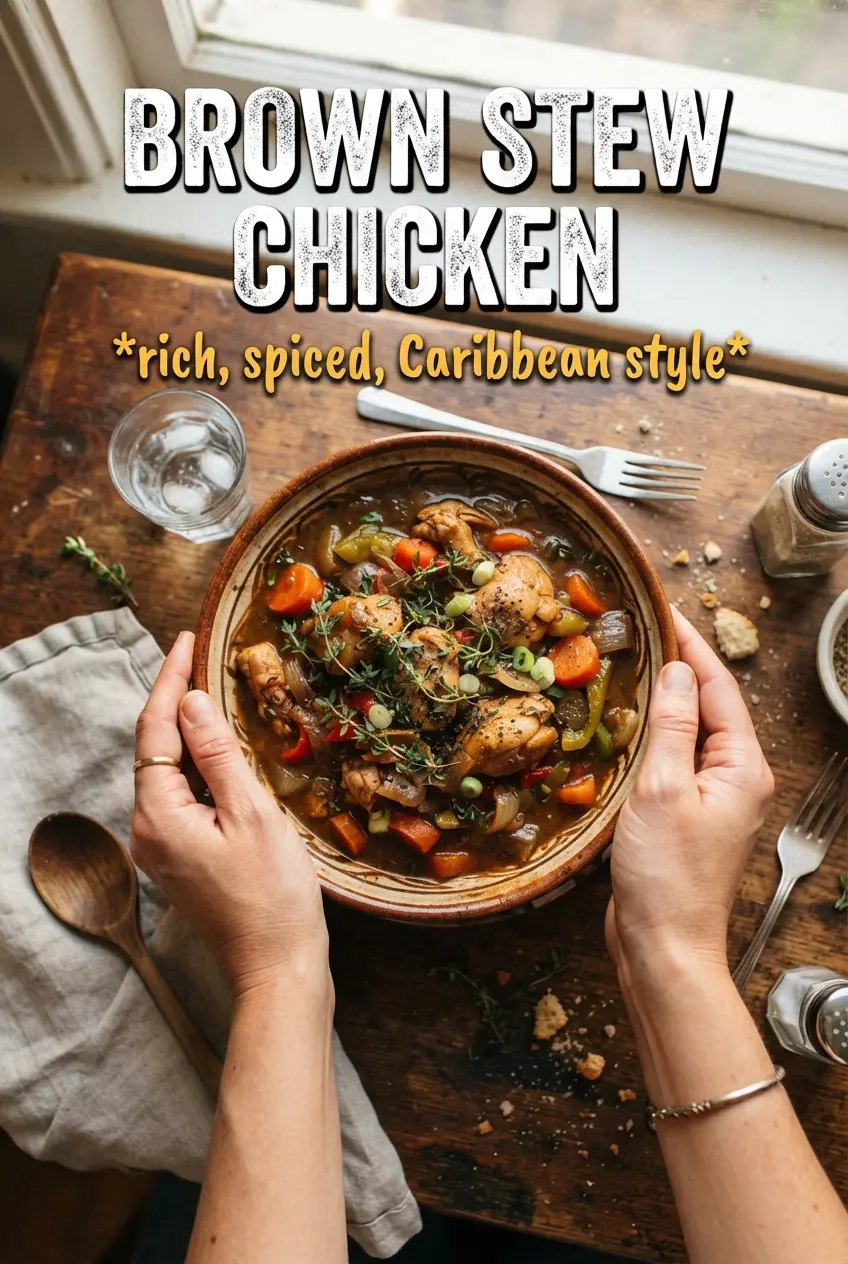
Brown Stew Chicken
Ingredients
Equipment
Method
- Combine browning sauce, all-purpose seasoning, garlic powder, onion powder, dried thyme, salt, and black pepper, then rub the mixture all over the chicken thighs and drumsticks and refrigerate.
- Marinate for at least 2 hours or overnight so the flavors penetrate the meat.
- Heat the vegetable oil in a large skillet or Dutch oven over medium heat, then add the sugar and cook until it turns golden brown.
- Brown the marinated chicken pieces in the caramel oil until deeply golden on all sides, then remove to a plate.
- Sauté the onion, bell peppers, garlic, green onions, and scotch bonnet (if using) for 4 minutes until fragrant and slightly softened.
- Return the chicken to the pot, add the chicken broth, and bring everything to a boil.
- Reduce heat to low, cover, and simmer 35-40 minutes until the chicken is fall-apart tender and the gravy is thick.
- Serve the brown stew chicken with rice and garnish with fresh thyme.