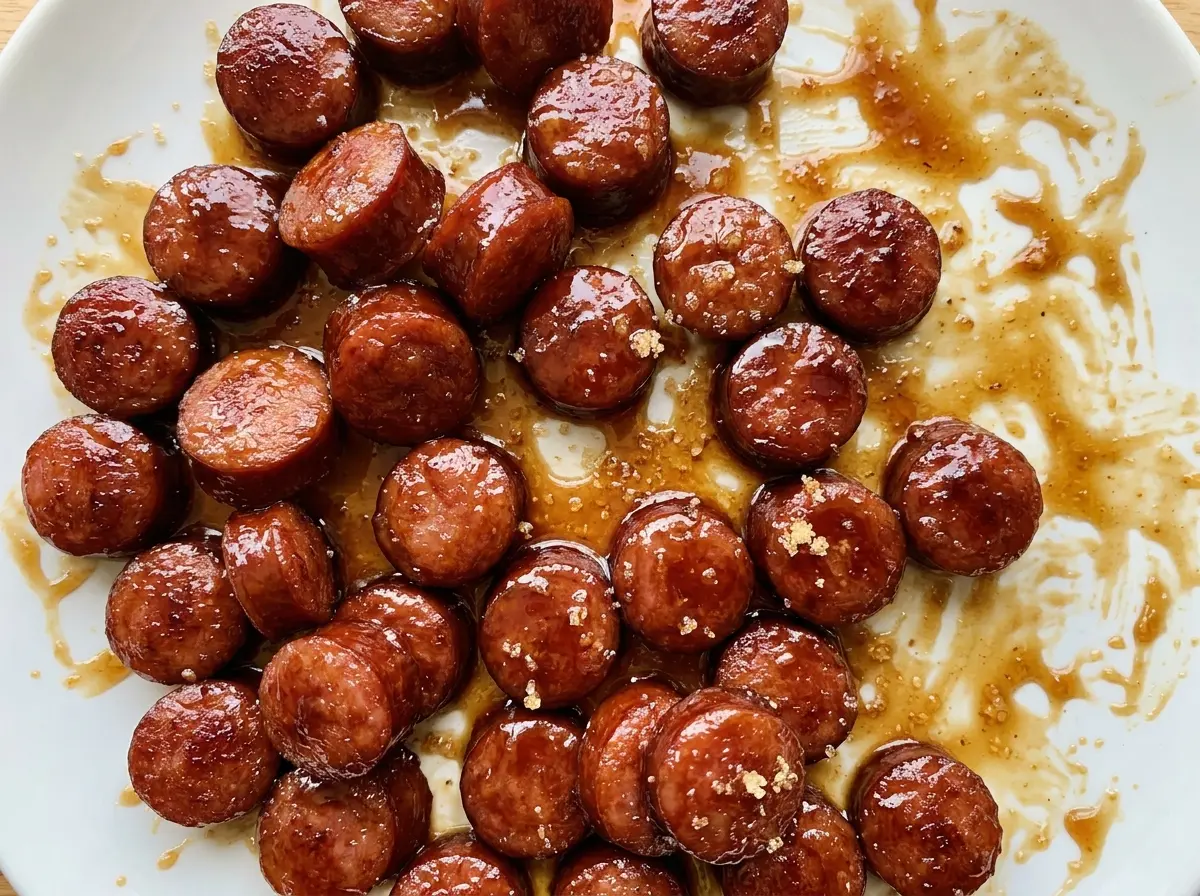
The rounds hiss against the skillet, then pick up browned edges before the sugar ever touches the pan. That order is what gives these Candied Kielbasa Bites their contrast: savory, browned sausage under a glossy sweet-and-tangy coating. I like that the kielbasa gets its own time in the pan first, so the glaze doesn’t have to compete with the heat needed to brown it.
The glaze is a quick mix of brown sugar, water, Dijon, and apple cider vinegar. It doesn’t need to turn into a thick syrup on its own; it just needs to dissolve and thicken slightly before the kielbasa goes back in. Tossing the rounds in the skillet finishes the coating while they heat through, leaving each bite shiny and sticky without burying the sausage’s smoky flavor.
Kitchen Note
Cut the rounds to a consistent half-inch thickness. That keeps the smaller end pieces from racing ahead of the thicker slices while the skillet browns them.
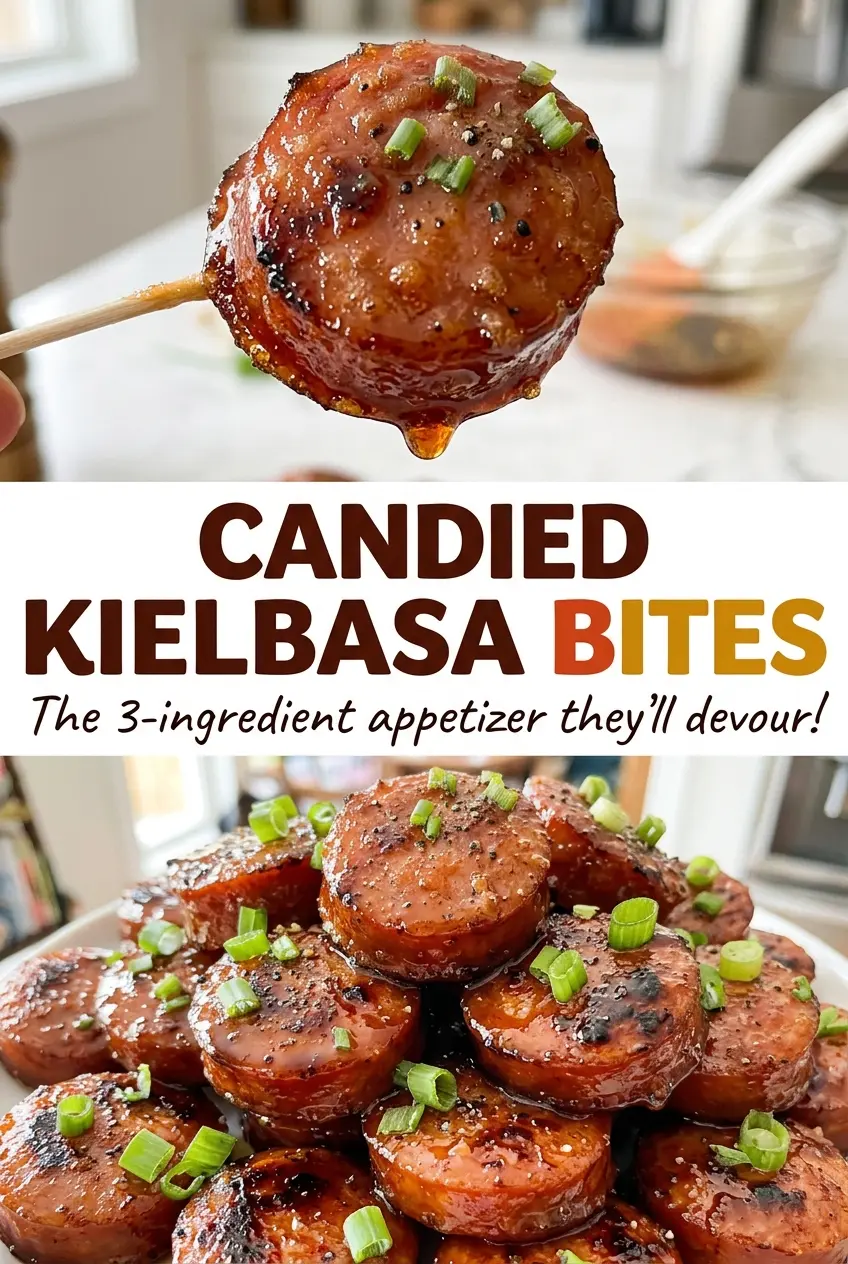
Save these Candied Kielbasa Bites for a party snack with browned sausage and a sweet-tangy glaze that comes together right in the skillet.
Why the Glaze Goes Into a Cooler Skillet, Not a Hot One
The sausage needs medium heat to brown, but brown sugar behaves differently from kielbasa. Leave the skillet at that higher heat and the sugar can darken or scorch before it has time to dissolve evenly. Taking the sausage out gives you room to lower the heat and stir the glaze without overcooking the bites.
There’s also a useful texture cue here: the glaze should be only slightly thickened when the kielbasa returns. It will finish coating the rounds as you toss them over medium-low heat. Waiting for a heavy, slow-moving syrup in the empty skillet works against you; the glaze gets stickier as it cooks and can turn too stiff before it clings evenly to the sausage. Keep the sequence simple: brown first, lower the heat, dissolve and thicken the glaze slightly, then toss the kielbasa through it. The sausage comes out glossy rather than coated in a hard shell.
What Each Ingredient Brings to the Kielbasa Glaze
- Fully cooked kielbasa — It’s already cooked, so the skillet time is for browning the edges and heating the rounds through, not cooking raw sausage from scratch. Choose a package with plump, intact links; fully cooked smoked sausage of a similar size can also stand in, though the seasoning may shift the final flavor.
- Packed light brown sugar — Its moisture helps the glaze dissolve and cling, while its mild molasses flavor suits the smoky sausage. Dark brown sugar works in its place and makes the coating taste more deeply molasses-forward; it also gives the glaze a darker color.
- Dijon mustard — Dijon brings a sharp, rounded tang that keeps the sugar from tasting one-note. Whole-grain mustard is a workable one-for-one swap if you like a little texture from the mustard seeds; the glaze will look less smooth.
- Apple cider vinegar — Its gentle fruitiness gives the sweet glaze a bright edge. White wine vinegar is the closest easy substitute and can replace it one-for-one; avoid a strongly sweet vinegar, which can push the glaze toward cloying.
Brown the Kielbasa, Then Let the Glaze Catch Up
Brown the Rounds in a Single Layer
Arrange the kielbasa rounds in a single layer in a 12-inch skillet over medium heat. Let them cook for 5–7 minutes, turning occasionally, until the edges are browned. If the skillet is crowded, the rounds won’t make good contact with the pan and their edges can steam instead of browning. Transfer the browned kielbasa to a plate before starting the glaze.
Dissolve the Sugar Over Medium-Low Heat
Reduce the skillet heat to medium-low, then add the brown sugar, water, Dijon mustard, and apple cider vinegar. Stir for 2–3 minutes, scraping through the mixture as the sugar dissolves. The glaze should look smooth and thicken slightly, but it won’t be a stiff syrup at this stage. If you still see sugar grains, keep stirring over the same moderate heat rather than turning the burner up.
Toss Until Glossy and Heated Through
Return the kielbasa to the skillet and toss for 2–3 minutes. Turn the rounds through the glaze until they’re coated and heated through, with no dry-looking patches on the sides. Keep the heat at medium-low so the sugar stays glossy instead of catching on the bottom of the pan. Take the skillet off the heat once the bites are coated; the glaze will continue to cling as it settles.
Two Easy Ways to Change the Kielbasa Bites
Make a Pork-Free Batch with Turkey Kielbasa
Use fully cooked turkey kielbasa in place of the pork kielbasa, keeping the same half-inch rounds and skillet method. It makes the bites pork-free and usually leaner, with a milder sausage flavor; watch the browning closely because a leaner sausage may not render as much fat into the skillet.
Turn Up the Mustard with Spicy Brown
Swap the Dijon for spicy brown mustard to give the glaze a more pronounced mustard bite. The coating will taste sharper and a little less smooth, but the sweetness and vinegar still balance it. Keep the same amount and stir it into the glaze with the other ingredients.
Storage and Reheating
- Refrigerator: Refrigerate in an airtight container within 2 hours and keep for 3–4 days. The glaze firms up when cold, so the bites will be stickier straight from the fridge.
- Freezer: Freeze in an airtight freezer-safe container for up to 2 months for the best texture. Thaw overnight in the refrigerator before reheating; the glaze may loosen slightly as it warms.
- Reheating: Warm gently in a skillet over low heat, stirring often, until the leftovers reach 165°F. If the glaze has tightened, add a small splash of water to loosen it; high heat can scorch the sugar before the bites warm through.
Questions That Come Up When Making Candied Kielbasa Bites
Candied Kielbasa Bites
Ingredients
Equipment
Method
- Arrange the kielbasa in a single layer in a 12-inch skillet over medium heat and cook for 5–7 minutes, turning occasionally, until browned at the edges.
- Transfer the kielbasa to a plate.
- Reduce the heat to medium-low, add the brown sugar, water, Dijon mustard, and apple cider vinegar to the skillet, and stir for 2–3 minutes until the sugar dissolves and the glaze thickens slightly.
- Return the kielbasa to the skillet and toss for 2–3 minutes until heated through and coated in glaze.